
Innovation Blog
Creating Radical Change With Baby Steps: 10 Incremental Innovations Create a Revolution — Case Study: Singapore’s Schools
By Shlomo Maital
Dec. 6/2009
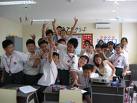 Singapore schoolchildren
Innovators love sweeping radical inventions that change the world. But sometimes, radical change occurs only through patient, plodding incremental improvements, many of them, that together add up to a revolution.
In the West, addicted to instant gratification (see my blog, “Marshmallow”, Nov. 27), baby steps are too slow. We search for a magic bullet. But, usually there are none. In the East, in Asia, with far longer time perspective, slow incremental changes are de rigeur, compulsory. And they create force-multiplying change.
Here is an account of how Singapore used incremental change to build a world-leading school system, written by Lars Qvortrup (Dean of a leading Danish School of Education) and supplied to me by my friend Bilahari Kausikan, First Permanent Secretary of Singapore’s Foreign Affairs Ministry. Qvortrup notes that Singapore ranks #1 in the world in quality of education (according to IMD’s World Competitiveness rankings), and is consistently in the top five countries in the world in reading, math and science.
Qvortrup recently made a best-practices benchmarking visit to Singapore schools. Here is what he learned.
1. Vision: “Singapore decided in 1997 its future was to be a knowledge society” (a slogan many countries, incuding Israel, mouth, but few implement). “They focused on innovation, creativity and entrepreneurship.” These core goals remain the central focus, within a highly disciplined system that measures performance through results and tests.
2. School is work. “School is a workplace, where it is expected each student will do his or her utmost”. Pupils stand up when the teacher enters, and say, “Good morning sir (madam)”. The teacher says, “Are we ready?”. The children answer, Yes!”
3. Class management. “What works?”, “why does it work in one context but not another?” are questions constantly repeated. Teaching has a clear structure: “problem, analysis, method, solution. Work is done collectively. “Class sizes are very high, 30-40 students per class.” All classrooms have a projector, “so that teaching can be supported by PowerPoint”.
4. Sport and health: Many children arrive as early as 7 a.m., and have fun, play ball, and do “wushu”, a Chinese gymnastics program; for the overweight, there is jogging between 7:30 and 8 a.m. St. Margaret School has a huge cafeteria, with five different cuisines, and low prices, because food venders are private small businesses.
5. Testing: As early as 2nd grade, a test is implemented, and 30-40 students are put into a special class, where they are stimulated in different ways and encouraged to develop their abilities. A comprehensive exam given at the end of primary school (end of 6th grade) provide feedback for teachers, and comparison between schools.
6. Physical facilities: Schools are big and perfectly maintained. Averaging 1,000-1,500 students, classrooms are bright, well-maintained, well-designed and spacious. Quality and cleanliness support respect for education.
7. Teachers’ work is organized uniquely. Primary teaching ends at 1:30 pm. Children then go to after-school programs. Teachers do not go home. They each have a laptop computer and a desk (and very small office). They work until 5 or 6 pm. The principal sends the last teachers home at 6:30 pm.
8. Parents are involved — and kept out. There are Saturday workshops for parents, where math and science are reviewed, so parents can understand the teaching principles and help their children with homework. But the boundary between home and school is clear. “Now you are in school”, children understand.
9. Teaching is prestigious. All Singapore teachers study for five years at the National Institute of Education (NIE). Instruction is research-based. There are ten times as many applicants as there are student openings. “Teachers are well-educated and have professional pride.”
10. Talented teachers: “All teachers in Singapore have a right to 100 hours of continuing education a year — a right they are expected to utilize”. Commonly, 50 hours are used for professional development and subject-area specialization, and the other 50, for common, educational development.
What works well in Singapore may not work well elsewhere. But the main lesson from the above is clear and simple. Education is about schools and teachers. Make each excellent, in a hundred different pragmatic ways, and accept nothing but excellence. Reject excuses (such as, no budget, bureaucracy, poor teacher education, bulging classes, crumbling schools). Keeping making changes until excellence is achieved, and then reinforce it by redoubling innovation. And always, every day, benchmark best practices, within your own country and abroad.
 TIMnovate
Leave a comment
Comments feed for this article