
Innovation Blog
How Ada Yonath Deciphered the Ribosome and Won the Nobel Prize: Lessons for Innovators
By Shlomo Maital
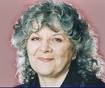 Prof. Ada Yonath, a scientist at Israel’s Weizman Institute, in Rehovoth, is the fourth woman to win the Nobel Prize for Chemistry. She joins Madame Curie, Curie’s daughter, and Dorothy Hodgkins.
Yonath deciphered the structure of the ribosome. How? And why does it matter? What can innovators learn from her discovery?
Here is an edited transcript of the short interview that appears on the Nobel Prize website, following the phone call that told her she had won the prize.
—————-
Interviewer: Your prize was awarded for your work in discovering the crystalline structure of the ribosome. What is a ribosome? What did you discover?
Yonath: The ribosome is a machine [inside the human cell]. It gets instructions from the genetic code, and operates chemically in order to produce its product: Proteins. During their work, ribosomes work very fast, very well, very accurately. During their work, they have to “proofread” the results (check that the protein they produced is precisely right), and to protect the protein until it is capable of protecting itself. Think about a baby kangaroo, in its mother’s pouch for weeks before it emerges into the world. Likewise, the protein made by the ribosome first goes into a “pocket”, or tunnel, and only then into the world. Like the baby kangaroo, the newly born protein progresses, until it emerges from its ‘pouch’.
Interviewer: You are the fourth woman to win the Nobel Prize for Chemistry. Your predecessors were: Marie Curie; her daughter; Dorothy Hodgkins; and now you. What gave you the courage to try?
Yonath: A serious bicycle accident. I had a brain concussion, a serious one. I had some free time while recovering and I read a lot. I read a study that showed that polar bears’ cells pack their ribosomes regularly, periodically, on the membranes of the cells, when they hibernate for the winter. I asked myself, why do they do this?
The logical explanation: At the end of the winter, when they awake, bears need lots of active ribosomes. By packing them closely, the ribosomes are preserved and are ready to function when the bears wake up in Spring from hibernating. This is the way they preserve active ribosomes, by this close packing. I read this and I thought, maybe this is the way to for solve the structure of the ribosome. This gave me the idea that ribosomes can be packed in an orderly way, so that one can determine their structure [by X-ray crystallography]. This was not believed at that time. I used ribosomes from very robust bacteria, ones that survived the harsh conditions of the Dead Sea, under very active conditions, and I took advantage of research done before me at the Weizman Institute on how to preserve their activity, and their integrity, while they crystallize. [The method Yonath developed is known as cryo bio-crystallography. It is now the standard method used by structural biologists].
When people ask me, how did I discover the structure of ribosomes, I say, because of a brain concussion, a blow to the head. This is technically true — but it is not the whole story.
Interviewer: Did you ever doubt you would succeed?
Yonath: I doubted all the time, the research was extremely difficult. The insight I had with the Bears was just one small step. Afterwards, there were lots of problems. At one point I described what I am trying to do in this way: we are climbing mountains in order to reach the summit; these mountains are like Everest, very difficult to climb; when you get to the top, you find there is another mountain behind it to be climbed afterward, an even higher one… and so on.
———————————
Yonath’s research will likely have world-changing impact. According to Wikipedia:
Yonath elucidated the modes of action of over twenty different antibiotics targeting the ribosome, illuminated mechanisms of drug resistance and synergism, deciphered the structural basis for antibiotic selectivity and showed how it plays a key role in clinical usefulness and therapeutic effectiveness, thus paving the way for structure-based drug design (i.e. designing molecules that heal, rather than use trial-and-error on thousands of compounds, hoping to find one that works).
Yonath’s life story holds the key to understanding her dogged persistence and fiercely-independent thinking, in the face of huge skepticism (in a male-dominated profession). She was born in the Geula neighborhood in Jerusalem, then and now a slum, living in a tiny apartment. Yonath’s parents were extremely poor; her father, a rabbi, ran a failing grocery store. Her parents sent her to elementary school in a better neighborhood to make sure she had a good education. Later she went to a top (and expensive) high school, and gave math lessons to help pay the tuition.
In her career: “I was the village fool for many years,” she told the Jerusalem Post. “It didn’t bother me at all. I had doubts of course. At first, I wasn’t sure that it would work. I had a lot of luck. For quite a while, I didn’t receive a higher academic status. I didn’t feel any discrimination against me as a woman scientist, but I hadn’t produced a lot of science journal articles. The Weizmann Institute showed me respect and didn’t require many administrative tasks, so I was quite independent. I did what I wanted.”
The result was a Nobel Prize and a breakthrough discovery that one day will save many many lives.
====================================================
POSTSCRIPT: Break the Rules!
Innovation is (intelligently) breaking the rules, this Blog has noted countless times. In her Nobel speech on behalf of all the participants (she was chosen to speak for them all) at the gala Nobel banquet, before 1,300 participants, Ada Yonath broke the rules: the strictest one. Do not NOT use your talk to say ‘thank you’, the Nobel organizers cautioned, wisely seeking to avoid the inane boring speeches actors make at, for instance, the Oscar ceremonies.
“I’m known as someone who carries out orders,” she said, meaning the precise opposite. “I want to warmly thank my loyal driver, Nisse.” (The crowd laughed). “Without him I would be lost in Stockholm, a wonderful (though dark) city. As a result, without Nisse, I would have missed most of the exciting events during this magical week.” (Loud applause).” Does this suggest a key innovation principle: Share the glory with those who help you, including the lowliest! According to her colleagues and students at the Weizman Institute — Yonath does.
She continued: “ …Isaac Bashevis Singer [who won the Nobel Prize for Literature in 1978] said in his Nobel speech, ‘people ask me why I write in a dead language, Yiddish’. Well, in my case too, people used the word ‘dead’ — when I spoke of my plans to determine the structure of the ribosome, top scientists said, ‘why? …ribosomes are already ‘dead’ and we know all we need to know about them!’. [‘Dead’, because until Yonath, to study ribosomes, you had to kill them]. ‘You will be dead before you succeed,’ these scientists said. Well, happily, ribosomes are alive and kicking …and so am I!”
Yonath sat next to the King, Gustav XVI, and said the conversation was fascinating; the King is knowledgeable about science and technological innovation.

 TIMnovate
Leave a comment
Comments feed for this article