
By Shlomo Maital
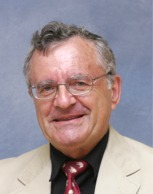
Robert Ballard

 James Cameron
This is the story of two innovators, light years apart in their endeavors, but closely linked by two things: the sea and Titanic, once the largest moving object on earth. James Cameron, who made the highest-revenue movie in history Titanic and Robert Ballard, who discovered the wreck of the Titanic on the ocean bottom, (as well as the wreck of the Bismarck) were recently featured on Sixty Minutes segments. Cameron is a movie director. Ballard is an undersea explorer. Here are the lessons their life and work teach us.
1. Have a Dream, Pursue It Relentlessly. Cameron: “I’ve been working up to this for a long time. This is the film I always thought I wanted to make when I set down the path of being a filmmaker,” Cameron said. He wrote Avatar years ago, but had to wait for technology to catch up with his vision of blue people and alien worlds. “I’ve loved fantasy and science fiction since I was a kid. I’m an artist. I’m an illustrator. I’ve been drawing creatures, and characters, and robots and spaceships since I was in high school. I grew up landlocked. Seven hundred miles from the ocean. But the Jacques Cousteau specials, this was in the late 60s, brought the ocean into our living rooms and into my already inflamed imagination that loved, you know, exploration and fantasy. So I had a love affair with the ocean that began before I had actually even seen an ocean.” Ballard: For someone who has devoted his life to exploring the ocean, Ballard was born in an unlikely place: Kansas. As a young boy, he was inspired by the explorer, Captain Nemo, in Jules Vernes’ “20,000 Leagues Under the Sea.” Since then he has been on more than 120 undersea expeditions all over the world. What still excites Ballard most is making new discoveries and he’s done it time and time again. Ballard is 67 but is unstoppable. 60 Minutes asked him: “In all these years, is it the same passion now that inspires you?” He answers: “Oh yes, of course. Discovery is an unbelievable, unbelievable feeling,” Ballard said. “And it never loses its magic?” “No, because it always could beat the last one,” Ballard said. “People say, ‘What is your greatest discovery?’ And I say, ‘It’s the one I’m about to make.'”
2. Just Do It! Cameron: Growing up in Canada, his passions were movies, art and science. After the family moved to California in his late teens, he spent some aimless years, dropping out of junior college, and working as a machinist and a bus mechanic. “And then one day I just quit my job and started making, making a film, a short film,” Cameron said. “You once said: ‘I went from being a bum who liked to smoke dope and hang out by the river to this completely obsessed maniac.’ What was the turning point? What was the point at which you lost your mind?” 60 Minutes asked. “Or found it? I think, you know, I found my calling,” Cameron said. “And I think the moment you’re making a film, no matter how crude, no matter how small or cheap the film is, you’re a filmmaker.”
3. Break the Rules! Ballard: “By cheating. I basically didn’t do the search pattern the way they had done it. See the traditional approach to searching for something in darkness, cause you can’t see, is use a sonar. And you lower the sonar down, and you tow it back and forth, and you mow the lawn. And that’s what all three of them had done. And I went, ‘Well, clearly that’s not working.'” So Ballard used what he had just learned investigating the Navy subs: that when a vessel sinks, the wreckage is carried by the current, leaving a trail of debris like a comet. Applying that to the Titanic, he decided not to look for the ship itself. Instead he searched for the trail of debris that he estimated stretched over a mile, a much bigger target. Ballard also expanded the original search area. And instead of using the sonar to slowly comb every inch of the sea floor as the others had done, he used cameras on a remote controlled vehicle to hunt visually, spacing his search lines almost a mile apart. “So I was able to go through the box real quick. And sure enough, I picked up the trail, and as soon as I picked up the trail I knew exactly: go north. And I walked right into the Titanic,” he explained. Asked how the other experts could not worked that out before him, Ballard said, “They were in the box. They were in the, this is the way you do it. …I live outside the box. I’m always outside the box.”
4. Never Ask Others To Do What You Yourself Will Not Do!… Cameron: His 1989 film “The Abyss” is still remembered as one of the toughest movie shoots ever. Cameron filmed it in South Carolina, in a decommissioned nuclear power plant filled with ten million gallons of water. “We were underwater for ten weeks. Six days a week, eight to ten hours a day, submerged,” he remembered.
5. …But Demand the Very Best! Cameron: From The Abyss on through Titanic, Cameron got a reputation for driving cast and crew relentlessly – come hell or high water – to get the shot. It’s not for nothing that the letters on the cap in his office stand for: “Head – M*** F**** – In Charge.” “I’m not in this to phone it in or to do mediocre work. I tell everybody when we start a project, ‘You know, we’re going to the Super Bowl. Just understand that. You got to be ready. Don’t, as Martin Sheen said in ‘Apocalypse Now,’ you know, ‘Don’t get on the boat if you’re not ready to go all the way,'” Cameron said.
6. If You Need Money — Abandon Modesty. Ballard: He admits he is a showman and a self-promoter, but he says he has to be. “Because I have to raise money, I have to promote myself. I don’t want to say, ‘Well I’m not very good at this, give me a bunch of money.’ No, obviously I’m a salesman,” he explained. Cameron: Cameron famously declared himself “King of the World” when Titanic won 11 Oscars in 1998. Since then he has been immersed in a wildly ambitious and very expensive 3D science fiction fantasy that mixes real actors with computer generated creatures, the sum of which he believes will change the movie business forever. [The cost of Avatar is estimated at $400 m., including marketing and promotion].
7. But Star or Not, Remember It is “We”, not “I”! Ballard: . “Science is a ‘we,’ not an ‘I.’ It truly is. I didn’t do anything. We did a lot of things. But in our system, in America, we have this star-based system. Star athletes, star news people, star politicians. And stars are ‘I.’ And the academic world is really, honestly a ‘we.'” “But you’re the star quarterback,” 60 Minutes said. “I’m the star. But it can get you in trouble in that world that doesn’t believe in that star-based system,” Ballard said. Cameron: Avatar is set on the moon Pandora, a fantasy Eden, which earthlings want to exploit. It’s a Shangri-la created entirely by computers. “You’re creating a world, every creature in it, every blade of grass, every tree, every cloud in the sky, every little reflection in the eyes of the characters,” Cameron explained. His state-of-the-art computer experts worked partly in New Zealand, partly on the 20th C. Fox lot where Marilyn Monroe once starred.
 TIMnovate
1 comment
Comments feed for this article
December 30, 2009 at 10:36 am
r4iIt stops being a story at all and is instead just a sheer, unmitigated visual and auditory experience, two hours and forty minutes of being exposed to a brand new world.
It stops being a story at all and is instead just a sheer, unmitigated visual and auditory experience, two hours and forty minutes of being exposed to a brand new world.