
Innovation Blog
Cotton Candy? Carmelized Popcorn? Sea Weed? Meet Chef José Andrés, World’s Most Creative Chef
By Shlomo Maital
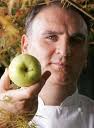
Meat … Chef José Andrés. It’s not a spelling error. Chef José, the pioneer of molecular gastronomy, has this to say about meat:
“We overemphasize meat. Meat is boring. I love it. But only once in a while. Put meat in your mouth, chew it, in seconds all the juices are gone….then what? You are stuck for 20 more seconds chewing and chewing and chewing… with no flavor. This doesn’t happen with pineapple, asparagus, green peas. The future of gastronomy lies in vegetables and fruits, they are far more exciting than chicken. Take a chicken breast, the best ever made, compare it with a beautiful pineapple. Aroma? Acidity? Afternote? The chicken breast has none of these.”
Chef José was featured on a great 60 Minutes segment, interviewed by Anderson Cooper. He is Spanish, came to America with $50 in his pocket about 20 years ago, is only 41 years old, started and runs some of the world’s greatest restaurants, and is changing the world. His The Bazaar is the only LA restaurant given four stars by the LA Times. Innovators everywhere can learn a lot from him.
Ruth Reichl, author of the acclaimed Tender at the Bone and a former editor at Gourmet magazine, says about Andres: “… expect wonders, his food will do things you never imagine, it will float at you. Textures you didn’t ever think possible will be in your mouth. It’s not a gimmick. It’s a kind of magic, a circus of the mouth.”
Chef Jose thrusts at his interviewer what looks like a small ice cream cone. It’s not. It’s…well, bagel and lox, wrapped inside a tasty small wafer cone. Yum.
Chef Jose likes to surprise. He serves Cooper a cocktail, icy cold on top, foamy, with hot liquid on the bottom. Surprise! A key principle of innovation – do the unexpected. Chef Jose’s dishes have many many surprises.
He serves what looks like a solid green glob. Cooper pops it into his mouth. Whoops…It’s all liquid inside. And – it’s actually …seaweed. Cooper says, “It’s all I can do not to lick the plate! But we’re on camera!”. Jose says: OK. Turn off the cameras! Next, Cooper gets an incredible dish – cotton candy wrapped around seafood. Cotton candy is the most amazing invention ever, exclaims Chef Jose. Again – surprise! Cooper tries his clam chowder. Surprise! It has potato in it. Who in the world puts potato into clam chowder?? Surprise! Chef Jose does. Break the rules. Molecular gastronomy.
How does Chef Jose know if what he makes is good? The MiniBar. This is a small place in Washington DC, where there are places for only six people. There, you are served his experiments, and you give feedback. The waiting list? Well, it’s only slightly harder to reserve a seat there than to get a seat next to Jack Nicholson courtside at a Lakers game.
Chef Jose teaches a course at Harvard University in culinary physics. There, he teaches about molecular gastronomy – how you analyze gourmet cooking by deeply understanding the structure, texture and interaction of the molecules of the ingredients you use. I wonder if he makes lunch for his students.
The thing I liked best about Chef Jose is the fact that for the past 17 years, not long after he arrived in Washington DC from Spain, he has been volunteering for Robert Eggar’s DC Central Kitchen. There he trains former drug addicts and criminals to become chefs in intensive 12-week courses. He raised $1.5 million to support the school. He and his students prepare meals daily for 4,000 needy people in the DC area. And he has hired 10 of his graduates to work in his own eight restaurants.
“We chefs should be more outspoken about the way we are feeding America,” he insists. “We should be committed to the 97 per cent of Americans who don’t eat in restaurants.”
Chef Jose is married to Patricia and they have three daughters.
 TIMnovate
Leave a comment
Comments feed for this article