
Global Crisis/Innovation Blog
Birth and Death in the Auto Industry: The Difference Between America and Europe
By Shlomo Maital
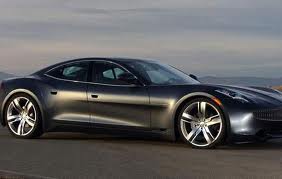
Fisker’s NINA
A short piece by John Reed in the Financial Times, Oct. 4 (“startup to launch hybrid sports car”) and in today’s Global New York Times by Bloomberg (“Unable to sell, Opel will close Antwerp plant”) reveals a key, vital difference between American entrepreneurship and innovation and that of Europe.
John Reed reports that Fisker Automotive, a US startup launched by Henrik Fisker, will build rechargeable hybrid sports cars (Fisker “Nina”) at a former General Motors plant in Wilmington, Delaware. Fiskers bought the plant for an amazing $20 m.! He says it would have cost him $400 m. if he had to build the plant from scratch. His company got two low-interest loans worth $529 m. from a US Dept. of Energy credit-line for low-emission vehicles.
Fisker’s competitor is Elon Musk’s Tesla Motors, already building $109,000 electric roadsters. Tesla will produce its Model S mass-market car in 2012 at another former GM plant in Fremont, California. Musk paid $42 m. for it. He says: “We’re getting first-rate equipment for pennies on the dollar.” Tesla, too, got a Department of Energy loan worth $465 m.
In contrast, GM’s unprofitable Opel Division in Europe also tried to sell its large factory in Antwerp, Belgium. “None of the potential investors was able to come forward with a sustainable business concept for the plant,” GM Opel said. “The process (for selling the plant) has come to an end.” The plant opened some 43 years ago. While 18 assembly plants have been closed in the US since the onset of the 2007-9 global crisis, the only European automotive assembly to close is Opel’s Antwerp operation, where some 1,300 workers are employed.
What can we learn from this?
Again, for the umpteenth time: There is no birth, no innovation, no launching of new ideas and industries, without death, without closing old moribund ones. If Europe cannot close old failed plants, it will not have entrepreneurs snatch them up to create and build wonderful new cars that the dinosaur firms like GM Opel should have, could have, would have – but never did. The US Energy Dept. grants are helpful. But the Fisker and Telsa startups would doubtless have built their cars in Asia had they not been able to buy the GM plants, and all those good jobs would have been lost to Americans.

 TIMnovate
Leave a comment
Comments feed for this article