
Innovation Blog
Sam Gandy: Finding the REAL Cause of Alzheimer’s
By Shlomo Maital
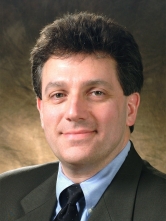
Sam Gandy
A superb short article in the September AARP (American Association of Retired Persons) Bulletin describes new research that is totally changing how we understand the underlying causes of Alzheimer’s. For two decades, drug developers have been focusing their efforts on finding chemicals that target plaque – sticky gooey calcified stuff that clogs the brain and ruins our memory and cognition, plaque that has until now always been linked with Alzheimer’s (in post mortem studies of the brains of Alzheimer’s sufferers, some dating back a full 100 years).
“Plaques are no longer where the action is,” notes Sam Gandy, M.D., researcher at the Mount Sinai School of Medicine in New York City. Gandy has showed, using specially genetically-engineered mice (mice that develop Alzheimer’s even though their brains are plaque-free), that it may be clumps of amyloid beta protein (“oligomers”) that cause Alzheimer’s, and that plaque may actually be the brain’s way of defending itself against oligomers (in the same way that oysters wrap grains of irritating sand in pearl coatings, notes Robert Tanzi, head of Genetics & Aging Research at Boston’s Mass General). In other words, plaque may be the brain’s ineffective solution to Alzheimer’s, not the cause.
Andrew Dillin, researcher of Alzheimer’s at the famed Salk Institute in California, has pursued the oligomer theory of Alzheimer’s for years. When he first presented his ideas at conferences, he notes, some scientists walked out of the room in disgust. But he persisted. Today, drug companies may shift so-far futile efforts to battle plaque toward battling oligomers. They may save billions of dollars that otherwise might have been invested in barking up the wrong plaque tree.
A report released by the World Alzheimer’s Association two weeks ago reveals these disturbing data:
The total worldwide costs of dementia, including Alzheimer’s disease, rose to more than $600 billion this year… An estimated 35.6 million people were diagnosed worldwide in 2010 with dementia, notably Alzheimer’s disease, at a cost of $605 billion in care and treatment for patients, as well as lost productivity of those with the disease and caregivers. According to the study, 46 percent of people with dementia live in high income countries, almost 40 percent in middle income countries and 14 percent in low income countries. Experts say the number of Alzheimer’s cases will likely double during the next 20 years to 65.7 million in 2030 and to more than 115 million cases in 2050.
As a personal note: I am 68 years old, and do not fear dying in the least, but frankly, greatly fear Alzheimer’s, perhaps the only thing I truly fear. More than a few of my academic colleagues have already succumbed. I have seen superb creative minds disintegrate, leaving only a hollow physical shell. The effect on their loved ones can be devastating.
Let’s hope the bold innovative research of Gindy and Diller will bear fruit long before the disturbing doubling of Alzheimer’s victims occurs.

 TIMnovate
Leave a comment
Comments feed for this article