
Global Crisis
Guess Who’s Making Your Gasoline Bills Soar? Clue: Not OPEC
By Shlomo Maital
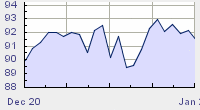
crude oil price volatility
A recent business commentary on Canada’s CBC radio made a great deal of sense.
An expert from Enfo, an energy consulting firm, discussed the recent spikes in the price of oil and gasoline, as petroleum soars over $90/bbl. Back in June 2010, oil was only $78/bbl.
Why? Geopolitical instability? OPEC? None of the above.
Speculators.
The crude oil market has become a favorite sandbox for speculators. With huge amounts of liquidity floating around the world, with banks reverting to old habits of ‘nostrum’ speculation to generate huge profits, and with very few opportunities to earn high returns, traders have put huge amounts of money into crude oil futures and options.
They are speculating that the global economic recovery, which will drive world GDP growth to 4.5 per cent this year (according to the IMF), will create demand for oil and hence drive up prices.
What is the problem with this?
It creates a kind of doom loop. The more speculative money that flows into petroleum trading, the higher the volatility. The higher the volatility, the higher the potential speculative profit from guessing right. The higher the potential profit, the more money this market attracts… and so on. We have seen this before in other derivatives markets.
The problem with this doom loop, or feedback system, is that we USE oil, to run our cars, heat our homes, produce electricity. So a relative handful of speculators can make energy more expensive, generate profits for Arab despots and in general fuel global cost-push inflation. The speculators and oil-producing countries, mostly non-democratic, share a common interest – make money, at our expense.
It appears that regulators are powerless to prevent it. What ordinary people can do, one at a time, is conserve energy, as best they can, and press their elected officials to spearhead policies that do the same.

 TIMnovate
Leave a comment
Comments feed for this article