
Innovation Blog
How to Milk Goats for their Spider Webs – Say That Again??!!
By Shlomo Maital
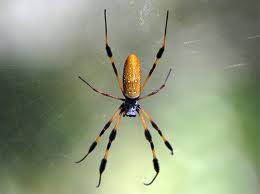
Spider silk surpasses steel
In this blog, I often write about how Nature, with its ultimate patience that uses millions of years of evolution to create winning innovations, surpasses by far human ingenuity. Here is a story about how human innovation partners successfully, and highly creatively, with Nature’s innovation. You can learn more by watching the wonderful four-part Public Broadcasting System Nova series on “Making Stuff”.
Spider silk is amazing. It has higher tensile strength than steel. Nature has patiently, through evolution, enabled spiders to spin tough silk. Nothing humans make rivals it.
. A thread of silk can resist more pull before breaking than a thread of most kinds of steel. It is also quite stretchy. In the spotlight recently has been the newly discovered Darwin’s bark spider of Madagascar, which builds one of the largest webs known. The silk of this spider is twice as strong as other spider silks, ranking it among biological materials with the highest tensile strength and toughness known.
[At the American Museum of Natural History, you can see a large orange blanket, woven from spider silk. It took four years to painstakingly collect enough thread, by ‘milking’ spiders into an alcohol bath, then retrieving the threads that coalesce in it.]
Univ. of Wyoming molecular biologist Randy Lewis asked himself, how can we create spider silk commercially (since humans cannot synthesize it)? Here is what he does.
First, he extracts one of the two key genes spiders have, that enable them to produce their silky threads. Next, he inserts it into goats, creating baby goats that have the spider-silk DNA.
Next, he milks the goats, and extracts the spider silk compound from their milk. The level of spider silk in their milk is about 1 per cent (like low fat milk). A quart of goats’ milk generates a tiny thimble of spider silk material, that can be used to produce ultra-strong threads.
Here is how Lewis describes his thinking: “We needed a way to produce large quantities of the spider silk proteins,” Prof Lewis said. “Spiders can’t be farmed, so that route is out and since they make six different silks, even that would not work if you could.” Spiders also have a tendancy to eat each other, so milking one thread from six out of a solo spider was clearly never going to service the entire human race. Prof Lewis and his team singled out the “dragline” – the outer strand of the web – as the strongest of the six types of silk. They spliced the DNA that creates the silk into a female goat’s DNA, then waited for it to give birth and start lactating.”
Lewis says he is thinking of inserting the gene into alfalfa, rather than goats.
It is therefore time to begin thinking about uses. What uses can you, reader, think of, for ultra-light [a strand of spider silk that circles the world, 25,000 miles, weighs only one pound!] and ultra-strong, stronger-than-steel, thread? Fishing line? Bullet-proof vests (we use Kevlar today)?

 TIMnovate
Leave a comment
Comments feed for this article