
You are currently browsing the monthly archive for January 2011.
Global Crisis/Innovation Blog
Estonia, the Euro, and National Contrarian Thinking
By Shlomo Maital
A few years ago, I visited Estonia, a small Baltic country with only 1.3 m. people, once a part of the USSR and now a dynamic and creative nation with strong political leadership. We were impressed by its commitment to innovation, not just at the level of startups (Skype was founded and developed by ethnic Estonians) but at the national or government level. For instance, Estonians file taxes on-line, usually submitting their annual tax report in 20 minutes or so, and it also votes on-line, the first nation to do so. Estonia’s Government meets on-line, often, with travelling ministers joining sessions by videoconference, dialing in to a start-of-the-art wired Cabinet room. Estonia has very low tax rates and is singlemindedly weaving its economy into the fabric of the European Union.
Now, as of Jan. 1, Estonia has happily, wholeheartedly, embraced the euro. Prime Minister Andrus Ansip slid a bank card into an ATM and withdrew some euros, at an ATM specially set up in front of the opera house in the capital city Talinn. With this, Estonia became the 17th member of the Euro zone. “Being inside is better than being outside” [the Euro zone], said a leading Estonian banker.
Why would Estonia want to join the Euro zone, when the euro has been so unstable, so troubled, its future in doubt? The answer is simple. It is a matter of alternatives. Which do you prefer, as a foreign investor, as the head of Estonia’s Central Bank, or as Estonia’s finance minister – the kroon, weak and unstable, with high risk, or the euro, known, and relatively more stable?
Estonia suffered a deep drop in its 2009 GDP. Part of this was self-inflicted. In order to defend the fixed kroon-euro exchange rate (part of the condition for officially adopting the euro), Estonia slashed its government budget and reduced its deficit by fully 9 per cent of GDP – a huge cut, one that other larger governments have been unable to even contemplate.
Estonia remains a poor country, with GDP per capita only two-thirds of the OECD average. But it has vision and determination, and sees Ireland 1987-2007 as its model. Estonians are ethnic Finns. They share the Finnish stoicism and toughness. Estonia endured centuries of foreign domination, and many now see the Euro as a key to future independence.
Estonia has a long road to travel. One in ten Estonians are unemployed, a fifth of the population lives in poverty and it is by far the poorest country in Euro zone. But it perceives of itself as the anti-Greece: the opposite of the profligate irresponsibly heavy-spending Socialist nation that took to the streets to fight necessary fiscal cuts.
“There is no reason to be afraid,” said one leading Estonian. “We have had worse experiences.” For Estonia, everything is relative. The tribulations of embracing the euro, however bad, cannot come close to what Estonia endured under the Soviets and other colonial powers. While other nations ponder leaving the Euro, Estonia practices contrarian thinking and embraces it with vigor. We wish Estonia well.
* based on: Jack Ewing, “As euro struggles, Estonia readies for entry in currency”, Global NYT, Dec. 30, 2010.
Global Crisis/Innovation Blog
China Patents A New Direction in Patents
By Shlomo Maital
In this blog, I have consistently argued that China is fiercely determined to move up the value-chain ladder into the realm of innovation-intensive products and services, and is acting aggressively to implement this policy.
Writing in today’s International Herald Tribune, Steve Lohr [“Building a more innovative society by government decree”, IHT Jan 3/2011, p. 14] reports on a Chinese government document defining goals for drastically raising China’s production of patents. US PTO’s David J. Kappos, the Director, says the Chinese targets for 2015 are ‘mind blowing numbers’.
China’s goal for annual patent filings by 2015 is … two million, including ‘utility-model patents’ or design patents, which cover items like engineering features and are less ambitious than invention patents. In contrast, in 2009, there were about 300,000 applications filed for utility patents, about equal to the total of invention patents.
Patent filings in the U.S. totaled about 480,000 in the year up to September 30.
China’s patent surge has been evident for many years. China has been expected to overtake the U.S. in patents this year, but it has happened faster than expected, Lohr reports.
China is not only ambitious for Chinese patents. It wants to double the number of patents that its residents and companies file in other countries. Chinese filings in the US PTO are soaring, and are focused on strategic areas China finds crucial, such as solar and wind energy, information technology, telecommunications, battery and manufacturing technologies for automobiles.
China’s government is offering incentives, including cash bonuses, better housing for individual filers, and tax breaks for companies that are prolific patent appliers.
Creativity expert John Kao told Lohr that “one day China will have the Chinese entrepreneurial equivalent of Steven P. Jobs of Apple and Mark Zuckerberg of Facebook.”
Kao takes comfort in the fact that American culture, more than any other, forgives failure, tolerates risk and embraces democracy. I wonder when America will begin taking seriously the ominous challenge “Made in China” poses for America’s wealth and wellbeing.
Innovation Blog
How Old Do You Need to Be To Become an Entrepreneur?
By Shlomo Maital 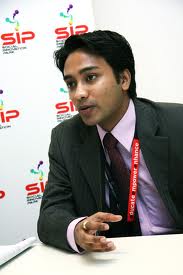
Suhas Gopinath
How old do you need to be to become an entrepreneur and launch a successful global company? Would you believe – 14? That’s how old Suhas Gopinath was, when he launched Globals Inc in Bengaluru, India, ten years ago, from an internet café. Here is the story, relayed to me by my close friend and co-author D.V.R. Seshadri:
When 14-year-old Suhas Gopinath started Globals Inc ten years ago from a cyber cafe in Bangalore, he didn’t know that he had become the youngest CEO in the world. Today, Globals is a multi-million dollar company with offices in the United States, India, Canada, Germany, Italy, the United Kingdom, Spain, Australia, Singapore and the Middle East and has 100 employees in India and 56 abroad. Among the several honors that have been bestowed upon this young man, the most prestigious is the invitation to be a member of the Board of the ICT Advisory Council of the World Bank. He is also recognised as one of the ‘Young Global Leaders’ for 2008-2009 by the prestigious World Economic Forum. Suhas is the youngest member ever in the World Economic Forum’s history. The other members include the Louisiana governor Bobby Jindal, Hollywood star Leonardo Di Caprio, musician A R Rahman, Prince of Brunei, etc.
Globals Inc. has grown rapidly from a small home office to a globally recognized multinational company offering world class quality solutions in Web, e-Commerce, and Mobile. Today “Globals develops mission critical applications on the web for various industries including Education, Finance, and Governments”.
Gopinath taught himself how to build websites and sold portals to bricks-and-mortar firms in the US. He was the youngest certified website-builder in the world. He originally called his company CoolHindustan.
 TIMnovate