
Innovation Blog
Where Good Ideas Come From: “Bricolage”, Spare Parts
By Shlomo Maital
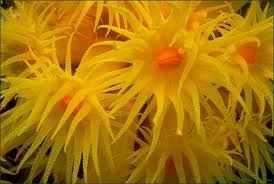
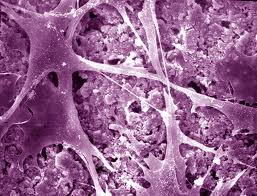 coral polyps adjacent to
bone cement
Author Steven Johnson’s new book about the origin of good ideas has many practical insights innovators can use. His main point:
“Big new ideas more often result from recycling and combining old ideas than from eureka moments. Ideas are, almost inevitably, networks of other ideas. We take the ideas we’ve inherited or stumbled across, and we jigger them together into some new shape. We like to think of our ideas as a $40,000 incubator, shipped direct from the factory, but in reality they’ve been cobbled together with spare parts that happened to be sitting in the garage. People used extant stuff or ideas to produce a new bricolage [the construction or creation of a work from a diverse range of things that happen to be available] and did so because of their immersion in open networks”.
The model for ‘good idea invention’ is one of tinkering, using existing spare parts. This is how life began, Johnson says. Imagine basic molecules — ammonia, methane, water, carbon dioxide, a smattering of amino acids and other simple organic compounds – in a warm sea. By spontaneously combining, aided perhaps by lightning, you get “most of the building blocks of life: the proteins that form the boundaries of cells; sugar molecules crucial to the nucleic acids of our DNA.” This ‘adjacent possible’ is a first-order innovation, leading to second- and third-order, in the same way.
Here are two of Johnson’s examples: Double-entry accounting: “It was first codified by the Franciscan friar Luca Pacioli in 1494, but it had been used for at least two centuries by Italian bankers and merchants.” Printing: “The printing press is a classic combinatorial innovation. Each of its key elements—the movable type, the ink, the paper and the press itself—had been developed separately well before Johannes Gutenberg printed his first Bible in the 15th century.”
Johnson makes heavy use of the notion of the ‘adjacent possible’ developed by theoretical biologist Steven Kauffman: “The strange and beautiful truth about the adjacent possible is that its boundaries grow as you explore them. Each new combination opens up the possibility of other new combinations. Think of it as a house that magically expands with each door you open. You begin in a room with four doors, each leading to a new room that you haven’t visited yet. Once you open one of those doors and stroll into that room, three new doors appear, each leading to a brand-new room that you couldn’t have reached from your original starting point. Keep opening new doors and eventually you’ll have built a palace.”
Johnson stresses how “liquid networks” among people, with ideas flowing smoothly, rapidly and without barriers, create good ideas. He attacks the patent system: “The premise that innovation prospers when ideas can serendipitously connect and recombine with other ideas may seem logical enough, but the strange fact is that a great deal of the past two centuries of legal and folk wisdom about innovation has pursued the exact opposite argument, building walls between ideas.” Patents are such walls. He cites Nike’s experiment, which has made available, in a ‘liquid network’, 400 patents,
“Earlier this year, Nike announced a new Web-based marketplace it calls the GreenXchange, where it has publicly released more than 400 of its patents that involve environmentally friendly materials or technologies. The marketplace is a kind of hybrid of commercial self-interest and civic good. This makes it possible for outside firms to improve on those innovations, creating new value that Nike might ultimately be able to put to use itself in its own products.”
Johnson’s advice to innovators can be summarized as follows: Talk about your ideas with others. Listen to what they say carefully. Include creative people in your network. Avoid secrecy. Seek to combine existing things in new ways. Think of the ‘possible’ but be wildly imaginative. And, as I’ve noted often in this blogspace, observe Nature. Place “human bones” adjacent to “coral polyps”. Johnson notes how “Brent Constantz, working on a Ph.D. that explored the techniques that coral polyps use to build amazingly durable reefs, realized that those same techniques could be harnessed to heal human bones. Several IPOs later, the cements that Mr. Constantz created are employed in most orthopedic operating rooms throughout the U.S. and Europe.”
* Steven Johnson, Where Good Ideas Come From, Riverhead: 2010.

 TIMnovate
Leave a comment
Comments feed for this article