
You are currently browsing the monthly archive for February 2011.
Innovation Blog
The Entrepreneur Who Could Not Spell His Own Name:
How Jeff Pearce Overcame Dyslexia
By Shlomo Maital

Young Jeff (James) Pearce
Over my 43 years as an educator, I have taught many students who had dyslexia, a learning disability that makes it hard to read and write, afflicting from 5 – 10 percent of the population. For a few, it was severe. They used many self-invented tricks to overcome it and many went on to achieve great success—the discipline and persistence required to overcome dyslexia served them well later, as start-up innovators.
Here, from the BBC World Service’s Outlook program (recounted by journalist Jo Fidgen), is the story of James (Jeff) Pearce, in his own words. Jeff is literally someone who could not spell his own name for 54 years, nor read or write – yet he was voted Retailer of the Year in the U.K. and twice built business empires. If Pearce could succeed, despite the odds, surely any of us can.
“Three letter words, cat, dog. I’d spell them backward. Teachers thought I was disruptive, kids laughed at me, teachers put me in the corner with a dunce cap, made me face the wall, they did not know what dyslexia was then, and the punishment made me worse, I lived with shame. In promotion from junior to senior high, the day before I went in, my mum knew I would get laughed at, because I could not write my own name, James, I couldn’t spell it, mum sat me down and said from now on, you are JEFF “J” “E” “F”, then add another ’f’ on , I could just about handle that. I lived with that all my life. I became Jeff Pearce.”
“My mom brought us up on the ‘markets’, she had to find money to feed five children, dad drank every penny he earned; in the morning, she told me, on you go on, go earn some money. I was 14. I went to the ‘markets’, asked the business people there if I could do errands, deliver messages? I became an entrepreneur…that put me in good stead for when I went into the world. I set up own business at 17. I’ve always worked for myself, for the simple reason I was unemployable, who would employ someone who couldn’t write their own name?”
“How did I manage? I lived two lives. As entrepreneur/businessman, I employed over 40 staff. They didn’t know I lived another life of torture, as a man that couldn’t write his own name. I hid things. Gina, my wife – she came with me to the bank, gave me a form to fill out, she’d say, I’ll do that so you can keep talking. I couldn’t fill it out. She’d say, Jeff, just sign there. And it got worse. We lived a millionaire life style. We mixed with doctors, accountants, lawyers, we’d go for dinner. I couldn’t read the menu. Gina would say, Jeff, the steak, you like that, “Yes, I’ll have that”, I’d say, pretending I read the menu. Wine list? Gina: Jeff’s bad at wine, let me pick. Gina and I have been together, for 35 years…she’s with me here today, she goes with me everywhere.”
“I hid my dyslexia from our daughters for many years. “I was living millionaire life style, house, car, horses, you name it, big cars… I’d come home, our daughters Katie, 7, Fay, 5, would say, daddy read us a story. They passed me a book. I went to pieces. I started to make a story up with the pictures. ”Daddy you’re being silly, you can’t read”. I can! I can! I said. Lights out! I cried my eyes out. Please don’t let that happen again, I told Gina, I can’t handle that. I would have given all my wealth up just to be able to read my girls a story. I felt I was living a live of a con man, trickster, once in school the teacher said to me, no good will come of you, you were a waste of time… those words were in my mind, but I always felt, nobody who can’t spell their name should be an entrepreneur nor live this life style. “
“When I lost my business, in 1992, when the recession came, bank called me in, called the loan, I lost everything, I sat there, close to suicide…at that time, I thought, that was my punishment for being a fraud. I should not have succeeded in the first place. I lost my family home. My daughters were privileged, all of a sudden I took it away from them. But I started again, on the markets, 10 hard years later, I built up another empire, my own dept. store in Liverpool, I felt then I wasn’t a fraudster I was named most outstanding retailer of the year…in the taxi on the way back to the hotel that night, with 2 awards, I felt as equal as the person next to me..I told my daughters, I can’t read and write! It was very emotional. It was a relief to tell them, best moment in my life, a beautiful feeling, 54 years of hell, it all came out. After retirement, I learned to read and write. Why not before? The shame and embarrassment was with me all my life. I want to go to schools now and tell those who have dyslexia, do not hide it, I did it for 54 years!”
Global Crisis/Innovation Blog
Capitalism for the Long Term: The View from McKinsey
By Shlomo Maital

Dominic Barton, McKinsey
Writing in the March issue of Harvard Business Review, McKinsey global managing director Dominic Barton addresses “Capitalism for the Long Term”. Few people are better equipped to write about how capitalism should be reformed than the peripatetic consultants of McKinsey. Barton’s main point: Business leaders — rewire the way you govern, manage, and lead corporations to restore the public’s trust in a capitalist system jeopardized by the financial crisis and ongoing social anxiety. If you don’t, the political system will reinvent capitalism, and you will not like the result at all.
Barton says the business leaders of capitalism must implement three major reforms in the way they think and act.
First, “business must jettison its short-term orientation in favor of a longer-term focus.” The short-term focus that led to financial collapse did major harm to almost everyone, including those who committed the ‘crimes’. “
Second, “executives must also infuse organizations with the perspective that serving all major stakeholders is not at odds with maximizing corporate value.“ In an earlier blog, published on Aug. 6, 2010 (timnovate.wordpress.com), I noted the credo of Scott Paper magnate Tom McCabe, who insisted his managers seek the wellbeing of customers, workers, the community, thee nation, and finally, the shareholders – an old-fashioned credo that seems to be making a comeback.
Finally, companies must bolster the power of boards to cure the ills stemming from dispersed and disengaged ownership. The purpose of the Board of Directors is to give the CEO and top management a hard time, track everything they do and say, and challenge their decisions, making them provide hard data and clear rationales. Failure of many boards to do this led to the fatal crashes of Fannie Mae, Lehman Bros., Citigroup, GM, and many other companies.
Investor – check your portfolio of stocks. Do the companies whose shares you hold understand these three ‘new capitalist’ principles? If not, perhaps it is well to find companies who do.
http://e.mckinseyquarterly.com/10742fd80layfousubktwfcyaaaaaa2bdqgjshi2w4ayaaaaa
Innovation Blog
Innovations That Don’t Create Jobs: A Global Social Dilemma
By Shlomo Maital
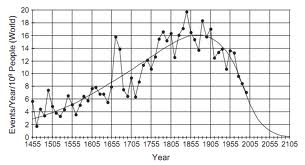
Tyler Cowen: The Great Stagnation
Innovations have been declining!
Here is the list of the world’s top 20 innovating organizations, from the magazine Fast Company, for the year 2010. (See below).
Company Rank* Revenue Profit ($ billion) *rank in Global Fortune 1000, 2010
1. Facebook –
2. Amazon #340 $24.5 $0.901
3. Apple #197 $36.5 $5.7
4. Google #355 $23.7 $ 6.5
5. Huawei #397 $21.8 $2.7
6. First Solar –
7. PG&E –
8. Novartis #160 $45.1 $8.4
9. Walmart #1 $408 $14.3
10. HP #26 $115 $ 7.7
11. Hulu –
12. Netflix –
13. Nike #453 $19.2 $ 1.5
14. Intel #209 $35 $ 4.4
15. Spotify –
16. BYD –
17. Cisco #200 $36.1 $ 6.1
18. IBM #48 $96 $13.4
19. GE #13 $157 $11.0
20. Disney #199 $36.1 $ 3.3
Several interesting conclusions emerge.
* First, very few of the great innovators are big, in global size (ranked by revenues, from the Global Fortune 1000, 2010). Walmart is an exception (#1). So is GE (#13) and HP (#26).
* Second, the hottest of the new innovators are pure Internet companies (Facebook, Hulu, Netflix, Spotify) that create massive amounts of wealth but very few jobs, because when your product is bits and bytes, you do not need assembly-line workers.
* Third, the list of Top 20 innovators from 2005 (Bloomberg/Business Week) is very different. A great many innovators have fallen off the list,
In his best-selling new eBook, The Great Stagnation, Tyler Cowen notes that the automobile industry generated millions of good-paying jobs, but Facebook employs 2,000, Twitter 300 and eBay about 17,000. Only 14,000 people make and sell iPods, but iPods eliminate other jobs (CD manufacturing, etc.) and anyway most of those iPod-based jobs are outside the U.S. Cowen notes that this current era’s technological breakthroughs generate great gains for society but very little added economic activity.
Can we imagine a futuristic economy, in which a majority of the population does not work at all, and in which the privilege of working goes to only an elite handful with high-level skills? A society in which innovation benefits humanity, takes brains, but requires no hands to generate those benefits?
Recall that Henry Ford complained he got an (un-needed) brain every time he hired a pair of hands. Perhaps in future, his innovative industrial descendants will complain that they get (un-needed) hands along with the brain. Perhaps that future is already here.
Global Crisis/Innovation Blog
Wake Up, America! To Innovate, You Have to Make What You Invent!
By Shlomo Maital
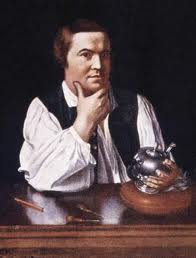
Paul Revere: when America still made stuff!
Veteran New York Times reporter Louis Uchitelle is helping to wake up America. * His point: When you no longer manufacture, dumping everything off to China, you also cease innovating.
To make this point, he studies the flatware industry. Since America’s colonial times and Paul Revere (silversmith), America has made knives, forks and spoons. The last such plant closed recently, in Sherrill, NY. Some 80 workers lost their jobs. Nobody seems to notice.
But, Uchitelle notes, the local value-added component of the remaining manufacturing plants is also declining, as more and more components are imported, mainly from China.
“The imported portion has risen to more than 25 percent from 17 percent in 1997, according to Susan Houseman, a senior economist at the W.E. Upjohn Institute in Kalamazoo, Mich. The Boeing Company, to consider one striking example, once bought all of its components from American suppliers, or made them in its factories here. Now the wings of several of its airliners are manufactured by Japanese subcontractors and shipped across the Pacific in giant cargo planes.”
Economist Houseman says an accurate measure of America’s manufacturing would give it no more than 10.5 per cent of GDP, down from over 30 per cent in the 1950’s.
“How did the nation get into this situation?” Uchitelle asks. “America gambled, in effect, that by importing more from foreign suppliers and from American companies that had set up shop abroad, consumer prices for manufactured products would fall, without any sacrifice in product quality. Low-wage workers abroad would make that happen. American manufacturers, on the other hand, would be the world’s best innovators, developing sophisticated new products here at home and producing them, at least initially, in their domestic factories. The first part of the arrangement worked very well. Consumer prices did fall as imports flooded in. The second part of the arrangement, however, has been more problematic. As it turns out, the United States is not the only path-breaker. The Toyota Prius, the first hybrid, shines as an example of Japanese ingenuity, and more than a decade after that car was developed it is still being exported from Japanese factories, marrying innovation to production and jobs”.
“The big debate today is whether we can continue to be competitive in R&D when we are not making the stuff that we innovate,” Houseman says. “I think not; the two can’t be separated.”
The point is simple. You have to make the stuff you innovate. If you don’t, you lose the value added from innovation, and you lose the vital information that production brings.
Wake up, America! Get your manufacturing back. If you don’t, you will lose your innovation as well.
* Louis Uchitelle, “When Factories Vanish, So Can Innovators”, Global NYT February 12, 2011
Innovation Blog
The REAL IQ: How Creativity and Intelligence Combine
By Shlomo Maital
“Teach boys and girls nothing but facts! Facts alone are what is wanted in life.”
– Thomas Gradgrind & Mr. McChoakumchild, “Hard Times”, Charles Dickens
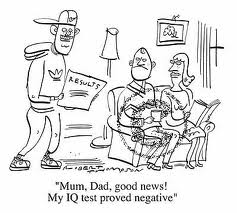
Mom, Dad, great news, my IQ test came back negative!
Psychologist Robert Sternberg, a pioneer in cognitive psychology and now an educational innovator, has used his remarkable life story to blaze new trails in the concept of IQ. After he suffered from text anxiety and failed an intelligence test. Sternberg realized that this score did not predict his intelligence. Just one year later, in the seventh grade, Sternberg developed his first intelligence test: the Sternberg Test of Mental Ability, or STOMA. Because he was a perpetual ‘outsider’, Sternberg never feared challenging the prevailing paradigms in psychology, such as conventional IQ.
Writing in School Psychology International,* Sternberg outlines his own concept of intelligence, called WICS, an acronym for “Wisdom”, “Intelligence”, “Creativity” and “Synthesis”. “The basic idea is that citizens of the world need creativity to form a vision of where they want to go and cope with changes in the environment, analytical intelligence to ascertain whether their creative ideas are good ones, practical intelligence to implement their ideas and to persuade others, and wisdom to ensure the ideas will help achieve ethically-based common good. Then, ‘synthesis’ is needed to combine the W, I and C.
The WICS theory is remarkably similar to what innovators need, in my view, to achieve marketplace success: Creativity, for vision, Intelligence for analysis and implementation, Wisdom, to create value for everyone not just the inventor, and then Synthesis, to combine the three seamlessly. I would prefer to call the ‘innovation’ version of the model, CIWS.
Sternberg has created a Rainbow Project to measure WICS and complement the standard terrifying SAT tests for college entrance. At Tufts U., where he served as Arts & Sciences Dean, he developed Kaleidoscope, which asked applicants to write stories on such creative topics as “The End of MTV”. Kaleidoscope scores did not correlate at all with SAT’s.
Sternberg’s WICS teaching method encourages students to: a) create, b) invent, c) discover, d) imagine if… e) suppose that, and f) predict. Teaching for creativity is very hard for teachers used to teaching ‘facts’.
These six stages match closely stages the inventors follow, in particular, d) e) and f), imagine, suppose, predict. They also match what parents and teachers often call ‘dreaming’, for children and students whose vision wanders far away from blackboard ‘facts’.
* R.J. Sternberg. “WICS: A new model for school psychology”. School Psych. International, Dec. 2010.
Innovation Blog
Where Does Innovation Come From? R&D? Or “Dark Matter”?
By Shlomo Maital
Eric von Hippel and user-created innovations
Innovation, much of it, comes not from institutionalized R&D funded by companies, but rather from tinkerers and users, who have a real need and solve it inventively with their own two hands.
Eric von Hippel is an MIT scholar who pioneered research showing ‘lead users’ can be enormously valuable to companies, who want to improve their products. Now, with a British study funded by the British government, he conducted the first large-scale survey of consumer innovation ever done. *
The astonishing result: The amount of money individual consumers spent in making and improving products was more than twice the amount spent on product research and development by all British companies combined, over a three-year period. It makes sense – there are probably 20 million British consumers, and perhaps 1/100 that number of R&D engineers. Von Hippel will replicate his study in Finland and in Portugal.
Harvard Business School professor Carliss Baldwin says, “we’ve had on a set of mental blinders”, because we have missed, or underplayed, this key source of inventive progress.
“We’ve been missing the dark matter of innovation,” von Hippel said, meaning, just as dark (i.e. not visible or detectable) matter exists, because otherwise the universe would not be expanding, even though we can’t really see it, so does consumer –driven innovation exist, though we don’t really see it (until now). Von Hippel says 77 per cent of scientific instrument innovation come from users in the field. One of the implications? Change patent law, to enable people to build on others’ ideas without fear of law suits.
Does von Hippel practice what he preaches? He does indeed. His book Democratizing Innovation is available for free, by download from his personal website, even though the standard print version is published by MIT Press. I wonder how he managed to persuade MIT Press that free downloads actually boost print book sales.
I am certain that this type of small-scale one-off innovation is crucial. Think of all the times you have taken a product, and in small ways changed it to improve it. Now, imagine if you had shared these ideas with the world, using Internet, the way Daniel Reetz did.
Reetz built a commercial book scanner, that normally costs $10,000, out of two old Canon A590 Powershot cameras, using parts rescued from junkpiles. Total cost: $300. He can scan a 400-page book with it in 20 minutes! Reetz uploaded his do-it-yourself product to DIYbookscanner.org, 1,000 people joined his forum on that site, and 50 people actually built the scanner.
Do you have an innovation, small or big? Tell the world about it. Share it. If enough of us do this, a wave of innovation will wash over the globe, enriching all our lives.
* Patricia Cohen, “Turning innovation on its head”, Global New York Times, Feb. 11, 2011, p. 18
Innovation Blog
From Homeless to Harvard: The Story of Liz Murray
By Shlomo Maital

from the movie: From Homeless to Harvard
Innovation, ultimately, is about resilience and the ability to overcome huge obstacles. Perhaps the remarkable story of Liz Murray, as told on BBC’s World Service Outlook program, can help inspire us. Few have overcome obstacles as great. What are the odds that a homeless virtually-orphaned child, whose parents were both addicts from the time she was three, could graduate from Harvard University and become a top motivational speaker?
Liz’s parents were both severe drug addicts, injecting heroine into their veins, often in Liz’s presence, from the time she was three years old. She recounts, in her book, that they were always loving parents, despite the addiction. But they lived in filth and hunger, because the monthly welfare checks were spent on drugs, leaving her and her sister to scrounge meals from neighbors. She recounts, “We would do things like eat ice cubes, or chapstick or toothpaste. We would knock on our neighbours’ doors. But everyone in the neighbourhood was living off government cheques.” Her father was an ABD (all but doctorate) in psychology and read voluminously, using New York City’s famous Public Library (often under pseudonyms, because he failed to return books); Liz, thus, read widely too.
Liz’s mother was diagnosed as HIV positive in 1990, and she died in 1996. With a mother in and out of hospital, and a father who was still heavily addicted to heroin, Liz eventually ended up on the streets, homeless.
Despite being homeless, she went from high school to high school, seeking admission. After many rejections, she was somehow accepted to an “alternative” high school – Humanities Preparatory Academy in Chelsea, Manhattan. She did homework at friends, in school, even while living on the streets. She had an inspiring teacher, who chose her as one of 10 students to go on a field trip to Boston — her first time outside of NYC. They visited Harvard University. Liz recounts she could not take her eyes off the Harvard students, clean, neatly dressed, wearing Harvard sweatshirts.
Back at high school, she began looking for college scholarships. She spotted, in The New York Times, a full $12,000/year scholarship for four years. Some 21,000 students applied. She made it into the last 20. In her final interview, she was asked about her ability to overcome obstacles – and told her story about living on the streets, homeless, while attending high school. She got the scholarship to Harvard.
According to her account on the BBC, “while she was at Harvard, she began public speaking – helping people who, like herself, had an almost impossible mountain to climb to succeed in life.”
“Now, today, she makes her living as a motivational speaker and founder of Manifest Living, a company which offers workshops for people wanting to change their circumstances.”
Liz’s father also contracted AIDS, and she returned to care for him. “Just before he passed away, he wrote me this card,” she recounts. “He wrote in the card, ‘Lizzy, I left my dreams behind a long time ago. But I know now they’re safe with you. Now we’re a family again.'”
The next time you encounter an obstacle, big or small, to achieving your goals, remember Liz Murray. With determination and courage, the human spirit is capable of anything.
Global Crisis/ Innovation Blog
More Stuff, Less Happiness – Something Is Very Wrong!
By Shlomo Maital

Tammy and Logan Strobel: Live on Less!
For years, as an economist, I taught students about something called a “utility function”. The inputs were material things or income. The output was “utility” or happiness. And of course, the more stuff, the more income, the more happiness. It was always, everywhere, a rising function.
Wrong.
U.S. per capita income went from $24,079 in 1980 to $40,454 today. This is a steep rise of 100 per cent (double), despite the global 2007-9 crisis. Did Americans’ happiness double too? Or even rise? I doubt it.
Economists (quoted in USA Today, “Is our standard of living better than ever?” , Feb. 4-6, 2011, p. 1) say, “people grossly underestimate our progress over time because of technology”. Ohio State economist Richard Steckel urges people to shut off their electricity and plumbing, to see just how great things are now, relative to the past.
In other words, we’re just dumb. We’re way better off, but we just don’t realize it.
“People earning $200,000 a year are feeling and behaving like those with half that income,” says the CEO of First Command Financial Services.
The USAToday article describes an Oregon couple, that asked themselves seven years ago, how much does it take to live comfortably these days? Their answer: $20,000 – $25,000. Result: Tammy Strobel gave up a job in an investment firm, cut her income in half and chose to live cheaper and simpler. She and her husband limited themselves to 100 “things” (possessions) each. “Taking a step back from materialism helped me understand the big picture”, she says.
According to a USAToday poll, only 3 per cent of people think it is possible to be comfortable on less than $20,000 a year. Nearly two-thirds think $50,000 a year is the minimum, and 25 per cent think $100,000 is required. Ten per cent think $150,000 a year is the minimum!
There are two strategies in life. One is to constantly boost one’s income to match rising spending. A great many people find this is not the road to happiness, because the added ‘stuff’ the income brings is not the source of wellbeing. A second route is to spend less and less, to adjust spending to income, and to treat non-work time as ‘income’ by giving it a value, often very high. Very few people even consider this option. No sane business or politician would encourage it. But it may be the route to true sustained happiness, for individuals and for our planet.
Innovation Blog
Where Good Ideas Come From: “Bricolage”, Spare Parts
By Shlomo Maital

 coral polyps adjacent to
bone cement
Author Steven Johnson’s new book about the origin of good ideas has many practical insights innovators can use. His main point:
“Big new ideas more often result from recycling and combining old ideas than from eureka moments. Ideas are, almost inevitably, networks of other ideas. We take the ideas we’ve inherited or stumbled across, and we jigger them together into some new shape. We like to think of our ideas as a $40,000 incubator, shipped direct from the factory, but in reality they’ve been cobbled together with spare parts that happened to be sitting in the garage. People used extant stuff or ideas to produce a new bricolage [the construction or creation of a work from a diverse range of things that happen to be available] and did so because of their immersion in open networks”.
The model for ‘good idea invention’ is one of tinkering, using existing spare parts. This is how life began, Johnson says. Imagine basic molecules — ammonia, methane, water, carbon dioxide, a smattering of amino acids and other simple organic compounds – in a warm sea. By spontaneously combining, aided perhaps by lightning, you get “most of the building blocks of life: the proteins that form the boundaries of cells; sugar molecules crucial to the nucleic acids of our DNA.” This ‘adjacent possible’ is a first-order innovation, leading to second- and third-order, in the same way.
Here are two of Johnson’s examples: Double-entry accounting: “It was first codified by the Franciscan friar Luca Pacioli in 1494, but it had been used for at least two centuries by Italian bankers and merchants.” Printing: “The printing press is a classic combinatorial innovation. Each of its key elements—the movable type, the ink, the paper and the press itself—had been developed separately well before Johannes Gutenberg printed his first Bible in the 15th century.”
Johnson makes heavy use of the notion of the ‘adjacent possible’ developed by theoretical biologist Steven Kauffman: “The strange and beautiful truth about the adjacent possible is that its boundaries grow as you explore them. Each new combination opens up the possibility of other new combinations. Think of it as a house that magically expands with each door you open. You begin in a room with four doors, each leading to a new room that you haven’t visited yet. Once you open one of those doors and stroll into that room, three new doors appear, each leading to a brand-new room that you couldn’t have reached from your original starting point. Keep opening new doors and eventually you’ll have built a palace.”
Johnson stresses how “liquid networks” among people, with ideas flowing smoothly, rapidly and without barriers, create good ideas. He attacks the patent system: “The premise that innovation prospers when ideas can serendipitously connect and recombine with other ideas may seem logical enough, but the strange fact is that a great deal of the past two centuries of legal and folk wisdom about innovation has pursued the exact opposite argument, building walls between ideas.” Patents are such walls. He cites Nike’s experiment, which has made available, in a ‘liquid network’, 400 patents,
“Earlier this year, Nike announced a new Web-based marketplace it calls the GreenXchange, where it has publicly released more than 400 of its patents that involve environmentally friendly materials or technologies. The marketplace is a kind of hybrid of commercial self-interest and civic good. This makes it possible for outside firms to improve on those innovations, creating new value that Nike might ultimately be able to put to use itself in its own products.”
Johnson’s advice to innovators can be summarized as follows: Talk about your ideas with others. Listen to what they say carefully. Include creative people in your network. Avoid secrecy. Seek to combine existing things in new ways. Think of the ‘possible’ but be wildly imaginative. And, as I’ve noted often in this blogspace, observe Nature. Place “human bones” adjacent to “coral polyps”. Johnson notes how “Brent Constantz, working on a Ph.D. that explored the techniques that coral polyps use to build amazingly durable reefs, realized that those same techniques could be harnessed to heal human bones. Several IPOs later, the cements that Mr. Constantz created are employed in most orthopedic operating rooms throughout the U.S. and Europe.”
* Steven Johnson, Where Good Ideas Come From, Riverhead: 2010.
Innovation Blog
Thumb, Gesturing Backward: Innovator, Can You Play 4th Trumpet
Like Wynton Marsallis?
By Shlomo Maital
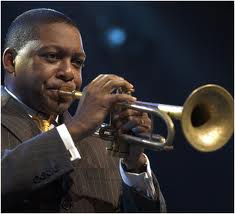
Wynton Marsallis
“Founder’s Disease” – inability of entrepreneur/innovator to transfer the daily operation of his/her startup to a professional manager, often leading to collapse and failure.
No catalog of diseases lists this one. But it is very very common. I’ve seen it often. A gret deal of emotion accompanies the launching of a startup. For the founder(s), it is much like the birth of a baby. And who would put their baby up for adoption, unless absolutely necessary, by placing it in strange hands? Yet this must happen, because the capabilities to run and build a global organization are far different from those needed to launch a startup.
Recently, on the CBS TV show 60 Minutes, Morley Safer interviewed jazz trumpeter and bandleader Wynton Marsallis. Marsallis, who is 50, is regarded as perhaps the world leading jazz artist. His Big Band is regarded as the best of its kind in existence. Marsallis travels the world with his band and is acclaimed everywhere. The son of a musician, he grew up in New Orleans, and was trained in classical music. He has an amazing work ethic, works harder than any of his band members, and travels the world, despite a deep fear of flying.
Where is he, when his band plays? Out front, conducting and taking applause (like Duke Ellington)? No. He plays 4th trumpet, in the back row. Why? When he tries conducting, one of his musician will “look down at the music and gesture backward with his thumb”, Marsallis says, meaning, “hey, man, you can’t conduct a paper bag, get back with the trumpeters where you belong!”. And amazingly Marsallis listens.
Innovator – remember this, when you launch your startup and you need to grow it into maturity. Find someone to do it, unless you are a rare person gifted with managerial skills as well as creativity (rare as hounds’ teeth). Remember the backward-thumb gesture, and Marsallis’ acceptance of it.

 TIMnovate