
Global Crisis/Innovation Blog
Innovator: Your EQ May Be More Crucial Than Your IQ
By Shlomo Maital
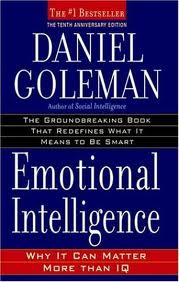
Looking back on my ‘career’, I find the thing I most regret concerns the two or three sharp, hasty words I blurted, that created lifelong enemies. (In Academe, memories are long – like, centuries long). These words were the result of low EQ – emotional intelligence. EQ is in very short supply in many organizations, driven by people who’ve spent their lives studying and researching. I recall a Workshop we once did for Intel engineers in Ireland. We taught them strategy, HR, innovation – lots of strong tools. We included, at the last minute, a short lecture by an expert on Emotional Intelligence. A huge majority of them chose the EQ talk as by far the most valuable. They realized it was something they needed, as super-smart nerdy engineers, and lacked.
Emotional Intelligence (EQ) is defined as “a self-perceived ability to identify, assess, and control the emotions of oneself, of others, and of groups”. The concept was built mainly by Daniel Goleman. It includes ‘reading’ your own emotions, and reading those of other people, and acting and responding in a mature and controlled fashion.
In his 2004 book, * Primal Leadership: Learning to Lead With Emotional Intelligence, Goleman and co-authors link EQ with leadership. Here is their typology, showing how to assess your EQ in four separate key dimensions, and then linking EQ with leadership styles.
The dimensions: 1. Self awareness (emotional awareness; accurate perception; self-belief); 2. Self management (control the emotions; transparency; adaptability; achievement; initiative; optimism); 3. Social awareness (empathy; organizational awareness; ability and desire to serve or meet needs); 4. Relationship management (inspire others; influence othes; develop others; change catalyst; build bonds; teamwork).
They identify six leadership styles. Which suits you? 1. Visionary. 2. Coaching. 3. Affiliative. 4. Democratic. 5. Pace-setting. 6. Commanding.
And finally, they pose five key questions all innovators should answer. 1. Who do I want to be? 2. Who am I? 3. How can I reduce the gaps between (1) and (2)? 4. How can I experiment, in order to understand better who I am and who I want to be? 5. Who will support me, in these efforts?
Self-awareness is a key (and underestimated) element in innovation. You cannot deal effectively with the powerful opposition your new ideas will arouse, unless you are very secure with who you are. So, set aside your high IQ, and reflect on your EQ. It’s really important.
————
* Primal Leadership: Learning to Lead With Emotional Intelligence by Daniel Goleman, Richard E. Boyatzis and Annie McKee HBS Press, 2004.

 TIMnovate
Leave a comment
Comments feed for this article