
The Snuggle for Survival: Darwin is Not What You Thought
By Shlomo Maital
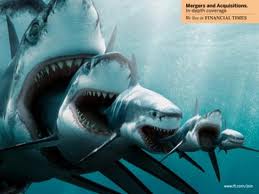
Evolution: It’s NOT always like this….
The July cover story in Scientific American is by Harvard scholar Martin Nowak. It is titled “Why we help”. The theme? If Darwin is right, if both humans and animal and plant species struggle for survival, and if indeed it is “survival of the fittest”, if big fish eat little ones, why then do we help one another? Is there some evolutionary advantage to cooperation? Why don’t we just ‘eat’ one another? Nowak coins a lovely phrase: “the snuggle for survival”, rather than “the struggle for survival”.
The answer, of course, is that mutual assistance and love helps those who offer it to survive and thrive. Societies, tribes, cultures that are cohesive and that help and support one another are more likely to survive than those that do the opposite. Take ant colonies, for instance. Ants (which, incidentally, are all female – the few males fertilize the queen and then die) act for the good of the colony. This social behavior, which is true of termites as well, has evolved through evolution. Ant colonies have been selected for this pro-social skill.
Nowak, in his article, lists five reasons people help one another. First, direct reciprocity, or ‘tit for tat’. You help me, I help you. Even animals evince this type of behavior. Second, neighborly effects. Neighbors help one another, and a culture of sharing spreads. I grew up in a small rural town in Saskatchewan; with fiercely cold winters this type of mutual help is vital for survival. Even yeast does this; ‘cooperative’ yeast cells make enzymes that digest sugar, at a cost to themselves but creating value for the whole colony. Third, kin selection. Because our kin share our genes (first cousins have 12.5 % of our genes), by helping our kin, we preserve our own genes. Fourth, “indirect reciprocity”. This one exists even in monkeys.
“Those who have a reputation for assisting others who fall on hard times might even find themselves on the receiving end of goodwill from strangers when their own luck takes a turn for the worse. Thus, instead of the “I’ll scratch your back if you scratch my mine” mentality, the cooperator in this situation might be thinking, “I’ll scratch your back, and someone will scratch mine.” Among Japanese macaques, for example, low-ranking monkeys that groom high-ranking ones (which have good reputations) may better their own reputations—and hence receive more grooming—simply by being seen with the top brass.”
Finally, the fifth reason is one Darwin himself understood, group selection.
“Darwin himself, who observed in his 1871 book The Descent of Man that “a tribe including many members who … were always ready to aid one another, and to sacrifice themselves for the common good, would be victorious over most other tribes; and this would be natural selection.”
The 2007-2012 global financial and economic crisis was driven by two forces: selfish self-seeking destructive behavior that took on excessive risk, and a system that permitted this behavior. Are we now seeking a ‘natural selection’ process, in which societies that pursue such selfish behavior (America, parts of Europe, particularly Germany) are sinking, while other societies (Scandinavia, Asia) are rising?

 TIMnovate
2 comments
Comments feed for this article
July 2, 2012 at 12:13 pm
Eelker van Hagen
Great analysis, it presents the outcome as a result rather then as a reason for it. The parallel with the struggle within societies and between societies that is currently shaping our world, is spot on as well. I miss however one argument in this analysis. The effort it takes to help someone else reach his goals is most of the times less then the effort it would take that person reach his or her goals by him or her self (especially if you bring gratitude as a reward into the equation). For a group of people or a society so you will, it means that performance, which is a result of a combined effort, will most of the time, be more efficient, then “solo efforts”. There is but one human effort that is excluded from this efficiency analysis, which is the effort that we produce by our creativity. Maybe that is the reason that creativity could be perceived as the one thing that sets us apart. Though even this leaves some doubt as to why we consider creative solutions in the animal world the result of “coincidence” and our own as creative.
July 3, 2012 at 7:37 am
timnovate
Lovely comment, Eelker! You’re quite right. I also came to the conclusion, after long years of teaching team-based creativity, that of all our human activities, creativity is highly individual and personal..though, of course, the implementation of a creative idea must always involve a team, large or small. That is why I now have all my students create their own personal “Personal Creativity Machine”, I’ve collected hundreds of these, and they are all different…. thanks for your comment.