
What Money Can’t Buy: End the Tyranny of Markets Now!
By Shlomo Maital
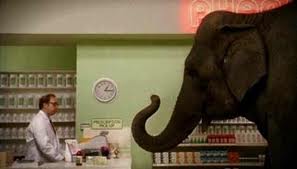
The Mastercard elephant: Priceless???
In a Mastercard commercial, an elephant keeper in a zoo catches cold and goes home. His elephant picks up his Mastercard credit card, and with it buys tissues ($4), cold medicine ($11), soup ($4) and a warm blanket ($24), and brings it to his keeper’s home.
After quoting all those prices, the narrator says, “Making it all better….priceless”.
The problem is, with the overwhelming dominance of capitalism and free markets, thanks to us economists, everything today has a price, including things that should not. Even ‘making it all better’.
Princeton Univ. Professor William Baumol, who taught me microeconomics nearly 50 years ago, once observed that “a price is a relationship between people, expressed as a relationship between things [money and goods].” Harvard University Professor Michael Sandel believes that at least some relationships between people should NOT have a market price, precisely because they are priceless. “Markets crowd out morals,” he writes, in his new book What Money Can’t Buy: The Moral Limits of Markets.
He is absolutely right. In another of their destructive ideas, economists teach that when you create a market for something, you make it efficient. Here is a wide variety of things that now have prices:
* Kids in schools are paid for grades or achievement.
* Criminals in prisons buy luxury cells ($82 a night).
* Sheriffs are paid by the number of prisoners they incarcerate (Lousiana).
* Lobbyists pay people to stand in line for them, to get seats in Congressional hearings. (They charge $36-$60/hr., often reaching $1,000 a seat, and pay $$10-$20/hr. to those standing in the queue).
* Doctors offer ‘concierge service, for up to $25,000 a year, giving people priority in service, and no waiting.
* Airlines offer no-queue service, even in security lines.
* In theme parks, a premium ticket lets you jump long queues.
What’s wrong with all this? Simple. Today, in capitalist America, you can buy anything and everything. Despite Mastercard, nothing is priceless. Once queues were the great equalizer…rich and poor waited for Grateful Dead tickets. No longer. If you have money, you jump almost every queue. Today, whether you are at Universal Studios theme park or waiting for a rock concert ticket on-line, if you have money, you get what you want, if you don’t, you probably don’t. Because those who pay to jump queues push those who don’t far back to the end of the line.
It’s just another case of rampant raging capitalism, out of control, guided by economists who have put their ethical judgment into the drawer…permanently.
If you think it’s just and sensible to have lobbyists’ deep pockets capture all the seats in a Congressional hearing, if you think Congress should allow this obscene practice, well, ignore this blog. [A Democrat Congresswoman tried to ban it – the Republicans foiled her attempt.] If you think there things that, like Mastercard says, should forever remain priceless, let me know. If you think that not every relationship between people should be capable of expression in terms of things, let me know.
As Sandel says, “we live at a time when almost anything can be bought and sold. The logic of buying and selling governs the whole of life. It is time to ask whether we want to live this way.”
I don’t. Do you?

 TIMnovate
1 comment
Comments feed for this article
July 4, 2012 at 3:04 pm
Eelker van Hagen
Goodmorning Mr. Maital,
I love the invitation for a discussion on this specific topic. If you don’t mind I would like to to try to broaden the horizon of it. I would like to do that because I think at the root of this observation lies the million dollar question that shaped our last century and the world we live in today:
Who do we feel should be responsible in shaping our every day life and the options we have in shaping it? As the answer to this question has that profound an impact on our lifes, the answers given may differ enormously but it is possible to place them all on a scale: At the one end we have: “Only the individual has the knowledge and capacity to shape his or her own life and no one else or organization is to be trusted to safeguard the options to choose from”, which of course represented currently in extrema in the United States by the “Tea Party” and the swing to the right American politics have gone through, which had the fast majority of the Republican Party pass their party icon Reagan on the right side. At the other end of the spectrum, lies the idea that however people themselves are the only ones that have enough “information” to be able to choose, the options given to them decrease rather quickly the moment we choose to “deregulate” or choose to have the market fulfill our every day needs and only a few will have all options available to them. Regulation or production however is not to be trusted to any organization unless it is completely bound by accountability to the society they serve, which in itself might be a good but alas a little too philosophical slogan for the Democratic Party.
If we take a little distance and take a look at our recent history, all armed and unarmed conflicts have a root in the difference of opinion on this specific topic. Do we esteem the individual capable enough to make the right choice? No doubt, this was the underlying gap in the cold war. The optimistic view of the west on the individual vs the pessimistic one; people will not make the right choice for the community at large when given free choice that dictated policies in the Eastern Block. With a little effort, the division that has shaped the start of the century when some people on this planet renewed the focus on the division between the faithful and the “infidels” stands on the belief that people will not make the most ethical choice when given the freedom to choose.
This in itself lays bear something very important. The answer to the original question has 2 legs: The one being whether to trust or not to trust the individual to make the right choice, the other being whether “governments” by their nature enhance or hinder the freedom to choose. These 2 legs most of the time turn the debate into a perpetuum mobile; most discussions have the one opponent answer or use arguments for the first leg, whilst the other opponent answers or uses arguments on the second and never the two shall meet. Or people embed their choices that deeply into their “religions” that they are not able to answer these questions freely. And for this specific topic “religions” in my opinion, include Communism, Liberalism and the like.
And then you, Mr. Maital, you asked the perfect question, because we shouldn’t look for an -ism or the one moral compass to guide us in all choices. We should ask ourselves with every choice we encounter, what to do with it. Which makes the discussion much more practical and fruitful. Because in basic we choose “the production method” on 2 criteria: Access and Quality. What product or service do we think needs universal or public access and why, in which the price level is a very significant tool to regulate this access. For instance: I think we all feel that everybody should have access to the air to breathe, something that will leave no room for discussion, whatever your mindset. Human rights are also basically services that we all agreed upon should have universal access. Now in answering our question: Who do we trust best to produce the services or is the best equipped to produce, for that matter: the choices are quite simple: corporate, government or corporate but embedded in supervision by government, either by regulation or direct influence.
Now whether you thought my introduction too philosophical or just spot on, the goal behind this exercise was to find instruments that make it easier to assess the questions and examples Mr. Maital gave us. Let’s take the tickets to a venue example. Something is to be said that the freedom of choice dangerously hinders both access and quality at the back of the queue, liberal minds will say that access for anyone is granted given enough “investment”, whether it be waiting in queue or buying your way out of the queue. I think there is something to be said for the idea that the investment is a defining factor in the quality of the product. There is a strong correlation between the “lost time” of waiting in queue and the enjoyment of the concert. Apple perfectly understood this correlation, the queues in front of the Apple store, the moment the first Iphone came out, were a strong indication to the rest of the world of the perceived quality of the device. Something they quite simply created by creating the most miminal access thinkable. I’m also a strong believer of the fact that the Private Business Boxes do not enhance the quality of the service rendered but replaces them with a different service; “the feeling of privilege”, which in itself doesn’t have to be wrong. I thoroughly enjoyed and valued the classes that I followed with you Mr. Maital during my MBA course, in which case “the feeling of being privileged to be able to follow them” was a defining factor, a strong motivation to put in the effort and would undermine the value of the service if not present.
I could leave it simple, and make a bold statement. If we have a product or service that we think should be produced with a fixed minimal quality and we want as universal access as possible, let the government do the work. If we don’t need to gain access for everyone and we’d like everyone to choose the quality-level they need, let the corporate world take care of it. It seems fair but let me take the example of telecommunication, that was long done by governments for exactly these 2 reasons. But then something happened. Innovation became a defining factor in the quality of the product. Innovation is heavily dependent on speed of change and speed of change is something governments don’t have or better even we don’t want them to have. Governments represent us, representation or “finding out” what we all want takes time and effort, that’s why we always wanted our governments to be effective rather than efficient. So we had to render these services to the corporate world. They do know “how to speed things up”. The speed of change of IT, Telecommunication and the internet that shape our present world, is completely dependent on the corporate world. No government body would have been able to innovate at this level. This is a perfect example of a success story. On the other hand we followed the same principle when we wanted our financial services to be more innovative. I’m still able to imagine a world where some aspects of the financial markets; rating agencies and liquidity would not have been left to the corporate world. In this imaginative world, we would not have faced the debt crisis that is still rearing its ugly head in all the crises it triggered to exist.
I think that the choices we made during the last 2 decades of the 20th century in the public vs private debate, have had the most influence on the world we live in today. However at the moment our focus was not at the heart of this discussion. We outsourced these decisions to our governments to have our hands and thoughts free to live in these roaring times. Now that we are confronted with the results, we have to re assess the choices we have made or had others make for us. No answer we will find will be static. We’ll have to renew our answers against changing times and new insights. But the essentials are: there is no growth without innovation; there is no innovation unless we dare to experiment; but we’ll never learn unless we evaluate our experiments unbiased: we’ll have to leave our -isms at home for that. We also have to face the fact that the different waves of populism share one point of argument: “The decisions that shaped our every day lives were made over our heads rather then in them.”, which is a valid point.