
Curiosity: Is It Worth It?
By Shlomo Maital
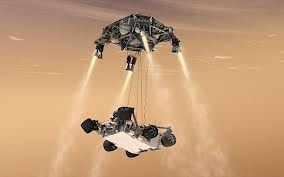
The Mars explorer Curiosity landed successfully in the Gale Crater on Mars on August 6. The project cost several billion dollars. As expected, naysayers raised objections. How can you justify spending so much money, when America has so many unemployed, poor, sick and uneducated people? Why can’t we tackle the key problems we face on earth, rather than those on Mars?
There are important reasons why this project of NASA is different from previous ones, and why it is so worthy of praise. First, it is a shoestring project. NASA’s budget has been fiercely cut, owing to American budget deficits. As former Curitiba Brazil mayor Jaime Lerner says, when you slash budgets you spur creativity, because creativity has to replace checks. Second, it invents and extends several wonderful new technologies, and you never know how and where they will find powerful use on Earth. (For instance – Curiosity can zap a rock with a laser, from a distance of 7-8 m., vaporize a small part, and then analyze the result to determine the rock’s composition. This is neat, isn’t it?). Third, and most important, Curiosity will help re-ignite the interest of young Americans in science and engineering, just as the Moon project of Kennedy did in the 1960’s.
Millions have watched NASA’s viral YouTube video “7 Minutes of Terror”. Finally, NASA has succeeded in capturing the imagination of ordinary people, and instead of dull clips extolling technology, it explains how a dedicated team of NASA engineers feels, investing years of their lives in the project and then waiting in huge suspense until radio waves travel from Mars to Earth and say, “we did it! We’re on the surface of Mars!”.
Whoever chose the name Curiosity was brilliant. Yes, curiosity, the desire to know, can justify the Curiosity budget. In the end, all human progress is driven by fierce curiosity, soaring imagination, and the ability to ‘land’ that imagination firmly on solid ground. Head in the clouds, feet on the ground, is my recipe for impactful innovation — but Curiosity’s ‘head’ is on Mars, not in the clouds, and that’s just amazing. Go Curiosity! You have 96 months, 8 full years, to tell us about the surface of Mars – and to show us what a planet is like that only has water in frozen ice at its poles. If we don’t resolve global warming, Earth will begin to look like Mars – and parts of the U.S. Midwest already do.

 TIMnovate
Leave a comment
Comments feed for this article