
You are currently browsing the monthly archive for September 2012.
America’s Doomsday Scenario: Democrat President, Republican Congress
By Shlomo Maital

Want a really truly scary Doomsday scenario for troubled America, as it heads toward elections on Tuesday Nov. 6, and for the world?
Here it is. Obama is re-elected by a narrow margin, allowing Republicans to challenge the legitimacy of his leadership. There may even be Supreme Court appeals or prolonged recounts in Ohio, Virginia, Pennsylvania or Florida.
Meanwhile, the Republicans retain control of the House, and win four Senate seats, to take control of the Senate.
Doomsday. Deadlock. Obama is President, but he cannot get any decent legislation through Congress. The Republicans can repeal Obamacare, and pass tons of laws, but Obama will veto many of them, and the Republicans cannot muster a 2/3 majority for an over-ride.
If this sounds imaginary, well, remember the well-loved humanitarian Karl Rove? Rove is back, with his American Crossroads SuperPAC and team of billionaires writing checks for candidates he likes. Here is what Rove reportedly told a meeting of his SuperPAC, according to Bloomberg BusinessWeek:
Rove said his total budget was $300 million, with $200 million intended for the presidential race, $70 million for the Senate, and $32 million for the House. “We should sink Todd Akin,” he said about the Republican Senate candidate from Missouri, who is under pressure to leave the race following his comments about “legitimate rape.” Rove joked, “If he’s found mysteriously murdered, don’t look for my whereabouts!” (Rove later apologized for the remark.) The Republicans need four seats to gain a Senate majority, Rove continued. He felt “really good” about Nebraska and was optimistic about North Dakota, even though Democrats have a strong candidate in former state Attorney General Heidi Heitkamp. In Wisconsin, former Governor Tommy Thompson “has an excellent shot to win—he has a quirky, cross-party appeal.” Virginia is going to be tight. Of those, Rove declared, “we can win three.” New Mexico, Hawaii, and Connecticut are “longer shots,” Rove went on, but “I think we’ve got a shot to take at least one of those three.” In Connecticut, Rove noted that Linda McMahon, the former head of World Wrestling Entertainment, whom he had once written off, was running a “really smart campaign.” And the state, he noted happily, had moved to the right. “Those affluent, socially liberal, economically conservative people in Fairfield County and the New York suburbs have finally figured out that their pocketbooks matter more than abortion.
The only thing worse than bad leadership (e.g. Romney as President) is no leadership and deadlock. And that, alas, may be exactly what America gets on Nov. 6.
-
Putting Innovation to Sleep: Once Upon a Mattress
By Shlomo Maital

Here are two case studies about innovation related to mattresses, as related by my friend and colleague Arie R.
* A small Israeli mattress company had a miniscule market share. Then, an advertising company employee looking for ideas for copy spoke with a line worker at the company, and discovered that after receiving complaints from customers about back pain, the company was putting a piece of extra-firm foam into the mattress at the area of the lower back. This became the focus of an ad and marketing campaign, touting the “Healthful Center” (the center of the mattress that supports the lower back and therefore contributes to our health and wellbeing). At one stroke, this campaign shifted the focus in the mattress business from “comfortable sleep” to “healthful sleep” – from comfort, to health and healthy backs and straight spines. The company became a market leader. Competitors first ignored the “healthful center”, then copied it. But in copying it, they verified and validated the very idea, and further strengthened the originating company’s innovation. Innovators: Get your competitors to copy you! If you cannot nail them for patent infringement, you can use them to prove that you are the first, original and authentic source of the innovation.
* A New York City mattress salesperson made a small observation: You do not have to go to a restaurant to buy pizza, it will be delivered to you. Why not, he thought, have mattresses, too, ordered and sold by phone? Mattresses, like pizza, are standard. People usually know what they want: extra firm, extra soft, etc., and they know the size. Why not store the mattresses in Jersey, in inexpensive warehouses, and zip them across the Lincoln Tunnel to Manhattan to fill orders, while taking away the customers’ old mattress? Why not save people the trouble of shopping, shipping, etc.? The result was Dial-A-Mattress, a highly successful business for many years.
Innovation, as Dell Computers’ direct-order mass customized business proves, is not solely about gadgets or technology. It can also be about such mundane things, as, how do I fill an order? Find a better way, and you can redefine an industry.
Open (Crowd-sourced) Innovation May Not Be Your Cup of Tea
By Shlomo Maital

An article in McKinsey Quarterly * warns that open, or crowd-sourced, innovation (in which customers generate the innovation, rather than just the R&D department), may not be ideal for you or your organization.
But how do you when it is, and when it isn’t?
Ask three questions, McKinsey experts counsel.
“Having studied the case of infrastructure software closely, we believe executives can gain some insight into this possibility by asking three questions that underpin the logic of competing by protecting the open space—open competition, as you might call it:
1. Do specialized firms offer proprietary solutions within certain layers of my industry’s value chain? 2. Do integrated firms seek to cut development costs in my industry by drawing on open technologies to substitute for these proprietary solutions? 3. Are the underlying technologies complex—consisting of so many bits and pieces that a significant number could inadvertently infringe on proprietary IP held by specialized firms?
The more affirmative the answers to these questions may be, the more likely it is that the interests of specialized vendors of proprietary solutions will collide with those of firms drawing on open innovation, which could involve any type of open good, from software to the genetic code to crowd-sourced designs for parts or tools.
The simple point here: If some key parts of your product or service are protected by patents, or if your clients’ products are patent-protected, open technologies that are not protected may risk infringement.
Systems where everything is patented, or where nothing is patented, are simple. Systems that mix the two are complex. This is just another realm where the complexity of managing – in this case, managing innovation – is growing rapidly.
* Managing the Business Risks of Open Innovation. McKinsey Quarterly, Jan. 2012.
How to Buy Innovation: The Case of Condé Nast and Reddit
By Shlomo Maital
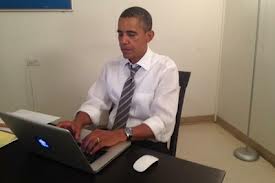
Obama: AMA
Last Thursday, President Barack Obama signed up for an AMA (Ask Me Anything) session on Reddit, a social networking “aggregating” site. (His favorite basketball player? Surprise – Michael Jordan.)
What is Reddit and what can we learn from it? Founders Steve Huffman and Alexis Ohanian, Univ. of Virginia graduates, founded it in 2005, then sold it to the magazine publisher Condé Nast in 2006 for $20 m. Reddit is very messy, “like peering into a bowl of spaghetti”, writes David Carr in his Global New York Times media column (Sept. 3). But it has defeated sites like Digg, has 40 m. subscribers, serves up over three billion page views monthly, and has only 20 employees.
Big organizations have immense trouble with innovation, almost by definition. Many of them try to buy innovation, by buying startups, like Reddit. As they swallow the startup into their bureaucratic jaws, their gastric juices dissolve all the creativity, the founders leave, the creative people leave, and nothing is left.
But not in this case. Condé Nast wisely decided, under its Chair Steve Newhouse, to spin off Reddit in 2011 as an operationally-independent subsidiary. This happened after it became clear Reddit was failing as an integral part of the Condé Nast bureaucracy, even though the two founders stayed on with the company for three years after they were acquired. As one expert noted, “Condé gave it enough rope and left the people there to their own devices. I don’t know whether it was a brilliant strategy or accidental neglect, but the founders did not leave, the community stayed intact and the site grew beyond anbody’s expectations.”
Reddit is, well, weird. Carr says it has the “retro graphic appeal of Craigslist”. And it has miniscule revenues. Condé Nast says that is OK, “there will be ample opportunities to monetize what they have built”. Perhaps, perhaps not. But the lesson is clear. If you are big fish, and you swallow a very small one, best to leave it largely alone. Recall that the IBM PC was born only because IBM made an independent unit out of it, way down in Boca Raton, Florida, and then ignored it, so it could not be infected by the stultifying IBM bureaucracy. You can buy innovation, without killing it, provided you treat it with benign neglect.

 TIMnovate