
mAGIc: Artificial General Intelligence
By Shlomo Maital
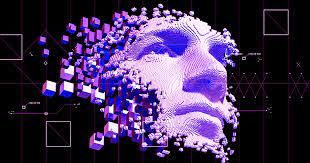
In March, after Microsoft researchers experimented with OpenAI’s new ChatGPT4, they published a paper on the results. They had, they wrote, “identified sparks of artificial general intelligence” (AGI). ***
AGI is the ability of artificial intelligence to do anything humans can, but better. So, a huge heated debate resulted. Here, below, are the words, of Professor Ronen Eldan, Weizmann Institute, who was a lead researcher and co-author.[1]
“…Some of us were skeptical…but it just left all of us slack-jawed. It was like discovering a new continent in the era when they thought the earth was flat. After four months of experimenting, we understood that we had to share this with the world.”
“…The model demonstrated a high level of proficiency compared to humans across a broad range of tasks, and …it happened far more rapidly than we expected….The main takeaway is that we can now create an intelligent being out of nothing. All you need to do is to take a lot of information from the internet, shove it into an algorithm –admittedly, one that took a long time to develop—and then a sort of mathematical miracle happens. We get this being, which embodies the intelligence extracted from the information on the web.”
“It seems like magic…. Computers that can communicate, draw conclusions, generate knowledge, in some ways better than most humans. And we still don’t really understand how it works.”
Where is AGI headed?
“…if the models continue to advance at the pace of the past few years, then I would go out on a limb and say it will be a revolution on the scale of the Industrial Revolution.”
Let’s be clear. Professor Eldan is a mathematician, not given to hyperbole. He was given access to explore ChatGPT4 as a scientist. His views above are the result.
[1] Source: Israeli daily Haaretz, Monday July 10, 2023, p.7 (English edition).
*** Sparks of Artificial General Intelligence,
Sébastien Bubeck, Varun Chandrasekaran, Ronen Eldan, Johannes Gehrke, Eric Horvitz, Ece Kamar, Peter Lee, Yin Tat Lee, Yuanzhi Li, Scott Lundberg, Harsha Nori, Hamid Palangi, Marco Tulio Ribeiro, Yi Zhang, Computer Science: Computation & Language, March 2023
 TIMnovate
Leave a comment
Comments feed for this article