
Thoughts on Good and Evil
By Shlomo Maital

At the onset of the Jewish New Year 5784, in the 10 days leading up to Yom Kippur, our thoughts turn to an inward look at our deeds and our selves – a kind of soul accounting. I was helped in this process by a Hidden Brain podcast, an interview with psychologist Elliot Aronson.
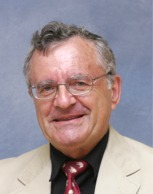
Elliot Aronson is 91. He was a student both of Leon Festinger (Stanford) and Abraham Maslow. Festinger pioneered the theory of cognitive dissonance, and Aronson published breakthrough studies on it.
Cognitive dissonance occurs when we believe in two ideas or propositions, which cannot both be true. The dissonance between them creates discomfort – and we try hard to resolve it. For instance, 1. “I am a good person” and 2. “I have done hurtful things to others, including those I love”. Good people don’t do hurtful things. Right? So ? We find a rationale for those hurtful things. We rationalize bad behavior.
Aronson’s brilliant experiments had students do a boring task, then asked them if it was interesting. If they were paid $20 for it, they responded, no it was boring, because — they clearly did if for the money. If they were paid $1 for it, they responded, yes, it was interesting! Because if they didn’t do it for the money – well, it must have been for the interest. And these subjects told other students the experiment was interesting! There is no end to the lengths we go in rationalizing behavior, to dispel dissonance.
For the days up to Yom Kippur, there is another way. Yes, I AM a good person. And yes, good people do hurtful things. It is part of life, part of having free will and choice part of learning and growing. And as my Rabbi explains, God did create everything, including evil, so good AND evil must play a role in our lives, together, and it is often not easy to distinguish between them. Long term, evil sometimes works out well, though not always.
Aronson used his brilliance to impact the world. He invented the jigsaw classroom, to deal with bullying. (I recall being bullied by big guys. I think most kids experience this). The idea was simple. You get kids to work in diverse teams. The proposition: This kid is brown, black, yellow, Jewish, scrawny, small, dumb…. Is dispelled, the dissonance reduced, when he or she is part of team, each given a piece of a problem to solve (hence, jigsaw), and the team works together, leading to: we are all part of a team, pretty good, pretty smart, pretty similar. Bullying is sharply reduced.
By the way — creative people are known to tolerate very high levels of cognitive dissonance. They can hold two contradictory ideas in their heads for a long time, without trying to resolve it. Ultimately, it leads them to great pathbreaking ideas – like those of Festinger and Aronson.
May this year bring all of us to heightened self-awareness, that we ARE good people, and that there is massive good in the world, even though we often cannot see it clearly.
 TIMnovate
Leave a comment
Comments feed for this article