
mRNA Nobel Winner: Against the Odds
By Shlomo Maital
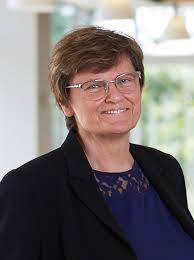
Katalin Kariko
Stories of how scientists win Nobel Prizes are often dramatic, laden with drama, against-the-odds persistence and determination. My friend Dan Shechtman, Technion, won the prize for chemistry in 2011 after leading scientists including Linus Pauling called his work a fraud.
This year, former Hungarian scientist Katalin Kariko won the prize for Medicine & Physiology, sharing it with Drew Weissman, U. of Pennsylvania. Her story is equally dramatic.
According to New York Times reporters Benjamin Mueller and Gina Kolata, Kariko, Hungarian-born, fought huge odds to crack the mRNA puzzle and lead to the mRNA COVID vaccine that saved millions of lives.
“Dr. Karikó, the 13th woman to win the prize, languished for many long years without funding or a permanent academic position, keeping her research afloat only by latching on to more senior scientists at the University of Pennsylvania who let her work with them. Unable to get a grant, she said she was told she was “not faculty quality” and was forced to retire from the university a decade ago. She remains only an adjunct professor there.”
I wonder if Penn will give her a real appointment, now she has won the Nobel.
How do mRNA vaccines work? Karako, in Weissman’s lab, was certain, over 25 years ago, that this would work. mRNA vaccines work by introducing a piece of mRNA (RNA is ribonucleic acid, kind of a building block for DNA) that corresponds to a viral protein, usually a small piece of a protein found on the virus’s outer membrane.
In the case of the mRNA COVID vaccine, the piece of mRNA injected in the vaccine is based on the protein found in the virus’ spike, that punctures the cell and then reproduces, killing the cell and spreading thousands of new viruses. The vaccine alerts the body’s immune system to the vital spike protein, in the COVID virus, and when the virus invades the body, the immune system is ready to fight it with antibodies.
According to the NYT, “The mRNA work was especially frustrating, Karako said, because it was met with indifference and a lack of funds. She said she was motivated more than by not being called a quitter; as the work progressed, she saw small signs that her project could lead to better vaccines.
“You don’t persevere and repeat and repeat just to say, ‘I am not giving up,’” she said.
Karako met Weissman over a coffee machine in 1998. Weissman believed in her ideas and gave her a home. At the time Prof. Weissman was desperately searching for an innovative approach to develop an HIV vaccine.
The NYT reports, “At first, other scientists were largely uninterested in taking up that new approach to vaccination. Their paper, published in 2005, was rejected by the journals Nature and Science, Dr. Weissman said. The study was eventually accepted by a niche publication called Immunity.”
Kudos to Karako and Weissman. And to Karako’s mother, who early on told Karako: “I will listen to the radio that maybe you will get the Nobel Prize.” Dr. Karikó said she would answer: “Mum, you know, I never even get a grant.”
“Dr. Karikó is the 13th woman to be awarded the Nobel Prize in Physiology or Medicine since 1901, and the first since 2015. Women represent a small fraction of the total of 227 people who have been awarded the prize, a reflection of how women are still largely underrepresented in the field of science and scientific awards, including the Nobel Prizes.”
It still rankles me, and others, that Rosalind Franklin, who made the electron microscope photographs that enabled Crick and Watson to decipher the DNA double helix, was ignored by the Nobel committee and even by Crick and Watson.
This is how Dr. Anthony Fauci described their seminal 2005 paper:
Their hallmark 2005 Immunity paper dissects how RNA containing different levels of naturally occurring modified nucleosides differentially activates dendritic cells (DCs). They elegantly showed that adding certain modified nucleosides to mRNA molecules blocked DC stimulation, suggesting that modified mRNA could evade innate immune detection”
Do any of the anti-immigrant MAGA nutcases realize they and others owe their lives to a Hungarian immigrant – that they are trying so hard to keep out, by building walls?
Karikó, K., Buckstein, M., Ni, H., & Weissman, D. (2005). Suppression of RNA recognition by Toll-like receptors: the impact of nucleoside modification and the evolutionary origin of RNA. Immunity, 23(2), 165-175.

 TIMnovate
Leave a comment
Comments feed for this article