
Three Cheers for Unions
By Shlomo Maital
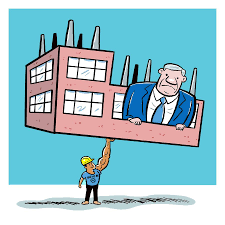
The United Auto Workers have struck a deal with Ford, Chrysler (Stellantis) and now, tentatively, with GM. Yes – they did good! All three agreements involve a roughly 25 percent wage increase over the next four and a half years, plus other significant concessions.
Here is NYT columnist Paul Krugman’s take on this
Background: “Some history you should know: Baby boomers like me grew up in a nation that was far less polarized economically than the one we live in today. We weren’t as much of a middle-class society as we liked to imagine, but in the 1960s we were a country in which many blue-collar workers had incomes they considered middle class, while extremes of wealth were far less than they have since become. For example, chief executives of major corporations were paid “only” 15 times as much as their average workers, compared with more than 200 times as much as their average workers now.
“….a revelatory 1991 paper by Claudia Goldin (who just won a richly deserved Nobel) and Robert Margo showed that a relatively equal America emerged not gradually but suddenly, with an abrupt narrowing of income differentials in the 1940s — what the authors called the Great Compression. The initial compression no doubt had a lot to do with wartime economic controls. But income gaps remained narrow for decades after these controls were lifted; overall income inequality didn’t really take off again until around 1980.”
Unions were a major cause of the improved equality. They kept CEO salaries from their current high, outrageous levels and helped spread profits to workers, not just shareholders.
And why are unions back, after a huge decline (only 7% of private wage-earners are union members today)?
“Research by David Autor, Arindrajit Dube and Annie McGrew shows that a rapid recovery that has brought unemployment near to a 50-year low seems to have empowered lower-wage workers, producing an “unexpected compression” in wage gaps that has eliminated around a quarter of the rise in inequality over the previous four decades. The strong job market has probably encouraged unions to stake out more aggressive bargaining positions, a stance that so far seems to be working.”
It is not just the auto workers that are gaining power and income. “This apparent union victory follows on significant organized-labor wins in other industries in recent months, notably a big settlement with United Parcel Service, where the Teamsters represent more than 300,000 employees. And maybe, just maybe, union victories in 2023 will prove to be a milestone on the way back to a less unequal nation.”

 TIMnovate
Leave a comment
Comments feed for this article