
Breaching the Blood-Brain Barrier:
Hope for Treating Alzheimer’s
By Shlomo Maital
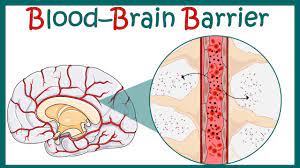
Alzheimer’s causes dementia through build-up of amyloid plaque in the brain. There are drugs that are effective in removing much of the plaque. Problem is, they are largely defeated by a remarkable defense mounted by the brain, to keep harmful things away from it, like toxins and germs, called the blood brain barrier.
Until brilliant researchers and an Israeli hi-tech company Insightec joined forces. Insightec headquarters are in a suburb of Haifa. It was founded by Kobi Vortman and Oded Tamir in 1999, 25 years ago.
Writing in The New York Times, Jan. 10, Gina Kolata explains that “the barrier is at the ends of several major blood vessels that supply the brain. As they enter the head, the vessels branch and divide until, at their tips, they form narrow capillaries with extremely tight walls. This barrier keeps large molecules out and allows small molecules like glucose and oxygen to get in.”
Anti-plaque drugs are swallowed or injected and enter the blood stream; the goal is for them to reach the brain. But they are intercepted by the blood brain barrier – so effective, that only 1% of the drug reaches its destination. This in part, Kolata explains, is why the new Alzheimer’s drug by Biogen, aducanumab (Aduhelm), is so costly — $28,000 a year. You need to administer 100 times more than eventually reaches the brain.
“The challenge was to pry those [capillary] walls open without ripping the capillaries apart.” Kolata explained. We need the blood brain barrier intact.”
How to have your cake (keep the barrier) and eat it too (open it to useful drugs)?
Here is the solution.
Kolata reports: “…Investigators at the Rockefeller Neuroscience Institute at West Virginia University reported their results last week in The New England Journal of Medicine. When the blood-brain barrier was opened, 32 percent more plaque was dissolved, said Dr. Ali Rezai, a neurosurgeon at the institute, who led the study.”
“First, patients are injected with tiny microbubbles of perfluorocarbon gas. The bubbles range in size from 1.1 to 3.3 microns (a micron is about 0.000039 inch.) Then, pulses of low frequency ultrasound are focused on the area of the brain to be treated. The ultrasound pulses set up waves in the fluid in blood vessels; the microbubbles rapidly expand and contract with the waves. This pries open the vessels without damaging them, providing entree into the brain.”
The ultrasound pulses must be aimed very precisely at just the right spot. The Israeli hi-tech company Insightec has technology that does delicate brain surgery with precisely-aimed beams of ultrasound, aimed with the aid of MRI’s. Its device provides the precision ultrasound beam that opens the blood brain barrier briefly without damaging it.
The technology is not only impactful for Alzheimer’s drugs. “One group, led by Dr. Nir Lipsman, a neurosurgeon at the Sunnybrook Research Institute of the University of Toronto and his colleagues, opened the barrier to deliver a chemotherapy drug to the brains of four breast cancer patients whose cancer had spread to the brain. The concentration of the drug, trastuzumab, increased fourfold, they reported.”

 TIMnovate
Leave a comment
Comments feed for this article