
What Divides Us?
By Shlomo Maital
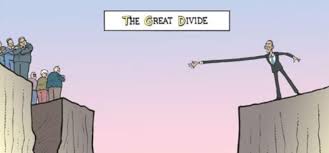
Let’s face it. Societies everywhere, worldwide, seem more divided and divisive than ever. Far left and far right dominate in France’s elections. The political middle seems to be emptying, as people flock to extremes. Democracy seems to crumble. The politics of identity divides us into tribes, rather than citizens with shared values.
What is the cause?
Harvard political scientist Robert Putnam wrote a book, Bowling Alone, 25 years ago, that identified growing loneliness and isolation in society. Recently, he has a new book out, and has been interviewed widely on his findings.* Putnam takes long historical view, for the US. In the early 1900’s, there was enormous inequality, isolation, division. This declined steadily, until the 1950’s and 1960’s, when unity peaked – and began to decline, rapidly. Today we are back to the 1900’s in terms of unity.
- The Upswing: How America Came Together a Century Ago and How We Can Do It Again by Robert D. Putnam and Shaylyn Romney Garrett
Why?
Putnam observes that there are two ways that people come together. One, he calls ‘bonding’ – joining with those like us, in race, religion, ethnicity. A second is ‘bridging’ — joining with those UNLIKE us, in race, religion, ethnicity.
Bonding is a response to alienation and loneliness. Find others like us, in values, and bond with them, against those unlike us. This is divisive, dividing, friction-making. And it can become the antithesis, or enemy, of bridging.
Bridging is in huge decline. Politicians use bonding as their springboard to winning votes. And they build bonding on the precise opposite of bridging – by attacking those from opposing political parties, those who are ‘different’. The ‘other’ becomes an object of hatred, rather than understanding and empathy.
Putnam sees a cycle in this – an inverse U-curve. Will we bottom out on this? Will we hit bottom and return to respecting and honoring one another, to building bridges rather than digging Grand Canyons?
I hope so.

 TIMnovate
Leave a comment
Comments feed for this article