
You are currently browsing the category archive for the ‘Innovation Blog’ category.
Innovation/Global Risk
The World Is Still Drowning in Debt!
By Shlomo Maital
The good news? America is halfway through its deleveraging (debt reduction) process. The bad news? The rest of the world is still piling up debt and hasn’t even begun.
A report in McKinsey Quarterly by three McKinsey scholars * provides a useful summary regarding where the world stands in its deleveraging process. This is crucial, because until households and businesses feel comfortable with the existing level of debt, they are unlikely to resume their spending and investment and economic growth and job creation are unlikely to resume. Here are the results:
- Although the debt ratio of US households remains high, they may be halfway through the deleveraging process.
- In the United States, household deleveraging may have only a few more years to go, while in Spain and the United Kingdom it has just begun.
- … up to 14 percent of UK mortgages could be in difficulty—identical to the percentage of US mortgages in difficulty today.
- Significant public-sector deleveraging typically occurs after GDP growth rebounds. (The World Bank says developed country GDP growth this year will be very weak, only 1.4 per cent).
- The deleveraging process that began in 2008 is proving to be long and painful. The unwinding of debt—or deleveraging—has barely begun. Since 2008, debt ratios have grown rapidly in France, Japan, and Spain and have edged downward only in Australia, South Korea, and the United States. Overall, the ratio of debt to GDP has grown in the world’s ten largest economies.
Fasten your seat belts. More lean years are ahead, as the massive amount of debt continues to grow in most countries.
* Working out of debt . McKinsey Quarterly, JANUARY 2012 . Karen Croxson, Susan Lund, and Charles Roxburgh .
Innovation/Global Risk
A New “Kodak Moment” – Going Bust!
By Shlomo Maital
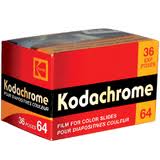
Kodachrome, they give us those nice bright colours
They give us the greens of summers
Makes you think all the world’s a sunny day, oh yeah
I got a Nikon camera, I love to take a photograph
So mama don’t take my Kodachrome away
– Simon and Garfunkel
Remember the “Kodak moments”? Remember when Eastman Kodak sold nine out of every 10 rolls of film in the United States? Remember when Kodak was a generic term for camera, and when its gross margins were 70 per cent? Yesterday, Kodak filed for Chapter 11 bankruptcy. It will continue to operate while trying to pay off its massive debts. Kodak does have strong revenues, from its digital imaging and printer business, but its losses over the years have created a mountain of debt that it can no longer service.
What is the lesson we can learn from Kodak – and from other giants before it, who ‘owned’ their industry (AT&T, Xerox, NCR)? Strategic agility! Kodak actually invested huge amounts in digital photography. According to The Economist, “extensive R&D contributed to Kodak’s undoing, since the firm ended up pioneering the very digital cameras that went on to kill its core business.” Kodak did not miss the digital camera trend. It simply flopped at riding the wave. Why? Silver-iodide photograph is chemistry. Eastman Kodak was tops in chemistry, and even had a huge chemicals business. Digital photography is electronics. Kodak never did build the key core competency in electronics, and perhaps never really could match the capabilities of true electronics firms like Japan’s Canon and Sony.
So, yes, Simon & Garfunkel, they have indeed taken away our Kodachrome. And it was not inevitable. Kodak should have acquired an electronics company, realizing this was the key core competency it lacked. It could have done so when it dominated its industry. It should have done so, had it been strategically agile. But Kodak, like so many elephants, never did learn to dance. It never did ask the late C.K. Prahalad’s core question: What is the core competency we need at this moment? Do we have it? How can we get it, fastest?
Good bye, Kodak. Perhaps other huge companies will learn from your demise. But I doubt it.
Innovation/Global Risk
Nature’s Resilience: Bacteria “Eat” the Gulf Oil Spill
By Shlomo Maital

oil-eating bacteria
According to the BBC World Service program “Science in Action”, the disastrous oil spill in the Gulf of Mexico, caused by a massive ‘leak’ in a British Petroleum oil well “Macondo 252”, has been effectively battled – not so much by cleanup crews as by Nature itself. At times, 53,000 bbl. of oil a day spilled into the lovely waters of the Gulf. But the oil sounded a ‘dinner bell’ for Nature — Hey, lunch is served, come and get it! And the bacteria came.
As their food supply expanded, the bacteria themselves ‘bloomed’, meaning they reproduced very quickly and grew huge colonies around and in the oil. Nature very quickly assembled bacteria for whom hydrocarbons were tasty. The cleanup crews used chemicals to break up the oil, and at times the chemicals themselves were worse pollutants than the crude oil.
According to reporters, there are still clumps of tar on the beaches along the Gulf Coast, which makes its living from both oil wells and from tourism. But for the most part, Nature has been far faster and far more effective in cleaning up the mess than anyone expected. Some 800 m. liters of hydrocarbons spilled into the Gulf. Around one quarter was cleaned up by humans. The rest? Leave it to Nature. According to the Scientific American, as much as half of these 800 m. liters have already been eaten up by bacteria. Many of the bacteria are new forms, not familiar to scientists, that perhaps have evolved in response to the huge and unexpected ‘feast’. And yes, the tar balls ARE a big problem, as they spread across beaches and the world’s oceans.
But again, Nature has proven that it is not only humans who are resilient, but Nature itself. If only we humans could help miraculous Nature protect itself, rather than dump ever-larger messes on it and test the innovative power of natural evolution.
Innovation/Global Risk
Fight Groupthink – Demand Space & Time – or Chats
By Shlomo Maital
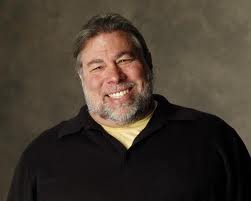
Steve Wozniak
Writing in the Global New York Times, Jan. 13, Susan Cain observes that “Research strongly suggests that people are more creative when they enjoy privacy and freedom from interruption.” Wow, amazing. But she does have a serious point:
“…the most spectacularly creative people in many fields are often introverted, according to studies by the psychologists Mihaly Csikszentmihalyi and Gregory Feist. They’re extroverted enough to exchange and advance ideas, but see themselves as independent and individualistic. They’re not joiners by nature.”
For innovators, this can be a huge problem, especially within large organizations. Much R&D is done in teams, with hierarchical organizations. Truly creative people, introverted ones, often don’t function well in such environments.
But as with all issues related to creativity, there are no hard and fast rules. Cain herself, in a recent book, gives Jobs partner Steve Wozniak some well-deserved credit:
“Before Mr. Wozniak started Apple, he designed calculators at Hewlett-Packard, a job he loved partly because HP made it easy to chat with his colleagues. Every day at 10 a.m. and 2 p.m., management wheeled in doughnuts and coffee, and people could socialize and swap ideas. What distinguished these interactions was how low-key they were. For Mr. Wozniak, collaboration meant the ability to share a doughnut and a brainwave with his laid-back, poorly dressed colleagues — who minded not a whit when he disappeared into his cubicle to get the real work done.”
Steve Jobs was a loner. Steve Wozniak was a collaborator and socializer. Both were exceedingly creative.
The message here is: Innovator, who are you really? Need solitude? Create it. Need socializing? Find it. Find your own unique creative style, and create your environment to optimize it.
Innovation/Global Risk
Friday the 13th: S&P, Euro & a True Horror Movie
By Shlomo Maital

On Friday Jan. 13, the latest sequel in Europe’s ongoing horror movie played out. The bond-rating agency Standard & Poor did the following:
… S&P lowered the top ratings of France and Austria one level to AA+, with “negative” outlooks, while affirming the ratings of countries including Germany, Belgium and the Netherlands. The company also downgraded Italy, Portugal, Spain and Cyprus by two steps and cut Malta, Slovakia and Slovenia by one level. The EFSF, the euro-region’s bailout fund needed to tap markets to finance aid for Greece, Ireland and Portugal, may lose its top rating if any of the bailout fund’s guarantors face a downgrade, S&P said.
Friday the 13th is a 1980 American horror film directed by Sean S. Cunningham and written by Victor Miller. The film is about a group of teenagers who are murdered one-by-one while attempting to re-open an abandoned campsite. European leaders are doing a brilliant rewrite. Drop by drop, one by one, their waffling, indecision, egoism and selfishness are driving the value of the euro down (to a new 11 year low re the yen) and making a disorderly Greek default even more likely.
You thought there was agreement on a 2nd Greek bailout? What was agreed, we now learn, was a 50 per cent ‘haircut’ (reduction in the face value of Greek bonds) by the banks. What was NOT agreed was the interest to be paid in the interim, nor the maturity (when the 50 per cent would be paid). There is now deadlock on these key issues. Great work, Europe! You had us fooled. We actually thought you had hammered out a deal. Well, dumb us!
S&P has been hammered by the French PM Francois Fillon, claiming its decision is “political”. Wrong, Fillon! S&P has at last told the truth! In its statement, S&P questioned whether Europe can “austerity” itself out of the crisis, noting that only economic growth will generate the tax revenues needed to pay outstanding debts. And there is no European growth policy in place at present, only austerity.
I think that in the wake of Friday the 13th (Europe’s version of the horror movie), disorderly Greek default has become virtually certain, and the world knows it. Europe continues to drag the global economy down with it, as one by one debt-ridden European countries fall, like the teens in the 1980 movie.
Perhaps some of us can bring European leaders to the International Court of Justice, on the grounds of committing crimes against humanity?
Innovation/Global Risk
Johnny Cash: How His Career Began in Folsom Prison
By Shlomo Maital

Johnny Cash & June Carter
Johnny Cash was one of America’s greatest country music singers, popular far beyond country fans. His career took off in large part because of a bold risk he took – he appeared before inmates in Folsom Prison, sang the song he wrote about Folsom, and then issued an album based on his live performance. It is regarded as one of the greatest albums ever.
I hear the train a comin’, It’s rollin’ ’round the bend,
And I ain’t seen the sunshine, Since, I don’t know when,
I’m stuck in Folsom Prison, And time keeps draggin’ on,
But that train keeps a-rollin’, On down to San Antone.
According to Wikipedia, Cash was inspired to write this song after seeing the movie Inside the Walls of Folsom Prison (1951) while serving in West Germany in the United States Air Force. Cash recounted how he came up with the “Reno” line: “I sat with my pen in my hand, trying to think up the worst reason a person could have for killing another person, and that’s what came to mind.”
When I was just a baby, My Mama told me, “Son,
Always be a good boy, Don’t ever play with guns,”
But I shot a man in Reno, Just to watch him die,
When I hear that whistle blowin’, I hang my head and cry.
Cash brought along his girlfriend June Carter, also a country singer. Her performance is also on the album. Cash got a great reception; Carter, as one can imagine, got a roof-raising one.
I bet there’s rich folks eatin’, In a fancy dining car,
They’re probably drinkin’ coffee, And smokin’ big cigars,
But I know I had it comin’, I know I can’t be free,
But those people keep a-movin’, And that’s what tortures me.
What I learn from this episode is this: In a career, the shortest distance between two innovative points is almost never a straight line. In Cash’s case, it was a crooked line (literally), that ran through Folsom Prison. Cash had a rapport with the inmates and you can hear it in the album. It showed he was not a spoiled country star but a real person, a working class singer who understood those he sang for and sang about. Innovator: In your career, innovate not just products or services. Innovate your career. Take crooked paths to your destination. Take risks. Go where others don’t dare. You won’t regret it .
Cash performed at Folsom Prison itself on January 13, 1968 and the At Folsom Prison album was released the same year. His career took off, and lasted several decades.
Folsom State Prison is located in the city of Folsom, California. Opened in 1880, it is the second-oldest prison in the state of California after San Quentin. Folsom was one of the first maximum security prisons, and as such did the execution of 93 condemned prisoners over a 42-year period.
Innovation/Global Risk
Innovator: Don’t Just Complain – Do Something!
A Man. A Van. A Plan.
By Shlomo Maital
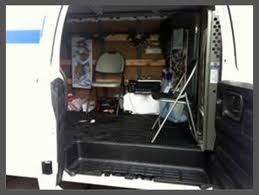
Faithful reader Jeff A. draws my attention to a great Planet Money blog about the key difference between those who complain bitterly and those who do something.
Adam Humphreys, who lives in NYC, wanted to travel to China. He filled out a long form, downloaded from a website, and showed up at the Chinese Consulate only to learn he had filled out the wrong form. At the nearby Internet café, where he went to get the right form, he found many others in the same predicament.
Reaction? #$%%%#%&*(!!!!!!! Anger. Grumbling. And …resignation.
Not this time. Adam called his friend Steven Nelson. They rented a large Penske cargo van. They parked it in front of the Chinese consulate. And they mounted a sign: Lucky Dragon Mobile Visa Consultants. Inside the fan: Two Mac laptops and a printer, an old couch, “cozy as a dorm room”. Confused visa applicants line up outside. Adam and Steve first charaged $10. They were over-run. They then charged $40. Too high. So they settled on $20, with a $5 discount for Buddhist monks. Sweet spot! Just right. Just like Goldilocks and the Three Bears’ porridge.
Adam says he can make $500 a day, but, he’s cagey about disclosing real numbers. After all, someone else can park a van next to theirs. It’s called capitalism.
How many times have I complained about bureaucracy, red tape, delays, incompetency, rudeness… and stopped there, rather than finding an initiative, taking action and offering a solution or work-around?
That, clearly, is the difference between an innovator and a complainer. Not IQ, brains, creativity, or anything else. Simply – willingness to act, to do something. Recall that da Vinci, that great creative brain, never actually built most of his amazing inventions, but simply drew them. Five centuries later, we venerate him, but most of us would like to change the world a little faster.
URL: http://www.npr.org/blogs/money/2012/01/04/144636898/a-man-a-van-a-surprising-business-plan
Innovation/Global Risk
Innovating With Junk:
Value From Old Truck Tarpaulins
By Shlomo Maital

In many businesses, cost of materials is an important part of total cost; sometimes, rising material costs (e.g. when oil prices spike and drag plastic prices up with them) endanger a company’s profit model. One solution is to use materials that are junk, discarded and available for free. Here is a good example – the Freitag brothers, in Switzerland, who create high value from old truck tarpaulins.*
“In a high-ceilinged factory in Zurich, old truck tarpaulins are being spread out to be cut up and stitched into idiosyncratic, colourful bags. Destined for sale across Switzerland, the rest of Europe and more recently Japan and the US, their popularity has spread far beyond the cycle couriers who first appreciated their practical stylishness and ecological appeal.”
“People like us for various reasons,” says Daniel, at 41 the older brother by a year. “Our buyers tend to be urban types, often working in the creative industries, like advertising or graphics. They like our functional design and appreciate the quality that comes with manufacturing in Switzerland.”
“The brothers say Freitag’s green credentials are also a crucial factor in its success. As well as the tarpaulins, almost all the materials they use are recycled, while each workspace in the factory has its own bicycle rack. “Customers know we don’t advertise or spend money on celebrity endorsements. They recognise and appreciate the honesty of our range,” Daniel says.”
“Our biggest initial investment was SFr2,300 – our combined savings at the time – for an industrial sewing machine,” says Daniel. Later, the brothers borrowed SFr20,000 from their parents to fund expansion.” “Only twice have they resorted to a bank loan: first to finance their landmark store in Zurich, which comprises a stacked pile of freight containers, and more recently to help equip their new factory. There are now nine stores, including outlets in New York and Tokyo. Profits are a carefully guarded secret but revenues this year seem likely to approach SFr30m.”
How in the world did they get the idea? Here is how: “Markus was on a course in graphic design. His shared student flat looked over the Zurich flyover that carries much of the transalpine truck traffic. Somehow, seeing all those trucks, and knowing there was a gap in the market, inspiration bloomed.”
Innovator! When you see junk – do you see value and creativity? Can you too build a powerful business, like the Freitags, out of junk?
* Bags of cash from cast-offs By Haig Simonian. Financial Times. January 4/2012
Innovation/Global Risk
Nature’s Great Innovation: The Incredible Giraffe
The Power of a Powerful Process
By Shlomo Maital
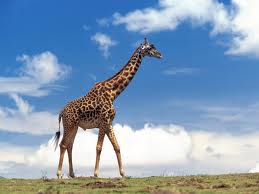
A courageous BBC Nature TV documentary has a team of researchers dissecting animals, and revealing amazing details. It’s tough to watch (all the animals died of natural causes, and the dissection is really an autopsy) but fascinating, all the same. So far, I’ve watched dissections of crocodiles and giraffes. Both have evolved over millions of years, to adapt perfectly to their environment.
The lesson here for innovators is simple and powerful: Continuous minute changes, each providing creatures with a tiny edge to survive long enough to procreate, ultimately become a creature so perfectly adapted to its environment, that it lives for a million years essentially unchanged. These changes often occur by accidental mutations, and most such mutations simply don’t work and disappear; but the few that do, endure and prevail, and contribute to a unique perfect design.
Here are some of the findings revealed in the giraffe dissection:
- The giraffe’s long neck evolved not just to reach treetops. It also enables giraffes to spot predators. Giraffes’ eyes are close together, enabling them to see well directly ahead and to gain depth perception. A powerful muscle keeps the neck erect, and relaxes to enable to giraffe to drink.
- Giraffe’s spots, too, have a purpose. Each spot, or mottled area, is its own temperature control area, with blood vessels that open and close. Living in the burning desert, giraffes, who feed during the heat of the day, need to be able to dissipate heat. Each ‘mottle’ area can do so. An infrared view of the giraffe shows heat differences for each ‘spot’ or mottled area.
- Giraffes have very thin, very very long, intestines. They eat leaves, which have little nutrition, and so have to extract every last bit of nutrition from them. And they gain most of their water, too, from the leaves…so they need long long intestines.
- Giraffes have evolved incredible tongues, very long and muscular, which can wrap around leaves while avoiding thorns.
- Giraffes have tiny valves in the blood vessels of their neck and legs. When they stoop to drink, their high blood pressure should actually damage their brain with heavy blood flow – but stop-valves have evolved to prevent that. One-way valves exist in their long legs as well, otherwise, blood would accumulate there, like dropsie in humans.
- Giraffes are NOT silent, they communicate, though not with vocal chords but with a kind of sound box. This communication, it turns out, is vital.
- Giraffe males fight by bashing each other, swinging their long necks and bashing their head into their rivals’ ribs. The longer the neck, the greater the force and the leverage. Hence, males with longer necks get to mate with females…and necks get longer and longer.
Each of these giraffe features occurred through evolution and natural selection.
Crocodiles are even more perfect. According to biologists, “of all the reptiles alive today, crocodiles and alligators may be the least changed from their prehistoric ancestors of the late Cretaceous period, over 65 million years ago”. For example, they have amazing stomachs, because they have to digest their food whole, in huge chunks; a special artery (non-existent in mammals) drives blood directly from their hearts to their stomachs, and the blood contains carbon dioxide. The carbon dioxide creates acid, carbonic acid, H2CO3, which helps their digestion. One can imagine an evolutionary accident that one time created such an artery – and those lucky few crocs who had it procreated like mad.
What do crocs and giraffes have to do with innovation? Simple. I’ve seen a great many one-shot startups, who think that creativity is like hitting a home run, or a century in cricket, only one time. But it isn’t. It should be a continual process, like evolution, with big and small improvements, driven by the users and the clients, constantly evolving and experimenting, changing the WAY things are done, orders are filled, customers addressed, always with everyone in the organization aware that they are vital instruments of evolution, looking for ‘mutations’, trying them, discarding the bad ones, preserving and improving the good ones, always aiming at perfection.
Stick pictures of a croc or a giraffe around coffee rooms and time clocks. Tell your Board and your workers: Now, let’s create a crocodile. Or a giraffe. Not to eat the competition, or stomp on it – but to make it irrelevant.
Innovation/Global Risk
How to Live: The Universe is Unfolding as it Should
By Shlomo Maital

I found this discarded somewhere, put it up on my wall, and am now sharing it with my blog readers. It has very good rules for living.
Go placidly amid the noise & haste; & remember what peace there may be in silence. As far as possible withou surrender, be on good terms with all persons. Speak your truth quietly and clearly and listen to others, even the dull & ignorant; they too have their story. ▲ Avoid loud and aggressive persons; they are vexations to the spirit. If you compare yourself with others, you may become vain and bitter; for always there will be greater and lesser persons than yourself. Enjoy your achievements as well as your plans. ▲ Keep interested in your own career, however humble; it is a real possession in the changing fortunes of time. Exercise caution in your business affairs, for the world is full of trickery. But let this not blind you to what virtue there is; many persons strive for high ideals; and everywhere life is full of heroism. ▲Be yourself. Especially, do not feign affection. Neither be cynical about love; for in the face of all aridity and disenchantment it is perennial as the grass. ▲ Take kindly the counsel of the years, gracefully surrendering the things of youth. Nurture strength of spirit to shield you in sudden misfortune. But do not distress yourself with imaginings. Many fears are born of fatigue and loneliness. Beyond a wholesome discipline, be gentle with yourself. ▲ You are a child of the universe, no less than the trees and the stars; you have a right to be here. And whether or not it is clear to you, no doubt the universe is unfolding as it should. ▲ Therefore be at peace with God, whatever you conceive Him to be, and whatever your labors & aspirations, in the noisy confusion of life, keep peace with your soul. ▲ With all its sham, drudgery & broken dreams, it is still a beautiful world. Be careful. Strive to be happy.


