
You are currently browsing the category archive for the ‘Innovation Blog’ category.
Global Crisis/Innovation Blog
Geopolitics & Innovation: Leveraging Three Crises?
By Shlomo Maital
As I write this, at least three major geopolitical crises are unfolding.
- In Britain, the new Conservative government is announcing spending cuts in civilian spending, after announcing defense cuts. The result may be redundancies (euphemism for firing and layoffs) among Britain’s public sector works. Some 60% of Britons accept PM Cameron’s statement that spending cuts are necessary. But many public sector workers, facing loss of their job, may migrate abroad. Economists are divided on whether the cuts should be zero (continue to stimulate a weak economy), small (avoid tipping the economy into recession) or big (achieve fiscal stability to reassure capital markets).
- In France, unions continue to blockade refineries and fuel dumps. President Sarkozy has called out France’s tough anti-terrorism squads to break these ‘illegal’ blockades. (“You have the right to strike,” the Interior Minister says, “but not the right to prevent others from working” – a very fine line). Unlike in Britain, 70 % of France’s citizens oppose Sarkozy’s mild proposal to raise the retirement age in the public sector to 62 from 60. The French Parliament will vote on this law this week. It will pass. It remains to be seen whether the union protests will grow and become violent, or shrink and fade away.
- On Nov. 11-12, the G20 nations meet in Seoul Korea, and the main topic will be the weakening dollar, the undervalued yuan, and the American Fed’s plan to blast huge additional amounts of dollars into world markets, many of which will immediately flee America to assets in emerging market countries. Can China, the US and the remaining nations agree on a consensus plan for exchange rates, similar to the Plaza Agreement on Sept. 22, 1985, [in which nations agreed together on a controlled devaluation of the US dollar, to reduce America’s current account deficit, which it was felt destablized world markets]? Or will nations engage in unilateral acts that destabilize capital markets and ruin world trade? Right now, consensus action a la Plaza looks highly doubtful.
In our new book Global Crisis/Global Opportunity, I and my co-author D.V.R. Seshadri note that true innovators with global vision can see opportunities where others see only crises. Innovators: Can you see opportunities in these three emerging geopolitical crises? What are they? How will you implement them? And will they create true value, by mitigating the crisis, and mitigating the impact they have on ordinary working people? I believe our book will help you find some answers.
Innovation Blog
The (Mis)Behavior of Financial Markets:
Benoit Mandelbrot –We Should Have Heeded Him
By Shlomo Maital
“Clouds are not spheres, mountains are not cones, coastlines are not circles, and bark is not smooth, nor does lightning travel in a straight line.”
— B. Mandelbrot, The Fractal Geometry of Nature
Benoit Mandelbrot, pioneering mathematician, passed away on Oct. 14 at age 85. He was an innovative thinker who should have been more closely heeded. Mandelbrot is known for the invention of fractals – visual representation of ‘odd’ events. He liked to visualize fractals by using cauliflower – each floret is composed of smaller florets, composed of smaller florets, and so on – a true fractal.
His math had a deep cautionary implication. For years, we economics professors taught ‘efficient markets theory’, which theorized that in capital markets, all known relevant information is immediately embodied in the price of assets, meaning that whatever motion there is in such prices must be Brownian, or random. This became the so-called random walk theory. Scholars like Scholes, Merton, and others won Nobel Prizes for work based on efficient markets. Mandelbrot, in contrast, cautioned that America’s financial system “is too complex to work” and warned of what Nassim Nicholas Taleb calls “Black Swans” (rare events, unpredictable, that destroy everything). His wonderful 2004 book The (Mis)Behavior of Markets debunked the efficient markets theory, and had it been heeded, would have helped prevent the catastrophe of 2007-9. Capital market returns do not follow a bell curve (normal distribution), he stressed, those who use this assumption as the basis of their risk management will end up in deep trouble. And they did.
Mandelbrot spent 30 years at IBM, as a researcher, before entering academic life. Even though he did very pure research at IBM, nonetheless he did live among people who lived in the real world. I believe this had a strong influence on his work. He was a maverick, radical innovator, unconventional writer, tackled anything and everything that interested him.
Mandelbrot was Jewish, of Polish-Lithuanian origin; his family fled to America in 1936, foreseeing the rise of the Nazis. Sometimes, such a history makes those who survive it risk averse and overly cautious. For Mandelbrot, it did not. He took risks. His life is a model for all those who seek to innovate in the realm of ideas. His credo: Pursue your passion, research and write about whatever interests you, damn the critics, look for the big picture, and, attack sacred-cow assumptions with powerful intellect.
Innovation Blog
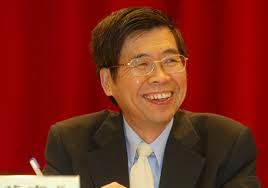
Meet Tsai Ming-kai, Mediatek Innovator: How to Innovate Business Designs
 By Shlomo Maital
Tsai Ming-kai
Today’s (Oct. 18) Financial Times has an excellent profile of Tsai Ming-kai, reclusive head of the Taiwanese chipmaker Mediatek. Mediatek is the biggest supplier of mobile phone chips to China. Innovators can learn much from him, even though he is rarely interviewed (the FT interview is the first in three years).
Tsai is an electrical engineer who never studied business – except for a one-week course at Stanford, where he learned about Harvard Business School Professor Clayten Christensen’s theory of “disruptive technology”. Tsai first joined United Microelectronics, a large Taiwanese chipmaker. When it spun off Mediatek, Tsai became its head. Christensen teaches that vertically-integrated industries tend to mature and then split into horizontal segments, with each segment specializing in a key part of the value chain. This creates huge opportunities for innovators who get there first.
Tsai realized Mediatek could thrive by doing just one thing very well – and doing it very cheaply. That one thing was making CD drives for computers, which then became making chips for DVD players. By 2000 Mediatek was big, but Tsai looked for new opportunities. He saw them in mobile phones. While the big mobile phone chip designers like Qualcomm and Texas Instruments focused on 3G chips, Tsai saw opportunity in improving 2G chips to service the “newcomers” in China that he foresaw would one day defeat the industry leaders.
“There was still room for technological improvement in 2G phone chips,” he observes. There is a very important principle here. Innovators often look to cutting-edge breakthrough technologies and products. That leaves much room for improving existing far-less-dramatic technologies, by raising performance and cutting cost. Tsai offered not chips but also a “business model” – “reference designs” that came with the chip and enabled new phone makers to break into the business. It was this business model that brought down barriers to entry into the mobile phone market dramatically. So even while Western phonemakers shunned Tsai’s basic “primitive” chips, Chinese firms leaped at the chance, and quickly grabbed 20 percent of world mobile phone markets, to the disgust of Nokia and Samsung.
The inexpensive Chinese phones became known as “shanzai”, or bandit phones – this is an injustice, Tsai says, because the enabled low-income people in emerging markets to have mobile phones just like the rich.
Tsai’s simple business model for innovation? “By relentlessly improving existing technology to reduce costs, this serves a population that is a much bigger proportion of the world.” It reminds one of the late C.K. Prahalad’s “fortunes at the bottom of the pyramid”. Tsai found a fortune there – and has made a fortune for himself and for his shareholders. Tsai’s next frontier is ‘reverse innovation’ – taking goods (chips) designed for low-cost emerging markets and repositioning them for low-cost producers making products for Western consumers.
Global Crisis/Innovation Blog
Currency War? Not Quite Yet!
By Shlomo Maital
America’s economy, now on Fed life-support, is growing but not producing jobs. Ordinary Americans think the Obama Administration has wasted billions of its hard-earned taxpayer money on fruitless bailouts and will likely punish the Democrats in the Nov. 2 mid-term elections. Obama and Treasury Secretary Tim Geithner have found someone convenient to blame: China. China is manipulating its currency, they say, keeping it excessively weak to foster exports. The resulting war of words has threatened a worse war, a War of Currency – with nations competing to devalue, or under-value, their exchange rates, to protect their exports and competitiveness. Geithner’s Treasury Dept. was due to issue in April a bi-annual report on currency policies of nations with which America trades. It was feared this report would formally accuse China of currency manipulation. The last time this happened was in 1994, under President Clinton. At that time, nothing was done to implement the report. And since then China has piled up a huge mountain of dollars, $3 trillion worth, to keep the yuan from appreciating.
The Treasury report has been repeatedly delayed. It will not appear until after the crucial G20 meetings in Seoul, Korea, on Nov. 11-12. Meanwhile, China’s export surplus with America was $28 b. in August alone; in that month America’s trade deficit soared 8.7 percent, to $47 b. Note that over half was in trade with China. Trade deficits imply that when goods are imported, jobs are exported, specifically to China. And jobs are THE political issue right now.
A Currency War means a rapid fall in the dollar. This is in nobody’s interest. World trade and capital flows require a stable currency. There is no replacement in sight for the dollar; some 80-90 per cent of foreign exchange transactions today are in dollars. With China restricting yuan transactions, the yuan is many years away from being a true global money. America says China is responsible for global imbalance and must strengthen the yuan, from 6.8 per dollar to, say, 3.5. China says America is the problem, endangering Asia by flooding the world with dollars through the Fed’s “QE” quantitative-easing policy. Both, of course, are right.
Sometimes, wars break out by accident. This was largely the case with World War I and II. In World War I, a random assassination of the Archduke was the spark. In World War II, it was Hitler’s blind miscalculation. A currency war could break out. But the fact that such a war would be lose-lose may hopefully deter the adversaries from starting it. Let’s hope a consensus solution to global imbalance and rebalancing will be crafted in Seoul.
For innovators: Innovation occurs within the context of global markets. As innovators zoom in on the DNA of their inventions, they must let one eye zoom out and track global developments, such as currency realignment. If I were an innovator, I would work out a worst-case scenario, or contingency plan, for the event that currency wars do break out and the dollar drops precipitously against other currencies.
Innovation Blog
Before You Measure: Define the Behaviors You Seek, OR
The Case of the Holey Azerbaijan Kettles
By Shlomo Maital
In this week’s Business Week, Lisa Hershman defines “the seven sins of performance measurement”. She raises a key point that has worried me for a long time. We management educators teach that management begins with measurement. What you cannot measure, you cannot manage. This is mostly true.
The problem is, how you measure things drives the behavior that creates the measure. If you are not certain about which behaviors you seek to encourage, and if you are not certain about the link between your performance measures and behavior, best not to measure at all.
For example: President Bush’s No Child Left Behind Act, the first piece of legislation he initiated after becoming President in 2000, focuses heavily on performance testing in schools. The result: Teachers teach how to do well on tests, not how to learn.
Here is the sad story of the Holey Azerbaijan Kettles, another example (no, Holey is not a mis-spelled word, it is indeed “holey”, based on “hole”).
In the old Soviet Union, factories were given quotas. A kettle factory in Azerbaijan was given a quota of “X” kettles to produce in the coming year, with the Gulag awaiting the plant manager if he failed to deliver. Result: 100,000 kettles on schedule…but barely big enough to boil one cup of water. Next year the performance measure defined the SIZE of the kettles. Result: The plant manager conserved aluminum by making the walls of the kettles very thin, so thin they quickly developed holes.
If you introduce performance measures to your innovation system, think very very carefully at the outset about which creativity behaviors you seek to foster and which measures will help you achieve this behavior. If you are uncertain – best to forget it.
Here, for the record, are the 7 sins of performance measurement, a la Ms. Hershman.
The Seven Sins of Performance Measurement
1. Vanity: using metrics that you have mastered, or that make you look good, rather than help drive improved performance results.
2. Provincialism: when you let organizational or department boundaries such as budgets determine your metrics. Chinese GDP data are provided mainly by provincial governors. Guess why some numbers look super-terrific!
3. Narcissism: when a company measures performance from its point of view, rather than the customer’s perspective. (I think this is the worst, and most common, of all the sins).
4. Laziness: Simply assuming what’s important to measure rather than taking the trouble to discover the right metrics by asking the clients.
5. Pettiness: Companies too often focus on a small part of what matters, rather than on the totality, or end results. (At BP – reducing OSHA-defined accidents [OSHA is the US environmental protection law)] instead of truly implementing safety).
6. Inanity: Creating metrics without any consideration for the consequences. (E.g. the Azerbaijan kettle). Or: a fast-food chain that chose to measure waste, based on how many cooked chickens went unsold at the end of the day. So managers responded by not cooking any chicken until orders were placed, thereby turning fast food into slow food.
7. Frivolity: There are companies that just aren’t serious about metrics at all. Any company that doesn’t take the business of measuring performance seriously won’t have anything to measure after a while.
Global Crisis/ Innovation Management
A Rainbow of Honesty: How Alan Mulally Rescued Ford
by Shlomo Maital
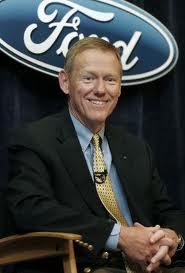
Alan Mulally
After a 37-year career at Boeing, during which Alan Mulally helped design and build all the great Boeing aircraft – 707, 727, 737, 747, 757, 767, 777, 787 — Mulally was asked to become President and CEO of Ford, in 2006. In 2007, even before the onset of the global crisis, Ford was drowning in red ink, losing $17 b.! Mulally’s leadership kept Ford out of bankruptcy, when GM and Chrysler were going bust, despite the fact that the global crisis came on top of Ford’s earlier problems — and restored Ford’s profitability. Here is a short excerpt from Peter Day’s (BBC Global Business) interview with Mulally, done at the Paris Auto Show. Remember his phrase: “Rainbow of Honesty’.
” “The only way to change attitudes is to pull everybody together – engineering, manufacturing, product development, We started meeting every Thursday, 7 a.m., everybody around the world, all netted in. Details of the plan – then expectations; everyone would say where they are relative to the plan. Every Thursday. Compelling vision. Stick to the plan. Relentless implementation. On the back of the card: Foster technological excellence, Own working together, Role model Ford values, Deliver results, [by coincidence, it spells FORD]… everybody worldwide, color coded, RED YELLOW and GREEN, we say, you’re not red, the issue you’re working on is red, so everybody can help…. Everyone on the same screen, color coded.”
“Nobody would admit there were problems, even though we were losing billions. We have all the data flowing. All color coded, every issue, every launch, quality, productivity. Up on the wall. All netted around the world. We lost $17 b. But — every chart is GREEN! I stopped the meeting, and I said to our team, is there anything that’s not going well? We’re losing $17 b., is anything not going well?” Eye contact, but– eyes to the floor! Trust me. How’s it going? Tell the truth. Reflect the reality.
“The next week, Mark Field, who runs the Americas, getting ready for launch of an Edge model in Canada, up comes the launch, everything about it, everything is RED! RED! The room goes silent. Everyone thinks, now we’re going to see what Alan the new leader will do. He said it was safe to tell the truth. Let’s see.
“I started to clap! Now all the eyes turn to me, that’s the sign, Marks’ gone! He’s gone!
“I said, Mark, that was fantastic! Fantastic. Is there anything we can do to help you? Because we know you’re working hard. Derek says, Mark I’ve seen that issue (actuator on tail gate), Benny says, “I saw that months ago”, manufacturing pipes up… etc., The team made suggestions! That interchange took 12 seconds. And we moved on. That was absolute key to One Ford.
“Next week it’s RED still. Everybody is helping. Next week it’s YELLOW. Next week it’s GREEN. 2,000 vehicles start shipping. Next week: The entire 320 charts look like a rainbow! Everybody knew everything, everything for the first time. A RAINBOW OF HONESTY. RED, YELLOW, GREEN, now we’re managing the business, because when everything was GREEN it was secret, and people were managing the secret, now they are managing the reality.”
“You never want to let a crisis pass you by. The real philosophy is, continuous improvement, every year, every quarter, is our commitment to improve the business, to improve the products, to improve our capability, quarter after quarter after quarter.”
Innovation Blog
10 % Wild Friday Nights: Your Key to a Nobel Prize:
“Let’s Levitate a Frog And See What Happens”
By Shlomo Maital
Recently ScienceWatch.com’s Gary Taubes interviewed fresh Nobel Prize winner Konstantin Novoselov. Here is what Novoselov said in describing the interesting process that generated the breakthrough discovery of how to make a form of carbon, grapheme, only one atom thick:
My background is in mesoscopic physics, studying fairly macroscopic objects that show some quantum effects. I did my Ph.D. with Andre Geim—first in Holland—and when he moved to the UK he invited me here as a post-doc. The style of Geim’s lab (which I’m keeping and supporting up to now) is that we devote ten percent of our time to so-called “Friday evening” experiments. I just do all kinds of crazy things that probably won’t pan out at all, but if they do, it would be really surprising. Geim did frog levitation as one of these experiments, and then we did gecko tape together. There are many more that were unsuccessful and never went anywhere (though I still had a good time thinking about and doing those experiments, so I love them no less than the successful ones).
This graphene business started as that kind of Friday evening experiment. We weren’t hoping for much, and when I gave it to a student, it initially failed. Then we had what you could call a stream of coincidences that basically brought us some very remarkable results quite quickly—within a week or so. Then we decided to continue on a more serious basis.
Part of every innovator’s time should be devoted to wild and crazy things (to quote comedian Steve Martin), that are fun, arouse laughter and are memorable. Most of the time, nothing comes of them. I’m not sure whether the course of history, or the wellbeing of humanity, would be changed by successfully suspending a frog in mid-air. But certainly, the Friday night experiment with cellotape and a pencil, which began with low expectations, ultimately led to the Nobel-Prize-winning discovery of graphen and may well be world-changing.
There is great importance to doing this on a regular basis. That way, the ‘wild’ muscle is regularly exercised and thus does not atrophy. That ‘wild’ muscle sometimes creates explosive breakthrough discoveries – as in the case of Novoselov and Geim.
Innovation Blog
America’s Space Shuttle vs. Russia’s Soyuz: Simplicity Defeats Complexity
By Shlomo Maital
Ray Kroc
With the last flight of America’s space shuttle, probably next June or earlier, America will officially be unable to send manned vehicles into space, for at least five years and probably more. That leaves Russia’s Soyuz rockets, launched from the space station in Baikanur, Kazakhstan, as the only way to send and retrieve cosmonauts and astronauts from the Space Station.
There is a major lesson to be learned here. It has to do with simplicity.
America’s Space Shuttle, like most of the hardware designed by American engineers, is complex and sophisticated. Some of that complexity may have contributed to the two Space Shuttle disasters, one of which killed an Israeli astronaut, Ilan Ramon. The complexity also made it very very expensive.
Russia’s hardware, in particular its military hardware, has always been very durable, rugged and ultra-simple. The ubiquitous Kalashnikov automatic rifle is an example. So are the Sukhoi fighters and bombers. Stories are told of Sukhoi aircraft making emergency landings on their bellies – and being still able to fly. (American aircraft would all be destroyed). But the prime example is its Soyuz rocket. It was first launched in 1968. Since then there have been over 450 launches. The rocket is simple, durable, tough, not expensive (in relative terms) and highly reliable. Note that there have been Russian fatalities in space – but mostly involving Soyuz space capsules, not the Soyuz rockets.
It is actually an American who first succeeded big-time through simplicity. McDonalds founder Ray Kroc originated the phrase Keep It Simple Stupid KISS. He had a big sign above his desk and applied the idea religiously. (RISDI President John Maeda wrote a wonderful short book on The Laws of Simplicity, about which I blogged some time ago). Perhaps, in politeness, we can do away with the second “S” (people who complicate are usually super-smart, not stupid). Or let the second S stand for “Smartie”.
But always, always, innovators should recall the faithful rugged Soyuz rocket – and make simplicity part of their daily core practices.
Innovation Blog
Search Funds: When It Comes to “Buy or Make”, Some Entrepreneurs Prefer “Buy” !
By Shlomo Maital
A former student has pointed out an interesting wrinkle in entrepreneurship, tracked most carefully by Stanford Graduate Business School. [1] It is called a “search fund”. My student is seriously planning to try it.
The idea is simple. Take highly-trained managers from top business schools, give them some money, and let them buy under-managed or poorly-managed companies with promise and potential, and apply all they’ve learned to scaling them up. This model works in place of one where the same graduates raise money and start their own businesses. Its appeal lies in the fact that it saves time, because you revitalize existing businesses rather than build new ones from scratch. In other words, “buy” rather than “make”.
According to the search fund Case,
” Most Search Funds are started by entrepreneurs who are viewed as having high potential (many are recent graduates from top-tier business school programs), though they typically have limited operational experience and often no direct experience in their target industry. Searchers tend to be drawn to the model for two principal reasons. First, the model offers relatively inexperienced professionals with limited capital resources a quick path to managing a company in which they have a meaningful ownership position. Second, Search Funds have historically generated significant financial rewards for a small, but growing, number of principals. The core thesis of the Search Fund model is that placing well-educated, high caliber, strongly motivated managers into an environment that is under-managed or lacking a professional management approach will yield attractive risk-adjusted returns for Search Fund investors as well as compelling experience (owning and managing a business) and financial returns for Searchers.”
How well have the Search Funds done? According to the Stanford Case:
Since 1984, 129 known funds have raised search capital for the first time. Of those, 41 are currently still searching to acquire businesses, 33 are currently operating the companies they acquired and 55 are terminal.
Innovator: If you have a powerful entrepreneurial idea – go for it! But if you do not, and you still dream of being an entrepreneur, consider the search fund model. For example, in a previous blog I mentioned Fiskers’ purchase of a GM plant for pennies on the dollar, to build new hybrid cars. By taking old assets and renewing them, wealth, jobs and income are created, at times just as powerfully as when totally new assets are created by conventional entrepreneurship.
[1] Stanford GBS, CASE: E-386 DATE: 7/21/2010
Innovation Blog
Sam Gandy: Finding the REAL Cause of Alzheimer’s
By Shlomo Maital
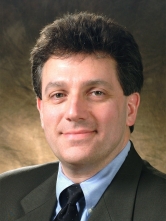
Sam Gandy
A superb short article in the September AARP (American Association of Retired Persons) Bulletin describes new research that is totally changing how we understand the underlying causes of Alzheimer’s. For two decades, drug developers have been focusing their efforts on finding chemicals that target plaque – sticky gooey calcified stuff that clogs the brain and ruins our memory and cognition, plaque that has until now always been linked with Alzheimer’s (in post mortem studies of the brains of Alzheimer’s sufferers, some dating back a full 100 years).
“Plaques are no longer where the action is,” notes Sam Gandy, M.D., researcher at the Mount Sinai School of Medicine in New York City. Gandy has showed, using specially genetically-engineered mice (mice that develop Alzheimer’s even though their brains are plaque-free), that it may be clumps of amyloid beta protein (“oligomers”) that cause Alzheimer’s, and that plaque may actually be the brain’s way of defending itself against oligomers (in the same way that oysters wrap grains of irritating sand in pearl coatings, notes Robert Tanzi, head of Genetics & Aging Research at Boston’s Mass General). In other words, plaque may be the brain’s ineffective solution to Alzheimer’s, not the cause.
Andrew Dillin, researcher of Alzheimer’s at the famed Salk Institute in California, has pursued the oligomer theory of Alzheimer’s for years. When he first presented his ideas at conferences, he notes, some scientists walked out of the room in disgust. But he persisted. Today, drug companies may shift so-far futile efforts to battle plaque toward battling oligomers. They may save billions of dollars that otherwise might have been invested in barking up the wrong plaque tree.
A report released by the World Alzheimer’s Association two weeks ago reveals these disturbing data:
The total worldwide costs of dementia, including Alzheimer’s disease, rose to more than $600 billion this year… An estimated 35.6 million people were diagnosed worldwide in 2010 with dementia, notably Alzheimer’s disease, at a cost of $605 billion in care and treatment for patients, as well as lost productivity of those with the disease and caregivers. According to the study, 46 percent of people with dementia live in high income countries, almost 40 percent in middle income countries and 14 percent in low income countries. Experts say the number of Alzheimer’s cases will likely double during the next 20 years to 65.7 million in 2030 and to more than 115 million cases in 2050.
As a personal note: I am 68 years old, and do not fear dying in the least, but frankly, greatly fear Alzheimer’s, perhaps the only thing I truly fear. More than a few of my academic colleagues have already succumbed. I have seen superb creative minds disintegrate, leaving only a hollow physical shell. The effect on their loved ones can be devastating.
Let’s hope the bold innovative research of Gindy and Diller will bear fruit long before the disturbing doubling of Alzheimer’s victims occurs.


