You are currently browsing the category archive for the ‘Innovation Blog’ category.
Innovation Blog
Carly Fiorina, Mark Hurd: HP Stands for Highly Perplexing
By Shlomo Maital

Mark V. Hurd
“Without vision, a nation perishes”. Isaiah 61, 11
If you track HP, now larger than IBM in global revenues ($115 b. in 2009), and if you are perplexed about why HP fired its CEO Carly Fiorina (now trying to become California Governor), and now has fired its CEO Mark Hurd (“one of the great head-scratchers of modern times”), read Joseph Nocera’s piece in today’s Global New York Times. [1]
Hurd led HP through the post-Carly crisis to become the world’s leading computer company, and boosted its sales in about four years from $80 b. to $115 b., an increase of 31 per cent, while raising profitability as well in an industry known for its falling margins. He was fired ostensibly for sexually harassing an HP contractor (he never laid a hand on her) and falsifying some luncheon expense accounts.
What in the world???
Nocera has the real story. A long-time writer for Fortune, Nocera is good at digging under the hype to find the truth.
Here is his explanation:
H.P. says its board should be applauded for not letting Mr. Hurd off the hook. But this is just after-the-fact spin. In fact, the directors should be called out for acting like the cowards they are. Mr. Hurd’s supposed peccadilloes were a smoke screen for the real reason they got rid of an executive they didn’t trust and employees didn’t like. The stand-up thing would have been to fire Mr. Hurd on the altogether legitimate grounds that the directors didn’t have faith in his leadership. But of course Wall Street would have had a conniption if the board had taken such a step. So instead, it ginned up a tabloid-ready scandal that only serves to bring shame, once again, on the H.P. board.
Carly Fiorina had a powerful vision for HP, reinventing the company founded by legendary entrepreneurs David Packard and William Hewlitt (the “H” and the “P”). She led the acquisition of Compaq, which now turns out to have been a good deal, against fierce internal opposition. She was fired by the Board of Directors led by her one-time friend Patricia Dunn. Dunn herself was fired, because of a scandal related to use of private investigators to track information leaks. It turns out, according to Nocera, that Hurd was responsible for the private eyes, but dumped the blame on Dunn.
Well, those who live by the sword die by it. HP’s Board has taken revenge. Hurd was a penny-pinching efficiency expert who slashed costs to the bone, boosted HP margins – and destroyed HP’s future by slashing R&D investment from 9 per cent of revenues down to only 2. HP, for instance, has no answer to Apple’s iPad, nor will it, says Nocera. Hurd engaged in a classic and not untypical strategy of boosting short-run profits, for his own gain and ego, while destroying long-run competitiveness. It will be up to his successor to clean up the mess, if he or she can.
The irony is this: Fiorina’s vision was outstanding, but she was incapable of leading the operational excellence needed to apply it. Hurd brought that operational excellence, but neglected and discarded the vision. For a company like HP to become great and remain great, you need both. Hewlitt and Packard together had both – long-run vision and short-run operational excellence. Somehow their successors have not. As Nocera summarizes:
One thing I found surprising this week was learning that to many H.P. observers Ms. Fiorina no longer seemed quite so bad. It was actually her strategic vision that Mr. Hurd had executed, I heard again and again. Her problem was that while she talked a good game, she lacked the skill to get that big, hulking, aircraft carrier of a company moving in the direction she pointed. Mr. Hurd was a brilliant operational executive, but had the strategic sense of a gnat, and knew only how to cut costs.
The prophet Isaiah’s powerful statement in Hebrew reads, without vision, nations literally fall apart (“Nifra” means to disintegrate). He might have added, without operational excellence, nations also disintegrate. You need both, for nations and for businesses. HP, under Carly, had vision (strategy). HP, under Hurd, had operations (tactics). Each is a necessary condition for long-term sustained success, and together, they are sufficient. Firms, like armies, need good strategy and good tactics. But if you lack one or the other — in the long run, you are dead as a doornail.
[1] Joe Nocera, August 13, 2010 “Real Reason for Ousting H.P.’s Chief”, Global New York Times.
Global Crisis/Innovation Blog
Lost Generation of Youth: Is Entrepreneurship the Solution?
By Shlomo Maital

The phrase “lost generation” appears in the epigraph to Hemingway’s great 1926 novel The Sun Also Rises. The phrase was coined by Gertrude Stein, who got it from a Paris garage mechanic (he called the post WWI generation, une génération perdue).
A new lost generation is emerging from the 2007-9 Global Crisis – youth unemployed. In Bloomberg Business Week (“Viewpoint”, Aug. 10) Chris Farrell notes the jobless rate for Americans aged 16-19 has jumped to 26 per cent, part of “the worst job market in 60 years”. And writing in the Global New York Times, Matthew Saltmarsh (“Global Youth Unemployment Reaches New High”, August 11) paints a much bleaker picture all over the world.
Farrell notes, “…among some minority groups the high school graduation rate is low: about 55 percent for Hispanics and 51 percent for African Americans, vs. the U.S. total of 69 percent, according to 2005-06 data….’You are really creating a society of people who don’t know what work is like,’ says Robert Straits, director of the Employment Management Services Div. at the Upjohn Institute for Employment Research. ‘It’s a generation of people who have never held a real job.’”
Saltmarsh reports: “…the International Labor Organization, said in a report that of some 620 million young people ages 15 to 24 in the [global] work force, about 81 million were unemployed at the end of 2009 — the highest level in two decades of record-keeping by the organization, which is based in Geneva. … Spain had a jobless rate of 40.5 percent in May for people under 25. That was the highest level among the 27 members of the European Union, far greater than the 9.4 percent in Germany in May and 19.7 percent in Britain in March.”
What can be done? What MUST be done?
Part of the problem is geography. Poorly-educated youths are mostly in inner cities, while entry-level low-skill jobs are far out in the suburbs. But much of the problem is simply supply and demand – creating a supply of key job skills to match demand. Germany has low youth unemployment partly because its superb vocational high schools equip youths for manufacturing jobs, and then Germany’s business model produces those jobs through competitive advantage and export success.
I wonder if an experimental program could be attempted, in which youths are taught the fundamentals of starting a business (delivering hot fresh-baked rolls early in the morning to lazy suburbanites), then given some micro-finance to get rolling. Even one success out of ten that creates ten jobs will overcome the other nine failures.
It is unacceptable that young people should be doomed even before they truly begin their lives. It is unacceptable to have a “lost generation”, when Wall St. fat cats are bailed out with government money that could have been used for job creation. And it is incredibly unacceptable that the world accepts the growing “lost generation” with equanimity, without loud political protests. Perhaps if we gave the vote to 16-year-olds, they might have a voice.
Here is some food for thought. The heading is “social insanity”.
In the US it costs $20,000 a year to keep a person in jail. In Florida, fully 8.5 % of the state budget goes to “corrections” (jails), or $2 billion ! Suppose, just suppose, one in ten of the unemployed youths ends up in jail. Suppose he or she serves, during a lifetime, a 10-year sentence. That’s $200,000 in direct costs, not counting the huge damage done to victims. The expected cost, then, is 1/10 times $200,000 or $20,000, not counting human suffering. Would it not make sense to invest $20,000 in prevention, for each unemployed youth, to keep the youths out of jail, by giving them skills and a livelihood ? Is there any other term for it, other than “social insanity”, for spending $2 b. on jails instead of $2 b. on a youth jobs programs?
Innovation Blog
Imagination Vitamins: Take More Than One a Day!
By Shlomo Maital

Imagination Vitamins
I found this on the wall of a doctor’s office. It is anonymous — no author is cited. It is a list of things to do to spur our imaginations and our creativity. I see these as a kind of vitamin pill — take one or more a day, to juice up our anti-habit anti-boredom anti-routine immune system.
—————–
# Stay Loose # LEARN TO WATCH SNAILS # invite someone dangerous to tea # MAKE LITTLE SIGNS THAT SAY YES! AND POST THEM ALL OVER YOUR HOUSE # make friends with freedom and uncertainty # LOOK FORWARD TO DREAMS # swing as high as you can on a swing by moonlight # CULTIVATE MOODS # refuse to be responsible # DO IT FOR LOVE # give money away…do it now! The money will follow # TAKE MOONBATHS # HAVE WILD IMAGININGS AND PERFECT CALM # draw on the walls # read every day # IMAGINE YOURSELF MAGIC # listen to old people # OPEN UP! DIVE IN! # be free! # DRIVE AWAY FEAR # play with everything # ENTERTAIN YOUR INNER CHILD # you are innocent # GET WET # hug trees # WRITE LOVE LETTERS
Innovation Blog
Innovator — Get to work, do nothing!
By Shlomo Maital
Writing in this week’s issue of Bloomberg Business Week (August 3), in the Management segment, Karen Duncum reveals a key secret of innovation — ideas come not when you are pressing, stressed or trying to have them, but rather when you are relaxing, chilling out and basically doing nothing. Innovators who do not regularly schedule such ‘down time’ (which is really productive ‘up time’) will miss out on a lot of productive creative thinking.
Notes Ms. Duncum:
Over the years many of the finest managers I’ve known have confided to me what they regard as their deepest, darkest secret. Their confessionals are strikingly similar and run along these lines: “People see me as a very driven person, but what they don’t know is that my downtime is when I do a lot of my real problem solving.”
Former FED Chair Alan Greenspan used to block off big chunks of time in his calendar, which could easily have been filled for 18 hours a day, so that he could reflect and think. The results may have been disastrous — he singlehandedly created the housing bubble — but at least the process was laudable.
So, innovator, try this: Zoom in on your problem, define it very well, then bury it in your subconscious. Go for a run, a long walk, watch a movie, read a novel, play with your kids, go home early from work, take your wife out to dinner, or spoil yourself with something you love doing. Then watch how your brain will surprise you, coming up with a great idea seemingly from nowhere, when you least expect it.
Here are Ms. Duncum’s concrete suggestions regarding “do-nothing” strategies:
● Feet-on-the-Desk Interludes: Spend quality time with your feet on your desk…
● Put on Your Thinking Cap: Setting aside time for the specific purpose of “doing nothing” can train your mind to be open to the process. Practice doing nothing….
● Create a Private, Contemplative Space: Experiment with varying locations, times of day, and even your current energy level and mood.
● Let Go Via What You Enjoy: Take a pastime you enjoy and incorporate it into the playground equipment of your business mind. With regular use and practice, it may turn into your own idea factory.
● Daydream: Pay attention when you drift away, if even for just a few moments. Out of random contemplation can emerge “Eureka!” breakthroughs. Write them down.
● Capture and Extrapolate: If you find that writing thoughts down breaks the spell, let ideas flow by rolling them off your tongue and into an audio recording.
● Transform Your Ideas into Practical Solutions: Don’t stop with ideas. Use your conscious mind to practice how to implement the ideas your subconscious tosses at you. Even if you don’t implement them, get into the habit of “feet on the ground” thinking that joins “head in the clouds” ideation.
Global Crisis Blog
What is the True Role of the CEO? Let’s Get Back to McCabe Basics
By Shlomo Maital
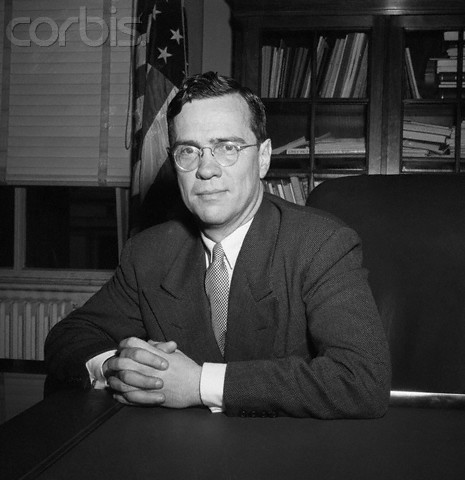
Thomas McCabe
What is the true role of the CEO? If you completed an MBA degree at Harvard Business School, MIT Sloan, Wharton, INSEAD, Stanford or any other leading school, within the past four decades, the answer is perfectly clear. Your objective is to make the maximum profit for your shareholders. Period. And since you will likely be CEO for a relatively few years, add the codicil: “maximum profit for the near term” — as in, “the next quarterly statement”. If you dare give corporate money to charity, Prof. Milton Friedman will say that this is wrong, you are giving away the money that rightly belongs to shareholders. In the era of militant shareholders, if you fail to bring short-term profitability, the Board of Directors will send you packing — and the CEO position has become a rapidly revolving door.
The result: Disastrous selfish short-term policies that turn out to be as ruinous for the company as they are for the nation in which the company is headquartered. CEOs have become expert at short-term policies that bring rising share prices tomorrow, but prove ruinous in the long run, long after the CEO is gone and forgotten.
Once, things were different, in the pre-MBA era. My friend Clyde Prestowitz, author of The Betrayal of American Prosperity, worked for years for Scott Paper, and for its legendary CEO Thomas McCabe.
McCabe graduated from Swarthmore College in 1915 and fought as a Captain in the US Army in WWI. He joined Scott Paper when he was 26 and became CEO at the age of 34. He built Scott Paper from a single mill employing 500 people into a global giant employing 40,000, at 60 locations around the world. He retired from the Scott Paper Board of Directors in 1980, when he was 87! In other words, he served Scott Paper for 61 years, most of which he led the company. During World War II, he took time out to serve his country, not in combat but in management. After WWII he served a stint as Chairman of the Federal Reserve Board of Governors, the job Ben Bernanke currently holds.
Prestowitz recounts that McCabe had a plaque on his wall, about “whom we [managers] serve”. At Scott Paper, McCabe insisted, we first serve…. our clients and customers. Next, we serve our employees. Next, we serve our community, the neighborhoods, towns and cities in which we are located. Next, we serve our nation — the men and women and children of our country. And last, perhaps even least, we serve our shareholders.
Why last? Because, McCabe said, if you serve the other four groups of stakeholders well and truly, then you will also serve the long-term interests of your shareholders. Emphasis on Long-Term! The McCabe credo must have worked — look at what McCabe created, in applying it — a first-rate enormous global company.
Are there any CEO’s around that would dare to follow McCabe’s credo?
Is there any way we can turn back the clock, to the McCabe era?
Would the world be in such deep hot water today, had its corporate CEO’s studied, memorized and implemented the McCabe credo?
Can capitalism return to its true roots, the McCabe credo roots, and reinvent itself in ways that fulfill its true destiny?
Can we please revise what we teach our MBA’s, to put shareholder profits last, rather than first?
Innovation Blog
Well-Planned Life? Or Summoned Life? Innovator — Pick the Latter!
By Shlomo Maital
New York Times op-ed columnist David Brooks habitually tracks interesting academic articles and writes about them in his column. In a recent column * he discusses an article in Harvard Business Review by Prof. Clayton Christensen (author of The Innovator’s Dilemma). Harvard Business Review is not, frankly, a enormous fountain of deep fascinating thinking. But Christensen’s article is an exception.
Christensen’s article is based on a commencement talk he gave recently. As a Rhodes scholar, he describes devoting an hour every night, “reading, thinking and praying abouat why God put me on this earth”.
Brooks writes: “Once you have come up with an overall purpose, [Christensen continues], you have to make decisions about allocating your time, energy and talent…. Christensen notes that people with a high need for achievement commonly misallocate their resources.” A spare half-hour is usually devoted to things that yield tangible benefits. But in contrast, investing time and energy in your relationship with your spouse and children doesn’t offer that same immediate sense of achievement. Writes Christensen: “It’s not until 20 years down the road that you can say, ‘I raised a good son or good daughter’. As a result, the things that are most important often get short shrift.”
We teach our kids to live the Well Planned Life. Life is a project, conceived carefully, reviewed, adjusted and brought toward fruition. What about, though, teaching them that life is not a project to be completed, but, in this uncertain world, an unknowable landscape to be explored. Perhaps life is about commitment — which defies conventional cost-benefit calculations economists love so much.
The Well Planned Life asks “what shall I do?” The Summoned Life asks, “what are these circumstances I face now summoning me to do? What is needed? What is the most useful social role before me?” The Well Planned Life asks, “how can I best leverage my skills and knowledge for personal gain?” The Summoned Life asks, “what new skills do I need to learn, in order to fulfill my destiny to change the world?”
In lecturing at business schools all over the world, I frequently encounter young MBA students who are locked into The Well Planned Life — and sense there is something wrong, something missing, but do not know what, because they have never considered an alternative. As a subversive, I pitch strongly for The Summoned Life.
For a handful, it works.
I believe those who seek to innovate, in order to change the world, need to pursue The Summoned Life. “Create something new, so we can increase our margins” is what companies tell innovators. What results are well-planned R&D projects.
“Create something new, so we can change the world” is what drives innovators to do extraordinary things against huge odds, in chaotic zig-zag poorly-planned adventures.
Choose the latter.
___________
* “The Summoned Self, Global New York Times, Wed. August 7, p. 7. Based on Clayton Christensen, “How will you measure your life?”, Harvard Business Review, July-Aug. 2010.
Innovation Blog
“Think Behavioral, Not Technological”
By Shlomo Maital

Maddock and Viton
G. Michael Maddock and Raphael Louis Viton write an excellent blog for Business Week, called “The Innovation Engine”.
In their latest blog (July 27), they write about how to innovate via mobile devices. They recommend: “think behavioral, not technological”. This advice is general, and applies to all varieties of innovation. Think lifestyle, think sociology, think about how people want to live and how they use devices to help them live they way they want — and THEN think about pulling the technology and design that will fulfill people’s needs.
Here are their five rules for behaviorally innovating mobile devices:
1) The world loves instant gratification. People are impatient. If you can design mobile devices and related apps that satisfies people’s needs instantly (not in one second, or three seconds, but in less than a millisecond), you have a winner. Incidentally: How come Microsoft has never yet been able to create an operating system that launches instantly when you turn on your computer? Why does the Mac operating system launch faster? And why, then, are we PC users second-class citizens — and accept it?
2) We like filling time vs. killing time. Mobile devices help people “fill time”, in four to 10 minute increments. Can you create ways to let people begin, and end, a task or an experience, in 4-10 minutes?
3) We crave superhero powers. We want to be everywhere, talk to everyone, connect with anyone, do anything, all at the same time. Can you enable this simultaneity, simply, easily, without baffling the poor user?
4) We modify, adapt, hack, and generally MacGyver everything. The blog authors say there are now more than 200,000 apps for iPhone! The PC defeated the Mac, originally, because its open system generated far more software. Did Apple learn its lesson? Harness the brainpower of thousands and millions of software creators, app inventors, and you vastly enhance the power and value of the iPhone. Create platforms others eagerly use, to modify, adapt, hack and MacGyver.
5) We think of our mobile device as our “No. 1 recovery tool”. Mobile devices are there when we need help. This use is rarely stressed, but it is perhaps crucial — it is why most people feel desperate if they happen to forget their mobile device. This behavioral need — for security, for the ability to call for help when needed — is fundamental. And it is a fact that the simple cell phone has saved many thousands of lives, in this way. Understand the fundamental ways devices create true value, ways that people often are not able to articulate, by observing them closely.
Innovation Blog
How to destroy a great business by falling asleep: The case of Metro Goldwyn Mayer
By Shlomo Maital
The American people are rightly furious at the U.S. Treasury Dept. for its incompetent bailout of “too big to fail” companies (AIG, Citigroup, Bank of America, General Motors). The leaders of these companies, who were all extremely highly paid, all failed. Many of them clearly did not know what was going on in their industry, in the world, and indeed within their own companies. They endangered the livelihood of thousands of honest working people and betrayed their fiduciary trust. The bailouts make it likely this will happen again.
Now, we have a case again of company leadership failing, this time destroying one of Hollywood’s most respected and venerable movie studios, MGM Metro Goldwyn Mayer, founded by legends Samuel Goldwyn and Louis Mayer in the 1920s.
MGM owns an enormous backlog of wonderful old movies. For a time it made money by selling DVD’s. Indeed the whole movie business shifted its revenue model toward DVD’s, which for many movies brought in more money than box office sales of tickets.
But today MGM is virtually bankrupt. Its film library no longer generates sufficient revenues to pay MGM’s huge debts. This was entirely predictable. Had MGM’s management tracked the music industry, they would have seen how CD sales plummeted owing to the shift to on-line downloads, many of them pirated. The same thing happened to movies. And it was entirely predictable, years in advance, had movie executives simply stayed awake and drew conclusions from their friends in the music business. Those same executives could have innovated their business model, shifting toward web-based business (just as Steve Jobs initiated with iTunes — virtually rescuing the music industry) and inexpensive downloads that create high volume business.
Time and time again, Peter Drucker’s axiom comes back to haunt us — businesses fail not because they do things the wrong way but because they do the wrong things. MGM is the latest example. Nobody will bail MGM out. But count on its senior managers to retire with golden parachutes. MGM workers will, as always, face a hard landing.
=========
See: “Who killed James Bond?”, by Matthew Garrahan, Financial Times, Weekend, July 25 2010, p. 1.
Innovation Blog
“Planck” Reveals Radiation from the Birth of the Universe!
By Shlomo Maital

First full sky-map from “Planck” mission
An announcement on July 5 by the European Space Agency (ESA), about the Planck mission to explore the cosmos went largely unnoticed, but is utterly stunning. The first full-sky map picture from Planck has been released, and it purports to show the radiation left over from the Big Bang — the birth of the universe.
The Planck mission was launched in May 2009 with the main goal of mapping the CMB, the primordial radiation leftover from the Big Bang. Slight variations in the temperature of the CMB are believed to reflect fluctuations in the early universe from which large structures such as galaxies would later evolve.
One of the main scientific goals of the Planck mission is to investigate what happened during the inflationary period shortly after the Big Bang, when the universe expanded by 1028 within just 10–36 of a second. This process is necessary in all mainstream models of the universe, but the details of the expansion are still debated. “The Planck data will provide our first realistic test of inflationary models ” explained Norma Sanchez, a cosmologist at the Observertoire de Paris, also speaking in Turin.
Neither you, reader, nor I can probably detect where that CMB radiation actually is, in the Planck picture, but I presume the scientists can. It is still incredible to look at that picture, and to think that in there, somewhere, is the faint trace of the radiation created when the universe was born some 10 billion years ago.
Happy Birthday, Universe. One day soon, we will truly understand how you were born. Perhaps then, we will be able to replicate parts of the process, to create our own “suns” (energy from fusion) and forever make BP, Exxon and Gazprom obsolete.
Innovation Blog
Is General Motors Waking Up? Build-It-Yourself As an Innovation Experience
By Shlomo Maital

After 80 years, and near-bankruptcy, is General Motors finally waking up and smelling the coffee? Is GM realizing that many of those who buy expensive cars actually LOVE cars and deserve, for their money, a first-rate car experience?
The New York Times reports that those who buy a new Corvette will have the option, for two models, to build their own engine — a 7 liter massive piece of engineering. The cost of the build-it-yourself option is substantial: $5,800, according an automotive PR magazine:
Have you always wanted to assemble a car engine? If so you may want to consider buying a Corvette Z06 or ZR1, this is because there is a new build-your-own engine option available. This option will set you back $5,800 extra, don’t worry if you are worried that you will end up with an engine that does not run, as a General Motors technician will supervise you throughout the build. It is no secret that Corvette owners are usually very passionate, therefore General Motors may have found a niche in the market, which will make enthusiasts even more involved in their motoring. If you choose the build-your-own option for the Corvette Z06 you will be putting together a massive 7-liter engine, whereas the ZR1’s engine is a supercharged 6.2 liter engine. If you choose this option you will have to travel to the Performance Build Center in Wixom, Michigan….
This could be an innovation trend. Can you find ways to create buyer buy-in, to leverage clients’ passion for your product, by giving them some role in actually making part of the product? Note how IKEA has leveraged this — it both saves costs when buyers do the assembly, and for some (not all!) provides an empowering experience. (Apparently, many women do the actual assembly of IKEA furniture — and do it well!). For years, pathbreaking innovators have had lead users (a la MIT’s Fred von Hippel) help with designing the product. Why not let them join the assembly line too? And, for GM, why not let the passionate Corvette buyers actually manage and run the whole Corvette division? They could do no worse than current management — and probably a whole lot better.
I think it is an error to charge buyers $5,800 for this build-it-yourself option, even if it does cost GM money to assign a supervising engineer. Come on, GM. Give a little ‘margin’ for those truly passionate about their Corvettes. And for once, before you appoint senior managers, could we have a polygraph for each? Only one question: Do you honestly and truly LOVE cars and are passionate about building and driving them? Only a straight ‘yes’ gets you a job. How many of GM’s current executives would pass the test?!