You are currently browsing the category archive for the ‘Innovation Blog’ category.
Some innovations simply borrow from Nature and use Nature’s skills– for instance, Weizmann’s discovery of the little bacterium that can make acetone and butyl alcohol from starch (see my blog “Trial and Error,” June 2, 2009).
But some great innovations save Nature, by replicating what it can do without destroying it.
As reported on CNN.com, a Norwegian company called Kebony has found a way to turn sustainable softwood (maple) into sleek dark wood that has all the characteristics of mahogany or teak– hardwood from Amazon forest. Kebony’s process takes only five days.
According to Kebony CEO Christian Jebsen, each mahogany tree is worth $25,000-$40,000 on the world market. This makes such trees very valuable, especially in a poor country like Peru.
Kebony’s patented process treats softwood by injecting it with a formula that includes furfuryl alcohol, a waste by-product of sugar cane.
One cubic meter of teak in Europe can cost between $3,000-$10,000 Euros, depending on quality. Jebsen says Kebony’s process (the name Kebony is a take-off on ‘ebony’, a kind of valuable black hardwood once used to make black piano keys) is cost-competitive.
Kebony is aiming at the U.S. market for patio decks, which uses at present, toxic impregnated metal-based wood modification methods. The market is worth $5 b. today, Jebsen notes. Jebsen also thinks boat manufacturers will embrace its product.
Copy nature for innovation? Of course. Improve on nature? Why not? Why not transform softwood maple into hardwood teak? The logic is simple. Those valuable things in Nature that we must preserve– only if viable substitutes are found for them will their market value decline, making it less worthwhile to ‘harvest’ them (and destroy them in the process). Kebony has made a good start at saving the world’s valuable hardwood forests.

Chris Anderson. “Free: The Future of a Radical Price” (Hyperion; $26.99);
(This blog is based in part on Malcolm Gladwell’s recent article in The New Yorker).
In the 1990’s a group of University of Illinois professors invented a web browser they called Mosaic, before anyone knew what web browsers were — then built a company called Netscape that gave it away for free. Millions downloaded Netscape. Netscape made its money by leveraging its widely-known brand name to sell server software. Its IPO in 1996 was a watershed — Wall St. noticed how Netscape’s share price soared by 10 times days after its launch, and decided this was the ideal way to make money. ( The result was the dot.com bubble that exploded in March 2000.)
Now the editor of WIRED magazine Chris Anderson has written a fine book that makes an exceedingly powerful yet simple point.
In the digital age, many products are bits and bytes. Digital products have zero marginal cost to reproduce. According to economic theory, in a competitive industry (and all digital industries are competitive), if marginal cost is zero, then the optimal price is zero too. Hence prices will gravitate quickly to zero — and they do.
Anderson’s previous 2006 book The Long Tail was equally insightful and spoke about how tiny niche markets can become huge businesses by leveraging the Internet.
Anderson writes: “In the digital realm you can try to keep Free at bay with laws and locks, but eventually the force of economic gravity will win.”
That law of gravity is the inexorable downward pressure on prices, driven by competition and zero marginal costs.
A great many industries have simply ignored this law and have reached the edge of bankruptcy, or even stepped beyond it. The music industry for one. Newspapers for another.
In this blog we often observed how the global depression creates opportunities, through major shifts in business paradigms. The “free” paradigm is a good example. Is your product one that has low or zero marginal costs? If so, can you find ways to provide it for free, while still building a powerful organization with strong top-line and bottom-line performance?
* Can you offer some ‘lead’ products for free, while charging for others?
* Can you leverage what Anderson calls “Fre-mium” strategies: 90% of customers get the product or service for free, as a standard commodity, while 10% of customers whose needs are more special pay for ‘premium’, and generate all the revenue.
* Can you introduce your product for free, then find a way to begin charging for it (realize, this is highly difficult, people hate to pay for what they once got for free)?
* Can you price “virtually” for free? (i.e. charge for maintenance contracts, etc., that generate the revenue)? Rolls Royce sells jet engines at low prices, but makes all its profit on high-margin service contracts.
Incidentally, there is a mathematical proof that a zero price is optimal.
Total Profit is Revenue (Price times Quantity) Minus Total Cost (TC).
Take the derivative of total profit with respect to quantity (Q), and equate to zero, in order to find the maximum.
Result: d(PQ)/dQ – dTC/dQ = 0
Or: Price = Marginal Cost
How many innovations remain fresh and innovative, 26 years after they debut?
The late Michael Jackson’s video Thriller qualifies as one of the few.
Jackson’s video was released on Dec. 2, 1983. It was 14 minutes long and was directed by John Landis, who also co-wrote the script for it together with Jackson. It cost an enormous $500,000, unheard of at the time. Guinness World Records claims the music video sold 9 million copies, more than any music video in history.
 Thriller was unconventional. It was a horror film spoof, with zombies performing with Jackson. After the video was made, the music was re-edited to match the video. The main dance sequence was filmed in East Los Angeles. In the video Jackson transforms both into a zombie, and then into a cat monster. The video includes spoken words by Vincent Price, Hollywood star of many horror movies, and includes incidental music written by Elmer Bernstein.
When he made Thriller, Jackson was a member of the Christian sect Jehovah’s Witnesses. Because of this, the video includes a disclaimer: “This film in no way endorses a belief in the occult.”
Many many thousands of music videos have been made since Thriller. Many are direct copies of the style and content of Thriller; few come close to Thriller’s pathbreaking innovations. Readers are invited to view it again on YouTube. It is hard to believe that it was made in 1983.
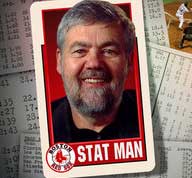 Meet Bill James. Bill is currently Senior Advisor to the Boston Red Sox baseball team. He is credited in part with helping Boston win two World Series championships, after failing to win one since 1919. James invented “Sabermetrics” (acronym for the Society for American Baseball Research). His innovation: Use statistical analysis, i.e. facts, to analyze why teams win and lose, instead of just believing in age-old truisms everybody knows are true, because, well — everybody believes them and repeats them.
James crunched a batch of numbers, and put out (in mimeograph form, the early version of photocopying) The Bill James Baseball Abstract in 1977. In it he began to make keen observations puncturing long-held beliefs in baseball. He persisted, and in a few years a major publisher agreed to publish his Abstract annually.
James is an improbable revolutionary. While working on his ‘stats’, he was a watchman in a pork-and-beans factory (Stokely – Van Camp).
Here is what James found, in opposition to what highly knowledgeable experienced players, managers and coaches believed:
* Don’t evaluate pitchers according to their wins and losses. This is highly misleading.
* Don’t evaluate hitters by their batting average. Instead use “percentage of at-bats when the hitter reaches base” (because good hitters get walks, get on base and tire pitchers), and “slugging percentage”:

where 1B, 2B, 3B and HR are singles, doubles, triples and home-runs, respectively, and AB is number of at-bats. Babe Ruth holds the record slugging percentage: 0.690.
* “Closers” (pitchers brought in, in the late innings, when a lead is threatened) are misused. Bring in ‘closers’ much much earlier, before you get in trouble.
All of James’ iconoclastic observations are based on extensive data, compiled game-by-game.
What can managers learn from Bill James and his analysis of baseball?
“Bring me data”. When innovations are proposed, when claims are made — ask for data. Ask for evidence. Bill James produced it. When he did, the way the experts strategized baseball changed completely.
___________________________
George William “Bill” James (born October 5, 1949, in Holton, Kansas) is a baseball writer, historian, and statistician whose work has been widely influential. Since 1977, James has written more than two dozen books devoted to baseball history and statistics. His approach, which he termed sabermetrics in reference to the Society for American Baseball Research (SABR), scientifically analyzes and studies baseball, often through the use of statistical data, in an attempt to determine why teams win and lose. In 2006, Time named him in the Time 100 as one of the most influential people in the world. [1] He is currently a Senior Advisor on Baseball Operations for the Boston Red Sox.
An aspiring writer and obsessive fan, James began writing baseball articles after leaving the United States Army in his mid-twenties. Many of his first baseball writings came while he was doing night shifts as a security guard at the Stokely Van Camp pork and beans factory. Unlike most writers, his pieces did not recount games in epic terms or offer insights gleaned from interviews with players. A typical James piece posed a question (e.g., “Which pitchers and catchers allow runners to steal the most bases?”), and then presented data and analysis written in a lively, insightful, and witty style that offered an answer.
Editors considered James’ pieces so unusual that few believed them suitable for their readers. In an effort to reach a wider audience, James self-published an annual book titled The Bill James Baseball Abstract beginning in 1977. The first edition of the book presented 80 pages of in-depth statistics compiled from James’ study of box scores from the preceding season.
Over the next three years James’ work won respect, including a very favorable review by Daniel Okrent in Sports Illustrated.[2] New annual editions added essays on teams and players. By 1982 sales had increased tenfold, and a media conglomerate agreed to publish and distribute future editions.
While writers had published books about baseball statistics before (most notably Earnshaw Cook’s Percentage Baseball, in the 1960s), few had ever reached a mass audience. Attempts to imitate James’ work spawned a flood of books and articles that continue to this day.
In 1988, James ceased writing the Abstract, citing workload-related burnout and concern about the volume of statistics on the market. He has continued to publish hardcover books about baseball history, which have sold well and received admiring reviews; these books include two editions of The Bill James Historical Baseball Abstract.
During the years after the annual Abstract ceased publication, James has published several series of new annuals:
• The Baseball Book (1990–1992) was a loosely-organized collection of commentary, profiles, historical articles, and occasional pieces of research.
• The Player Ratings Book (1993–95) offered statistics and 50-word profiles aimed at the fantasy baseball enthusiast.
• The Bill James Handbook (2003-present) provides past-season statistics and next-season projections for Major League players and teams, and career data for all current Major League players.
• The Bill James Gold Mine (2008-present) is a collection of new essays and never-before-seen statistics, as well as profiles of players and teams.
In 2008, James launched Bill James Online. Subscribers can read James’ new, original writing and interact with one another—as well as with James—in a question-and-answer format. The web site also offers new “profiles” of teams and players full of facts and statistics that hope to one day map what James has termed “the lost island of baseball statistics.”
Among the statistical innovations attributable to James are:
• Runs Created. A statistic intended to quantify a player’s contribution to runs scored, as well as a team’s expected number of runs scored. Runs created is calculated from other offensive statistics. James’ first version of it: Runs Created = (Total Bases * (Hits + Walks))/(Plate Appearances). Applied to an entire team or league, the statistic correlates closely to that team’s or league’s actual runs scored. Since James first created the statistic, sabermetricians have refined it to make it more accurate, and it is now used in many different variations.
• Range Factor. A statistic that quantifies the defensive contribution of a player, calculated in its simplest form as RF = (Assists + Put Outs)/(Games Played). The statistic is premised on the notion that the total number of outs that a player participates in is more relevant in evaluating his defensive play than the percentage of cleanly handled chances as calculated by the conventional statistic Fielding Percentage.
• Defensive Efficiency Rating. A statistic that shows the percentage of balls in play a defense turns into an out. It is used to help determine a team’s defensive ability. Calculated by: 1 – ((Opp. Hits + Reached on Error – Opp. Home runs) / (Plate appearances – Walks – Strikeouts – HitByPitch – Opp. Home runs)).
• Win Shares. A unifying statistic intended to allow the comparison of players at different positions, as well as players of different eras. Win Shares incorporates a variety of pitching, hitting and fielding statistics. One drawback of Win Shares is the difficulty of computing it.[3]
• Pythagorean Winning Percentage. A statistic explaining the relationship of wins and losses to runs scored and runs allowed. In its simplest form: Winning Percentage equals Runs squared divided by the square of Runs plus the square of Runs Allowed. The statistic correlates closely to a team’s actual winning percentage.
• Game Score is a metric to determine the strength of a pitcher in any particular baseball game.
• Major League Equivalency. A metric that uses minor league statistics to predict how a player is likely to perform at the major league level.
• The Brock2 System. A system for projecting a player’s performance over the remainder of his career based on past performance and the aging process.
• Similarity scores. Scoring a player’s statistical similarity to other players, providing a frame of reference for players of the distant past. Examples: Lou Gehrig comparable to Don Mattingly; Joe Jackson to Tony Oliva.
• Secondary Average. A statistic that attempts to measure a player’s contribution to an offense in ways not reflected in batting average. The formula is (Extra bases on hits+Walks+Stolen Bases)/At bats. Secondary averages tend to be similar to batting averages, but can vary widely, from less than .100 to more than .500 in extreme cases. Extra bases on hits is calculated with the formula (Doubles)+(Triplesx2)+(Homerunsx3) or more easily, (Total Bases)-(Hits).
• Power/Speed Number. A statistic that attempts to consolidate the various “clubs” of players with impressive numbers of both home runs and stolen bases (e.g., the “30/30” club (Bobby Bonds was well known for being a member), the “40/40” club (José Canseco was the first to perform this feat), and even the “25/65” club (Joe Morgan in the ’70s)). The formula: (2x(Home Runs)x(Stolen Bases))/(Home Runs + Stolen Bases).
• Approximate Value. A system of cutoffs designed to estimate the value a player contributed to various category groups (including his team) to study broad questions such as “how do players age over time”.
Meet the Wiggles, one of the world’s most successful, most popular, and most revenue-generating, rock groups.
Never heard of them, you say? Of course not. You have to be 5 years old to be a fan.
The Wiggles are a children’s musical group formed in Sydney, Australia in 1991. The original members were Anthony Field, Murray Cook, Greg Page, Jeff Fatt and Phillip Wilcher. Field and Page were students of pre-school education at Macquarie University. They identified a powerful niche: music for 5-year-olds. They use their background in theories of child development to tailor their videos, music, live shows and TV programs specifically for words five-year-olds know, songs they can sing, and dances they can dance.
The Wiggles are “the world’s biggest preschool band” and were named Business Review Weekly’s top-earning Australian entertainers for four years in a row and earned AU$45 million in 2007 (about the same in US $).
The group proves a key principle of innovation: Identify a need, learn your customers’ preferences well and deeply, and meet the need in creative and enjoyable ways. The Wiggles are niche players, but have shown their niche is substantial — there are a whole lot of five-year-olds in the world. While others seek the money in the 15-year-old and up group, they have done ‘down market’ — literally — with great results.
Here are the lyrics to one of The Wiggles’ great all-time hits. Note that the song is fun, easy to sing, educational (teaches healthy eating) and suited to their clients.
Repetitious? Hey — we’re talking five-year-olds! Anything good is worth repeating ten million times….
Fruit Salad, Yummy Yummy, Fruit Salad, Yummy Yummy, Fruit Salad, Yummy Yummy
Yummy Yummy, Yummy Yummy, Fruit Salad!
Let’s make some fruit salad today (Uh huh uh)
It’s fun to do it the healthy way (Uh huh uh)
Take all the fruit that you want to eat
It’s gonna be a fruit salad treat!
Peel your bananas, The second step
Toss in some some grapes, The third step
Chop up some apples, Chop up some melons
And put them on your plate
Now we’ve made it, It’s time to eat it (Uh huh uh)
It tastes so good that you just can’t beat it (Uh huh uh)
Give everyone a plate and a spoon
We’ll all be ating it very soon!
The first step, Eat up the banana
The second step, Eat up some grapes
The third step, Eat up some apples
Eat the melons, Now there’s nothing on your plate
Now we’ve had our fruit salad today (Uh huh uh)
It’s time to put the scraps away (Uh huh uh)
Wash the bowls and wash the spoon
Let’s do it all again real soon!
Fruit salad, Yummy yummy, Fruit salad,Yummy yummy
Fruit salad, Yummy yummy, Yummy yummy yummy yummy
Fruit salad!

The Wiggles
A fierce and bloody war is being waged, by the United States authorities against the Colombian and Mexican drug cartels, and in Mexico thousands of people have been killed. This war is in part about innovation.
The drug lords first smuggled drugs into the U.S. using personal messengers, who often swallowed drugs in plastic bags and then, after reaching their destination, retrieved them from their waste. The quantities, however, proved too small. The drug lords then smuggled drugs in ships, sometimes in tin cans labeled “pineapple” or “corn”. That too was eventually discovered and stopped. Then they bought aircraft. Sophisticated radar tracked them, and some were shot down. Next they bought high-speed speedboats, faster than any Coast Guard vessel. But these too were eventually interdicted.
The final stage in this innovation war was …submarines. The drug lords ordered and bought submersible vessels, some 20 ft. long. These were not true submarines, but submersible vessels with snorkels (air pipes) that travelled just below the surface. Each such vessel can carry up to 10 tons of cocaine! When authorities in Colombia stopped them, the crew simply scuttled the submarines, which sank, with all the evidence with them. So, a new law has been enacted which makes it illegal to be on, or in possession of, such vessels, with a 12-year jail sentence resulting, even if the vessels are scuttled.
Despite huge expenditures, large manpower and desperate efforts, America is losing the drug war. Many many billions of dollars worth of cocaine and other drugs flood into America annually. It is said, only half in jest, that the money in Miami is covered with a thin film of white powder. These resources make it possible for drug lords to find new and innovative ways to transport their death-dealing cargoes, no matter how costly. The only solution is for those battling the drug lords to be even more creative and innovative, to anticipate their next moves, and to interdict them aggressively and cleverly.
An interesting article in the latest issue of Business Week by its resident economist, Michael Mandel, makes the case that the Great Recession, as it is known, reflects not only excessive borrowing and financial collapse, but inadequate innovation in previous decades.
Mandel argues persuasively,
“…there’s growing evidence that the innovation shortfall of the past decade is not only real but may also have contributed to today’s financial crisis. Think back to 1998, the early days of the dot-com bubble. At the time, the news was filled with reports of startling breakthroughs in science and medicine, from new cancer treatments and gene therapies that promised to cure intractable diseases to high-speed satellite Internet, cars powered by fuel cells, micromachines on chips, and even cloning. These technologies seemed to be commercializing at “Internet speed,” creating companies and drawing in enormous investments from profit-seeking venture capitalists—and ordinarily cautious corporate giants”.
“…one thing is abundantly clear… The commercial impact of most of those breakthroughs fell far short of expectations—not just in the U.S. but around the world. No gene therapy has yet been approved for sale in the U.S. Rural dwellers can get satellite Internet, but it’s far slower, with longer lag times, than the ambitious satellite services that were being developed a decade ago. The economics of alternative energy haven’t changed much. And while the biotech industry has continued to grow and produce important drugs—such as Avastin and Gleevec, which are used to fight cancer—the gains in health as a whole have been disappointing, given the enormous sums invested in research. As Gary P. Pisano, a Harvard Business School expert on the biotech business, observes: ‘It was a much harder road commercially than anyone believed.’ If the reality of innovation was less than the perception, that helps explain why America’s apparent boom was built on borrowing.'”
When pieces of paper, and the fortunes they created, attracted the best brains, rather than the tough road of technological innovation, and when those pieces of papers became detached from the underlying innovation that drives profits, the collapse was inevitable.
When will see see ‘green shoots’, in America and the world? Perhaps, when powerful new innovations reach the market, driving new waves of consumer spending and investing — a result that followed after every major Depression, and will likely follow after this one as well. Perhaps America will rediscover, and reinvent, its innovative energy.