
You are currently browsing the category archive for the ‘Innovation Blog’ category.
How “You’re Out of Your Mind!” Won a Nobel Prize
By Shlomo Maital

Cultivate wild ideas! This is a proven path for changing the world, and, perhaps, for winning a Nobel Prize in Physics.
Profs. Weiss, Barish and Thorne have won the 2017 Nobel for Physics. They won it for empirically demonstrating the existence of “gravity waves”, predicted by Albert Einstein a century ago. According to The New York Times:
These waves would stretch and compress space in orthogonal directions as they went by, the same way that sound waves compress air. They had never been directly seen when Dr. Weiss and, independently, Ron Drever, then at the University of Glasgow, following work by others, suggested detecting the waves by using lasers to monitor the distance between a pair of mirrors.
In 1975, Dr. Weiss and Dr. Thorne, then a well-known gravitational theorist, stayed up all night in a hotel room brainstorming gravitational wave experiments during a meeting in Washington. Dr. Thorne went home and hired Dr. Drever to help develop and build a laser-based gravitational-wave detector at Caltech. Meanwhile, Dr. Weiss was doing the same thing at M.I.T. The technological odds were against both of them. The researchers calculated that a typical gravitational wave from out in space would change the distance between the mirrors by an almost imperceptible amount: one part in a billion trillion, less than the diameter of a proton. Dr. Weiss recalled that when he explained the experiment to his potential funders at the National Science Foundation, “everybody thought we were out of our minds.”
The breakthrough research combined a wild idea (empirically measuring gravity waves) with a feet-on-the-ground project to measure them. The most advanced version of LIGO Laser Interferometer Gravitational-wave Observatory had just started up in September 2015 when the vibrations from a pair of colliding black holes slammed the detectors in Louisiana and Washington with a rising tone, or “chirp,” for a fifth of a second.
Barish knew how to manage Big Science projects, like LIGO; Weiss and Thorne had the wild idea of measuring tiny tiny waves, an “out of your mind” idea. And the National Science Foundation provided the needed resources. Presto – Nobel.
Weiss and Thorne are MIT professors; Barish is from Caltech.
Nobel for Physiology: How We Rise and Shine!
By Shlomo Maital
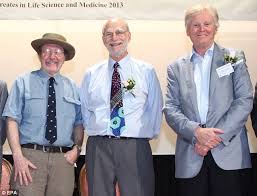
The Nobel Prize season is upon us! The first prize, for physiology or medicine, was awarded to three researchers who discovered how living things tell the difference between night and day (the 24-hour body clock):
According to the Nobel committee’s citation, Jeffrey C Hall, Michael Rosbash and Michael W Young were recognised for their discoveries explaining “how plants, animals and humans adapt their biological rhythm so that it is synchronised with the Earth’s revolutions.” The team identified a gene within fruit flies that controls the creatures’ daily rhythm, known as the “period” gene. This gene encodes a protein within the cell during the night which then degrades during the day.
According to Paul Nurse, at the British Crick Institute:
“Every living organism on this planet responds to the sun …. All plant and animal behaviour is determined by the light-dark cycle. We on this planet are slaves to the sun. The circadian clock is embedded in our mechanisms of working, our metabolism, it’s embedded everywhere, it’s a real core feature for understanding life.”
This Nobel Prize highlights the competitive nature of science:
“While all three laboured to isolate the period gene, publishing was something of a race. While Hall and Rosbash collaborated, Young was working on the puzzle independently. Both teams reported their findings in 1984.”
Experts tell us that it is wise to rise and retire at the same time each day, to regulate our biological clock. I like to rise at 5 a.m. Now I know that somewhere, a gene is turning on a protein that gets me going. The experts say, “Our [internal] timer is constantly struggling to reset to what environment people are exposed to. If you shift your clock every week by six hours or three hours, that puts an enormous pressure on your body.”
What kind of personality does it take to win a Nobel? Well – crazy, eccentric, nose-to-the-grindwheel, obsessive-compulsive, super-nice? Yes, all of the above.
Bambos Kyriacou, professor of behavioural genetics at the University of Leicester, who is friends with all three winners and a former colleague of two, said the trio were very different people. “Jeff [Hall] is eccentric … brilliant but eccentric,” he said. “Michael [Rosbash], there is no stopping him – he is just going 100%, he will die with his boots on in the lab, and Michael Young is the most charming, nicest one of them because he is polite and pleasant, whereas the other two aren’t like that, they are just crazy,” Kyriacou added.
Wealth Creation: Creativity Beats Oil
By Shlomo Maital

A brilliant long-view analysis of capital markets is provided by the New York Times (Karl Russell).. The graph above shows “years publicly traded since 1926” on the X axis, and “total wealth creation since 1926” on the Y axis. The area of the circle shows the annualized stock return (capital gains and dividends). So this lovely graph shows us 3 pieces of information in two dimensions.
The 90-year old companies are mainly resource-based (oil, e.g. Exxon, Conoco, ), consumer products (Pepsi) and Pharma.
The newer companies are high-tech and digital.
Most striking: Apple has, in 2017, overtaken Exxon as a wealth creator, even though it is half Exxon’s age. This is because of Apple’s astonishing 30% + annual return. And Microsoft has created more wealth than, say, General Electric or IBM, with over 40% annual return. The tech stocks (the fat circles) have generated much higher annual returns than the traditional old-line companies (fairly slim circles).
What this means for individuals, companies, small businesses, and whole countries, is simple. The digital revolution is real. If you haven’t got on board yet, you’ve missed the boat. But maybe it’s not too late. If your country is still resource-based (oil nations, like Russia, Chad, Gulf States, Iran), you are out to lunch. Your leadership has be asleep.
What will this graph look like ten years hence? Fifty years hence? I’d give a lot to know.
Politics Trumps Economics
By Shlomo Maital

Sorry for the awful play on words but — once again we learn that politics drives (Trumps) economics.
McKinsey Global Research does a global survey of ‘experts’ (mostly senior managers) to survey perceptions of global risk. For some reason, I get to respond as well.
Here are the results of the latest survey.
Worldwide, four of the five top global risks are related to politics: transition of leadership, changes in trade policy (which are highly politicized, viz. Trump’s new tariffs on Canadian imports), geopolitical instability and domestic political conflicts. Asset bubbles are #3, but fall well behind the two key sources of political instability.
Trump’s footprint is seen in the risks for North America, 52% see domestic political conflicts as by far the main source. In contrast, for Latin America, it is the transition of political leaders that is most worrisome.
Developing markets are most concerned with asset bubbles, fed by massive credit expansion, especially in China. Eight years after the global crisis, asset bubbles are back.
What this means for all of us, especially global managrs but not only they: We all need to track political currents and events closely, because they drive asset prices and the economy.
Politics trumps economics. And when you capitalize Trump – you get a quirky, narcissistic and utterly unpredictable egotistical leader who can and does and say almost anything.
Wall St.: Yup, They’re At It Again!
By Shlomo Maital

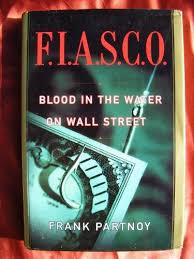
Frank Partnoy was a Wall St. insider who wrote two powerful books, showing how greed and deceit have corrupted our crucial financial markets, leading to the disastrous 2008 financial crash and ensuing economic crisis.
Hard to believe but – he now reports (in the Financial Times) that the same skullduggery that sank the world in 2008 has begun anew, with slightly different disguises.
The central culprit this time is the collateralised loan obligation. Like its earlier esoteric cousins, a CLO bundles risky low-grade loans into attractive packages and high credit ratings. In May, there were two deals of more than $1bn each, and experts estimate that $75bn worth are coming this year. Antares Capital recently closed a $2.1bn CLO, the largest in the US since 2006 and the third-largest in history. Although most of the loans underlying these deals are of “junk” status, more than half the new debt is rated triple A. Sound familiar? During the early 2000s, similar highly rated deals called collateralised debt obligations were popular. At first, they seemed harmless, or at least not so big that their collapse could cause financial contagion. But when regulators ignored their growth, they became more opaque and more profitable, with credit ratings disconnected from reality. Like cracks in a building’s foundation, the risks seemed minor at first. But high ratings hid the instability of the entire structure. Until it was too late.
Same script, different actors. Hide junk bonds in a package with good bonds, and have the credit ratings agencies rate the whole package AAA, triple A, risk-free.
The credit rating agencies, particularly Moody’s Investors Service and S&P Global Ratings, are the central actors in this story, just as in the original. The computer programs they use to assign triple-A ratings remain flawed. Because loan defaults can come in waves, mathematical models should account for “correlation risk”, the chance that defaults might occur simultaneously. But the models for CLOs assume correlations are low. When defaults occur at the same time, these supposed triple-A investments will be wiped out. CLOs are just CDOs in new wrapping.
Partnoy observes that keeping financial markets honest, clean and sane is really difficult!
It is hard to police the financial markets. New business school graduates are inevitably one step ahead of their regulator counterparts, and many of the least creditworthy businesses find it easy to borrow, because their loans can be quickly repackaged and sold. During the debates about Dodd-Frank repeal, legislators should keep their eyes on these complex investments and the agencies that facilitate them.
Trump and his Treasury Secretary are actively working to repeal the key elements of Dodd-Frank, the legislation that keeps 2008 from recurring.
Fasten your seat belts!
Warning: The Next Crash is Taking Shape
By Shlomo Maital
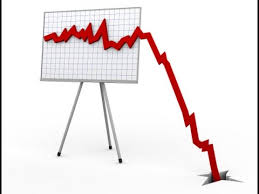
In the children’s fable, a boy cried “Wolf! Wolf!” in jest – until, when there really was a wolf, nobody came to help. Economists seem to be like that boy. We are always crying “wolf!”. Problem is, sometimes, not always, the wolf does come.
Writing in the New York Times, Ruchir Sharma, chief global strategist of Morgan Stanley Investment Management (a Wall Street insider for sure) sounds a thousand warning bells. When an insider cries Wolf!, we should listen.
Here is why.
“Central banks adopted zero to negative interest rates and provided huge amounts of cash” after the 2008 crisis. Result: “global financial assets are worth over $250 trillion, up from $12 trillion in 1980, or more than 3 times global GDP.” …”The ocean of money in financial markets is so large, it’s possible that ripples on its surface could trigger the next big downturn.”
Suppose, just suppose, as North Korea and the US square off, global financial markets fall by 10%. That implies paper losses of $25 trillion, or half again as large as the United States’ annual GDP. That could trigger widespread panic.
Why have asset prices risen so dramatically? Because when you get to borrow free money, you are tempted to do something, anything, with it — even when returns are low. At long last, central banks are beginning to worry about what they’ve done – create a new bubble. As Sharma notes, “asset prices from stocks to real estate have never been this expensive simultaneously.” Clue that it’s a bubble? Of course.
Since WWII, there have been 88 recessions – and 62 of them followed a stock or housing bubble or both. So a financial crash will inevitably bring an economic crisis.
Does anyone else agree that the wolf is on the way? Philip Inman, The Guardian, does. He notes that the US Federal Reserve is now starting to sell its $4 trillion in bonds, bought in order to pump money into the system. In other words – soak up some of the mountain of money it created. This will require the US Treasury to raise more in tax, Inman notes. Why? If the Treasury can’t sell bonds, it has to raise taxes. But baby boomers everywhere, those who have grown wealthy, simply refuse to pay the taxes needed to keep their governments afloat. And the Trump administration is hell-bent on lowering taxes, not raising them. The baby boomers are “offloading the problem to younger lower-income groups, who now must borrow excessively just to make ends meet”.
It’s a recipe for big trouble, which now includes a war between the generations – when once, we old fellows used to try to make things better for the younger kids, and now we seem to be working hard to make them worse. And I haven’t even mentioned climate change.
“There is growing evidence of a slide into outright deflation even ahead of the next recession…”, notes a financial analyst, Albert Edwards. He thinks the US will soon slide into recession. And Trump is about to appoint five new Fed governors, all of whom want less regulation and less government.
I know a fairly wealthy investor, highly savvy, who is pulling his investments out of the US and putting them into Europe, of all places. Problem is, in a global crisis, there is no safe haven.
These are dangerous times. Everyone should set aside a bit extra for rainy days, and prepare at least mentally for a new global crisis.
What Happened? Why Hillary Lost..My Take
By Shlomo Maital

Hillary Clinton has now published her account of why she lost the presidential election: What Happened? She admits to blame, but also blames many others, including the Russians and Comey.
She also notes how she was unnerved at a crucial debate, when Trump lurked behind her, scowling. And a headline even praises her for ignoring Trump (see above).
I disagree. Her is my take on an alternative scenario.
Hillary: turning and pointing at Trump. “Is that the person the American people want to lead them? Come out here, Mr. Trump, come out into the light where we can see you for what you are – a bully. You bully everyone, you bully women in particular – but Mr. Trump, you can’t bully me. I’m not afraid of you. A man who bullies, who hides in the shadows as you do in your shady business dealings, in your shady bankruptcies, in your hiding your income tax returns… you are not worthy of the trust of the American people. We don’t like bullies. We don’t like liars. And we don’t like men who threaten women. We are going to thump Trump on November 8! Thump Trump!”
Hillary was the first female U.S. Presidential candidate. I recall that Israel had a woman Prime Minister, Golda Meir, who was widely believed to be a lot tougher than her male counterparts. Many criticized Hillary for her emails, her lack of human warmth, etc. I think she would have won Ohio (and hence the election) if she had shown another quality – toughness. The irony is, Hillary is indeed tough. But the toughness was shown only in private, and rather hidden in public. Alas!
How to Help Creative People: Be (Or Support) Claude Shannon’s
By Shlomo Maital
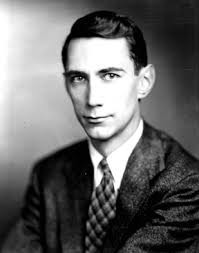
Claude Shannon
Claude Elwood Shannon (1916- 2001) was an American mathematician, electrical engineer, and cryptographer. He invented what we today call known as “information theory” – the foundation of software, computers and cell phone technology.
According to Wikipedia: “Shannon is noted for having founded information theory with a landmark paper, A Mathematical Theory of Communication, that he published in 1948. He is, perhaps, equally well known for founding digital circuit design theory in 1937, when—as a 21-year-old master’s degree student at the Massachusetts Institute of Technology (MIT)—he wrote his thesis demonstrating that electrical applications of Boolean algebra could construct any logical, numerical relationship.” In other words, you can do anything with 0,1.
NATURE magazine (July 13 2017, p. 159) has a review of a new book about Shannon, A Mind at Play: How Claude Shannon invented the Information Age. The review is written by Vint Cerf, who designed the architecture of the Internet.
At the close of his review, Cerf notes: “What emerges is a portrait of an exceptional free-spirited mind, nurtured by colleagues at MIT and Bell Labs….he was protected from some of the more mundane aspects of work, such as reporting progress, by colleagues and managers. They recognized his unique ability to wrestle insight from complexity, by peeling away details that obscured the kernel of problems and inviting creative solutions”.
What I learn from this is: Be like Shannon. Strip away the humdrum things you do, and focus on big problems, on the core of the problem. Peter Drucker taught “Innovation and Abandonment” and he began with ‘abandonment’. That is, what can you get rid of in your life that takes away time and energy from your creative powers? How can you be like Shannon?
And, next best, if you cannot be like Shannon, can you identify and support other people around you who are like Shannon? Supporting other creative people may be as important as being creative yourself.
How to Cure Cancer: Zelig Eshhar and the $12 b. Exit
By Shlomo Maital
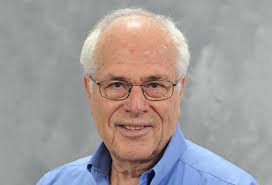
Prof. Zelig Eschar
Last year, I blogged about a remarkable breakthrough in research on fighting leukemia and lymphoma.
“Media reports last week [2016] brought exciting news about a new breakthrough in the fight to cure cancer. Cancer patients received genetically modified T-cells that were equipped with synthetic molecules called chimeric antigen receptors, or CARs. Those T-cells were able to target and destroy the tumor cells – specifically the ones that were responsible for the acute lymphoblastic leukemia the patients were suffering from. According to officials at the Fred Hutchinson Cancer Research Center, where the research was carried out, patients in the trial – some of whom were told in 2013 they had barely a few months to live – not only survived, but now, after the therapy, “have no sign of the disease.” One of the pioneers of this approach is Prof. Zelig Eshhar, of Israel’s Weizmann Institute. According to press accounts: “Eshhar has been conducting T-cell research for over a decade, and in 2014 was recognized by leading industry publication Human Gene Therapy for his work, along with Dr. Carl June of the University of Pennsylvania for their work in the field.”
Yesterday brought an interesting postscript, with an Israeli perspective.
Kite Pharma, a US company founded by an Israeli scientist, Dr. Arie Belldegrun, acquired the patent rights to Eschar’s breakthrough, in a very complicated deal. Now, according to the Wall St. Journal, a biotech company called Gilead (“Balm of Gilead”, from the Bible), with $30 b. in annual revenues, has acquired Kite Pharma, for a staggering $12 billion. And that figure is not overpriced.
One reason for the high price is that recently Novartis received FDA approval for a similar drug, based on genetically engineering T-cells to recognize and kill cancer cells, this one for leukemia. Kite and Gilead may soon get FDA approval for their drug aimed at non-Hodgkin’s lymphoma.
Belldegrun is a remarkable individual. He is a Professor at UCLA, a specialist in urological oncology. And at the same time he is a serial, successful entrepreneur, having done several exits (and earned many hundreds of millions of dollars), and is founder of Kite. He recognized the potential of Eschar’s breakthrough and managed a complex deal in which Kite acquired the rights to the patent. Belldegrun studied at Israel’s Weizmann Institute and Hebrew University Medical School, and moved to the US early in his career. He collaborated closely with Dr. Steven Rosenberg, of the U.S. National Institutes of Health.
The new approach to fighting cancer – teaching T-cells how to spot cancer cells, which are cleverly disguised, tear off their disguise and kill them – is highly promising. Kudos to Professor Eschar, Dr. Belldegrun and to those who were early investors in Kite – and profited.
Crowd-Sourcing Hard Problems, as Games
By Shlomo Maital

One of the hardest problems in molecular biology is discovering the exact 3-dimensional structure of complex protein molecules.
Scientists at University of Washington, Center for Game Science, in collaboration with the Department of Biochemistry, found a unique way to tackle the problem. They crowd-sourced it, by creating a kind of social game in which players collaborate to find protein’s 3D structure – how the protein molecule ‘folds’. The game is called FoldIt. A recent BBC program decribed it.
Foldit attempts to apply the human brain’s three-dimensional pattern matching and spatial reasoning abilities to help solve the problem of protein structure prediction. Current puzzles are based on well-understood proteins. By analyzing how humans intuitively approach these puzzles, researchers hope to improve the algorithms used by protein-folding software. Foldit includes a series of tutorials where users manipulate simple protein-like structures and a periodically updated set of puzzles based on real proteins. It shows a graphical representation of each protein which users can manipulate using a set of tools.
But did anything useful emerge? Indeed it did.
* A 2010 paper in science journal Nature credited Foldit’s 57,000 players with providing useful results that matched or outperformed algorithmically computed solutions.
* In 2011, Foldit players helped decipher the crystal structure of the Mason-Pfizer monkey virus (M-PMV) retroviral protease, a monkey virus which causes human immunodeficiency virus (HIV) infection and acquired immune deficiency syndrome (HIV/AIDS), a scientific problem that had been unsolved for 15 years. While the puzzle was available for three weeks, players produced an accurate 3D model of the enzyme in only ten days.
* In January 2012, Scientific American reported that Foldit gamers achieved the first crowdsourced redesign of a protein, an enzyme.
We know young people are bored in school. What if we could teach them math and science through a gaming approach? Challenge them with hard problems, let them work in teams (get those smartphones out of locked cupboards and put them to work) and ignite their creative energy.
Surely, somewhere, progressive schools are doing this?
 TIMnovate