
You are currently browsing the category archive for the ‘Innovation Blog’ category.
Dealing with the Trump Presidency: a Survival Guide for 4 to 8 Years
By Shlomo Maital

OK, so counting four years from Jan. 20, or possibly eight – how do we survive?
Mark Blyth, a political science professor at Brown University, has some sage advice, published in the Washington Post.
The basic problem: In democracy, we vote for what we want. And increasingly, Blyth notes, we are simply NOT getting it.
“Unsurprisingly, people are beginning to realize that they are no longer getting what they vote for. Instead, they are being asked to pay more and more for what they already receive through taxes, taken from stagnant or declining incomes, which also must service their debts. In such a world it’s great to be a creditor and lousy to be a debtor. The problem for democracy is that most people are debtors. In such a creditor-friendly world, however, democracy is reduced knowing that the menu of policy will never vary. Trump’s win in the Midwest, British voters deciding to leave the European Union, Italy’s referendum and Greece’s revolt against its creditors are all connected in this way.”
In short: Most of us owe money. A few OWN money. The system has been rigged in their favor. And it may stay that way under Trump, the billionaire.
So how do we respond? Blyth observes:
“At the end of the day, when you no longer get what you vote for and when the role of voting is reduced to affirming the status quo, voters will vote for the most undemocratic of options if that is all that is “off the menu.” That’s democracy in action in a world devoid of choice. When you can’t get what you want and most people do not benefit from the economic outcomes of government, it’s also what makes democracy unstable.”
Americans voted “off the menu” (a minority of them, true) because that was the only choice ‘off the menu’. And it has made democracy unstable, and is doing so all over the Western democracies.
We’ll survive this. Take a deep breath. Take a long view. Watch how the brilliant, wise American Constitution protects its citizens from scoundrels. At some point, centrist politicians will begin to understand that voters want real change, want to unrig the system to help debtors not creditors, and want actions, not promises. It may take a few more ringing defeats, like Trump, Brexit, and Italy to wake these politicians up.
For four years, or eight years, Americans must say clearly what they want, and vote that ticket in every election. Mid-term elections are only two years away. How will Trump supporters vote, when they feel they are again, not getting what they want?
There is Only One Eye in Mobileye: And It Saves Lives
By Shlomo Maital

Amnon Shashua and Ziv Aviram
If 93 per cent of road accidents are caused by drivers, then there has to be ways to help drivers avoid crashes. The problem is a global one. Worldwide, there are 1.5 million road deaths yearly and 15 million injuries as a result of car accidents.
An Israeli startup called Mobileye, founded in 1999 by two friends, one a Computer Science professor and the other, a CEO specializing in retail, seems to have the answer. Here is the story.
Shashua recalls being asked at a conference in late 1998 by a car maker whether two cameras could identify the location of a vehicle. Humans, animals and insects use two eyes to gain perception of depth. Shashua answered, “Why two? It can be done with one.” He knew this from his computer science research; he had published a seminal article titled “3D visual recognition from a single 2D image” the year before. The fact that there is only one “eye” in Mobileye was an iconoclastic idea initially rejected by all, and is today, a standard. Shashua recalls, “We (Shashua and Aviram) decided to develop a company….. The decision was taken when we were on a motorbike trip in the Negev. The company was launched in mid-1999. The idea was to use a single camera along with advanced software to warn drivers. At the time no-one thought this monocular device was possible. It was unique.”
Mobileye uses visual systems and software to warn drivers of impending collisions. The device warns drivers if their vehicles are about to stray into another lane, and if they are dangerously close to a vehicle ahead. It has been installed in 12 million vehicles in the world, in Israel, US, Japan and Korea. And it works. In an age when many accidents are caused by drivers distracted by cell phones, it is definitely life-saving.
Insurance company data audited by an actuary show the device cuts accidents by half. An Israeli Transportation Ministry regulation now requires all heavy vehicles over 3.5 tons to install this device, as of Nov. 1.
Mobileye is based in Jerusalem, employs 700, will reach revenues of $350 m. this year and net income of some $200 m. It is partnering with Intel and BMW to prepare the technology for future self-driven cars.
Here is the two entrepreneurs’ vision of the future for autonomous driving:
“Robot cars do not drive like humans,” Shashua observes. “They are too slow, too conservative. Cities won’t agree to this. How can we teach self-driven cars to drive safe, but like humans? We are proposing a solution. And our future includes this solution. This will be much bigger than the existing car industry. This is “wow” squared!”
Aviram adds: “18 years ago, we started a company that had vision-based technology to prevent car accidents. Today our vision is much wider. We are a provider of infrastructure to enable autonomous driving systems. It will be very hard to produce such systems without Mobileye. There will be a total change in how and what we drive. There will be no parking lots. People will not own cars. Sales of cars will fall by half. The brand of your car will be of no importance. You will summon a car when needed and it will drive you to where you’re going.”
“In 20 years,” Aviram claims, “it will be illegal to drive.” Considering the enormous human toll accidents take today, that may be a breakthrough.
Restart for Globalization? What It All Means for Us
By Shlomo Maital
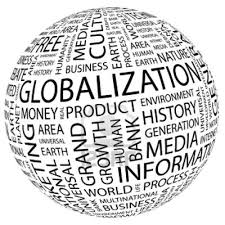
The rise of rightist leaders and governments worldwide (UK, Europe, US) who oppose globalization (free unhampered movement of goods, services, people, information, money and technology) has brought a great deal of new thinking. Trump wins, Brexit, Renzi resigns, Austria’s far right barely loses, Merkel turns right, LePen is on the rise, Putin makes trouble everywhere… Globalization seeks win-win. Nationalism seeks “we win/you lose”… which can turn into lose/lose easily.
Global world trade and finance seem headed for some sort of restart: What are the main implications for people everywhere? What form will this restart of globalization take? Will the free movement of goods, services, people, information, money and technology be impaired? Amidst the enormous fog of uncertainty shrouding the world economy at present, can we make some reasonable predictions? This and several following blogs tackle this daunting task.
Background: Globalization really began on July 1-10, 1944, at a resort called Bretton Woods, New Hampshire, U.S. at Hotel Mt. Washington. The U.S. convened world economic and financial leaders and in 10 short days redesigned the architecture of the world economy, even as World War II raged. Here globalization was born: the General Agreement on Tariffs and Trade, which in negotiated rounds lowered trade barriers; the World Bank, which funded infrastructure in poor countries; IMF, the financial fireman; and others. The goal: first, lower tariffs and trade barriers, to make trade an engine of growth. America opened its markets, and emerging nations benefited greatly. So did the U.S., in part, by gaining a flood of low-price consumer goods; while losing manufacturing jobs. The world gained, with trade becoming the engine of growth; trade grew twice as fast as world GDP.
The gains for the US from globalization are amorphous, the losses are tangible and identified with specific people and groups. Globalization brought enormous inequality, with a few big winners and a lot of small losers. Nobody found a way to compensate the losers, or even to try. It was a ticking time bomb. (The illustration above mentions ‘inequality’..nowhere). Wealth concentrated in very few hands. And inevitably it exploded. The losers, blue collar workers, low-to-middle class wage-earners, now take their revenge at the polls. Hence: Trump. And that revenge has just begun.
Who gets it? Which of the experts has begun to figure this ‘restart’ out? Start with Larry Summers, Bill Clinton’s Treasury Secretary, former Harvard President, and the nephew of two Nobel Economics Laureates, Paul Samuelson (MIT) and Kenneth Arrow (Harvard). In the New York Times, Summers make these observations:
“This renaissance of nationalism and resistance to globalization appears to be universal, and not the exclusive preserve of either the left or right. It seems to stem from a profound sense on the part of many groups that their lives are buffeted by forces beyond their control. As people’s distance increases in a geographic sense, in a cultural sense, and in the sense of a lack of shared identity, they lose confidence in their leaders’ abilities to protect them. Insecurity is begetting atavism (the reappearance of bad traits that we thought had disappeared). These trends pose dangers. For all the problems and challenges, the past 70 years have been a period of unprecedented progress in increasing human emancipation, prosperity, life expectancy and in reducing violence. All of this would be at risk. We need to redirect the global economic dialogue to the promotion of “responsible nationalism” rather than on international integration for its own sake. … These and other statistics indicate that the United States and Europe are just one recessionary shock away from being caught in a deflationary trap. Japan has been stuck in one for more than a decade, with expectations of decreasing prices prompting consumers to delay spending and save money. Assuring adequate pressure for stimulus needs to become a priority for the Group of 20, to precaution against deflation. The events of 2016 will be remembered either as a point at which we began to turn away from globalization or the one at which the strategies of globalization began to be reoriented away from elite and toward mass interests. As we make our choices over the next few years, the stakes are very high.”
Top priority, for Summers: Prevent a global recession, as Trump pushes interest rates higher (helps the rich make even more money) and this spreads worldwide, and as trade stops growing and with it, GDP.
Implication: In your planning, think about a scenario in which there is renewed global recession. Have you set aside enough? For those who know history: In 1932 the U.S. imposed a tariff on foreign imports, the Smoot-Hawley tariff, bringing retaliation, shrinkage of trade…and ultimately, the Great Recession.
Pontypool: We Forgot Them & We Will Pay a Heavy Price
By Shlomo Maital
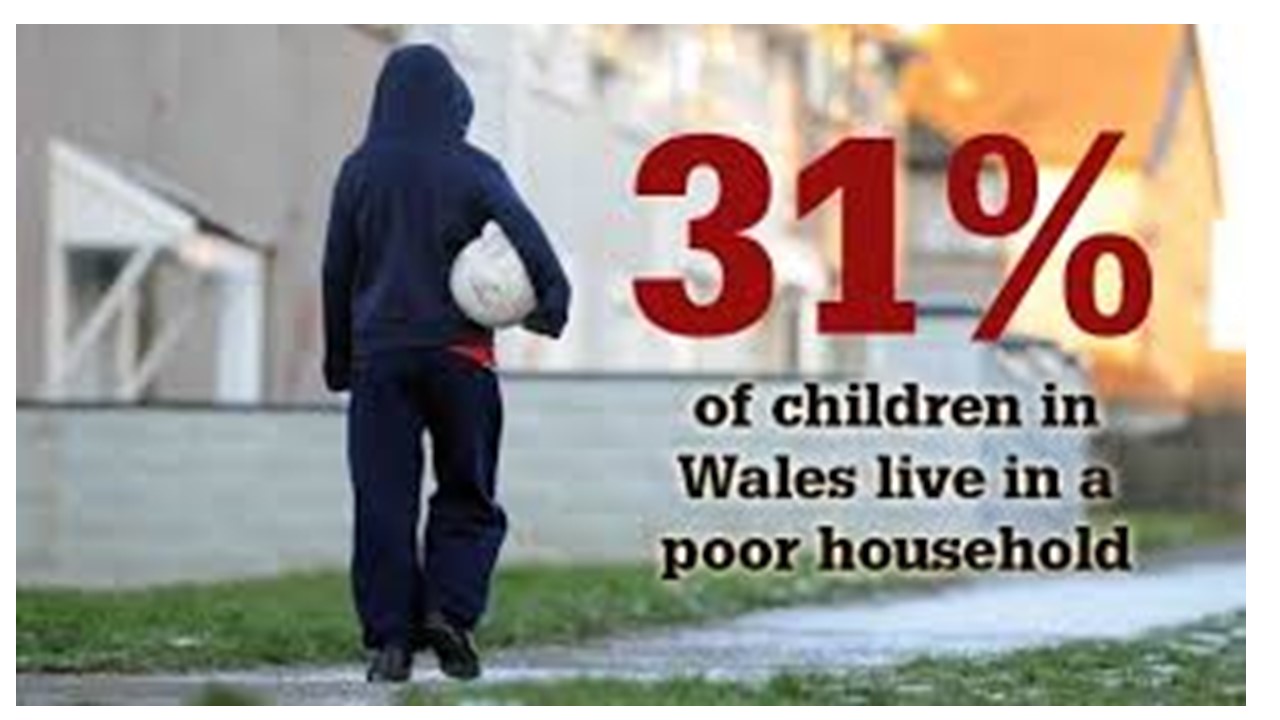
Journalist Aditya Chakrabortty has been covering the “post industrial” depressed areas of Britain for The Guardian. These are the people who once had good jobs in factories and mines, who have been forgotten and neglected by governments in Britain, the rest of Europe and the U.S. They became invisible.
Now, after Trump and Brexit, perhaps we are waking up. Perhaps we are beginning to see them. Here are parts of Chakrabortty’s vivid description of a once-wealthy Wales town. If Brexit and Trump act to truncate globalization, it will be because we forgot those who lost because of it, and celebrated only those who gained. Post industrial? “Post” implies something came after ‘industrial’. But what? Poverty? Hardship?
“The story of Pontypool is a story of riches squandered, of dynamism blocked, of an entire community slung on the slagheap. Sat atop vast deposits of iron ore and coal, it was probably the first industrial town in Wales. For a time, under Victoria, it was richer than Cardiff. Even now, to look along its skyline is to see traces of wealth: the park with its Italian gardens and bandstand; the covered market with its olde price list for snipes or a brace of pheasants; the 25 listed buildings that make this one of the most sumptuous small town centres in Britain.
“Then look down. On a typical weekday, the indoor market is a desert. Those bits of the high street that aren’t to let are betting parlours, vaping dens and charity shops: the standard parade for hollowed-out towns across Britain. The reason isn’t hard to fathom: the mines shut down decades back; the factories have pretty much disappeared. Those big employers still left aren’t big employers any more. One of the staff at BAE tells me that when he joined in 1982, it had 2,500 workers on its shopfloor; now, he reckons, it has 120.
“Swaths of Pontypool and the surrounding region of Torfaen now rank among the poorest in all Britain. On part of one of its housing estates in Trevethin, 75% of all children under four are raised in poverty. Over half – 53% – of all households who live on that stretch are below the poverty line. With that come all the usual problems: families that can’t pay the rent, that are more likely to fall prey to a whole range of sicknesses, from mental health to cancer. Those people can expect to die 20 years before their near-neighbours in some of the better-off areas in Pontypool. First the economy died out, now its people are too.
“Pontypool is like the rest of south Wales, like many other parts of Britain I have reported from. It’s what politicians and economists call “post-industrial”. That term, though, implies something coming after; here, hardly anything has come after. A few years ago Pontypool town centre was declared on the verge of death by a local councillor, who bore a coffin lid in a mock funeral procession.”
2007: Did We Miss It?
By Shlomo Maital

New York Times columnist Tom Friedman thinks something interesting and important happened, in 2007 – while we weren’t looking. Why weren’t we looking? Because we were preoccupied with the global economic and financial crisis. And we missed a “strategic inflection point” (a key turning point in history).
This is the subject of his forthcoming book, in the works for the past 3 years.
What did we miss in 2007? The first iPhone that began the smartphone revolution; Facebook opened itself to anyone; Twitter took off in 2007; Hadoop helped enable Big Data and cloud computing. Kindle began the e-book revolution. Google introduced Android. IBM started Watson – the cognitive computer that is great at medical diagnoses. Genome sequencing? Once it cost $100 m. to decipher a genome; that cost fall drastically, starting in 2007. Solar panel costs decline sharply in 2007; Airbnb was conceived in 2007; Intel introduced non-silicon materials in its microprocessors; and the Internet cross the 1 billion user mark.
“Connectivity and computing got so fast, cheap, ubiquitous…that they changed three forms of power:
* the power of one – what one individual or small group can do to make or break things is phenomenal. (See Trump’s tweets to 28 million followers).
* the power of machines – machines are starting to become truly creative, [making things] that are indistinguishable from the work of humans.
* the power of ideas – ideas now flow digitally through social networks all over the world, faster and farther. New ideas suddenly take root and long-held ideas can suddenly melt away. “
These three changes are like a hurricane in which we’re all being asked to dance. You can dance in a hurricane, Friedman notes – but only if you’re in the eye. Trump and Brexiters want to build a wall against the change. Won’t work. “I think the challenge is to find the ‘eye’ “, Friedman argues.
How will you adapt to these three key changes? And, can you find the ‘eye’ and the ‘I’?
World Economy: Loop the Loop!
By Shlomo Maital

From time to time, I answer a questionnaire distributed by a German research institute, called Ifo World Economic Survey. Based on that survey, Ifo publishes a “business cycle clock” for the global economy. The latest one is shown above.
To explain: the X axis is the current situation: good or bad; the Y axis is the change, improving or deteriorating. The ‘clock’ starts in 2007, just before the 2008 subprime mortgage crisis that began in the US and spread around the world.
What we see is this: First, a huge ‘loop the loop’ cycle, stretching from 2007/8 to 2011, with a very deep recession. Then, two smaller loops, 2012-13 and 2014-15 cycling around ‘no change’ and ‘average situation’. The cause? Weak Chinese growth, and very weak EU growth.
Once the global economy had a powerful locomotive tugging it upward. First, the locomotive was the US economy, whose appetite for goods created enormous demand and pulled the Asian economies into high growth. Then, the locomotive was China’s economy, whose rapid growth spread to surrounding countries, as China imported components.
Today? The global freight train has no locomotive. Not the US, not EU, not China. Until a locomotive emerges, and one may not, the world economy will continue to do these small ‘loop the loops’, like a stunt plane, around the average.
Have you strategized this rather gloomy forecast?
Basic Income Guarantee: It’s Coming!
By Shlomo Maital

President-elect Trump promised many things in his election campaign. One of his promises was to restore the lost jobs of steelmakers in Pennsylvania and coal miners in West Virginia. Many doubt that this can be done. U.S. workers are more costly, and less productive, than those in other countries, in steel and in mining. If Trump protects them with high tariffs, other countries will retaliate, and everyone will lose as trade declines.
America, Europe and virtually all nations have to face a hard fact. Many jobs are being destroyed, not by trade, but by technology. Robots will be able to do half of all existing jobs in a decade or two, according to research by Oxford University experts. What then do we do about it?
Switzerland and Finland have already held referendums on paying a cash grant to all citizens, as a kind of living wage. If the economy cannot provide jobs for people, then it must give them enough income to live on. There is no choice.
Writing in the New York Times, Nov. 14 (“Handouts with a twist”), leading behavioral economist Robert H. Frank offers a concise analysis.
Historically, social welfare legislation arose only when countries landed in deep hot water. For example, American social security was signed into law by President Franklin Roosevelt in 1935, at the depths of the Great Depression, with millions jobless and suffering. Unemployment insurance in the United States originated in Wisconsin in 1932 and quickly spread to state governments, for the same reason (unemployment at its worst was 25% in the U.S.). People were starving.
Will it take a similar crisis to countries to enact the cash grant plan?
Frank recalls that right-wing (Republican) economist Milton Friedman, a Nobel laureate in 1976, advocated a negative income tax, basically an income guarantee. Friedman advocated a grant of $25,000 for a family of four, just above the poverty line. Frank proposes just such a grant, combined with “subminimum wages for performing useful public sector tasks”.
This is simply an adequate social safety net. The U.S., and many countries, lack one at present. The result is immense suffering, especially for children of poor families. This is directly responsible for Trump’s election.
But Frank is very practical. “Policies we adopt must be palatable to voters in the middle – the people who make significant sacrifices to earn the incomes we tax, to pay for social welfare programs.” These voters would react angrily at the polls to efforts to pay money to able-bodied people who do not work. These are Trump voters.
Frank thinks such cash grants, if they are small enough and combined with public service, could pass. The question is, will they be implemented before a deep crisis, or during and after?
Blockchain: What It Means For Us
By Shlomo Maital

At a Swiss-Israel Innovation Workshop I spoke at recently, in Lucerne, a speaker casually mentioned that the next world-changing technology will certainly be something called “blockchain”.
What in the world?
According to Florian Graillot, writing in the TechCrunch website:
In the blockchain, information is stored in blocks that record all transactions ever done through the network. Hence, it allows validating both the existence of assets to be traded and ownership. To avoid double spending, the technology requests several nodes to agree on a transaction to process it. A validation is also artificially difficult to achieve: miners leverage computer power to solve complex cryptographic problems (the proof-of-work). Every time a problem is cracked, a block is added to the chain, and all the transactions it includes are thus validated. The updated chain, including the new block, is shared with other nodes and becomes the new reference; this process leverages cryptography to prevent duplicate transactions.
Not too clear? Another try: With blockchain, chains of ‘blocks’, or transactions, you don’t need a middle man (e.g. bank) to organize buying and selling. It is done by a network of buyers and sellers, and the technology of blockchain enables secure transactions, without fraud. Blockchain is a matchmaker bringing together those who have something with those who want it. It is built, like building a brick wall…
It is best understood by the way it is used. Graillot continues: “ Bitcoin was the first use case of the blockchain, and the most famous one. Its founder developed this technology to process money transfers and to solve many cryptocurrency issues. Instead of having a central bank that issues money, and banks to validate financial transactions, Bitcoin relies on the blockchain. Abra, for instance, is leveraging this technology to ease money transfers across borders — they rely on Bitcoin to disrupt the remittance market.”
Blockchain is a disruptive technology – that is, a game-changing technology that undercuts huge established existing players (stock exchanges, banks, etc.) and instead enables smaller players and startups to compete, by creating value for customers.
“…..many applications of the blockchain could be explored. And startups are already working on this technology to disrupt industries. Indeed, every time a third-party is involved to process a transaction, the blockchain could replace it. ● Overstock developed “tØ” a public equities trading platform based on the blockchain. ● And in the same area, NASDAQ announced a partnership with Chain a few months ago: They are working on disrupting shares trading by using the blockchain. ● More generally, financial institutions, like Goldman Sachs or Barclays are teaming up with the startup R3 to create a new framework for the markets based on the blockchain. ● A few startups are going even further, and plan to use the blockchain to trade physical assets. Thus, Bitproof and Blocknotary are disrupting contracts by recording them on the blockchain; instead of completing your house sale in front of a notary, just store the contract on the public ledger. ● Colu, on its side, is using the blockchain to manage property through digital tokens that can unlock either online services or physical objects. ● This also could be applied to intellectual property. For instance, ● Verisart is using this decentralized technology to verify art pieces. It encodes copyrights of artwork and records them on the blockchain. ● ProofOfExistence, as well, is leveraging the public ledger to keep track of files you have created. ● To go further, the blockchain could be used to identify people. ShoCard encodes and stores personal information regarding identity. It could enable smart contracts, as well: As soon as terms are met, the contract is processed, thanks to the decentralized infrastructure. ● IBM is currently working on this application. It also unveiled a partnership with ● Samsung ADEPT, a proof of concept using the blockchain in the Internet of Things area.”
We don’t really need to understand the technology of blockchain. Enough to know that it can match supply and demand, worldwide, instantly, and in a secure manner, bringing people together. Marc Andreessen, legendary inventor of Netscape, compares it to previous tech revolutions: “Personal computers in 1975, the Internet in 1993 and Bitcoin in 2014.”
How Asia Sees the Trump Presidency
By Shlomo Maital

Here is how my friend Bilahari Kausikan, former First Permanent Secretary of Singapore’s Ministry of Foreign Affairs, sees the Asian reaction to the election of Donald Trump as U.S. President. This is from the Nikkei Asian Review:
Donald Trump will be the 45th president of the United States. Whatever they may say in public, few East Asian governments will greet the news with much enthusiasm — and all will harbour a degree of unease. Only the North Korean leader Kim Jong Un and Cambodian Prime Minister Hun Sen made their preference for him known. But they are hardly typical and the latter, for once, did not follow China’s lead.
- Beijing is usually scrupulous about avoiding comment on the domestic politics of other countries, but still felt it necessary to publicly criticize Trump’s stance on climate change. A South China Morning Post poll published on Nov. 5 showed that 61% of Chinese preferred Trump’s Democrat rival Hillary Clinton, higher than her final share of the U.S. popular vote. Only 39% of the Chinese preferred Trump, lower than his share of the U.S. popular vote. A study by the U.S. journal Foreign Policy of Chinese elite attitudes, published on Nov. 7, concluded that while they viewed Clinton as unfriendly, most felt that Trump would be a disaster for the U.S. and hence for global stability.
- China’s leaders may not admit it, but they know that the U.S. is vital for the maintenance of regional stability. Beijing values stability above everything else, particularly with the Chinese Communist Party’s crucial 19th congress only a year away and internal labour and social unrest endemic. President Xi Jinping’s anti-corruption campaign has generated a great sense of insecurity among cadres across all sectors of the state. In October, about 1,000 military veterans in uniform protested outside the ministry of defense in Beijing. It is impossible for such a large and conspicuous group to have gathered near such a sensitive area without at least the tacit connivance of some senior cadres.
- Like most of East Asia, China hates surprises. Clinton was a known quantity and would have stood for continuity in American policy toward the region. But East Asia is also pragmatic, not wont to just wring its hands in despair over new realities. Governments of the region will work with whoever is in power in the U.S.
Harvard Business School Reveals: Why Trump Won
By Shlomo Maital

Harvard Business School’s Working Knowledge on-line magazine reveals: “6 Lessons from Donald Trump’s Winning Marketing Manual”
Donald Trump’s upset election win offers six lessons for marketers looking to beat the odds and overcome powerful competitors, says John A. Quelch. Here they are, in case you wondered.
Here are six important lessons from Trump’s brand marketing playbook:
- Give consumers a job. The best marketing campaigns always call on consumers to do something. For example, United invites you to “Fly The Friendly Skies.” Nike insists that you “Just Do It.” The most successful brands also allow their consumers to co-create brand meaning. “Let’s Make America Great Again” is an inclusive call to arms with a powerful goal that each voter can interpret for himself. It embraces passion and purpose. Clinton’s “Stronger Together” is also inclusive but it evokes process, not that process isn’t important, but the desired outcome is much less clear. Good marketers know that, if you don’t position your brand clearly, your competitors will do it for you.
- Show the past as prologue. Offering consumers the adventure of voting for an uncertain future never works with the majority, especially if your brand is new to the game. Trump, the political neophyte, won by recalling a better yesterday and promising to recreate it as the better tomorrow. The word “Again” is no accidental addition to the Make America Great slogan. Remember the famous Kellogg’s Corn Flakes campaign to recover lost consumers: “Try Us Again for the First Time.’ For millions of Americans in the rust belt, the good old days really existed and they voted to bring them back.
- Pursue forgotten consumers. Most financial firms chase the same high net worth prospects, ignoring or at best taking for granted millions of modestly prosperous people. Trump turned the Democrats’ commendable embrace of diversity on its head to invoke the “Forgotten Man,” winning over lunch-bucket Democrats overlooked by their party as well as bringing in new voters and energizing lapsed ones. At the same time, almost all Republicans came home to vote for their nominee. Good marketers always know how to balance new customer acquisition with customer retention.
- Sizzle beats steak. Clinton was always going to beat Trump on the steak of experience and policy knowledge. A new brand can’t afford to get lost in the policy weeds. Hence, Trump’s campaign persona and his contract with the American voter offered more sizzle. Painted in broad brush strokes, the contract emphasizes goals and outcomes, and is light on policy and implementation details.
- Build enthusiasm. Good marketers know the power of word-of-mouth recommendations. In the era of social media, better organization (the old ground war) and outspending on television advertising (the air war) weren’t enough for Clinton. Trump’s determination and stamina–five speeches a day–and the size of his crowds impressed ordinary voters watching on television much more than Clinton’s barrage of paid ads. The pundits questioned whether enthusiasm would convert into votes. Good marketers know that brand enthusiasm rings the cash register. It did for Trump, but not for Clinton.
- Close the sale. Political marketing requires you win a plurality of votes not every day but on a single day once in four years. Timing is everything. Trump learned what worked and what didn’t work as the campaign progressed. He refined his message, suppressed the ad hominem insults, and peaked at the right time, confounding the pollsters and media pundits. In every recent speech, he repeated the same messages, inviting voters to imagine the future if they bought into the promises of a Trump administration. He confidently asserted “we are going to win” this state, “we’re leading in” that state. Consumers not only want to back a winner, they want to back a brand that sees itself as a winner. And they want to back a brand that other people similar to themselves see as a winner. That’s when a brand becomes a movement. In the last week, brand Clinton promised a bright future but looked like the candidate of yesterday, a little tired and overly reliant on a supporting cast of Obamas and Bon Jovis. By contrast, Brand Trump promised a future that looks like yesterday, Everyman’s high-energy underdog and outsider, disruptive yet decisive, standing alone at the podium, mane flowing, ready to step up to Pride Rock.
Quelch concludes: “Brand Trump is today’s bright new thing. But new is easy. Good is hard. Time will tell whether Brand Trump can deliver on its promises.”

 TIMnovate