You are currently browsing the category archive for the ‘Innovation Blog’ category.
How to Pitch Your Idea: Secrets from TED
By Shlomo Maital

My Entrepreneurship courses, taught in Israel and in China, always end with each student team giving a ‘pitch’ – presenting their ideas to potential investors. Even seasoned educators are often poor communicators, let alone very young students. What advice can I give, to help make ‘pitches’ highly interesting and effective – especially when you are pitching to a jaded audience, one that has heard it all before? I’ve been reading a book by Carmine Gallo, Talk Like TED, about the most popular TED talks and what makes them so popular. The book is very useful, because it is based on a democratic ‘election’ – number of views. Here are the top TED talks of all time: (See List below).
What makes for a TED talk that millions watch? I can boil down Gallo’s fine book into one recommendation, in two words: Tell stories! Tell your own personal story. Get your message across with N=1, not boring N=5,000. People relate to stories, learn from stories, their own and others. Take for instance the TED talk by Jill Taylor. She is a neuroscientist, who had a serious stroke. She welcomed the stroke, because, as she explains, she could analyze the post-stroke brain “from the inside”, inside her own brain. And in 18 minutes, she tells the story. Watch it – it’s gripping.
So – you have an idea for a product or service? Tell it as a story. Who uses it? Name a real person. Why do they love it? How does it change their lives? Be authentic. Be real. Skip the Power Point. Slip in 2-3 key facts, but only as part of the story. Try to add some ‘surprises’ – those who have heard it all need something to jolt them… wow, that’s interesting, haven’t heard that before. Start with a punchy short key sentence… like Sergio Brin’s and Larry Page’s pitch to Sequoia, that got them a big check…and the rest is Google history. [“our search engine brings you all the world’s information in one click”].
Top TED talks of all time
Ken Robinson. Do schools kill creativity? Sir Ken Robinson makes an entertaining and profoundly moving case for creating an education system that nurtures (rather than undermines) creativity.
Amy Cuddy. Your body language shapes who you are. Body language affects how others see us, but it may also change how we see ourselves. Social psychologist Amy Cuddy shows how “power posing” — standing in a posture of confidence, even when we don’t feel confident — can affect testosterone and cortisol levels in the brain, and might even have an impact on our chances for success.
Simon Sinek. How great leaders inspire action Simon Sinek has a simple but powerful model for inspirational leadership — starting with a golden circle and the question “Why?” His examples include Apple, Martin Luther King, and the Wright brothers …
Brené Brown. The power of vulnerability. Brené Brown studies human connection — our ability to empathize, belong, love. In a poignant, funny talk, she shares a deep insight from her research, one that sent her on a personal quest to know herself as well as to understand humanity. A talk to share.
Jill Bolte Taylor. My stroke of insight Jill Bolte Taylor got a research opportunity few brain scientists would wish for: She had a massive stroke, and watched as her brain functions — motion, speech, self-awareness — shut down one by one. An astonishing story.
Creativity: The Dark Side
By Shlomo Maital

Some 53 years ago, Harvard Business School Prof. Ted Levitt, as always ahead of his time, noted in the Harvard Business Review that creativity has a dark side.
“Creativity…can actually be destructive to businesses. By failing to take into account practical matters of implementation, big thinkers can inspire organizational cultures dedicated to abstract chatter rather than purposeful action. In such cultures innovation never happens – because people are always talking about it but never doing it.” [“Creativity Is not enough”, HBR 1963. Reprinted August 2002].
My friend and colleague Prof. Ella Miron-Spektor drew my attention to this wonderful article.
Levitt’s prescient insight shows how and why organizations tend to stress one half of the creativity yin-yang circle – novelty – and fail to invest time and resources in the crucial second half – usefulness and implementation. A case study of an Israeli high-tech company shows how it pioneered a unique approach for overcoming creativity’s dark side. The key is in having high-level managers examine every creative suggestion, while guiding the workers toward ideas that are BOTH novel and highly useful.
‘Innovative’ organizations, large and small, often fail to generate successful innovation, because their innovation process puts far too much weight on ‘novel’ and far too little weight on ‘useful’ and ‘creating value’. One reason for this is that process innovation – how you do things, not what you do – is often neglected. Process innovation pays a far higher return than product innovation, yet many organizations don’t bother much with it. Why?
Innovator – Ask Dumb Questions!
By Shlomo Maital
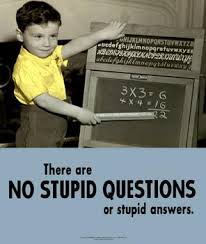
How can one person change the world? By asking dumb questions.
Really?
Here is what I mean. Last week I spoke with a founder of a startup called Aquarius. All four founders are in their 50’s… not spring chickens. Not the twenty-somethings we often picture as startup entrepreneurs. One of the other founders is a serial inventor. And one day he asked a dumb question.
The world auto industry is enormous, selling 90 million vehicles a year, with nearly a billion vehicles on the roads today. It is a major source of pollution and global warming. Car and truck engines burn hydrocarbons, either gasoline or diesel, and heavily pollute.
Conventional car engines have worked on the same principle for at least 130 years. Gasoline is burned in a cylinder when combined with air, driving the piston up and down. The up-down motion is converted into rotary energy, to turn the car wheels. The conversion process loses huge amounts of energy, making the conventional internal combustion engine only 20 % efficient.
The Aquarius founder, Shay, asked: Why? Why convert up-down piston action to rotary wheel energy? Duh… because, like, wheels go round and round, right? For many decades, and many billions of dollars in research, huge companies have tried to improve car engines, without asking that dumb question. It’s obvious. Because wheels are round, you need rotary energy.
Shay said, wait. Let’s lengthen the piston, and use its action to charge a battery. Then let’s send the electric energy to two electric motors attached to each of the front wheels. No rotary conversion. No loss of energy.
Result: 40% engine efficiency. 40%!!! Fuel saving. Plus, the key fact, far far less pollution, because by increasing air intake of the cylinder, the fuel is burned far more efficiently. The whole engine is only 500 cc’s, about enough for a Fiat 500, yet it is powerful enough to drive a larger vehicle. The engine generates an enormous 34 kilowatts of power, more than twice the power generated, for instance, by my Toyota Auris hybrid, (which I love, and which is wonderfully fuel efficient), which has an enormous heavy battery and generates only 14 kilowatts. The Aquarius battery is very small, because there is no need to store electricity, it gets delivered immediately to the wheels.
Management consultant Peter Drucker once wrote a powerful article in Harvard Business Review, in which he challenged managers to challenge all their basic sacred cow assumptions. This is harder than you think. We are often not aware of the things we believe are true, that in fact should and must be challenged. Drucker has a checklist that helps us run down all our assumptions and smash every single one, in search of a way to change the world.
Remember the name. Aquarius. Will we live in the Age of Aquarius in the coming years? Stay tuned.
Business Ethics: Oxymoron?
By Shlomo Maital
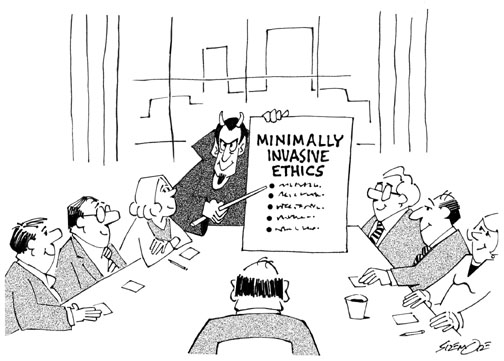
I’ve just written my fortnightly column for a magazine (Jerusalem Report), about how “plunder and blunder” ruined a first-rate supermarket chain, endangering the livelihood of 3,500 employees, as it goes into receivership and bankruptcy. The shareholders plundered the profits rather than reinvest them. Legal? Sure. Ethical? Far from it.
Strategy guru Gary Hamel has a new book out, What Matters Now: How to Woin in a World of Relentless Change, Ferocious Competition and Unstoppable Innovation. You can download a long summary by doing a Google search on the title.
Surprisingly, this is not a book about how to compete at all costs, in a jungle. It is about values and ethics. Hamel writes, “managers are the ethics teachers of the company. They define the defining moments and how to deal with them.” He cites the 5 responsibilities of stewardship: fealty (view things with trust, not personal gain); charity (put others’ interest before your own); prudence (safeguard the future, don’t take great advantage of others or the present); accountability (take responsibility for your actions); and equity (distribute rewards based on contribution, not on power). The managers of the Israeli supermarket chain, the Board of Directors and the shareholders did none of the above.
Hamel goes on: “We need an ethics revolution in business. In a 2010 Gallop study, only 15% of respondents rated the ethical standards of executives as high or very high. Nurses came in first at 81%. Corporate lobbyists, at 7%”.
I know countless businesses that were ruined by ethical corner-cutting. I know of a high-tech exec, billionaire, who back-dated options to the benefit of his workers….and fled a court summons, and now lives with his family in a very poor country, not his own, because it has no extradition agreement.
Are you going to be a values leader? Hamel asks, or a values laggard? “Having a set of ethical principles can ensure that our enlightened self-interest doesn’t go unchecked and cause a meltdown within our company.”
Sounds like a sermon in church or synagogue? It’s actually a powerful, crucial business lesson. We would all do well to heed it.
How to Raise a Creative Child
By Shlomo Maital

Adam Grant, a Wharton management professor and New York Times Op-Ed contributor, has written a wonderful piece on “how to raise a creative child”, based on solid research. Here are a few of his observations. Parents (and grandparents): Take note.
- Malcolm Gladwell, in one of his books, says success depends on investing 10,000 hours of practice. OK…but, says Grant, “can’t practice blind us to ways to improve our area of study?…the more we practice, the more we become entrenched – trapped in familiar ways of thinking?
- What motivates people to practice a skill…is passion – discovered through natural curiosity or nurtured through early enjoyable experiences with an activity or many activities.
- Psychologist Benjamin Bloom’s study of the early roots of world-class musicians, artists and scientists found that “their parents didn’t dream of raising superkids. They responded to the intrinsic motivation of their children. When their children showed interest and enthusiasm, their parents supported them.”
- What does it take to raise a creative child? One study showed: parents of ordinary (non-creative) children had an average of six rules, like schedules, bedtime… parents of highly creative children had an average of fewer than one rule.
- Harvard Prof. Teresa Amabile, creativity guru, says parents of creative children placed emphasis on moral values, rather than on specific rules. At Grafton MA.’s Touchstone School, I had a wonderful discussion with children; they told me that once they integrated the school’s core values, rules of behavior were no longer necessary.
- Parents of creative children encouraged their kids to find “joy in work”. Their children had the freedom to sort out their own values and discover their own interests. And that set them up to flourish as creative adults.
- It’s not rocket science. Find what your kids love doing, what stimulates their interest. Help them pursue them. Let them enjoy the pursuit. Build in their core values, then make them think for themselves about how to apply them. Avoid long lists of rules. Let them have fun. Give them freedom to explore. And, though Grant doesn’t say this, make them T-shaped. Deep knowledge in something. Wide broad knowledge in many things.
Adam Grant. How to raise a creative child. International New York Times, Wed. Feb. 3, 2016, p. 9.
Cheap Oil: Why Is It Bad News?
By Shlomo Maital

All too often, economic analysis seems to many like a good news/bad news joke. No economic news is ever completely happy, is it? Take for instance oil prices. The price of oil has fallen below $30, and with Iran about to add millions of barrels to the excess supply every day, it looks like the price of oil will remain low for some time.
So this is good news, right? Cheaper gasoline, more discretionary income to spend, cheaper energy prices, and indirectly, cheaper goods and services… all good news. Because, when the past oil shocks (1973/4, 1978/9) zapped oil prices way up, the result was recession. So the opposite should cause…boom? Right?
If so, then why have global financial markets reacted very negatively to the oil price fall. Why is the rule of thumb – a 10 % fall in oil prices boosts GDP growth by 0.1 to 0.5 points – not longer true? Why have global stocks fallen sharply?
Note that the cause of the current oil glut is clear – Saudi Arabia. Its Minister of Oil (acting under the aegis of King Salman, young and highly pro-active) chose to take on Saudi’s enemies, Iran and to some degree Russia, by engaging in an oil price war and bashing prices down. Saudi Arabia can do this, because it is by far the world’s low cost oil producer. It can still make money when oil is $30, unlike Russia, Iran and most other nations. And $30 oil can kill a lot of American oil production, through fracking, and reduce competition in the long run. Saudi Arabia though is suffering too, and the Oil Minister may yet lose his job.
Collapsing oil prices seem to be taken by the world as bad news, not good, because: * they will increase instability in an already unstable world, in countries like Venezuela and the Gulf States; * oil producers are slashing their spending and investment, especially Russia, as oil revenues collapse; * many investment projects involving energy exploration are now on hold; * emerging market corporate debt of an added $650 billion was in oil and commodity industries; that debt is now much more risky; * Higher risk aversion to energy firms has spread to other parts of the market and other industries as well. * real interest rates are at near zero and there is no room to slash them lower.
There are some winners. E.g., India, China, South Korea. But, notes The Economist, with the world still trying to dig itself out of the 2008 financial crisis hole, “the world could yet be laid low by an oil monster on the prowl.”
The most distressing aspect of the fall in global equities, due to cheap oil, is that it signals who really matters in the world. Big Oil, big capital, tycoons, the 0.01 per cent…THEY matter and they are the ones who are hurting. The rest of us 99.99? Well, we benefit from lower oil prices… but since we are not players in global money, we don’t really count.
Can You Focus On This – for 8 Seconds?
By Shlomo Maital
Technology is changed and adapted by human thought. But the process is circular — technology also changes human thought and behavior. For instance, the rapid-fire images of MTV music videos, which change several times a second, caught on with young people. Same with smartphones – texting, without verbs and nouns, with emojis. Instant. Fast.
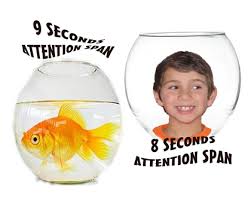
A study of Canadian media consumption by Microsoft, quoted in Timothy Egan’s New York Times Op-Ed (Jan 23-24/2016) found that the average attention span (“the amount of concentrated time on a task without becoming distracted) has declined from 12 seconds in the year 2000, to 8 seconds in 2015. “We now have a shorter attention span than goldfish”, Egan quotes the study.
Here at my university Technion, Sarah Katzir, who interacts with students daily, recently spoke about this ever-shorter attention span as a major problem for university instructors. Students simply are not able to stay focused for an entire 50 – minute class. And when instructors ban their use of smartphones in class, there is an outcry heard throughout my country.
“Our devices have rewired our brains,” Egan notes. “The trash flows, unfiltered, along with the relevant stuff, in an eternal stream. And the last hit of dopamine only accelerates the need for another one.” In other words – our ever-shorter attention spans are actually a kind of addiction, a need for a shot of ‘dopamine’ at ever-shorter intervals, from some new stimulus.
Antidotes? Egan has two. First, gardening. “Working the ground, there is no instant gratification”. Planting, he notes, forces you to think in half-year increments, at least. Second, deep reading. Curl up with an 800-page tome. Try, Gibbon’s history of the Roman empire. Will Durant’s history of the world. Or, Egan’s choice, William Manchester’s massive biography of Winston Churchill. Each of us can fight that short attention span, and at the least, become as focused as… goldfish.
Read This Blog — Tomorrow
By Shlomo Maital

There are two personality styles, for dealing with pressing tasks. One – reduce the tension, stress and anxiety they cause, by getting them done, now and quickly, and end the source of the stress. Two – reduce the tension, by putting off the task, “I’ll do it tomorrow”, procrastinate, and basically shove the task under the carpet.
Which one is you? Me? I’m the first. I do things now, quickly, often rather poorly, just to get rid of that nagging tension, that something HAS to be done, often something not pleasant. I think of myself as a creative person. But it turns out, according to U. of Pennsylvania Wharton School Professor Adam Grant, writing in The New York Times, procrastination may HELP creativity, not hinder it. Here is his argument:
So Jihae, now a professor at the University of Wisconsin, designed some experiments. She asked people to come up with new business ideas. Some were randomly assigned to start right away. Others were given five minutes to first play Minesweeper or Solitaire. Everyone submitted their ideas, and independent raters rated how original they were. The procrastinators’ ideas were 28 percent more creative. Minesweeper is awesome, but it wasn’t the driver of the effect. When people played games before being told about the task, there was no increase in creativity. It was only when they first learned about the task and then put it off that they considered more novel ideas. It turned out that procrastination encouraged divergent thinking.
Our first ideas, after all, are usually our most conventional. My senior thesis in college ended up replicating a bunch of existing ideas instead of introducing new ones. When you procrastinate, you’re more likely to let your mind wander. That gives you a better chance of stumbling onto the unusual and spotting unexpected patterns. Nearly a century ago, the psychologist Bluma Zeigarnik found that people had a better memory for incomplete tasks than for complete ones. When we finish a project, we file it away. But when it’s in limbo, it stays active in our minds.
So, hey! Why do today what you can do tomorrow? Tomorrow – you may have far better ideas for doing it. If you’re already a procrastinator… enjoy! You’re on the right track.
p.s. faithful Timnovate readers: the long silence, since Jan. 9, is not because I procrastinated. My wife and I have practiced what we preach, and have innovated in our personal lives – we’ve moved our household lock stock and barrel from Haifa, from the house we lived in for 35 years, to a community south of Haifa, where we found new friends and new adventure. So far, the leap of faith is proving to be wonderful….
2016: Two Key Inflection Points
By Shlomo Maital
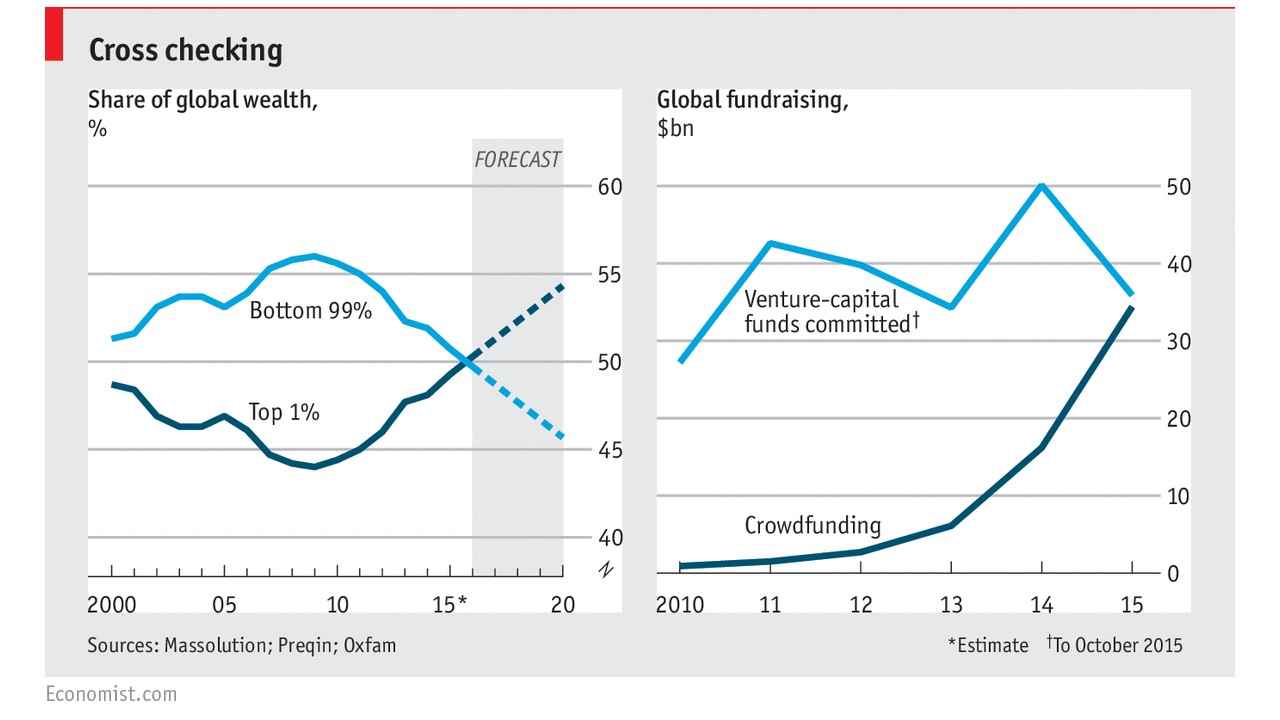
Two key inflection points (points implying major change) will occur in 2016, according to The Economist’s very interesting graphic. (see above).
First, for the first time, in a very long time, the world’s wealthiest one percent will hold a larger share of total world wealth than the bottom poorest 99 percent, and by 2020, that share of the wealthy will grow rapidly, to 55 per cent! This is a key ‘inflection point’ (point at which major changes occur), because I cannot imagine that it will bring anything but unrest and instability in the world, as the wealthy leverage their wealth to tilt political decisions and policies in their favor. Indeed the graph’s sub-text is precisely that – wealth perpetuates itself.
Second, also for the first time, crowdfunding, as a source of funds for startups and new ventures, will catch and exceed conventional venture capital. This is a major disruptive change for the large VC industry, and it is a change that has happened with incredible rapidity – from zero crowdfunding, essentially, in 2010, to $35 billion in 2015. It implies a different business model for startups, which now must tailor their messages more toward “crowds” than toward perspicacious (and sometimes, supercilious) venture investors. Along with the rise in crowd-funding comes the rise in angel investments, funded by wealthy people who are willing to take bigger risks with their money (and achieve higher returns) than with conventional financial assets.
These two changes have each occurred with great rapidity and will change our world, one perhaps for the better, one for the worse. They are worth watching closely.
What other inflection points have you noticed in 2016?
McKinsey: Testing for Innovation
By Shlomo Maital
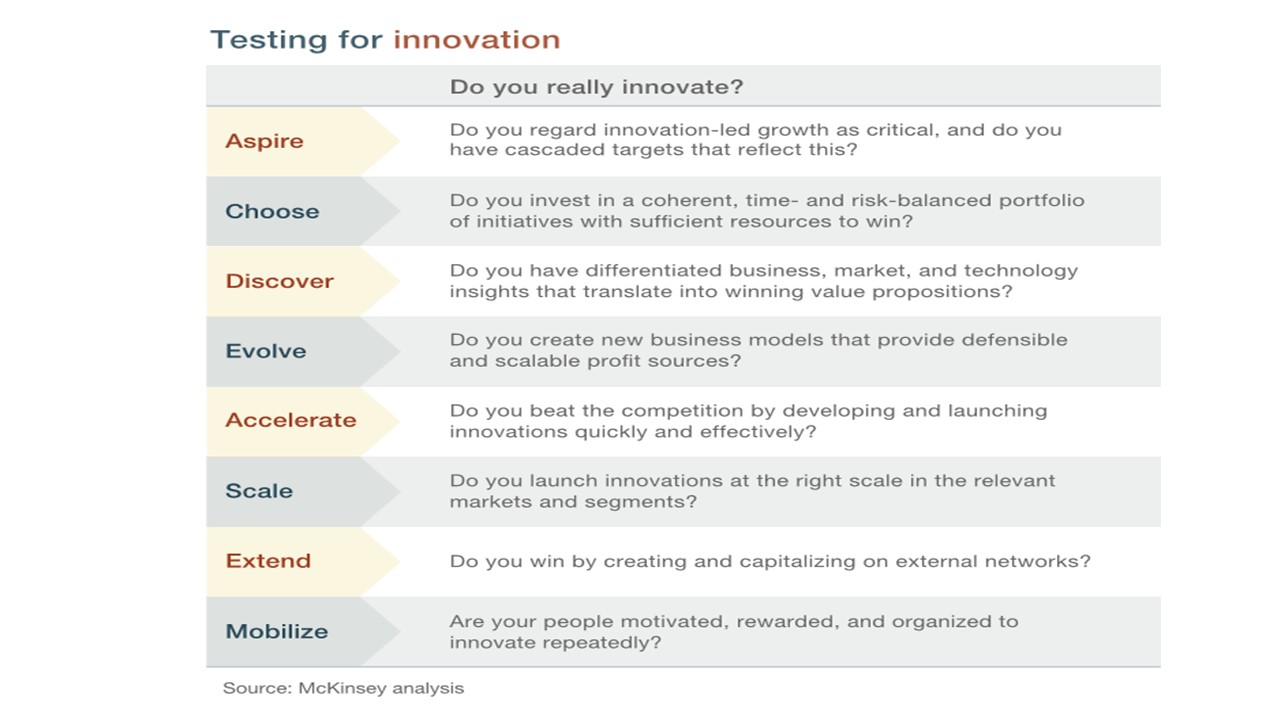
McKinsey Global Research April 2015 has circulated a lovely article on Innovation: “The eight essentials of innovation” by Marc de Jong, Nathan Marston, and Erik Roth. It includes a short self-test for you and your organization. Their key point: (often repeated in this space): “Since innovation is a complex, company-wide endeavor, it requires a set of crosscutting [and at times paradoxical] practices and processes to structure, organize, and encourage it.”
Here are the eight questions you should ask:
- ASPIRE Do you regard innovation-led growth as critical and do you have cascaded targets that reflect this? Yes/No
- CHOOSE Do you invest in a coherent time- and risk-balanced portfolio of intiatives with sufficient resources to win? Yes/No
- DISCOVER Do you have differentiated business, market and technology insights that translate into winning value propositions? Yes/No
- EVOLVE Do you create new business models that provide defensible and scalable profit sources? Yes/No
- ACCELERATE Do you beat the competition by developing and launching innovations quickly and effectively? Yes/No
- SCALE Do you launch innovations at the right scale in the relevant markets and segments? Yes/No
- EXTEND Do you win by creating and capitalizing on external networks?
- MOBILIZE Are your people motivated, rewarded, and organized to innovate repeatedly?
Score yourself and your organization. Six out of 8 or above? You’re an innovator. Five and below – you need to make some urgent changes.

 TIMnovate