
You are currently browsing the category archive for the ‘Innovation Blog’ category.
Global Uncertainty: Lifting the Fog?
By Shlomo Maital

Bilahari Kausikan
When I want some help in understanding what in the world is going on, I turn to my friend Bilahari Kausikan, Ambassador at Large in the Singapore Foreign Ministry, and until recently Permanent Secretary. Bilahari has met world leaders in person, and is an independent thinker. Here is Bilahari’s ‘take’ on the global fog, in an essay for Nikkei Asian Review:
The problem: “The 21st century global order is becoming more uncertain. The Cold War of the last century had one virtue: structure. The threat of nuclear annihilation focused that structure with stark clarity. Today, we still have danger — although of a lesser magnitude — but without structure or clarity. No one really knows what will replace the Cold War as a frame of reference. More than a quarter of a century has passed since the Berlin Wall was torn down, but we still call that period the “post-Cold War era.” Ours is an age without definition. Without a global structure, there can be no leadership. Without leadership, many urgent issues will be left unresolved or dealt with unsatisfactorily, exacerbating uncertainties.”
What made it worse: “There was a brief post-Cold War unipolar moment, during which the West seemed to define the world alone. The illusions that flourished in this short period were immensely damaging, particularly in the Middle East, where the interventions that destroyed the existing regional order were justified by the illusion of the universality of certain interpretations of democracy and human rights. The disintegration of first Iraq and then Syria shattered the regional balance. Chaos in the Middle East has global ramifications that will play out for many years to come. But the illusion of universality has not yet been discredited and still contributes to the difficulties of establishing a new, stable global order. Notwithstanding loose talk about multipolarity, the U.S. is still dominant in most indices of power. But the U.S. clearly needs help to exercise leadership, as it did during the Cold War.”
So who will step up to help the U.S.? Europe? Forget it. “The region is tangled in knots of its own making” (the worst kind!). BRICS? “Not much unites the BRICS except a vague dissatisfaction with the existing order and the desire for greater recognition of their status. But they are not all equally dissatisfied, and the sources of their discontent are not identical.” China? “China has neither the capacity nor the interest to do so, even in East Asia, its backyard, where Beijing is assertively pursuing a role that is in accordance with what it believes was its historical position and what it believes are its territorial rights. President Xi Jinping’s “One Belt, One Road” strategy is an ambitious vision of a Sino-centric transcontinental order. Can the vision be fully realized? Can China be “contained”? Should it? Does the vision require the U.S. to be displaced from East Asia? There are as yet no clear answers. The fact is that neither the U.S. nor China really know what they want from each other, even as they each seek a new modus vivendi. The strategic mistrust that permeates the Sino-U.S. relationship, which is rooted in the universalist illusions of the U.S. on the one hand and Beijing’s triumphalist nationalism on the other, do not make the search for accommodation any easier.”
Confusing? Ambiguous? Uncertain? Even, dangerous? Indeed. But at least, Kausikan helps us understand why. And who will do best in this confusion?
“The successful will be those who have best learned to live with uncertainty.” And that uncertainty, globally, will be with us for a very very long time.
Creativity: Resolving 6 Paradoxes
By Shlomo Maital
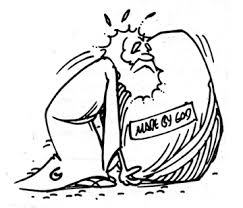
Can God make a stone so heavy God cannot lift it?
A barber shaves all those in the village who don’t shave themselves. Who shaves the barber? (Kurt Goedel).
These are examples of paradoxes: 2 propositions, sometimes wrapped into one sentence, that are internally contradictory. There is even a fifty dollar word for it: oxymoron. E.g. military intelligence.
Creativity is often a matter of two things that conflict, and a creative individual who is able to integrate and combine them. And innovation, as a process, often embodies such paradoxes. Here are six of them, drawn to my attention by a colleague, Prof. Ella Miron-Spektor.
* Passion vs. Profit: Innovation is driven by passion, as its rocket fuel. But if you focus solely on passion, ignore the hard reality of profit, you cannot build a sustained business. How to resolve?
* Huge hairy challenges vs. build self-confidence: Innovation builds on huge hairy challenges. But, frequent failure ruins self-confidence, the key resource of creative people.
* Personal empowerment, initiative, vs. Shared goals: Ideas come from individuals, who are highly motivated. Yet delivery of ideas is done by teams, who need shared goals, where the individual personality is submerged.
* Diversity vs. cohesion. Diverse teams work best. Yet cohesion is vital for delivery of ideas.
* Learn from history vs. Detach from the past. You need to learn from the past. But you also need to forget the past, in order to create the future.
* incremental vs. radical innovation: you need to make small improvements to existing things; but you also need to reinvent entire product categories or industries.
And of course, there is another paradox, that overarches the other 6: novelty vs usefulness. Creative ideas are novel, new. But they have to be useful. And what people find useful is what they know, what is familiar. This is very hard to overcome.
Innovator: How can YOU resolve these paradoxes? Find a creative way to do so, and make it a key part of your innovation process. Above all – be aware these paradoxes exist, have to be managed, and have to be somehow resolved, without destroying either of the key two propositions.
Why Migrants Are an Undervalued Resource
By Shlomo Maital
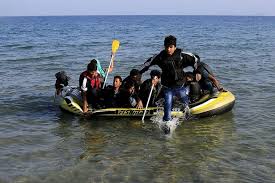
My mother and father, grandmother, aunts and uncles, all were migrants. They came from Bessarabia, now Moldova, escaping pogroms, grinding poverty, and seeking a new life in Canada and America a century ago. Canada’s relatively open policy gave them new lives and eventually made Canada prosperous, through their energy and the energy of other migrants. And their offspring have done great things for their country. My father, for instance, built low-cost houses for working people.
Today, Europe faces one million Mideast and African migrants during 2015. Public opinion has largely turned against them. The brutal homicidal use of ISIL of the Syrian migrant pipeline to smuggle in a terrorist has done enormous damage to a great many peaceful Moslems, but what does ISIL care?
What evidence is there that migrants are constructive? NYT columnist David Brooks draws our attention to an essay by Malcolm Gladwell, in the New Yorker, Aug. 24 2015 (awarded Brooks’ prize for one of the year’s best essays). It’s called Starting Over. It’s about sociologist David Kirk, driving around a very poor neighborhood in Post-Katrinia hurricane New Orleans, and wondering:
“As Kirk drove around the Lower Ninth, however, he realized that post-Katrina New Orleans [Katrina destroyed much of New Orleans in late 2005, a decade ago] provided one of those rare occasions when fate had neatly separated the two variables. In the course of bringing immeasurable suffering to the people of New Orleans, Katrina created what social scientists call a “natural experiment”: one day, people were in the neighborhoods where they had lived, sometimes for generations. The next day, they were gone—sometimes hundreds of miles away. “They had to move,” Kirk said. What, he wondered, were the implications of that?
In other words: How productive are migrants who get up and move, far away, compared to those who stay, in New Orleans? Simple answer. Migrants do far better than those who stay mired in the same poverty context.
Kirk’s idea was to look at convicted criminals from New Orleans who had been released from prison after Katrina. As a group, they were fairly homogeneous: largely black, largely poor. For years, their pattern was to return to their old neighborhoods after they were released: to their families, homes, social networks. But for some, by the most random of circumstances, that was now impossible. Their neighborhoods—the Lower Ninth, New Orleans East—had been washed away. How did the movers compare with the stayers?
Gladwell cites distressing evidence that black Americans born in poor neighborhoods are stuck there, contrary to the ‘American dream’ of upward mobility: “Over the past two generations, 48 percent of all African American families have lived in the poorest quarter of neighborhoods in each generation. The most common experience for black families since the 1970’s, by a wide margin, has been to live in the poorest American neighborhoods over consecutive generations. Only 7 percent of white families have experienced similar poverty in their neighborhood environments for consecutive generations.”
One of the researchers, named Graif, found compelling evidence that those who moved from New Orleans poverty did far better than those who stayed, despite the traumatic circumstances.
“I think that what’s happening is that a whole new world is opening up to them,” Graif said. “If these people hadn’t moved out of the metro area, they would have done the regular move—cycling from one disadvantaged area to another. The fact that they were all of a sudden thrown out of that whirlpool gives them a chance to rethink what they do. It gives them a new option—a new metro area has more neighborhoods in better shape.” That is, more neighborhoods in better shape than those of New Orleans, which is a crucial fact. For reasons of geography, politics, and fate, Katrina also happened to hit one of the most dysfunctional urban areas in the country: violent, corrupt, and desperately poor. A few years after the hurricane, researchers at the University of Texas interviewed a group of New Orleans drug addicts who had made the move to Houston, and they found that Katrina did not seem to have left the group with any discernible level of trauma. That’s because, the researchers concluded, “they had seen it all before: the indifferent authorities, loss, violence, and feelings of hopelessness and abandonment that followed in the wake of this disaster,” all of which amounted to “a microcosm of what many had experienced throughout their lives.”
Here is the surprising conclusion. We can learn about Mideast and African migrants from similar American migrants. They are resilient. They overcome the enormous trauma of their original homes. They do better than if they had stayed home, because nearly any place is better than that. And, they contribute massively to their new homes, as productive energetic families desperate to build better lives for their children. Like my family did.
In America, people can move anywhere they wish. In Syria, they risk their lives to get to Europe, where they are herded into camps for years, even though no native Europeans will do the kind of hard labor these migrants gladly seek.
Will anyone pay attention to sociological evidence? Or will Europe listen to the hate-mongerers on the right, and vote their emotions and fears. Can anyone translate Gladwell’s essay into language the Europeans will read and listen to?
Why Honey Bees Are Smarter Than People
By Shlomo Maital

My blog has been silent for some time; I was unable to upload blogs to WordPress.com during a 10-day visit to China. I’ve returned with many ideas for blogs in my suitcase, and will soon catch up and zero the deficit.
On the long flight from Hong Kong to Tel Aviv, 12 hours, I reread Thomas Seeley’s wonderful book Honeybee Democracy. Seeley is a biology professor, passionate about understanding bees, and his research has revealed startling insights into bees.
One of those insights is that bees, which have tiny tiny brains, are smarter than humans, when it comes to making decisions – because they do so cleverly, as a ‘swarm’ or group. Bees’ brains are about 20,000 times less massive compared to human brains. It is the size of one sesame seed. The honey bee brain is actually ten times denser compared to a mammal’s brain. It can do amazing things, like calculate distance and angles and direction and return to a nest site or flower site miles away.
Bees, sometimes 10,000 of them, gather in a ‘swarm’, a mass of bees hanging together in one spot. Scout bees travel far and wide, often several kilometers, and return to report to the ‘nation’ of bees on prospective sites. Seeley tells how these scouts report on their findings, by doing a dance. The dance tells the other bees whether the site is great (big, 40 liters, small entrance) or just adequate (15 liters, big entrance). If great – the dance is rapid, vigorous, compelling. If adequate – the dance is, well, a slow waltz. Several such scouts dance. The other bees watch.
Then – little by little, the other bees join the dance they favor. Eventually, and it doesn’t take long, the swarm reaches a whole-swarm consensus on the prospective site and then, as if on a signal, takes off, in just 60 seconds, and flies to the new site, where the nest is built, honeycombs erected, honey stored, and the queen bee sets up her throne and baby factory.
But why are the bees smarter than humans? Two reasons. First – dissent, then commit. That actually is a widely-used mantra at Intel Corp., where fierce debate is cultivated (like the scout bees), but then – everyone must commit to the final decision, wholeheartedly.
But even more important – the dancing scout bees convey information to the other bees, that includes intensity. That is, here is where a new site is, here is what it looks like, and here is how enthusiastic I am about it. Other bees join in, to show THEIR enthusiasm, by the rapidity of their dance. Human democracy is a zero-one process, where you vote for a candidate. But what aobut how much you like the candidate? Is it a “1”? a “5”? or a 10? Who knows? No way to tell. Bee democracy includes intensity, not just zero-one choice.
The bees use intensity of emotion. Humans do not. How many times do we vote for a candidate while holding our nose, because he or she is the best of a really bad lot of losers. What if we could indicate this in the democratic process? What if we voted for a candidate, and added 1-10 how much we liked him or her? Then added up both the intensities and the votes, perhaps by weighting?
Humans retain their views, after the election, and as the Republicans, do everything possible to sabotage the elected Democratic President and his plans. Bees always form a consensus; they have a process that usually ensures it. In rare occasions where swarms split into two, and go off to two different sites, they often don’t survive.
Seeley writes, “one valuable lesson we can learn from the bees is that holding an open and fair competition of ideas is a smart solution to the problem of making a decision, based on a pool of information dispersed across a group of individuals.”
I watched the Republican Presidential debate while in China. Open competition of ideas? Ideas? Not one. Donald Trump? Ted Cruz? Dispersed across a pool of individuals? Tea Party? Makes one yearn for the little dancing bees, waggling their behinds.
Living with Generation Y
By Shlomo Maital
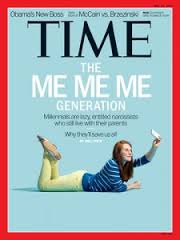
Yesterday I made a short presentation at a one-day Technion conference on Technology, Education and Society. My main thought was: How can we leverage the Internet of Everything, rapidly emerging, where everyone, everything are connected all the time, everywhere..to benefit college students?
An excellent presentation was made by the Technion’s head of student advancement, Sarah Katzir, who has been in this post for over 30 years. She recounted her experiences in dealing with Gen Y students. She had three interesting insights about Gen Y:
- Gen Y is impatient. They do not tolerate uncertainty well, and lack emotional strength to accept situations that are vague, ill-defined, or even chaotic. They seek fast solutions, a silver bullet, to situations involving discomfort. This is the generation of speed. They consume rapid MTV images, and want things to move quickly, especially, solutions to their problems.
- Multi tasking: Gen Y is perpetually multi-tasking. In the Technion computer farm, where students spend much time, it is common to see them doing homework, following news on the Internet, sending SMS messages, Tweeting, writing their blog, and more. All at the same time. Their attention span, as a result, is very short. It is hard to instructors to hold their attention for 30 minutes, let alone for 45. They read rapidly, but on the surface, lacking in – depth understanding.
- Individual learning is now group learning. Even when Gen Y studies alone, they do it ‘together’ with ours, via smartphones. Learning is done within chat forums. Being alone is no longer necessary, because through smartphones and other technologies, Gen Y is always always connected with others. SMS is their mode of choice for communicating. Their thumbs are incredibly agile as a result.
At the conference, one of my colleagues noted that Gen Y has many advantages. Their discomfort with being uncomfortable leads to rapid creative solutions to problems.
And Gen Z? The new generation coming along? What will they be like? I’m looking for some good answers.
Shape Your Child’s Future
By Shlomo Maital
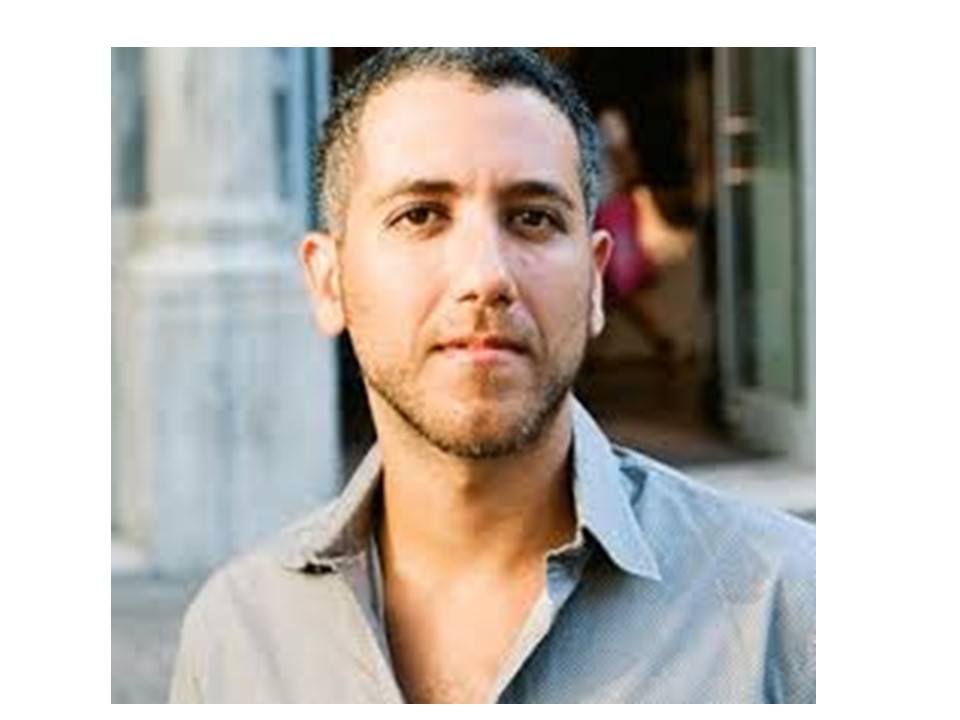 Offir Dagan
Today’s New York Times has a lovely story about Offir Dagan, a choreographer and artistic director for dance training, in Tel Aviv.
When he was 5, he recounts, his parents removed the insides from an old black and white TV set and turned the wooden case into a puppet theater for their son.
That gift, he recounts, put Offir onto a career path. He is now 36. “My parents understood what I wanted,” he recounts. Because it was inside a TV set, it was more than a puppet show, it was inside TV, people wanted to watch what was inside it.
Dagan acted out stories with puppets his grandmother made for him. One was a green cactus made from corduroy.
For his 10th birthday, Dagan got a real puppet theatre, made especially by a carpenter. He enjoyed putting on puppet shows at birthday parties.
Today he still teaches puppetry and how to manipulate puppets, sometimes in theaters.
“I thought my parents never really supported my artistic side,” Dagan says. “But now this makes me realize they did.”
We parents and grandparents need to be attentive to our children’s and grandchildren’s true interests and passions, and foster them, offer them ways to develop those talents. The result can be life-changing.
Advice from a 73-Year-Old: Go for It!
By Shlomo Maital

In his New York Times column today, Roger Cohen writes movingly about the carnage of war and battle. He also includes a passage that caught my eye:
It seems, as we grow older, that we are haunted less by what we have done than by what we failed to do, whether through lack of courage, or information, or insufficient readiness to cast caution to the winds. The impossible love abandoned, the gesture unmade, the heedless voyage untaken, the parting that should not have been – these chimera always beckon.
We are haunted less by what we have done than by what we failed to do.
I just turned 73. I admit that as a fairly ethical person, I am sometimes haunted by what I did. But also, as Cohen notes, I’m mainly haunted by what I did NOT do, by opportunities missed. Like, becoming an economist rather than a journalist or writer, because it seemed safer.
I think that if young people consulted me today, the main advice I would give them is to think ahead backward. When faced with a great new opportunity, a scary one, one that involves risk – how do you decide? Think ahead. Picture yourself a decade ahead, 2025. Imagine that you have taken this opportunity. Picture where you are, what it feels like. Feel the emotion in your gut. Does it feel right? Now, imagine yourself in 2025, and you’ve chosen NOT to take the opportunity, or chance. How does it feel? Do you sense regret? Is that sense of regret a sharp stabbing pain in your gut?
Do you agree with Roger Cohen, that we are pained by things we pass by and miss, rather than things we do and experience?
You cannot try EVERYthing. But you can try more things, and be more adventurous. Even if you fall on your face, you’ve learned, and grown, and always have the warm feeling that you had the courage to give it a shot, which for me is a big part of self-awareness and self-acceptance. And it’s never too late, even at age 73. Right?
Phishing for Phools
By Shlomo Maital
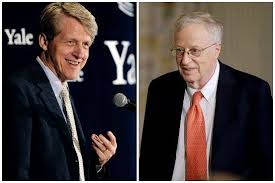
Robert Shiller & George Akerlof
It is really bad journalism to write about a book without reading it. But I’m going to do it anyway, based on an excellent London Review of Books article by John Lanchester. The book is George Akerlof and Robert Shiller’s Phishing for Phools (Princeton, £16.95). My friend Peter Dougherty, who heads Princeton University Press, has come up with yet another great economics book. I plan to read it very soon.
Shiller and Akerlof are Economics Nobel Prize Winners – Shiller, in 2013, for pioneering work in behavioral finance, and Akerlof, in 2001, for his insightful and unconventional microeconomics research. When two create unconventional thinkers like these put their heads together, and write fearlessly, the results have to be good.
Here is an excerpt from Lanchester’s review:
“Phishing for Phools is about ‘the economics of manipulation and deception’. Akerlof and Shiller aren’t using the word ‘phishing’ in the sense in which it’s usually employed…. Here, they use ‘phishing’ to mean ‘getting people to do things that are in the interest of the phisherman, but not in the interest of the target’. A phool is someone who has been successfully phished. If you buy a two-quid packet of ibuprofen, [instead of one that costs 35 pence, a generic package]…..that’s you.”
“Conventional economics struggles to deal with phenomena such as this. Why would rational consumers making rational decisions to ‘maximize their utility’ pay seven times more than they need to for anything? You could bodge together an argument that it’s rational by claiming that the branded version of the drug is safer and more trustworthy – but, truthfully, in a regulated developed market, that’s bullshit. For non-economists, the explanation is perfectly obvious. Somebody is – perfectly legally – trying to rip us off.”
“They talk about the Age of Reform, from 1890 to 1940, and the proof it provided that ‘government, used effectively, can be genuinely beneficial.’ This was replaced by what they call the New Story, beginning with Ronald Reagan’s statement in his first Inaugural: ‘In this present crisis, government is not the solution to our problem; government is the problem.’ The New Story is Akerlof and Shiller’s term for the whole anti-government, anti-regulation, neoliberal narrative in American politics and economics. It is, they argue, just another phish, whose characterization of the economy and of US history is wrong.”
So, have Americans simply been fed a wholly wrong, misleading view of history? Are the government regulators the heroes, preventing phools and phishing, rather than the goats? Do we need more regulation rather than less? Do we need regulators to protect ourselves against ourselves, as the authors show, when we tell ourselves wholly false stories that play into the hands of the manipulators? Let’s keep this in mind, as efforts proceed apace to weaken or destroy the 2009 Dodd-Frank Law.
Why John Arnold Is Disliked for Giving Away Billions
By Shlomo Maital

John & Laura Arnold
If you’re a billionaire, and are busy giving away your money for good causes, you should be widely known and beloved, right? Well, John Arnold (and wife Laura, a lawyer) are billionaires, have a foundation that is giving away their money for good causes – and they are widely disliked. Why?
Arnold made a fortune as a financial trader. His method: Discover an idea, a truth, nobody else saw. Then bet everything you had on it. In 2006 Arnold’s hedge fund Centaurus bet against natural gas prices. He was right. They fell. He made a fortune. In 2008 Arnold bet on a commodities price crash. He was right. Commodities fell. Three years ago, at age 38, and worth $4 billion, Arnold decided to spend the rest of his professional life giving away his fortune. The story is told by Bloomberg Business.
Arnold and wife Laura decided to focus on problems “dragging down the nation that no one else wants to confront”. For instance: research integrity; drug-sentencing reform; organ donations; pension systems that are broken.
“I try to look at supply and demand,” Arnold explains. “Where is the need being met today, and where is there unmet demand?”. Arnold, a moderate Democrat, believes a rich country like the U.S. should provide a high safety net for its citizens. At the moment, it does not.
Why is Arnold unpopular? Mainly for his work on pension reform. Fixing the pension system means slashing payments to people who need and were promised them. Without the changes, the Arnolds say, both governments and pensioners have no future.
Arnold was used to being unpopular as a financial trader. He accepts the criticism of him as philanthropist. His method? Find “leverage points in the system”, and create “higher potential for value added”.
Want to help people? Give away money? It may well bring sharp criticism, when only love and praise are expected. Be prepared for it. You can be punished for doing good, if you rile vested interests. In fact, the more good you do, the angrier some people will become.
Source: Dan Murtaugh, Bloomberg News, Nov. 19, 2015
VC: VERY Conspicuous Consumption – Why?
By Shlomo Maital
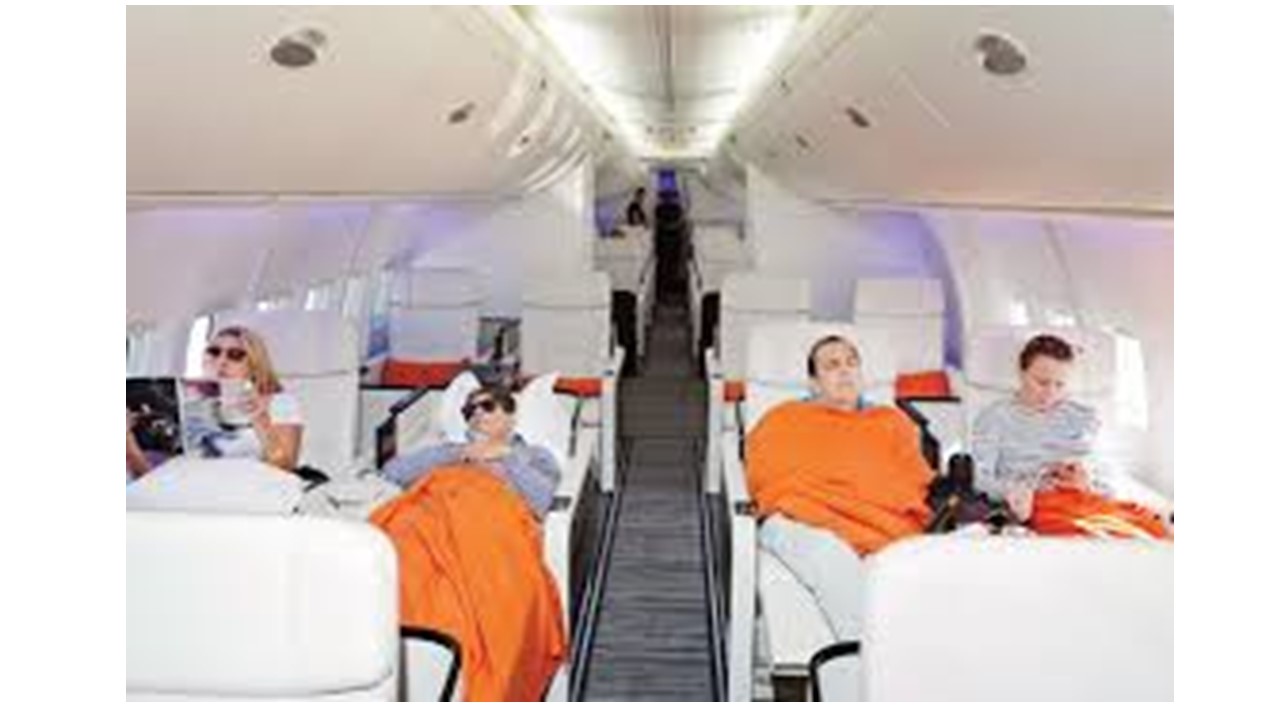
Over a century ago, sociologist Thorstein Veblen published The Theory of the Leisure Class: An Economic Study in the Evolution of Institutions (1899), in which he presented his theory of conspicuous consumption – spending by the rich to display economic power, rather than enjoy goods. In the Nov. 14 2015 issue of “T” magazine, the New York Times’ style magazine, is David Brooks’ article on “The ultimate vacation”. Brooks joined a vacation package organized by the Four Seasons’ Hotel chain, for one week, out of the 24-day total vacation package. His opening sentence: “I tried but failed to ward off the second bottle of champagne”. This is Veblen’s conspicuous consumption — with capital C.
The vacation cost $120,000 per person. For 24 days “you fly around the earth in a Four Seasons-branded private jet, taking off in Seattle and stopping in ..Tokyo, Beijing, the Maldives, the Serengeti, St. Petersburg, Marrakesh and new York, going from Four Seasons to Four Seasons”.
Conspicuous consumption indeed. But Brooks speaks highly of those on the tour. “They were socially and intellectually unpretentious. They treated the crew as friends and equals. They have spent their lives busy with work and family, not jet-setting around or hanging out with the Davos crowd.”
Wow. So the really, really rich, who can spend $120,000 on a short vacation, are nice people after all. Wow.
I would like to raise a few issues, Mr. Brooks.
The rich can do whatever they wish with their money. And some of them really worked hard to earn it, though fewer than you might think (8 % return on assets doubles your money every 9 years, even without doing any work at all). But it is hard not to think about what one could do with $120,000, that goes up in smoke in a short vacation.
* Send a worthy poor student to medical school, after which, the resulting doctor saves lives and cures illness
* Feed entire villages of poor people in Asia and Africa for a whole year
* Provide seed money for startups in emerging market countries, some of which will result in successful job-creating companies
* and the list goes on and on….
I’m sure many of the wealthy on that Four Seasons private jet do some of those things. I just wonder how stable our global society is, when so few have so much, and so many have so little. When a handful jet around the world in private jets, and billions have no clean water or toilets or schooling.
When will those with nothing start to come after those with everything, and destabilize the world? Wasn’t that what we called the Arab Spring ..which turned into a desolate winter? Do we really HAVE to have a world in which the freedom to waste huge amounts of money is an undeniable unalienable right?
 TIMnovate