
You are currently browsing the category archive for the ‘Innovation Blog’ category.
Disaster Economics: Why “Up” is Now “Down”
By Shlomo Maital
In physics, matter behaves differently at very high pressure and temperature. Apparently, in economics, too.
Writing in the Financial Times today (July 24), Gillian Tett says “we have entered the world of disaster economics”, where the normal laws of economics move in the wrong direction. Today, what was “up” is now “down”, and vice versa.
Tett observes that judging by credit default spreads (a measure of risk), bond markets judge that not only Greek and Spanish bonds are risky, but also German and US bonds. When bonds are riskier, that should mean that they bear a higher risk premium, i.e. interest rate. And the higher the yield on bonds, the lower their price.
Except – that’s not happening. German and US bond yields have hit multi-year lows, and their price has gone way up. If risk is up, how come yields are down? What is going on?
Tett has a simple explanation. In normal times, and in normal economics, bond buyers look for a return on their money and seek higher yields. In abnormal times, like the times we live in now – when it has dawned on the world that there isn’t enough money in all of Germany to bail out Spanish banks, when they fail, not to mention the Italian banks that the failure of Spanish banks will topple, too — investors are not looking for return or interest, they’re looking for SAFETY of their principal! And German and US bonds seem safe from default in a global meltdown. We are seeing an extreme panic and flight to safety, when the laws of economics are suspended. This creates demand for safe bonds, raises their price and lowers their yield, even if they are perceived as riskier day-to-day but safer in case of disaster (global collapse).
I find this scary, don’t you? If the world is built not on money, but on trust, and if fundamental trust is evaporating, how will the global economy run? If we don’t trust one another, how will we do business with one another? And how in the world will lost trust ever be rebuilt?
Sea Bass: They’re Both Mommy and Daddy!
 By Shlomo Maital
Mommy? Daddy?
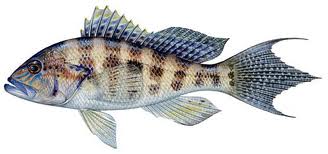
Some of us are mommy’s. Some of us are daddy’s. Very very few of us are sometimes mommy’s, sometimes daddy’s. So, you’ve got to hand it to those sea bass, better known to us as tasty dishes at restaurants.
Black sea bass are increasingly rare in the wild, and so are being fish-farmed. Problem is, according to Prof. David Berlinsky, a zoology prof. at U. of New Hampshire, “they have a tendency to change sex unpredictably in captivity”. (Science Daily, 2006):
“In the wild, black sea bass are born as females and turn into males at around two to five years old,” Berlinsky explains. “When you bring them into captivity, they change into males more quickly.” Some captive-born fish emerge as males even before reaching adulthood, devoting energy toward reproductive development and away from growth. Such problems make breeding and growing the fish in captivity a tricky proposition. Berlinsky and his colleagues have discovered that fish are more likely to become males if raised at constant temperatures. But temperature is hardly the only factor involved. Sex ratios and density also come into play. Berlinsky’s team found that females were more likely to change sex when no males were present in the tank. Additionally, the fish were more likely to turn into males when kept in crowded tanks.
Let’s give those sea bass a round of applause. When there aren’t enough males around…well, females become males. Human females just enroll in JDate. Crowding? Sea bass females turn into tough males with sharp elbows (or fins). Human females? They just use a little more perfume. Hot and cold flashes? Sea bass stay female. Human females wish they were males.
Love those sea bass. I think they are purposely screwing around with the fish farmers, because, frankly, they don’t love being put in cages. Free the sea bass! Any creature capable of being both mommy and daddy, well — they’ve earned their freedom.
LIBOR is SF – but Not Why You Think It Is
By Shlomo Maital

My favorite SF (Science Fiction) writers are the late Ray Bradbury (Fahrenheit 451, The Martian Chronicles) and Philip K. Dick (Do Androids Dream of Electric Sheep?). Bradbury famously said, when asked if he tried to predict the future: “No! I’m trying to prevent it.”
They now have a rival. It is the LIBOR (London Interbank Offered Rate), the rate at which banks lend money to one another. LIBOR is truly science fiction. But not why you think. Not just because big banks manipulated it (among them, Barclay’s), with the apparent knowledge (as early as 2007) of the New York Fed, headed then by Tim Geitner, who is now US Secretary of the Treasury.
No, it’s much more serious. You see, in order to have an Interbank Offered Rate, you have to have an Interbank Offer – banks lending to one another. According to The Economist (July 14, p. 55) “banks are lending almost no money to one another”. Why? Because they know that if other banks are in as bad shape as they are – it’s too risky. How bad? We don’t know, because European banks have “marked to market” (written off) only a tiny fraction of their ultimate losses, and we don’t know how much.
So LIBOR, even if it is not fiddled, is STILL science fiction. Indeed, as fast as the European Central Bank pumps money into Europe, the banks pump it back, depositing ECB loans back in the ECB (at zero interest, by the way), instead of lending it to people and to businesses. (That’s too risky, apparently). This is why ECB “quantitative easing” has no impact. There is something called a EURIBOR (euro interbank offered rate), which is even MORE science fiction. It’s supposed to present lending between one “prime” European bank to another. Well, there ARE no ‘prime’ European banks, except German ones, and they can borrow at far far lower rates than any other bank in Europe…so the EURIBOR rate is just the German rate, which reflects nothing but, well, Germany.
Does this all sound wacky? Could the weird imaginative brains of Bradbury and Dick have dreamed this all up? Not a chance. When it comes to science fiction, you have to hand it to the bankers. They’re doing their best to ensure that we truly don’t have a future.
Why Romney Won’t Reveal His Taxes
By Shlomo Maital
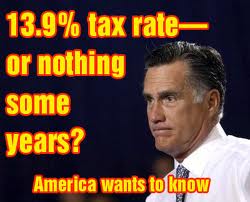
Writing in Bloomberg Business Week, Joshua Green offers an interesting explanation about why Republican presidential candidate Mitt Romney refuses to reveal his income tax returns, apart from two years, 2010 and 2011. He has taken enormous criticism for this, with his secrecy compared to that of the openness of his dad, George Romney, a man who created jobs when he ran Amerian motors (rather than destroyed them, as Romney did at Bain) and who revealed all when he was a candidate. Here is Green’s theory:
As a member of the ultra-rich, Romney probably wasn’t spared major losses. And it’s possible he suffered a large enough capital loss that, carried forward and coupled with his various offshore tax havens, he wound up paying no U.S. federal taxes at all in 2009. If true, this would be politically deadly for him. Even assuming that his return was thoroughly clean and legal—a safe assumption, it seems to me—the fallout would dwarf the controversy that attended the news that Romney had paid a tax rate of just 14 percent in 2010 and that estimated he’d pay a similar rate in 2011.
So, let me get this straight. Romney is a multi-multi-millionaire. He’s the richest candidate to run for president. He has offshore accounts in the Cayman Islands, sheltering his wealth from taxes. He apparently has Swiss accounts too. Yet he is still neck-and-neck with Obama in the polls. Who in the world would even think of voting for a super-rich candidate, raised in wealth, who cannot possibly conceive what it is like to struggle to pay for electricity and food? Someone who paid no taxes in 2009, when ordinary Americans paid lots of them? At a time when millions of Americans are unable to make ends meet? And when Romney represents the party that largely caused this huge mess, not only in America but in the world, by fostering crony capitalism?
The only explanation is, Obama and the Democrats are doing a truly awful horrendous job of explaining to Americans what their vision and policies are. The fact that the presidential race is actually so close is to me mind-boggling.
Banker Cats Guard the Cream…Again! (It Just Gets Worse and Worse)
By Shlomo Maital

Banker?
And you thought the LIBOR-rigging case was scandalous, unbelievable? Where major banks (not just Barclay’s) rigged the daily LIBOR figure, almost openly, to keep it low, to underestimate bank borrowing costs, to reassure capital markets and make balance sheets look better? (As one cartoonist put it: Swindle and cheat, so that people will believe in the banks’ integrity).
Well try these two additional variations.
- · HSBC, a major British bank, (Hong Kong and Shanghai Banking Corporation), world’s second largest bank, indeed world’s second largest public company, one that has come unscathed through the global crisis, has now been caught guarding the cream rather badly.
An American Senate subcommittee found the following: “The investigations found that HSBC, with its headquarters in London, allowed affiliates in countries such as Mexico, Saudi Arabia and Bangladesh to move billions of dollars in suspect funds into the US without adequate controls. Besides, HSBC in 2009 authorised its affiliate to supply Indian rupees to Saudi Arabia’s Al Rajhi Bank, which, the report said, has links to financing terrorism. The report also said that Al Rajhi Bank handled IIRO’s ( International Islamic Relief Organisation) “charitable contributions intended to benefit suicide bombers by directing Al Igatha Journal advertisements … in Somalia, Sri Lanka, India, and the Philippines.”
Now – who actually tries to see that HSBC doesn’t help money-launderers, shipping an estimated $7 b. from Mexico to some really bad places? Well, it’s….would you believe, HSBC itself? Its own compliance staff. In fact, its employees in India, a kind of internal outsourcing. With a huge backlog of transactions, the overworked Indian workers were swamped. Could it be that HSBC knew this, organized it purposely to avoid excess scrutiny for highly profitable deals? No, that couldn’t possibly be true.
● Credit default swaps (not swaps at all, but ‘insurance’, called swaps to avoid regulation) are a huge multi-trillion dollar market, unregulated. When nations can’t redeem their bonds, the CDS pays up, billions of euros or dollars. Who decides that nations are in default? Who decides that the banks get paid billions and billions in credit default insurance? Well, it’s a shadowy body called the “Determinations Committee of the International Swaps and Derivatives Association”. And, who are they? Who are the members?
You guessed it.
The major banks, and their traders and dealers. They decided that Greece was in default, after the recent ‘haircut’ reducing Greek debt in return for EU cash. It is not at all clear that this in fact was a default.
The banks themselves decided if the banks should be paid the ‘insurance’.
There is nothing fundamentally wrong with capitalism. There is a great deal wrong with crony capitalism where the fat cats guard the cream. This isn’t capitalism at all. It’s simply corrupt. And it is taking a very long time to clean the filthy stables, with no Hercules in sight.
Political Leaders: Stop Screwing Our Youth!
By Shlomo Maital
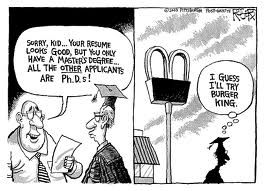
It is widely agreed that our political leaders, all over the world, are screwing up badly, on the crackpot advice of economists. Europe is in recession, it is spreading to America and elsewhere, and no solution is in sight.
With such short-term woes, it is easy to lose sight of a more serious long-term problem. We are screwing our youth. If the political leadership of any country were to define a mission statement (why we exist), it should always include, near the top, “building opportunities for the younger generation”. There seems to be no such mission, and even if there were, politicians are everywhere destroying such opportunities. Look at these youth unemployment rates: Spain 45%, Greece 49%, Sweden 30%, Ireland 35%, Finland 25%, U.S. 20%, Eurozone 22%. And those are vast underestimates – because faced with no jobs, many youths simply do not even bother to look for one, and hence are not included in the labor force. And the best and the brightest, those who can, get on a ship or plane and leave.
New research by Harvard U. political scientist Robert Putnam (remember “Bowling Alone”, about growing fragmentation of society) reveals:
► “…. the children of the more affluent and less affluent are raised in starkly different ways and have different opportunities. Decades ago, college-graduate parents and high-school-graduate parents invested similarly in their children. Recently, more affluent parents have invested much more in their children’s futures while less affluent parents have not.” [See David Brooks’ NYT Op-Ed, July 9].
► Over the past decades, college-educated parents have quadrupled the amount of time they spend reading “Goodnight Moon,” talking to their kids about their day and cheering them on from the sidelines. High-school-educated parents have increased child-care time, but only slightly.
► Over the last 40 years upper-income parents have increased the amount they spend on their kids’ enrichment activities, like tutoring and extra curriculars, by $5,300 a year. The financially stressed lower classes have only been able to increase their investment by $480, adjusted for inflation.
► Putnam writes: “It’s perfectly understandable that kids from working-class backgrounds have become cynical and even paranoid, for virtually all our major social institutions have failed them — family, friends, church, school and community.” As a result, poorer kids are less likely to participate in voluntary service work that might give them a sense of purpose and responsibility. Their test scores are lagging. Their opportunities are more limited.
► Richer kids are roughly twice as likely to play after-school sports. They are more than twice as likely to be the captains of their sports teams. They are much more likely to do nonsporting activities, like theater, yearbook and scouting. They are much more likely to attend religious services.
Our worthless politicians are indeed addressing the youth issue – they exploit it, to seek voters and constituencies, rather than address it, to ameliorate it. As Brooks notes: “Political candidates will have to spend less time trying to exploit class divisions and more time trying to remedy them — less time calling their opponents out of touch elitists, and more time coming up with agendas that comprehensively address the problem. It’s politically tough to do that, but the alternative is national suicide.”
How Much Money Do You Need? Less Than You May Think
By Shlomo Maital

Mother Teresa…
New research by Elizabeth Dunn (UBC) and Michael Norton (Harvard), (“Happy Money: The Science of Spending”), about the link between money and happiness, is summarized in a recent (July 7) Op-Ed in the Global New York Times.
Here are their main findings:
- Using Gallup data collected from almost half a million Americans, researchers at Princeton found that higher household incomes were associated with better moods on a daily basis — but the beneficial effects of money tapered off entirely after the $75,000 mark.
- · In research we conducted with a national sample of Americans, people thought that their life satisfaction would double if they made $55,000 instead of $25,000: more than twice as much money, twice as much happiness. But our data showed that people who earned $55,000 were just 9 percent more satisfied than those making $25,000.
- · we teamed up with the developmental psychologist Kiley Hamlin and gave toddlers the baby-equivalent of gold: goldfish crackers. Judging from their beaming faces, they were pretty happy about this windfall. But something made them even happier. They were happiest of all when giving some of their treats away to their new friend, a puppet named Monkey. …. rather than focusing on how much we’ve got in our bowl, we should think more carefully about what we do with what we’ve got — which might mean indulging less, and may even mean giving others the opportunity to indulge instead.
Among the many wrongheaded ideas we economists have dumped on the world, is the worst one of all – that the more money you have, the happier you are. Over the years, I’ve taught people with a whole lot of money, and many were very unhappy, because they sacrificed their family life for the money and ended up realizing they made a really really bad deal.
By the way, the optimum amount of money in the U.S. is very close to average household income.
So if you’re seeking happiness, look for it in a different place than the economists counsel – in giving some of your money away, wisely, to those who lack enough of it, rather than using it to buy more needless junk to stuff our homes and closets with.
Barak Obama Is Not Andrew Jackson..Alas.
Why 2012 is Not 1832
By Shlomo Maital
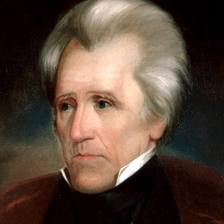
Andrew Jackson
Once upon a time, America had strong presidents with clear values and strong principles. Take, for instance, Andrew Jackson. He took on the banks, the moneyed interests, and the Republicans whom they supported – and defeated them all, and won re-election in 1832. Here is the story.
Nicholas Biddle ran the Bank of the United States, the heavyweight US bank (like Citibank and Bank of America combined) at the time. He was supported by Henry Clay, from South Carolina, the Republican Presidential candidate. The bank’s charter was about to expire, and had to be renewed by Congress. President Jackson thought the bank was a ‘monster’ and that it was corrupting America. Biddle had the Republicans table a bill to renew the charter, in Congress. The bill passed. Biddle exulted. Biddle assumed Jackson would not have the guts to veto the bill. He was wrong. Jackson vetoed it. Here is the reason he gave:
From presidentialprofiles.com: “Jackson scored the bank for its “exclusive privileges,” claiming that most of its stock was held by foreigners and Americans “chiefly of the richest class.” He accused it of operating inequitably, particularly against the West, and of “gross abuse” of its charter. Most especially he warned that the principles embodied in the bill contravened the basic principles of republican equality. Government, Jackson proclaimed, should confine itself “to equal protection, and, as Heaven does its rains, shower its favors alike on the high and the low, the rich and the poor.” It should not add “artificial distinctions” to the inevitable natural and just differences among men and “make the rich richer and the potent more powerful.””
The Republicans assumed that this veto would lead to Jackson’s defeat, for certain, in 1932. But the Democrats rallied and the people re-elected Jackson in a near-landslide. Clay never did become President. And Jackson went on to call South Carolina’s bluff, prevent it from breaking Federal law, and kept the Union (of U.s. states) together. And the Bank of the United States? Jackson broke it. He withdrew Treasury gold and money from it. And the bank withered and so did Biddle.
Oh – by the way – Jackson paid off ALL America’s national debt. Every cent. It was the last time America was out of debt.
Once, there were presidents with courage. It’s why Jackson’s portrait is on the US $20 bill. Today there is Obama. He bailed out the banks, rather than take them on. We could put his image on a $3 bill. But, then, it would be phony.
Gene Therapy for Cystic Fibrosis: New Hope
By Shlomo Maital

CF Gene Therapy…new hope!
Cystic fibrosis is an awful disease, inherited genetically. It is caused by a single faulty gene. Some 90,000 people suffer from it worldwide. Their prognosis is bleak. Average age at death for a CF sufferer is 41. The disease causes a painful buildup of mucous in the lungs.
With all we know about genes and gene splicing, why not just replace the faulty gene with a healthy one? It turns out to be a massively difficult task. The body itself is designed to keep out foreign stuff, including new and healthy genes. Now, a team led by Prof. Eric Alton at London’s Imperial College is about to try. The BBC reports that a clinical study has begun, with 60 CF sufferers being given gene therapy monthly, while 60 other CF sufferers will be given a placebo, every day for a year. In two years the results will be known – it works, or it fails.
How does it work? Cells are taken from the patient’s cheek. The offending gene is cut out in the laboratory. Bacteria are introduced into the cell, that manufacture the healthy gene, lots of them. Then the cells are breathed into the lungs with a ‘nebulizer’. Evolution, and the lungs themselves, are the problem. Human lungs have evolved to keep out bacteria. So the researchers have had to employ every trick in the book to keep the body’s immune system from rejecting the healthy genes. The healthy genes have to be introduced into the body every month, because they need to keep displacing the old, sick gene that remains in the lungs.
The British team spent a decade working on the problem. They did it using highly cooperative science – convening all the scientists in Britain, all the doctors in Britain, and brainstorming for different ideas, tricks and approaches to get the job done.
“Think what the Wright Brothers did in 1903,” Alton says. “They flew 50 yards. We’re trying to prove the concept first time, doing gene therapy for the first time in the world, and we have another product coming through… this is really difficult science… “
Let the Cat Guard the Cream – And You Get LIBOR Fraud, or
Don’t Blame Barclay’s, Blame Ourselves!
By Shlomo Maital
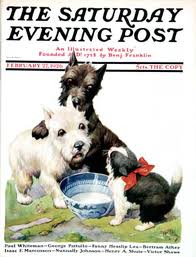
The Cat Guards the Cream..Great Idea!
What in the world is LIBOR?
It is an acronym that stands for “London Interbank Offered Rate”. It is the average of the perceived rate of interest banks pay when they borrow from each other. It is calculated by officials of the top London banks with “cash” responsibilities, just before 11 a.m. daily.
Why is it so important?
Because, LIBOR is used as the basis for calculating the rate of interest on a very wide and large range of assets, including forward rate agreements, short-term-interest-rate futures contracts, interest rate swaps, inflation swaps, floating rate notes, syndicated loans, variable rate mortgages, and currencies. You do not have to know what all those are; enough to know, as the BBC says, that LIBOR impacts $550 trillion (!) worth of assets (about 10 times the annual world GDP).
Why is it in the news?
On May 29 2008, The Wall Street Journal reported that banks were systematically understating the LIBOR rates, in order to pretend they could borrow much more cheaply than they really could. They did this, because in the face of huge losses on subprime mortgages and credit default swaps, they had to pretend their balance sheets were better than they really were. According to WSJ, “) “Citigroup said it could borrow dollars for three months at about 0.87 percentage point lower than the rate calculated using default-insurance data.” Is that a lot? You bet! 0.87 per cent on, say $550 trillion, is $4.35 trillion (twice the GDP of Italy!).
On 27 June 2012, Barclays Bank was fined $200m by the U.S. Commodity Futures Trading Commission, $150m by the United States Department of Justice and £59.5m by the British FSA manipulation of the LIBOR and EURIBOR rates.
Why Barclay’s?
Because the CEO of Barclay’s Bob Diamond was the first to admit wrongdoing. (You can bet he is kicking himself, because his reward for being the only one to tell the truth is to be humiliated, busted, fired and discarded). But many other banks did the same thing. And it was obvious they were doing it. How come we let the bank cats guard the cream? If they have every incentive to mis-state the true LIBOR rate, if millions of dollars and pounds in bonuses are at stake, why would they not do it? Especially when, as author Michael Lewis recounts, the bank culture is not that of kittycats but ferocious tigers:
“An investment banker is a breed apart, a member of a master race of dealmakers. He possessed vast, almost unimaginable talent and ambition. If he had a dog it snarled. He had two little red sports cars yet wanted four. To get them, he was, for a man in a suit, surprisingly willing to cause trouble.”
Bob Diamond is an investment banker. So are most of the other Masters of the Universe (cf. Jamie Dimon, JP Morgan, etc.). Maybe he did not know his workers were falsifying LIBOR. But given the culture he represented, why would they NOT?
What is the solution?
Here is a serious suggestion I heard on the BBC. Treat every bank product or service as a pharmaceutical drug. Act like the FDA – insist that banks prove that every new proposed product or service creates real value for human society, like medicine. And make them do ‘clinical trials’ to provide evidence. Because otherwise, we will continue to get poisonous products like manipulated LIBOR.
But at the very least, let’s stop being so stupid. Calculate LIBOR with a team of Bank of England experts who use objective data from real borrowing deals, not ‘perceived’ estimates from bank kittycats who have a vested interest in lying. If we let them do this, we deserve what we get.


