
You are currently browsing the category archive for the ‘Innovation Blog’ category.
Innovation/Global Risk
Sarah Blakely Hated How Her Butt Looks – and Made a Billion!
By Shlomo Maital
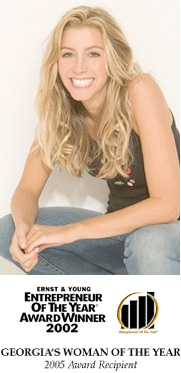
On Feb. 21, Sarah Blakely celebrated her 41st birthday. Who is Sarah Blakely? She is the youngest woman (an American) to reach Forbes’ “billionaire” list, self-made, on her own, without husband or family wealth. She is 416th on the Forbes billionaire list.
How did she do it? One of the 10 key brain ‘exercises’ in my draft manuscript Build Your Creativity Muscles is #9, “It’s ALWAYS Personal”. Sarah proves this. Here is her story.
She was working as a sales trainer by day, and stand-up comedian by night. She knew zero about pantyhose (except, she hated them), and had never taken a business class. “I had only one source to operate from…my gut”, she says.
She hated the way her fanny looked, wearing regular panties. She decided to do something about it, because she was sure many other women felt the same way. She developed a fanny-scrunching panty using Spandex, wrote the patent herself and it was approved. Then she trademarked the name SPANX. For months she drove around North Carolina begging mill owners to manufacture her product. Finally, after many rejections, she found a mill owner who agreed. Why? He said, he had two daughters. It took a year to perfect the prototype, because Sarah was obsessed that her Spanx should be comfortable. (After all – she would wear them herself). She chose the Spanx name carefully, and it proved to be a winner. (“It’s edgy, fun, catchy, and makes your mind wander,” she says, “and it’s all about making women’s butts better, so why not?”
She took a bold new approach to packaging – if your product is innovative, its package has to look it – and chose a bold red package with three women on the front. She called the buyer at Neiman Marcus, a top-of-the-line department store chain. She agreed to give Sarah 10 minutes. Together, they went to the ladies’ room, and Sarah showed the buyer her butt, in her cream pants, before Spanx..and after! Three weeks later Spanx was on the shelves of Neiman Marcus. She did the same with Saks, Nordstrom, Bloomingdales and others. She asked her friends to go to the stores and make a huge fuss over her product.
She had no money to advertise, so she hit the road. She did in-store rallies about Spanx with the sales associates, then stayed all day introducing customers to Spanx. And she got help from media women; her product was on the Oprah Winfrey show, for instance, and on Tyra Banks’ Show. To get free publicity for Spanx, she even joined Richard Branson’s reality show The Rebel Billionaire, leaving her business for three months to do daring tasks all over the world.
Sarah has now launched a foundation, to empower women all over the world. She summarizes: “My energy and inspiration comes from inventing and enhancing products that promote comfort and confidence for women. Customer feedback is one of the key drivers of our business. “
How many millions of women looked in the mirror, turned around, and did not like what they saw below the waist? One bold woman did something about it. And she’s a billionaire. Annual revenues are $250 m. and her net margin is estimated at 20 per cent.
And she started with the huge sum of $5,000 in personal savings.
Good work, Sarah! It really is all personal.
Innovation/Global Risk
Plants Talk To One Another. Are We Listening?
By Shlomo Maital

“Talking plants? You gotta be kidding!”
A team of scientists at Israel’s Ben-Gurion University has discovered that plants can talk to one another. An injured plant “communicates” to a healthy one, through its roots, and the healthy plants in turn relay the signals to neighboring plants, perhaps helping them to deal with stress in the future.
The research was published in PLoS (Public Library of Science One). The researchers were headed by plant biologist Ariel Novoplansky. In his experiment, he exposed five garden pea plants to drought conditions. The stressed plant closed its leaves to prevent water loss. Meanwhile, “its roots released signals that caused neighboring plants, not exposed to drought, to react as if they had been! The title of the study was “Rumor Has It — Relay Communication of Stress Cuts in Plants”.
According to the authors, “the results demonstrate the ability of plants and other ‘simple’ organisms to learn, remember and respond to environmental challenges in ways so far known in complex creatures with a central nervous system”, Novoplansky told Haaretz daily newspaper.
Apparently we’ve known about his phenomenon for years. A paper published in Science in 1983, by Jack Schultz and Ian Baldwin, concluded that injured poplar and maple trees release ‘chemical signals that are picked up by healthy neighboring trees’, which then activate defense mechanisms as if they themselves were hurt. This study was ridiculed at the time, and called the ‘talking tree’ notion. It has since been vindicated.
The amazing part of this research is that human beings have ‘mirror neurons’ in their brains, that enable us to feel ‘empathy’ – to feel what people near us are feeling, like pain, embarrassment, joy, etc. Perhaps plants do too…through chemical emissions. Apparently evolution discovered that such plant ‘empathy’ helps plants survive to reproduce..and thus, ‘plant talk’ perpetuated itself.
I wonder if we should issue a blanket apology to all those who hug trees, and who talk to their plants. And I wonder what trees and plants would say to humans, if they could speak to us? Something like: “Listen humans, if you keep asphalting open land and cutting down forests, pretty soon, there won’t be any plants OR humans left. Wise up!”
Innovation/Global Risk
One Small Tear….
By Shlomo Maital

In a famous experiment that won it a Pulitzer Prize, the Washington Post sent world-famous concert violinist Joshua Bell to play in the Metro subway stations. Very few people paid him any attention. Basically they neither heard nor saw what others paid hundreds of dollars to hear in a concert hall. The reason: Habit. We assume that a street musician cannot be worth stopping and listening to.
The experiment was attempted here in Israel, by a local Channel, using a cellist with 24 years’ seniority playing for the Israeli Philharmonic — one of the world’s great orchestras, directed by Zubin Mehta. The cellist set up in a shopping mall, in a poorer district, and in the lobby of a Tel Aviv theatre, Kameri. He played familiar melodies with stunning vibrato.
Results? He raised NIS 70 (about $20). Most people ignored him. He got twice as much money in the poorer district as in the rich shopping mall. And at the Kameri Theatre, where presumably highly-cultured knowledgeable people flock, hundreds walked right by the cellist without even glancing at him.
There was one exception, in the poor neighborhood. The TV interviewer spoke with a woman, who stopped to listen, and wiped a tear from her eye. Why are you crying? asked the journalist. “Such a wonderful musician!” she said. “Such beautiful music! And…he has to play on the street. It’s so sad!”
One tear.
I think we should shed a tear, for the singularity and tragedy that only one tear was shed. Do YOU walk by street musicians, without popping a coin into his hat? (I know someone who has transformed himself, and as part of the transformation, puts coins into EVERY street musician he passes). Do you wonder why they ARE street musicians? Do you walk by, without caring, when you see pain, suffering, homelessness? And why has modern life made us so damned uncaring?
Innovation/Global Risk
Good Listening: 3 Ways to Improve The Key to Innovation
By Shlomo Maital

One of the most amazing human organs is the ear. Its combination of ear drum, tiny hairs, auditory nerves and of course the brain to interpret the signals it receives, are taken for granted, yet the complex system that enables us to hear is insufficiently valued – except when it breaks down.
We are equipped to hear. But — do we really listen? Writing in the latest issue of McKinsey Quarterly, former McKinsey consultant Bernard T. Ferrari (now an independent consultant) notes that senior executives often are very poor listeners. They become preoccupied with speaking, what they are going to say, and do not truly listen to those around them. And as a result, they lose invaluable information, that could help them strategize and innovate. In a debate, they often formulate their own ‘speeches’ rather than listen to what those around them are saying.
Here are three things we can do, according to Ferrari, if we want to become ‘Ferrari’ quality listeners, instead of Yugo listeners where only the “outgoing” button works.
1. Show respect. If you respect your workers and subordinates, they will respect you, and often do-or-die for you. How do you show respect? By eliciting their opinions, sincerely, and really truly listening to them. Often the solutions to sticky problems lie far down the organization, at the “coal face”. But these solutions never reach the decision-makers..because they never bother to go to the ‘coal face’ or listen to the ‘miners’ when they do.
2. Keep quiet. Here is another of those 80/20 rule. Listen 80% of the time. Speak no more than 20% of the time. And when you speak, do it by formulating good questions, rather than deliver proclamations.
3. Challenge assumptions. “Good listeners seek to understand – and to challenge – the assumptions that lie below the surface of every conversation.” Ferrari uses legendary baseball manager Earl Weaver (Baltimore Orioles) as an example. Weaver’s autobiography is titled “It’s What You Learn After You Know It All That Counts”. To do this, to learn after you know it all, requires you to challenge the assumptions of those to whom you listen, but above all, to challenge your own sacred-cow assumptions as well.
I would add a fourth idea. 4. Don’t fill in pauses. When there is a pause in the conversation, don’t be embarrassed and rush to fill it in with idle conversation. Let the silence live. Let your conversant speak. You may end up finding out what people should have told you, but forgot or didn’t have the space in which to say it. And by the way – ask them! Ask people if there is anything you should know they haven’t yet told you. That communicates the message, that you expect people to give you all the information you need, without gaps.
* McKinsey Quarterly. “The executive’s guide to better learning”. B. T. Ferrari. Feb 2012.
Innovation/Global Risk
Machine Guns Vegas: Now THAT’S a Sure-Fire Innovation!
By Shlomo Maital

Las Vegas is an ideal place to look for new over-the-top super-excess ways to amuse people with money to waste. Hotels recreate the Eiffel Tower, the Pyramids, almost anything, at huge expense.
But now comes the latest sure-fire Vegas innovation: MGV. Machine Guns Vegas. It’s an indoor upscale shooting range with two key features: skimpily-dressed gun-toting hostesses, and a wide range of vintage weapons, including Uzi’s and Thompson machine guns. * If you’re tired of baccarat, why not drop in and fire off a few thousand rounds? Pretend the target is someone you really dislike.
The Thompson machine gun was invented in 1919 by John Thompson, and became infamous during the Prohibition era in the U.S., when it was used by law enforcers and criminals alike. It got the affectionate nickname, Tommy Gun. The Uzi is a submachine gun designed by Major Uziel Gal in the 1940’s and is still wildly popular among submachine gun aficionados.
The pricing model? For $699, the top of the line package, a client gets to fire an array of 16 weapons, 1,550 rounds of ammunition and a pass to the VIP lounge. For the Full auto package, you get 10 machine guns, for $399.
“We did the fully automatic,” says 61-year-old Wilbur Willis, a printer from Tennessee. “It was awesome: some older guns, some newer guns.”
This business innovation has huge possibilities. It could quickly be franchised, to Kabul, Afghanistan, and Ramadi, Iraq. In fact, Syrian President Assad has already optioned MGV, with a wrinkle: He uses real live women and children for his targets.
There is one place in the world where MGV will never fly. Israel. Here, where young men and women learn to fire weapons as part of their compulsory military service, somehow submachine guns lose their allure when you have to sleep with them, and smell the gun oil, for three years or more.
* “In Las Vegas a nice place to fire an Uzi and relax with a cappuchino”. Global NYT March 7 2012.
Innovation/Global Risk
America: Failed Welfare State #2
By Shlomo Maital

Pay for this…
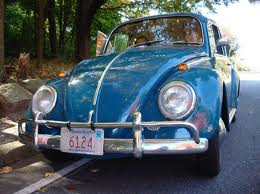
…and get this!
Would you say that a nation that spent $8,000 per person on health care (double that of Canada, or France) would qualify for the title “welfare state”?
That state is America. And according to Ezra Klein, writing in The Washington Post, the reason is simple. Prices. Health care costs in America are double those elsewhere.
Spending (on anything) is defined as price times quantity, P Q . When spending is high, there are only two reasons. Either Q (quantity of health care) is very high, or P (price of a unit of health care) is very high. For America, it is clearly the latter, P. Klein cites a study showing that for the prices of 23 medical services and products, Americans pay a higher price than elsewhere. America, in health care, is paying Maserati prices for VW returns.
Why?
In Canada and Britain, health care prices are set by the government. In Germany and Japan, they’re set by providers and insurers, with government mediation. In America? It’s a free-for-all. Providers can charge what they can get away with.
Klein notes that two of the five most profitable industries in America are pharmaceuticals and medical devices, with margins of about 20 per cent. They beat out even the financial services sector for profitability.
So, yes, America is a welfare state, because it spends fortunes on the health of its citizens. But it is also a FAILED welfare state, because it gets so little for all that money. Why? Because it privatized (for-profit) what is basically a public good – health. According to health care expert Uwe Reinhardt, of Princeton University, “the money we (Americans) spend on health care is money we don’t spend educating our children, or investing in infrastructure, scientific reseach and defense spending. So what this means is we ultimately have overmedicalized, poorly educated Americans competing with China, that’s not a very good investment.”
President Obama blew all his political capital on a health care bill. Problem is, it does not at all address this P’s and Q’s issue, of slashing health care prices. And that is the core issue. If there was smaller “P”, then more people could get more “Q”. It’s not a bad bill. It simply misses the key point.
Innovation/Global Risk
Breaking the Chains of Habit
By Shlomo Maital

The guru from Omaha, Warren Buffett, famously said this: “The chains of habit are too light to be felt – until they become too heavy to be broken.” How true! We live not by free will and conscious choice, but by inertia and by habit. And when we come to innovate and create – again, the rutted conventional thinking of habit dominates, without our realizing it.
In his March 7 column, in the Global NYT, David Brooks summarizes a new book by his colleague Charles Duhigg, The Power of Habit. Duhigg cites evidence from Duke Univ. research, showing that “more than 40 per cent of the actions we take are governed by habit, not actual decision.” “Habit” is defined as something we do because we have done it in the past, not because we have thought about it and made a clear conscious decision. “Habits are ingrained so deep in the brain,” observes Brooks, “that a patient with brain damage sitting in his living room can’t tell you where the kitchen is, but if he is hungry he can get a jar of peanut butter out of the pantry.” That’s me. I LOVE peanut butter and head for it without thinking.
Duhigg writes about how to instill good habits, or how to remove bad habits. And this turns out to be immensely difficult. We are supposed to “coolly appraise our own unconscious habits, and devise oblique strategies to alter the triggers and the routines.” The key to this is: cue, routine, reward. All of those three can be structured and controlled – but it is not easy.
I think the issue of habit is one of the toughest ones innovators face. Some habits are good – for example, regular waking and sleeping hours, or regular (long) working hours. Many habits are not good, just because they are habits. How can we break unnecessary habits while retaining a few constructive ones? How can we bring non-habitual thinking to creative endeavours, while using habitual thinking in other realms? Can the brain be partitioned in this way?
The key to this tough dilemma is, I believe, awareness. Try to make yourself aware of choices that are driven by inertia and by habit. Once you are aware, when you seek to be creative, you can spot habitual thinking and say to yourself, uh uh, no way, this is what everyone does, this is what I always do, not this time. Try ‘reversal’ (thinking and doing the opposite). Try the Drucker system of listing the ‘assumptions’ (especially unwritten ones) that drive habit thinking and action. And, finally, exercise your brain. I am writing a book titled Build Your Creativity Muscles, with 100 exercises for smashing habit-driven thinking. More about this later….
Innovation/Global Risk
Twitter: When The Idea Overcomes the Chaos
By Shlomo Maital

Dick Costolo, Twitter CEO
In the March 1 issue of Bloomberg Business Week, Brad Stone writes about “Twitter, the Startup That Wouldn’t Die”, and about how a powerful business idea that meets a true need (perhaps, even creating that need) can overcome total business chaos.
“Life inside successful Web startups—especially the really successful ones—can be nasty, brutish, and short. As companies grow exponentially, egos clash, investors jockey for control, and business complexities rapidly exceed the managerial abilities of the founders: ‘the violence of a startup.’ And nowhere has the violence been fiercer, or more public, than at Twitter.”
“Throughout its first five years of existence, Twitter always seemed on the verge of committing some excruciating form of startup seppuku [Japanese ritual suicide by the sword]. There were constant service outages (epitomized by the ubiquitous “fail whale” cartoon message), an embarrassing security breach in 2009 that released a torrent of internal documents, and nonstop departures of key employees. The pièce de résistance was the turmoil at the top: Twitter had three chief executive officers in as many years. That drama culminated with the promotion of serial entrepreneur and former Google executive Dick Costolo as CEO in 2010 and the return last year of one of Twitter’s founders, Jack Dorsey, as executive chairman and product chief.
“Now something freakish is happening in San Francisco. Twitter, which for years treated the responsibility of earning money as an annoying distraction, may be turning into a viable business. The company has added seasoned executives, pushed its unique symbology like the hashtag (#) and at-symbol handle (@) into the mainstream, and rolled out new advertising products to the delight of big brands such as General Motors (GM) and Budweiser (BUD), which advertised heavily on the microblog service during this year’s Super Bowl. Twitter is on pace to earn $260 million in 2012, according to research firm eMarketer”.
The key, apparently, is Costolo, who has brought superior business skills to Twitter, and none too soon.
There is a powerful message here for startup entrepreneurs. Great ideas and mediocre management defeat weak ideas and superior management. Make sure your idea is powerful, meets unwanted needs (or creates such needs) and then hang on with your fingernails…and at some point, hire a great responsible adult, when you can.
By all odds, Twitter should have died. But it was simply loved and used by too many people. Study Twitter, and Stone’s article, with care. Get your idea out there, validate it by users, and then deal with the chaos, which in fact always exists.
Innovation/Global Risk
Lady Gaga: She WILL Change the World!
By Shlomo Maital

Lady Gaga, with Paul McCartney, at the Grammys
Don’t be among the many old fogies who underestimate this phenomenon called Lady Gaga! Recently, NYT Columnist Nicholas Kristof reported interviewing her, about her Born This Way Foundation, partnered with Harvard. The goal: Empower kids, nurture them, and begin to deal with bullying and humiliation. Lady Gaga herself was humiliated in high school. As a straight-A student (!) she was literally dumped into a trash can. She was called terrible names in front of everyone. She came through it stronger – but many adolescents don’t. Recently, here in Israel, two adolescents were found shivering and soaking wet on the Ashkelon shore. They had tried to drown themselves because they were bullied in school; a passer-by saved them. On the radio, responding to this, a mother told about her son, who was very short, and was bullied in school because of it. He committed suicide.
Lady Gaga’s mother, Cynthia Germanotta (that name alone would get lots of bullying for Lady Gaga), will be the president of the foundation. She recalled that one of Lady Gaga’s most hurtful memories came when she was purposely excluded from a party to which everyone was invited.
And the situation has been made a million times worse by Facebook. As an expert reported on Israel Radio, once kids could feel safe at home, even though they were threatened in school. (I recall running home to safety, with my way blocked by “Derek”, a really big bully, and dodging around him. Is there anyone who does NOT have such memories?). Now, they are not safe even at home. They can be bullied, before the whole world, on Facebook, and there is no escape.
“Born This Way” is not restitution or revenge, Lady Gaga said. “I want to make that clear. This is: …I want to do everything I can to become an expert in social justice…I hope I can make a difference and mobilize young people to change the world.”
Let’s congratulate Lady Gaga. She is very smart. She has identified a problem that is not being tackled sufficiently, and is using her celebrity and funds to draw attention to it. Don’t count her out just because of how she dresses. Because that, too, is a mild form of bullying.
Innovation/Global Risk
Oops! Europe Stumbles Again!
EU’s Version of “Days of Our Lives”
By Shlomo Maital

Remember those terrifying three letters, CDS (credit default swaps), that destroyed AIG and hurt Citibank and nearly ruined the world? Recall that CDS’s are not swaps at all, but ‘insurance’ against default on bonds; they bore a premium of about 2% of bond face value, but the risk turned out to be far higher than 2% and wrecked the companies that sold such ‘insurance’ mistakenly.
Well, CDS’s are still threatening the world. It turns out that the deal with Greece, to slash Greek debt, is in danger. The core of the deal is a ‘voluntary’ agreement on the part of the private banks holding Greek govt. bonds to forego about half of the debt and erase it. Problem is, what does ‘voluntary’ mean? If the banks really sign on the dotted line, agreeing to such a deal, their losses on the Greek bonds are not insured by the CDS’s. If they don’t sign, they collect CDS insurance.
Why? Well, if you burn your house down on purpose, you don’t get the insurance money, right? But on the other hand, if the Greek government simply decides unilaterally not to pay half the debt, without the voluntary agreement, then the CDS insurance is indeed payable. So the private European banks (including huge banks in Britain, France and Germany) face the terrible dilemma of agreeing to write off half the Greek debt, and lose the CDS insurance. And the amounts are tens of billions of euros. You might think, who cares? If the default is voluntary, the banks lose; if not voluntary, the banks lose too. This is not the case. If it is involuntary, they collect insurance. How many of us would willingly tell the insurance company not to pay us, if our insured house burns down? So the private banks have a huge incentive to let Greece default unilaterally.
Moreover, no-one knows for sure how much the CDS insurance is worth or who holds it, because the CDS market is unregulated. (Remember: That’s why they called them ‘swaps’, because under a loophole in American law, ‘swaps’ are by definition unregulated). So there is an enormous ‘second shoe’ waiting to drop, if Greece does default unilaterally. It was this second shoe that caused the American credit market to freeze – banks refused to lend to other banks, because they were unsure how large the counterpart banks’ CDS debt really was.
Stay tuned, sports fans. This drama is ongoing. The European Union is a better soap opera than Days of Our Lives..and may be longer lived, too. (Days of Our Lives is one of the world’s longest-lived scripted TV programs, airing nearly every weekday in the United States since November 8, 1965 – 46 years!)
Footnote: Good old Mario Draghi at the European Central Bank just announced round two of his “All the Money You Want” program, and 800 banks are expected to borrow $713 b. (in euros), compared with 523 banks who borrowed some $647 b. in the first round. But remember: Draghi wants collateral. Greek bonds probably don’t qualify.


