
You are currently browsing the category archive for the ‘Uncategorized’ category.
Global Chaos: Is Snails-Pace Evolution to Blame?
By Shlomo Maital
Evolution is an ongoing nonstop race against an ever-changing world. But it appears to be too slow to be helpful lately. Global chaos? The pace of social and technological change outraces the ability of evolution to deal with it well.
This is my conclusion from a new study * from the University of Michigan.
- The Neutral Theory of Molecular Evolution. Jianzi Zhang et al. Nature Ecology and Evolution. 2025.
“For decades, many evolutionary biologists have believed that most genetic changes shaping genes and proteins are neutral. Under this view, mutations are usually neither helpful nor harmful, allowing them to spread quietly without being strongly favored or rejected by natural selection. A new study from the University of Michigan challenges that long-standing assumption and suggests evolution may work very differently than once thought.
“As species evolve, random genetic mutations arise. Some of these mutations become fixed, meaning they spread until every individual in a population carries the change. The Neutral Theory of Molecular Evolution argues that most mutations that reach this stage are neutral. Harmful mutations are quickly eliminated, while helpful ones are assumed to be extremely rare, explains evolutionary biologist Jianzhi Zhang.”
“Zhang and his colleagues set out to test whether this idea holds up when examined more closely. Their results pointed to a major problem. The researchers found that beneficial mutations occur far more often than the Neutral Theory allows. At the same time, they observed that the overall rate at which mutations become fixed in populations is much lower than would be expected if so many helpful mutations were taking hold.”
But beneficial mutations often don’t last! Why? A mutation that provides an advantage in one setting may become harmful once conditions shift, the researchers note.
There are lots of terrific ‘idea mutations’ emerging all over the world. But they are not numerous enough, powerful enough, and full-blown enough, to help much with the global chaos we face. The pace of change is outstripping the pace of evolutionary progress.
Example: Democracy is a social ‘mutation’. Dates back to Greece, 2,500 years ago, but it has evolved nicely. Ooops…capitalism, too, a mutation, generates billionaires. They buy political influence and push political systems to the autocratic right. Harmful evolutionary mutation. Solution? Regulate, tax, etc.? Too slow.
What should be done? Let’s help Nature. Let’s foster creativity, and use artificial intelligence as a full collaborator to generate powerful mutative solutions to global chaos and global crises.
Evolution has created us humans and our intelligence. Can we speed it up, to bail us out? It’s worth a try!
Why Economists are Baffled by the Data
By Shlomo Maital

What in the world is going on with the US economy? Economists are …well, out to lunch.
Why? Labor data is down. GDP growth is way up in the last quarter. Hmmm…
This is what Jason Furman, former head of the White House Council of Economic Advisors, writes in his New York Times Op-Ed piece?
“Economic data never tells a perfectly clear story, but lately the contradictions have been especially jarring. Just a week apart, the government delivered two sharply conflicting messages. One report showed job growth stalling and unemployment rising. Another showed the economy expanding at a blistering 4.3 percent annual rate — more than double the pace of the first half of the year.”
Unemployment is significantly higher than in previous periods. Job growth is small or maybe even negative. But GDP is growing at 4.3 per cent, double the rate earlier. Furman asks: Are we sliding toward recession or entering a new boom?
GDP growth without labor growth?
Could this be the result of AI replacing human labor? Probably not – Not enough companies are dumping people because their work is redundant and done by AI.
Wrong data? Job data is often wrong and updated – that brought a Trump tantrum the last time it was revised down. GDP data too is often updated.
It reminds me of the lovely sad Beatles song, with the repeated line “nothing’s going to change my world.” We economists analyze data with the insights and models and tools of the past. But…our world has changed. And so has the economy. And how people behave, spend, invest, save….
Disclosure: I have unofficially resigned from the army of professional economists. A profession that pitched unbridled capitalism, yet failed to anticipate why, say, a Board of Directors giving Elon Musk a trillion dollars in compensation might be obscene and needed fixing or forestalling – there is no hope.
I wonder what will be said to Economists when they reach the Gates of Heaven – and admit they are economists. I have a hunch.
The Pleasure Loop: Key to Understanding Addiction
By Shlomo Maital
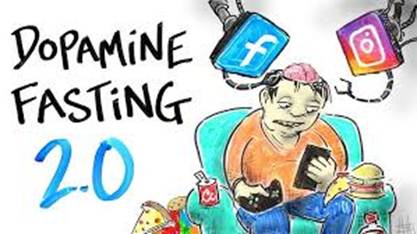
There are few tragedies in life greater than seeing loved ones suffer from addiction. Consider for instance the terrible addiction of Rob and Michelle Reiner’s son – and the horrible consequence. Yet we seem to be unable to crack the problem or solve it.
A recent edition of the Hidden Brain, headed by Shankar Vedante, offers a persuasive explanation. It is the dopaminc pleasure loop.
“Dopamine is a crucial chemical messenger (neurotransmitter) in the brain and body, acting as both a neurotransmitter and hormone that regulates pleasure, motivation, movement, mood, learning, and focus. It’s often called the “happy hormone””. It is a crucial hormone.
Some 50,000 years ago, when humans struggled to find enough food to stay live. Dopamine rewarded each such find. Today, when food is largely ample, or excessive, dopamine continues to reward us excessively. Result: obesity.
But the same is true with addiction. A narcotic triggers dopamine. But we become habituated. Less and less dopamine. The feedback loop seeks more and more drug, to generate the same dopamine high…and consumption rises, until, often, overdose or death or psychosis.
It is an example of how evolution generally improves survivability and viability – but in this case, a rare but terrible one, it leads to annihilation at times. Add to that the enormous drug profits the cartels earn and generate.
The pleasure-loop feedback is immensely hard to change. Once it gets rolling. I think we are all somewhat addicted to something… complete this sentence, “I find it hard to wean myself from my favorite….???”.
There is no easy solution. Dopamine is an insidious, terrible foe, when it becomes an enemy. I loved running – in part because my brain always rewarded it with a jolt of dopamine. Runners know what I mean.
Can we replace bad dopamine pleasure loops with positive ones? Facile, shallow, too easy.. but, we absolutely have to crack this terrible pleasure loop. Understanding it more deeply can help.
Rope a Dope As a Life Strategy
By Shlomo Maital

What can we ordinary people struggling to live good productive lives learn, from a superstar professional boxer, such as Mohammed Ali?
How about….. Rope a Dope?
What???
Here is Wikipedia’s definition of Ali’s Rope a Dope strategy: “The rope-a-dope is performed by a boxer assuming a protected stance (in Ali’s classic pose, pretending to be trapped and lying against the ropes, which allows some of the punch’s energy to be absorbed by the ropes’ elasticity rather than the boxer’s body). The boxer keeps his guard up and is prepared for the incoming blows while looking for opportunities to counter-punch the opponent, who by mounting an offensive may have left himself open to counters. By being in a defensive posture and being prepared for the incoming blows, the boxer decreases his chances of being caught with a clean flush blow. Ideally, a significant portion of the punches will land on the boxer’s hands and arms, or will miss completely, as a result of the boxer slipping the punch. Additionally, if an opponent lacks stamina, the power of the punches will decrease throughout the fight and he will essentially “waste” many punches into the boxer’s guard.”
Ali used the technique to defeat George Foreman, in the famous Rumble in the Jungle match in Africa. Ali purposely angered Foreman during the match, provoking Foreman to attack and force him back on the ropes. For nine rounds Foreman pounded Ali, who absorbed his punches on his gloves mostly and arms.
Then, in the tenth round, when Foreman was exhausted, Ali counterattacked and knocked out the spent Foreman.
What does this have to do with us ordinary folks? We all absorb blows during our lives. Some are really hard. It can lead to despondency, depression, feelings of futility, sadness – all of which weaken our immune system. Instead, rope-a-dope. Absorb the blows. Stay in the ring. Stay positive. Stay optimistic. You will win in the end, as Ali believed. Then, counter. Fight back. At some point the blows diminish…and you make a big comeback.
Easy to say? You note. I think in many ways, I and some of my loved ones practice this. Strong faith helps a lot. Support of loved ones. Optimism. And stubborn persistence. The key part — remain hopeful. Loss of hope is in many cases fatal.
Ali’s trainer was the legendary Angelo Dundee. He is alleged to have said, “Why don’t you…sort of be a dope on the ropes, letting Foreman swing away but hit nothing but air.” Foreman hit Ali, not air. But lost in the end.
Life, fate, whatever, it will tire of hitting you in the end and change course. And then you prevail. Even hurricanes run out of energy.
.
Conversing with our Brains
By Shlomo Maital

A friend of mine recounted recently, about how he listened to a song on Spotify, played it again – and then, his brain kept replaying it in his head, unwanted. This has happened to me, and maybe to you.
Why? When we enjoy something, our brain sends dopamine, a pleasure hormone, into our blood stream. The brain sees we like the song, that it brings pleasure – and like a good servant, repeats it..again and again. This also happens to us after trauma – bad experiences, only in a different manner.
My friend, who is highly creative, solved the problem. He sang the Israeli national anthem, HaTikva, several times – and extinguished the annoying repetitive song.
We CAN converse with our brains. We can tell it things. I do this at times when I am fearful of taking on some task or encounter. I tell my brain, I am not afraid. But – I am afraid. But if you tell your brain you aren’t… then maybe it comes to believe you. And you aren’t – or, are less afraid.
Try this. Converse with your brain. Talk to it. Sometimes, we can restore control, after our well-meaning brain takes over and controls us.
Why Birds Sing So Loud at Dawn
By Shlomo Maital

I rise early and walk our two little dogs, often at 5:00 or 5:30 a.m. These days, it is usually dark, well before dawn. Nonetheless, the songbirds are there, filling the air with their song, competing loudly one with another, with enormous energy.
Why? Why do birds sing to loudly even before the sun rises?
Writing in the New Scientist (a terrific magazine and website), James Woodford recounts research done by scientists/ornithologists, on zebra finches. Their theory: Birds rest at night, and their rapid metabolisms slow and accumulate energy. When they wake at dawn, they express that energy with a burst of song. When other birds do it, too, it turns into a kind of competition, with one songbird stimulating the other.
Woodford writes: “The dawn chorus of birdsong has inspired poets and nature lovers for thousands of years, but the reason why birds all over the world start the day this way is an enduring mystery. Now, a series of experiments in zebra finches (Taeniopygia guttata) suggests that while darkness inhibits singing, birds build up a stronger motivation to sing in the night that causes them to burst into song when the dawn breaks. The study also hints that a morning workout for the vocal muscles helps birds finesse their songs.
Of course. It’s the birds’ morning workout for their vocal chords. Ever heard a chazan (Jewish prayer leader) or opera singer warming up their voices? The birds are doing their hour of practice, before …well, before performing.
Try rising early, one of these mornings…just once, not every day! The birdies’ concert will make it worth your while.
Make People Happy!
By Shlomo Maital
Walt Disney, a struggling cartoonist, was working out of a small rodent-infested shed near a church. Seeing a small mouse inspired him to draw a new cartoon. That was the start of Mickey Mouse. Fast forward: Walt Disney Corp. has a market value of $190 billion and employs 230,000 people.
Disney had a vision to create a theme park called Disneyland. The banks did not understand his vision and turned him down. He eventually raised $11 million, and in one year, built and opened Disneyland in LA. It was an instant hit.
To motivate Disneyland employees, Walt Disney needed a mantra – a three word description of what they are meant to achieve. His mantra was: Make People Happy. Everyone, including those sweeping the streets, knew it and worked according to it. If a visiting family asks the street cleaner, excuse me, where is the Dumbo the Elephant ride? The response could be: I don’t know. It’s not my job. I just clean the streets. Or: Take this path, and at the end, turn left. If your job is to ‘make people happy’, you know what to say – and to learn the layout so you can answer tens of questions daily.
Make People Happy is not just a great mantra for Disneyland and Disney World. It works for all of us. Make people happy – others, primarily, and of course, ourselves. A happy body is one in which our amazing immune system is working best.
Years ago, we took our children to Disney World. “That was the best day of my life,” one of them said, with a big smile. Making people happy is a worthy purpose in life – for Disney, and for each of us.
Ever Seen a Drunk Hornet?
By Shlomo Maital

Ever seen a drunk hornet?
Let me explain.
Hornets are a species of wasp. They often dine on over-ripe fruit with high sugar content. The sugars in the fruit ripen and ferment, sometimes creating alcohol, as high as 80 proof (e.g., high-alcohol vodka, 40% alcohol).
This ought to make hornets dizzy-drunk, right? I mean, they are relatively tiny…and consume such large amounts of alcohol into their tiny bodies.
Not a chance. You have never ever seen a drunk hornet. Nor will you.
Why?
Because biologists have discovered that hornets have a powerful enzyme in their livers (our livers are the organs that process and metabolize alcohol) that metabolizes the alcohol fast and efficiently, before it enters the blood stream and screws up the brain.
How come? Over years of eating fermented alcohol-laden fruit, millions of years, hornets have through evolution evolved to deal with it. Hornets that didn’t, well – they died out before procreating.
Hornets have existed for more than 200 million years. Humans? Perhaps, 50,000 years. And in recent times, humans have brought a halt to evolution, because we do not allow survival of the fittest to eliminate those who are weaker or less fit (thank goodness for that!).
So, no, there are no drunk hornets. Another amazing feat of evolution. Thanks, Charles Darwin!
What We Learn From 5 Japanese Centenarians
By Shlomo Maital

On November 7, New York Times ran a lovely piece on five Japanese centenarians (aged 100 or over) who continue to work every day. Here is a brief summary of what we learn. By the way, Japan has 100,000 centenarians! More per capita than any other country. Diet, health care, exercise… all are important. But according to these five, work is key.
Massafumi Matsuo, 101, farmer. “I work to stay healthy,” he says simply. He grows eggplants, cucumbers and beans. He has survived esophageal cancer and COVID.
Tomeyo Ono, story teller. She is a teller of minwa, folk tales, a career she took up after 70. (At 101, she is the oldest member of a story telling collective). She says she is determined to keep telling stories “until she joins her friends and family who have passed on”.
Tomoko Horino, 102, beauty consultant. She says, “when I first tried on makeup I felt so pretty. I wanted to make others feel the same way”. “I love making people beautiful”. She makes her sales over the phone, with occasional visits to her home. Keeping busy helps her fend off loneliness.
Fuku Amikawa, 102, ramen chef. Five or six days a week, Fuku works the lunch shift at her family’s ramen restaurant alongside her son and daughters, using long chopsticks to swirl ramen noodles… Her restaurant marked its 60th anniversary. She says that physically and emotionally, work changes the quality of her life.
Seichi Ishii, 103, bicycle repairman. He goes to bed every night excited about the customers who might show up the next day. If I die here in the workshop, he says, I will be happy. Working at his shop gives him more joy than even singing karaoke every Sunday at his favorite snack bar.
I think we need to give our brains a reason to keep us alive. If we do, then our brains will continue to function well. Retirement? Make sure you retire TO something, not just FROM something.
Nature Heals – And Helps Us Think
By Shlomo Maital

In the latest episode of the psychological podcast Hidden Brain, with Shankar Vedante, the theme is how Nature Heals. It is based on a conversation with psychologist Mark Berman, U. of Chicago, who researched the subject.
Vedante opens with these startling statistics: “The share of American adults reporting they took prescription drugs for mental health conditions stood at 19% in 2022. … That’s millions of people taking drugs for anxiety, for depression, for attention deficit disorder. Millions more are in therapy, working through their challenges with a counselor. For many people, such measures are enormously helpful, even essential. At the same time, it may be the case that we are overlooking a potential source of relief that is literally right outside our door. This remedy costs nothing, has no known side effects, and is often delightfully pleasant. We are talking about spending time in nature. The capacity of the natural world to soothe and refresh our sensibilities has been known for centuries. But it’s only recently that scientists have begun to identify exactly what it is about the outdoors that has such a powerful effect on our moods and our minds.”
Berman and other scholars have shown what virtually all of us know – a stroll or hike or jog through Nature is calming, refreshing, relaxing … and can heal the mind, at least in part. And there is an additional benefit.
In daily life, our brains are attentive to what we are doing and what needs to be done. In other words, our brains are very busy. In Nature, as we stroll along, our brains relax, and have nothing more to do than to breathe and take in the beauty. And then, things pop in to our minds – ideas, solutions, Plan B’s…. These ideas are always there, but our brains are busy and we don’t have time or attention to hear them.
Berman explains that in Nature, we no longer have focused attention, enabling our brains rest, relaxation and ideation.
We all know this, right? Why don’t we use this more often? I find that our two doggies help a lot – they need walks four times a day, especially the elderly Yorkie, who is 14. We are blessed to live among beauty, among old trees and blooming flowers. Even a short walk can be therapeutic. And it’s right under our noses.

 TIMnovate