
You are currently browsing the category archive for the ‘Uncategorized’ category.
Getting to the Bottom of Things With 7 Why’s
By Shlomo Maital

There is a method for getting to the bottom of sticky problems. It’s called the method of the seven why’s. It is discovered and rediscovered by six-year-olds – many parents don’t have the patience to get beyond the first four!
Ask why? Get an answer. The answer raises questions. Ask why again, digging deeper. Answer. Why? Answer…. Few sticky problems can endure the seventh why? Without revealing an insightful answer.
Why is the world in such a horrendous mess? Seven why’s. Here goes. That was the first.
Because – of globalization.
Why? Because globalization generated massive wealth, 2,781 billionaires, to be precise.
Why did globalization create billionaires? (#3) By freeing the flow of capital, goods and information, it became possible to scale up (blitzscale, it is called) globally.
Why is this a problem? (#4). Because countries competed for capital by slashing taxes, luring billionaires’ money. Ireland: prime example.
Why are low taxes a problem? (#5) The huge wealth created by globalization could have been shared with the billions of people left behind, through the tax system. But—tax cuts and the billionaires’ purchase of political influence stymied it. (cf. Elon Musk’s massive gift to Trump’s PAC).
Why is the billionaires’ support of far-right politicians and their promised tax cuts such a problem – and such a conundrum? (#6) Because those whom this mess hurts most, low-wage working people, are precisely the ones voting for the far-right politicians and their billionaire backers. (cf. Zuckerberg’s pilgrimate to Mara Lago!).
Why do the low-wage working class people vote for those who harm them? (#7) Because the elitist centre-left, Harvard grads, ignored and denigrated them, impoverished them by exporting factories to China; their votes are protests, and the psychic benefit they gain from bashing the elite Ivy grads is what really matters most.
Every step in this seven-step chain of reasoning could be wrong. Any one wrong answer invalidates the whole syllogism.
So – where did I get it wrong?
Mapping every human cell
By Shlomo Maital
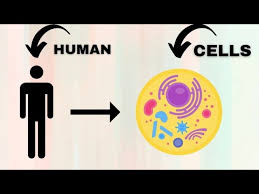
Two important developments in cell biology, published this week, suggest major breakthroughs in how healthcare is provided.
- Preventing disease is always superior to treating it, though Big Pharma loves selling billion dollar drugs. One approach to this has been through use of CAR-T cells.
Chimeric antigen receptor (CAR) T-cell therapy is a way to get immune cells called T cells (a type of white blood cell) to fight cancer by changing them in the lab so they can find and destroy cancer cells. Up to now, this approach has been used by modifying the cancer patient’s own cells. Published work by Chinese researchers, joined by Americans, suggests that donor CAR-T cells can be used as well. This is hugely important – because modifying each cancer patient’s CAR-T cells is expensive and takes time. Using modified donor cells means that large stocks of CAR-T cells can be placed ‘on the shelf’ – though it is unclear whether Big Pharma would be willing to cut down the branch their huge profits rests on.
2. Writing in The Economist, Geoffrey Carr explains how the Human Atlas Project may also change our lives.
“One thing that is now being done is the Human Cell Atlas, a project made possible by the Human Genome Project’s identification of the 20,000 or so protein-coding genes that can determine a cell’s nature. And what a thing it is. The endeavour has involved thousands of researchers spread over all six inhabited continents proposing to track down every type of cell in the body, where each is located, what their jobs are, how they form in a developing embryo, how they collaborate, how they cause diseases when they go wrong and so on.
“The long-term goal is to create something akin to a human digital twin—or, rather, a whole series of twins covering the spectrum of human sexes, ages and geographical backgrounds that can be poked and prodded digitally to see how they react. This will help researchers understand how actual bodies behave, decide which experiments are worth doing in the real world and, perhaps, provoke ideas that might not otherwise have had their lightbulb moment.
It is a huge endeavour, dwarfing the HGP in size and scope, but cleverly keeping costs down by piggybacking on and co-ordinating the efforts of people already working in established laboratories, rather than starting (as many genome-project efforts did) from scratch. Like the genome project, though, it makes its data available immediately, for any and all to use.
“However, unlike the genome project, which was frequently in the news up until that triumphant announcement at the White House in June 2000, the Human Cell Atlas has stayed largely under the radar. As we reported almost two years ago, the contrast is partly a result of the genome project having had well-run PR, a clear end goal, a competitor in the form of a private venture which aimed to beat the public one, and the (ahem) rather large egos of some of those involved (on both the public and private sides).”
= = = = =
It’s pretty simple. Our 20,000 genes (some of them) lead to expression of proteins. Proteins run our lives, keep us well and fight invading germs. Mapping our 30 trillion cells in the human body (!), linking proteins to cells, is an enormous project, requiring global cooperation among cell biologists. But it can yield huge benefits in preventive medicine.
The atlases that showed detailed geographies enabled seafarers to explore the world, and they changed our world. An atlas of the cells in the human body may do the same, for our preventive medicine.
Bernie Knows
By Shlomo Maital
I am as tired as you all, of reading the Democrats’ weary post-mortems of why they lost decisively. This blog is the last about this topic, quoting someone who gets it.
Senator Bernie Sanders, Vermont, former mayor of Burlington.
Why are the Democrats surprised that the working class did not support them? He asks. When — for years, the Democrats have not supported the working class. He said this to Michael Barbaro, on the New York Times” The Daily podcast.
Go back to the Clinton administration, when NAFTA shipped America’s factories to Mexico and Canada, $5 an hour labor rather than $25, and free trade brought a flood of cheap Chinese goods into the US, throwing many Midwest factory workers out of a job.
What specifically did the Dems offer working people in this election? Did they propose $18/hr. minimum wage legislation? Uh, no. National health care for all? No. Support for day care? No. Make groceries more affordable? Uh uh.
Virtually every ethnic, racial, and demographic group voted in the majority for Trump. And for the first time in a long time, the Republicans won the majority of votes for President. The Dems warned Trump would bash democracy. Well, he will, and has. But most Americans say, hold on. What did democracy do for me in the past 20 years? Put power in the hands of the educated elites, while I was shut out of a college education, unable to afford the tuition or the steep interest rates on student loans.
Unless the Dems (who spent a billion dollars in ads in the three blue-wall states, Michigan, Wisconsin, Pennsylvania, ineffectively) start listening to working Americans, and speaking to them in their language, look for J.D. Vance to become President in 2028.
Yikes.
In Science, One Thing Leads to Another…
By Shlomo Maital

Lawrence Livermore Labs fusion
For decades, scientists have pursued the goal of replicating the virtually endless source of energy found in our Sun – fusion, the fusing of hydrogen atoms, producing helium and releasing vast amounts of energy. H-bombs do this, of course – but use fusion for destruction, not for construction. Fusion is clean energy par excellence and infinite in quantity.
Scientists at Lawrence Livermore National Laboratoy in the US have finally succeeded in a key first step – ignition. Using powerful lasers to focus an energy beam at hydrogen, they have created fusion – and most important, gotten (in one experiment) twice as much energy created by the fusion, as the energy they needed to ignite it, by powering the lasers. This is a big deal.
But in a TED talk, Livermore scientist Tammy Ma said just in passing, that the laser technology developed for this purpose actually led to another unexpected, unplanned, unanticipated benefit – more powerful, smaller computer chips, through extreme ultraviolet lithography.
How come?
“Extreme ultraviolet lithography is a technology used in the semiconductor industry for manufacturing integrated circuits (ICs). It is a type of photolithography that uses 13.5 nanometer extreme ultraviolet (EUV) light from a laser-pulsed tin plasma to create intricate patterns on semiconductor substrates. ASML Holding is the only company that produces and sells such systems for chip production, targeting 5 nanometer (nm) and 3 nm process nodes.”
Note: A single atom is between 0.1 and 0.5 nanometers in width. So, the EUV technology, originating from fusion research, is now creating chips with detail down to the width of 6 individual atoms!
In life, and especially in science, one thing leads to another. The EUV technology arose because at Lawrence Livermore, it was necessary to focus the laser beam on a very very very small space, hydrogen atoms. And, whoops…turns out to be useful in etching transistors on silicon.
Who knew!?
Black Women: They Get It!
By Shlomo Maital

According to CNN’s exit poll in the US presidential election, 91% of black women voted for Harris. This is a far higher majority than any other demographic, ethnic, or religious group.
Black women get it! And – why? Why did they vote for Harris/
Not because of the economy, immigrants, inflation, or even abortion.
Democracy. According to CNN, they felt she would protect democracy. And because democracy protects them. Because a Republican who believed in democracy (Lincoln) fought a bitter war to preserve it, preserve the Union, and end slavery.
Yes, black women get it.
Whey, then, don’t black men, white men, and basically 73 million people?
Thermodynamics and the State of the World
By Shlomo Maital
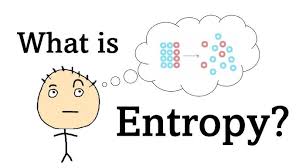
The second law of thermodynamics states that entropy always increases with time. Entropy is lack of order or predictability; or gradual decline into disorder.
What does that have to do with the state of the world?
At present, entropy is the defining word. Disorder. Trump wins the presidency in the US and threatens mayhem. Russia drags North Korean soldiers to the front in Ukraine. Iran threatens Israel with drones, rockets and who knows what. The Gaza/Lebanon War drags on. (This morning, many Israelis again were sent to bomb shelters). In Amsterdam, crowds of angry Muslims assault Israelis there for a basketball game; several are injured. China employs ‘wolf warrior diplomacy’, challenging US leadership. Israel’s PM fires the defense minister in the midst of an existential war and appoints a party hack in his place.
The entropy list is long and broad and deep.
It does seem that at the moment, entropy is not only increasing in the world, but soaring, spiking.
So?
Can we take comfort in knowing that entropy is not all bad. Static. Frozen order. Nothing really good comes from a system that is unchanging; it isn’t broken but it is not so great either.
Our world system is broken. Including democracy. But out of the entropy, there will emerge a new dynamic functional order. This happened in July 1944, when at Bretton Woods the US and its allies reinvented the global economic and financial system, in the midst of a terrible war. It will happen again. The process is painful – entropy is awfully stressful, especially when our perspective is day-to-day and we only see the tips of our noses, if that.
Good will emerge from the world entropy that prevails today. And as the Book of Genesis notes, in the very first sentences, the world emerged from chaos. Disruption is a vital component of world-changing hi-tech and innovation. It is not always a good thing. But sometimes, incredibly good things do emerge.
Can we take some comfort in this?
If You Want To Be Happy For the Rest of Your Life…
By Shlomo Maital

The 1963 hit song by Jimmy Soul (“If you wanta be happy for the rest of your life, never make a pretty woman your wife…”) is so offensive and politically incorrect, it would die today long before reaching the airwaves.
Moreover, it is dead wrong…as I will explain later.
But there is research that DOES complete the sentence, “if you want to be happy for the rest of your life…”… and it says: find a soul mate. Find a GOOD wife. And yes, she CAN be pretty.
Massive research just published in Nature – Human Behavior [1] finds this:
“Depression represents a significant global public health challenge, and marital status has been recognized as a potential risk factor. However, previous investigations of this association have primarily focused on Western samples with substantial heterogeneity. Our study aimed to examine the association between marital status and depressive symptoms across countries with diverse cultural backgrounds using a large-scale, two-stage, cross-country analysis.
“We used nationally representative, de-identified individual-level data from seven countries, including the USA, the UK, Mexico, Ireland, Korea, China and Indonesia (106,556 cross-sectional and 20,865 longitudinal participants), representing approximately 541 million adults.
“The follow-up duration ranged from 4 to 18 years. Our analysis revealed that unmarried individuals had a higher risk of depressive symptoms than their married counterparts across all countries.”
The other day, I saw a dentist (periodontist). She asked my age. I said 81.98 (five days to my birthday). She noted that I looked healthy and happy. I am. I said, unprompted, I have a secret. I have a good wife.
Indeed I do. My wife of 57 years is beautiful, interesting, supportive, and keeps me in line. There are reasons to be unhappy these days in our little country Israel – but at home, none at all. Having a spouse to love and care for is a major blessing and a significant reason to get out of bed in the morning.
The research I cited involved N=541,000,000! My life is N=1. But that N=1 is for me significant. How about you?
[1] Xiaobing Zhai, Henry H. Y. Tong, Chi Kin Lam, Abao Xing, Yuyang Sha, Gang Luo, Weiyu Meng, Junfeng Li, Miao Zhou, Yangxi Huang, Ling Shing Wong, Cuicui Wang & Kefeng Li. ” Association and causal mediation between marital status and depression in seven countries”. Nature — Human Behaviour. (2024)
Anger vs. Hope: In One Glance
By Shlomo Maital

REPUBLICAN ‘VIBES’
BEFORE BIDEN LEFT AFTER

DEMOCRAT ‘VIBES’
BEFORE BIDEN LEFT AFTER
Today, Tuesday, is election day in the US. Unlike in many countries, elections held on the first Tuesday of November are not held on weekends, when people are largely off work, nor are they days when businesses and workplaces are closed, to facilitate voting. This in part is why some 80 million Amerians have already voted, in early balloting.
Writing in the New York Times, Michelle Cottle supplies a rare insight into the election. With a talented graphics artist, she has canvassed voter emotions, Dems and Republicans, and graphed them. (See above).
The dominant emotion for Republicans is shown in red — ANGER. And since we know behavior is largely driven by our limbic brains, by emotions, this is crucial in understanding their support of Trump, who hourly feeds that anger, that grievance.
The dominant emotion among Democrats is the yellow – HOPEFUL It is the theme Kamala has driven, almost obsessively, and represents a huge shift in strategy from Biden, who messaged about the Trump threat — hate the haters.
A picture does convey a thousand words. Think about those two pictures above. Hope vs. Hate.
I am a dual Israeli-Canadian citizen. None of my business, right? But – this election will decide the fate of the world, and to an extent my country. Let’s hope Hope triumphs. Let hope trump Trump and hate.
Choosing Breakfast Cereal: Help!!!!
By Shlomo Maital
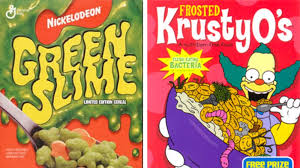
Remember the days when the choice of breakfast cereals was, basically, Corn Flakes or Rice Krispies?
Well, let’s do the math. An average supermarket these days allocates at least 35 linear feet of shelf space to breakfast cereals, comprised of 5 shelves each 12 inches high, or 60 inches in total in height, times 84 inches (7 feet) long. That is, 7 feet long times 5 shelves.
An average cereal box is 12 inches high and 8 inches in width. That means a 7 ft. shelf can hold up to 10 boxes per shelf, times 5 shelves, or 50 boxes. Some could be the same type and brand – say, half. So, there can be 25 different types of breakfast cereal on the shelf.
And this is a huge underestimate. 25 different cereals to choose from! Worldwide, there are an estimated 1,000 types of breakfast cereals. Perhaps half of those in the US alone.
Do we really NEED 25 different breakfast cereals on the shelf? Do we need KrustyO’s and Green Slime? (those two didn’t last long, for good reason!).
The breakfast cereal shelf in a supermarket is a microcosm of capitalism gone wild. It offers us a vast range of choices, that long ago ceased creating real value. Part of the breakfast cereal dynamic is the use of ‘sharp elbows’ to gain more shelf space, because that means selling more product. So, companies have a keen interest in proliferating brands, just to get more space on the shelf.
Let’s say, like me, you prefer Corn Flakes. You still have to search through 25 different kinds of cereal, just to find the one you usually like and buy. And it may be hard to find – because the sugary ones are the most profitable. So Corn Flakes may get the bottom far right shelf…Siberia. The science of product placement on shelves is very well developed.
So, if you shop at the same supermarket each week, can you get to know the placement of what you usually buy – and save cognitive energy? Sure – except, those diabolical shelf stockers keep mixing things up and changing locations. Mainly, to feature prominently more profitable, or newer, products. Sometimes, the stocking is done by the companies’ sales reps themselves…and they are diabolical!
The New York Times just published a neat article by Kashmir Hill, who used AI to help her make daily choices and simplify life. Worth reading… but, alas, not much help when it comes to finding Corn Flakes hiding under big boxes of Green Slime. *
Kashmir Hill. “I took a decision holiday and put AI in charge of my life”. NYT Nov. 1 2024.
The Election: Educated Women vs. Uneducated Men
By Shlomo Maital

Einstein said famously, “simplify as much as possible…but not more so.”
This coming Tuesday, voters choose between Trump and Harris.
How will they choose?
According to the New York Times: a recent poll gives the answer. Educated women favor Harris by 43 points (!) over men without college education, who favor Trump. Since half of all voters are women (and women vote more than men), looks like a squeaker for Harris. Some 64% of US men do not have a college degree. For women – over 40% have college degrees, up from 4% (!) in 1940.
But this is truly sad. Men without college education have been left behind and left out in America. Whose fault? Partly the Dems. They gave away their manufacturing jobs to China, under Clinton. But partly the men themselves. It’s not that hard to get into college… many have battled into community colleges, done well and gone on to university, sometimes with partial scholarships and federal assistance.
But, it’s easy for this left-out group to blame the Dems and the system and democracy and the immigrants and… everybody else. Trump sensed this back in 2014 and plays on it incessantly.
It is a terrible shame, an iniquity, that the election is settled on this basis. And much worse – that a President may be elected by those who eschew education, voting for one who panders to ignorance.

 TIMnovate