
You are currently browsing the category archive for the ‘Uncategorized’ category.
Lock ‘Em Up (Cellphones)
By Shlomo Maital
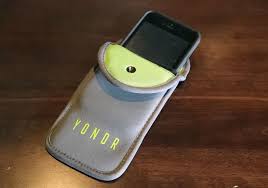
Lock ‘em up. Cell phones, that is.
At last, schools at least are seeing the light. After students returned to the classroom, following lengthy COVID lockups, the cell phone addiction was ruinous in the classroom. Reporting on NPR public radio, Rachel Cohen recounts:
“Restrictions on students’ cellphones are becoming more common in public schools across the country. Florida banned them statewide last year. Indiana’s ban went into effect this school year, as does one in Los Angeles. We visited a Colorado school in the first week of its new cellphone ban to see how it’s working.
“ It’s the third day of school at Doherty High in Colorado Springs. Seventeen hundred teenagers filed through the doors as security guard Lonny Barrett checks IDs.
Barrett:: Good morning. Thank you. Can I see your phone?
“According to a new policy, students are given special pouches to keep their phones in all day. Barrett checks each one. Principal Hillary Hienton explains the gray fabric pouches, designed by a company called Yondr, magnetically lock. Students unlock them at a magnet station at the end of the day. (see Photo above).
“In the first week, the English teacher reports he’s already noticed a difference. Last year when he gave students a break between lessons, they’d pick up their phones. He notes: “And then this year, every time I give them a five-minute break, they just talk to each other. So then that makes the feel of a community in a classroom way more powerful.”
“When challenged by parents and students, the Principal simply replies: ‘I care about you, and I care about your education, and I want to make sure that you have the tools and the skills and the competencies that are going to make you successful in life. Phones are a distraction from that success.’ “
Overall, students seemed to be OK with this policy, despite the pernicious addictive impact of their cellphones.
Wish we could get a few million of those Yondr devices for us adults.
China”s Mercantilism: Meeting the Threat
By Shlomo Maital
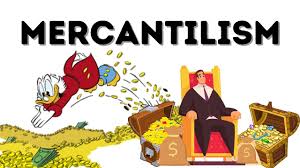
My country Israel has been flooded with Chinese electric vehicles: BYD, Geely and seven or eight other brands. They are high quality, cheap, and aggressively marketed – supported by heavy Chinese government subsidies. These cars are a reflection of China’s new economic policy, which is based on an outmoded economic theory known as ‘mercantilism’.
Mercantilism is a nationalist economic policy that is designed to maximize the exports and minimize the imports for an economy. In other words, it seeks to maximize the accumulation of resources within the country and use those resources for one-sided trade. In Napoleonic France, Napoleon’s government sold goods to Britain even during the Napoleonic Wars, on the theory that an export surplus that accumulated gold strengthened France. This led in part to Napoleon’s defeat at Waterloo.
China is now flooding the world with its cheap exports, backed by heavy government subsidies. The US China tariff is circumvented, when Chinese firms locate plants in Mexico, add a small amount of value to Chinese parts – and do an end run around the tariff. This policy has re-ignited China’s economy, replacing demand previously lost to low consumer spending and low domestic investment, especially in housing and construction.
The US needs to tighten its import tariffs, basing them not on country of origin (Mexico) but on value-added of components. Europe is now considering a China tariff, after being flooded with Chinese EV’s. These tariffs, of course, violate World Trade Organization rules. But China, after being admitted to the WTO, never followed them. The Chinee market is far from open to Western expoerts, while Western markets were largely open to Chinese goods.
Mercantilism is a failed policy. At some point, China cannot continue to run a huge export surplus, by subsidies and by buying up US dollars (via US Treasury bonds) to keep them from losing value and thus making imports expensive.
The US made a huge mistake, driven by profit and greed, by offshoring its manufacturing to China. It is now trying to reverse this, by near-shoring – bringing back plants, if not to the US, then to nearby friendly countries like Mexico. Mexico may, as a result, enjoy a huge economic boom. So far, building efficient semiconductor plants in the US, supported by government funding, has been far from successful — the skilled manpower to support it just is not there.
One wonders why China believes it can continue to reap economic benefits from the West, while aligning with autocrats in Russia and Iran and North Korea.
The new US president, after the election, must tell China clearly: You can’t. You cannot rip us off in trade, while being a bad actor threatening world peace. We’re on to you.
Choice Run Amok: The Case of Starbucks
By Shlomo Maital
There are a lot of things wrong with capitalism. Not the worst one is this: Choice.
Businesses are driven by desperate efforts to grow revenues, to proliferate the choices they offer. The result: six miles of breakfast cereals on supermarket shelves.
And …Starbucks, which offers “….some combination of tall venti grande double-pump, one to four shots of espresso, half-caf, oat milk, nonfat milk, soy milk, milk milk, whipped cream, syrup, brown sugar, white sugar, no sugar and mocha drizzle, from the pike position with two and a half twists.”
Writing in today’s New York Times, Bill Saporito details Starbucks’ dilemma, after firing their CEO (who created the problem) and appointing Chipotle’s previous CEO, who created the same problem at his previous job.
At Starbucks, “…There’s often a crowd waiting at the bar end because Gen Z, which tends to prefer anything but human interface, has overwhelmed the baristas with the same orders-of-magnitude drinks. Starbucks says there are more than 170,000 possible drink combinations available, but outside estimates have put the number at more than 300 billion. And the person in front of you always seems to be ordering 100 million of them.”
Three hundred billion combinations. Yikes. Why? Wall St. demands constant growth. You grow, by expanding your offerings, right?
Well, maybe not. Maybe you confuse customers, make life impossible for baristas who have to provide those choices, and create long long looooong lines of people waiting for their half-caf half soy half milk two shots no foam etc….
Long ago, I wrote an academic article explaining why, in contradiction to economic theory, more choice means less wellbeing. Sometimes, we are better off when we ourselves limit our own choices.
Saporito notes that there are fast-food chains that offer very simple limited menus and are thriving. I think, in many cases, less is more. Less choice is more simplicity, less complexity. Capitalism is choice run amok. Time to rethink it.
NeoToddlerism: When People And Leaders Throw Tantrums
By Shlomo Maital

A friend sent me this post, titled “The Rise of Neotoddlerism”:
“…activists spray paint Stonehenge, occupy US university campuses, block access to roads and bridges, occupy museums, and government buldings, storm sports events and movie premises, attack priceless artworks, desecrate war memorials and holocaust monuments.”
Roots of this tantrum behavior lie, the author says, in the digital revolution, when smartphones made it easy for strangers to unite and mobilize around shared views. Protests grew..”but became more outrageous”. “They are symptoms of cluster-B personality disordes – narcissism, histrionics, antisocial and borderline behavior.
Want change? Forget years of political organization, door-knocking. Just raise hell and disrupt things. Dumbing down is happening in politics. Trump labels Kamala “communist’. Walz labels Trump “weird”. Argument is distilled to one word.
A pro-Palestine activist, Riddhi Patel, addressed a Bakersfield, CA., City Council meeting last April and told the counsellors, she would murder them, adding “I hope one day somebody brings the guillotine and kills all of you mother-F’ers”. She was charged in court on 16 felony counts and sobbed unctrollably.
All of us parents know that toddlers throw tantrums; their brains haven’t yet developed the ability to control impulses. With time, they will.
Why then are our youths throwing tantrums? How many pro-Palestine protesters are familiar with the 100-year conflict, the complex geopolitics, underlying the dispute – and the many times Palestinians turned down peace proposals?
Most of all, why are some world leaders throwing infantile tantrums? Putin is angry at NATO and so decides to attack Ukraine, killing thousands of people. And Trump—upset at having to defeat Kamala rather than Biden, purposely, intentionally, mispronounces her name, KaMAla, is that a tantrum or what?
We deserve better. We deserve youths who are trained in critical thinking and explore all sides of an issue, asking hard questions. We deserve leaders who debate policies rather than whether Walz was a coach or assistant coach? We deserve better, when the New York Times’ fashion critic write two thousand words on what Kamala’s pants suit looked like.
Trivializing important issues is neo-toddlerism. We deserve leaders, and people, who are more mature than toddlers and act like it.
How Life Began on Earth
By Shlomo Maital

Have you ever wondered how life on Earth began? How this incredible complex system of the double-helix DNA, that enables cells to divide and reproduce in exact replicas?
Researchers have made some progress, recently. (See: How did the first cells arise? Carl Zimmer, New York Times, August 21, 2024).
Roughly four billion years ago, protocells (rudimentary cells) first came about. They contained only RNA (ribonucleic acid), a single strand version of DNA (which has two intertwined strands…). RNA can bend into intricate shapes, turning itself into a tool for cutting or joining other molecules together. mRNA technology is the basis of, for instance, powerful new COVID vaccines.
For over a century, researchers have created RNA droplets – droplets with RNA inside. If you shake the droplets, they split into two. That may be a clue about how simple cells divide and reproduce. But there was a problem. The RNA strands drifted from one droplet to another, and fused together, in a clump, like an oil film on top of the water.
There is serendipity in sciencd! A scientist, Aman Agrawal, a chemical engineer, made RNA droplets…he dumped the requisite chemicals into a vial and added purified water, then sealed it. Months later, he was surprised to see that the vial had a milky color. That meant the RNA droplets were still there inside, floating there. They had not clumped or bunched. Why? The water coaxed the molecules in the outer layer of the droplets to link together, forming a kind of protective membrance, that kept the RNA droplet intact.
Other Nobel scientists replicated this work. Hypothesis: Rain falling on the early Earth might have provided the water required to make the intact RNA droplets. A graduate student took beakers of RNA droplets outside during a storm. The rainwater resulting made the RNA droplets stable, intact.
There is still lots more to learn about how life on Earth began. But little by little scientists are making progress. And this research is absolutely fascinating….
Rose Harvey – Olympic Champion
By Shlomo Maital
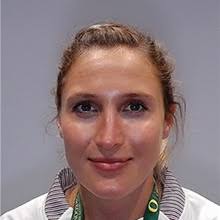
Rose Harvey
Rose Harvey represented Great Britain in the Paris Olympics Marathon. She finished close to last, 2 hours and 51 minutes, almost half an hour after the winner. She won no medals. And – she is a champion.
Rose Harvey ran the entire 26 mile marathon with a stress fracture in her femur. In other words, she ran for nearly three hours with a broken leg. I can only imagine the pain. Today, she is on crutches and cannot put any weight on her leg. It will heal, and she will run again.
Why would someone run for three hours in agony? Rose kept telling herself, to do just another mile (a method I have myself used…when you fell you are out of gas). She told herself she was running to her fiancé, Charlie, whom she will marry in three weeks. He was awaiting her at the finish line.
Stress fractures are cracks in the leg bone, caused by repetitive force, such as repeated up and down leg motions or running long distances. Track and field athletes get them, so do military recruits who carry heavy packs over long distances.
Marathons are a microcosm of life. You constantly ask, why go on? What’s the point? The point is so clear – to finish what you committed to finish. Despite everything. And when you do, it translates to other challenges in life.
Rose Harvey will run again, and compete at a world class level. And count on it, she will never quit.
Are YOU a Synesthete? Can YOU Connect the Dots?
By Shlomo Maital

The recent special issue of National Geographic is titled “Brain”. It is a fascinating tour through our brains, and shows how much we have learned through massive research on brain mapping.
I found an interesting piece on ‘synesthesia’ – “a merging of information that is otherwise unrelated and comes to a synesthete automatically…these aren’t memorized connections…Synesthesis isn’t something you can train your brain on.”
Synesthesia is ‘connecting the dots’ – when the dots seemingly are in no way connected. I call this X + Y — creating value by combining things that do not seem to go together. I’ve studied creativity for decades and it still remains to me a highly mysterious process. But synesthesia is definitely at the core of idea people.
Here is where I disagree. Synesthesia is DEFINITELY something you can train your brain to have. Let’s take some examples. Steve Jobs once noticed how small children touch computer screens, as if to manipulate objects on them. Many parents saw the same thing. But did not make connections. Jobs did – inventing the touch screen and innovating smartphones. Jobs was a synesthete.
Akio Morita, Sony CEO, pioneered the Walkman… a tape recorder that did not record, with weird earphones to listen to music. X + Y.
I practice synesthesia with students. We take a favorite product and take essential parts away. X MINUS Y. what do you get? How can it create value? Separate the dots. And remove some.
True, some people are much better at synesthesia than others. But the rest of us? We can improve and practice. We can train our brains to create new and unusual neuron pathways.
Try it. It’s a lot of fun.
Incidentally – some synesthetes have the quality of using graphemes – attaching personalities to figures and numbers. For many, the number 13, or the number 7, have deep meaning, almost as human personalities.
The brain scientists say that about one person in 25 is a synesthete. That makes over 300 million in the world. So – there are many people walking around who, like Jourdain in Moliere’s play Le Bourgeois Gentilhomme, who ‘speak prose without knowint it’ – who connect the dots regularly without realizing how unique and valuable this is.
So – are YOU a synesthete? Want to be one? Practice.
Why Humility is So Vital – and So Rare Among Leaders
By Shlomo Maital
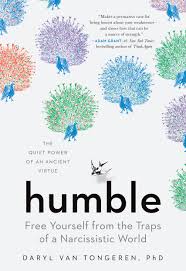
There is a paradox among world leaders and politicians. A growing number of autocrats are narcissistic, egoistic machomen (mostly men, nearly all) – a quality that once would have rejected them from the outset.
Why are people choosing such figures? Trump is not alone; consider Putin, Xi Jin Ping (the lifetime leader), Kim Jong Il, Viktor Orban…. The list is long. Meanwhile, a truly modest humble figure, with minimal ego, Biden, has gracefully exited from the world stage (on Jan. 20, for sure).
I think the reason may be this: In a world that is increasingly chaotic, a multipolar world with a renewed Cold War, there is great uncertainty. People seek leaders who seem certain about themselves and about everything — even if it is fake.
A new book by a psychologist Daryl Van Tongeren sheds some light on the matter.*
* Humble: Free Yourself from the Traps of a Narcissistic World. 2022 by Daryl Van Tongeren.
Van Tongeren argues, and indeed shows, that “the humble enjoy a more secure sense of self, handle challenges better, and, indeed, are often the people we like the most.”
He shows that humbleness is the happy medium between self-denial and self-obsession. “It gives the person with humility a true view of reality. “By seeing where we have room to improve, we can grow. By admitting our doubts, we can learn. And by acknowledging our own worldview as one among many, we can truly connect with others despite our differences.”
Humility is vital for connecting with others. And it has to be sincere. There is ‘humbug humility’ – professing false modesty, while in fact praising oneself. It is so easy to see through it.
Perhaps the self-esteem movement, that focused singlemindedly on how and why we should value ourselves, our abilities, one that sold millions of self-help books, is partly to blame. Those who are truly humble have a deep firm core sense of self-worth that needs no praising or inflating.
Humble people are truly caring about others, and listen to others with sincerity and intent. Humility is I believe vital for competent long-term leadership.
And by the way – the leading self-help book is the Bible. Ever thought about Moses’ humility? And how he led a bunch of motley slaves to become a nation? But never got to bring them in to the promised land? Read Deuteronomy, Moses’ amazing three discourses as he prepares for his death. He almost admits failure… because the people to whom he brought the Law, the 10 Commandments, would, he saw, never truly keep them all, as they should.
Von Tongeren once asked his wife to score his humbleness, on a scale of 1 to 10. She gave him a 4. Wait, he said. Do you mean, 1 is lowest? Or highest?
Lowest, she said. He saw himself as humble. Those who knew him best thought otherwise.
What is your humility score/ In your own view? And – in your spouse or partner’s eyes?
(Van Tongeren was interviewed at length on Shankar Vedante’s Hidden Brain podcast).
Breaking (Breakdancing) at the Olympics
By Shlomo Maital
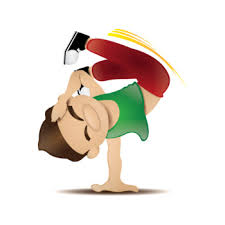
Breakdancing – at the Olympics! It is one of the last events and is perhaps the least familiar one.
Actually, it is known to the pros as ‘breaking’. The name comes from DJ’s. As they played hip-hop songs, they inserted ‘breaks’ (pauses) so that participants could dance, without distraction, and show their skills. The breaks comprised music, mixed by the DJ’s, that the dancers fitted their moves to. The ‘dances’ evolved into acrobatic athletic routines. And the DJ’s gradually lengthened the ‘breaks’, so the break dancers could show their wares.
Breakdancing arose in the Bronx in the 1970’s. It emerged from poverty, from African-Americans largely, as an expression of rebellion and self-awareness, or self-respect, at a time when the Bronx was a center of poverty, deterioration and crime. (I recall running the New York marathon in 1985, the route took us very very briefly through the South Bronx, across one bridge and quickly back on another, to Manhattan).
Breaking is a strong example of the inexorable nature of globalization. There is a strong trend today for countries to try to close their borders, to migrants and even imported goods and services and imported culture. But it is too late. The gates will not close. The World Champion breaker is a young girl, 16, from Lithuania, who was attracted to breaking by a YouTube video. Breaking is global, reaching Japan, Asia, Africa, all over.
Three concerts by Taylor Swift were cancelled, after an ISIS threat was uncovered by Austrian counter-terrorist officials. The teenagers involved were radicalized by sophisticated ISIS Internet sites.
Globalization – for good and for ill. Breaking…at the Olympics. Terror in Austria. As the Bible counsels: Choose life. I see breaking as a celebration of life and vitality.
Olympics and Politics: The Common Denominator
By Shlomo Maital

Have you noticed the common denominator between athletes’ success at the Paris Olympics, and Democrat presidential candidate Kamala Harris’s momentum, gaining on opponent Trump (“American Carnage”)?
Joy.
U.S. sprinter Noah Lyle starts last in the 100 m. finals, as he often does, and then surges to win in a photo finish. His smile is wide and broad and his joy at running is infectious. He makes no apologies for his late starts. He does it his way. Gymnasts, too – Simon Biles transforms from crippling stress that made her unable to assess her position in gymnastic exercises, leading to her dropping out in Tokyo – to the Paris Olympics, where she is clearly enjoying and having fun, harvesting four medals and doing stunts like bowing to the Brazilian gold medalist on the podium.
Kamala Harris arouses the crowds with a huge smile, a sense of humor, and a clear feeling that she is joyful, a happy warrior. Same for VP choice Tim Walz. Contrast that with Trump’s American Carnage (see the PBS special from 2021, about Trump’s dark vision for America – worst President ever, disaster, catastrophe, carnage).
Among others, Black women are leading the charge for Kamala – and Black men are getting onboard. The experts note, Black men do not respond to carnage, disaster, etc., but rather to empowerment and hope for the future. And guess who embodies that, with her smiling message?
I do understand that shifting manufacturing to China caused the US, mainly Democrats, to abandon the working-class white males in the heartland and Midwest. This is why Trump’s carnage message found resonance among them, and still does. They were screwed. But this is now being reversed…and the message is, we’re bringing back our jobs and our factories. A message of joy, hope, optimism. In the end it will win the day.
Personally – I dreamed of being an athlete. But never made it. Best I could do was a 3 hour 51 minute marathon in New York. I realize now that one thing was missing, apart from natural ability – joy. I always tensed up when playing tennis or soccer or anything. And as all athletes know, you need to relax, not tense up. In baseball, outfielders who excel have ‘soft hands’ – they relax their hands and embrace the ball as it lands in their gloves. I learned that too late.
Olympics, politics, and…life. Engage in them, with joy. A winning approach.

 TIMnovate