
You are currently browsing the category archive for the ‘Uncategorized’ category.
Competence? Or Spewing?
By Shlomo Maital

Once upon a time, we voted for political candidates based on their competence and their vision for a better future for all of us.
This has changed. In today’s New York Times, Frank Bruni reveals that the candidate for North Carolina Governor, Mark Robinson, is a rank anti-Semite, has no qualifications, no vision – but is viral in his ability to spew hatred – and gained prominence with a vicious speech about the right to carry guns. His rival is named Stein, Jewish, qualified, competent, but…may not win, as Robinson appeals to the darkest sides of N. Carolina voters. Stein and Robinson are in a dead heat.
We know this phenomenon well here in Israel. The bloated 30-minister far-right government of Netanyahu is riddled with ‘ministers’ with no competence or experience – but with incredibly loud mouths, and skill at ‘spewing’ hatred, extremism, tribalism. Many are women, though not all. And their do-nothing ministries are being given billions by the Finance Minister from the National Zionist party, B. Smotrich, who in polls is running well below the 3.5% electoral threshold (his own voters think he is a disaster).
The definition of ‘spew’ is: to send or cast forth with vigor or violence or in great quantity: a volcano spewing out ash. We are knowingly electing volcanoes spewing disastrous hot lava filled with hatred, racism, tribalism, partisanship and rank lies. These candidates become prominent solely through their ability to spew.
Spewing should be a strong reason NOT to vote for them. In these troubled times, it seems to be a necessity for electability. E.g., Trump is the Master Spew Champion.
Why in the world do we vote for these people? Love trumps hatred everywhere…except, it seems, in politics.
What a shame.
Do We Need Words in Order to Think?
By Shlomo Maital
Do We Need Language to Think? According to Carl Zimmer, reporting for the New York Times on June 19, “A group of neuroscientists argues that our words are primarily for communicating, not for reasoning.”
Zimmer relates that “For thousands of years, philosophers have argued about the purpose of language. Plato believed it was essential for thinking. Thought “is a silent inner conversation of the soul with itself,” he wrote. “Starting in the 1960s, Noam Chomsky, a linguist at M.I.T., argued that we use language for reasoning and other forms of thought. “If there is a severe deficit of language, there will be severe deficit of thought,” he wrote.”
But a student of Chomsky, Dr. Evelina Fedorenko used brain scanning to investigate how the brain produces language. And after 15 years, her research has led her to a startling conclusion: We don’t need language to think! Her data is based on extensive brain scanning, focused on language centers and reasoning centers.
I am a skeptic. I am certain Fedorenko has massive data to support her position. But thinking about myself: I find that I do not really know what I am thinking, until and unless I frame my thoughts in words. Until then, my thinking is not ‘reasoning’ but closer to fog. Only when the words emerge, do I really have a thought. That is one of the reasons I’ve written 2,099 blog entries.
What about you? Do you reason with words? Or is your logic wordless?
Gretchen Whitmer for President in ‘28
By Shlomo Maital

As an Israeli, I have no business writing this blog about who should be US President in 2028 (although, my wife is an American/Israeli citizen). So, take this with a grain of salt.
Gretchen Whitmer for President in 2028! She is the twice-elected Governor of Michigan – the second time, by an 11% margin ! in a battleground purple state. She was the intended victim of an assassination plot (no, not a kidnapping!) by far-right criminals, sent to jail. (They planned to ‘try’ and kill her, not kidnap her).
She saved lives in her state by imposing lockdowns, during COVID, when right-wing radicals vilified her for it. She implemented a progressive agenda that was astonishing, in a state that initially had both legisltures run by Republicans (she turned both blue!). She has worked bi-partisan with some really tough Michigan Trumpists.
Whitmer is ‘term limited’, and ends her governorship in 2026 – just in time to make a primary run for President.
Go for it, Gretchen! It’s time the US had a female President. Had it not been for fatal missteps, it could have been Hillary.
What Are Your Assumptions?
By Shlomo Maital
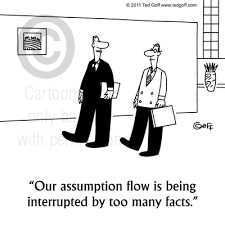
Each of us lives our lives on the basis of assumptions – the ‘constants’ in life that we believe in and act on. Most of us embrace these assumptions pretty early in life, and often, do not challenge them as we age. Speaking for myself, at least.
Here are two key assumptions that I recommend, and that I acquired for myself rather late. Better late than never? Better earlier rather than later, I would say.
- Every problem, crisis and challenge has a solution.
Now, I know this is not absolutely true. There are illnesses that have no cure. But, if you assume from the outset that a problem has no solution, your brain, especially your ‘quiet’ subconscious one, the powerful one, will not work on the problem, and you will miss valuable creative ideas. Better to assume from the outset that there IS a solution, I just have to find it..and you’ll be surprised what your incredible brain comes up with. No, this illness can’t be cured – but here are creative ways to deal with it… as an example.
- People are basically, at heart, GOOD and seek goodness.
This one, too, is not categorical. We in Israel are dealing with an enemy that seems to seek death rather than life. But regarding others perpetually with suspicion, mistrust, and doubt, is really not a great way to live. If your expectations of others are positive and optimistic, this prophecy may be self-fulfilling…they may respond according to your trust.
At times, this may get you into hot water. Trust your instincts. At times, they may tell you, beware of this person. Of course, listen to them. But in general, give people the benefit of the doubt, and approach them with trust, love and compassion.
We live our lives based on assumptions, and rarely challenge them. So, what are your assumptions? Which of them may need to be retested?
Life circumstances change. Does this perhaps require a change in our assumptions?

Jennifer Szalai, writing in the New York Times, reviews several books making the case that the economists’ perpetual refrain, “growth is good”, is bad. Our planet needs DeGrowth, they claim — less consumption, not more.
“Consider some of the books published in the last several years: Tim Jackson’s “Post-Growth: Life After Capitalism,” Kate Soper’s “Post-Growth Living,” Giorgos Kallis’s “In Defense of Degrowth,” Vincent Liegey and Anitra Nelson’s “Exploring Degrowth,” Jason Hickel’s “Less Is More: How Degrowth Will Save the World.” The proliferation of the term is as good an indicator as any: The literature of degrowth is growing.”
By building a global economy driven by personal consumption, we have indeed ruined our planet’s climate, water and land.
The question is: Having painted ourselves into a corner, how do we escape?
Stop spending? The economy would crash, causing recession, depression and unemployment, with massive suffering.
Shift from spending on consumption to investment? That just means growth is driven by a different component. Sure – better schools, trains, buses, transportation, airports… but, doesn’t solve the problem.
The only practical solution is to maintain some growth, but — eliminate fossil fuels, and create sustainable growth that at least does not do MORE damage to our planet; reversing the damage will take technological innovation, to absorb carbon from the air and store it, an innovation that awaits us.
The Genome of a Tiny Fern: Life’s Amazing Complexity
By Shlomo Maital

The New York Times’ science writer Carl Zimmer has a wonderful piece today, about the incredible complexity (and beauty) of Nature. It is about the remarkable discovery by Dr. Jaume Pellicer, a Spanish biologist. Pellicer holds the world record, with a graduate student Pol Fernandez, for discovering the plant species with the largest genome ever known: 160 billion pairs of DNA letters (over 50 times more than humans!). Its name: Tmesipteris oblanceolate, a tiny 2-3 inch high jungle fern:
“Dr. Pellicer knew that related fern species grew on a few Pacific islands. In 2016, he began making plans for an expedition to Grande Terre, part of the archipelago known as New Caledonia. It wasn’t until 2023 that he finally made it to the island. He collected a number of species along with a team that included colleagues from Kew, his graduate student Pol Fernández and local plant experts.
“Back in Barcelona, Mr. Fernández was startled to discover that Tmesipteris oblanceolata’s genome contained about 160 billion pairs of DNA letters. Thirteen years after Dr. Pellicer had discovered a record-breaking genome, his graduate student was also experiencing the thrill of breaking the record.”
Why is this little fern’s genome so complex? How does this help it compete and survive, in survival-of-the-fittest? Not clear. It may be just an “error” – DNA duplicates itself, in reproduction, and sometimes creates additional unnecessary copies.
Bigger genomes are a burden for cells. Because, inside cells, the genes have to have food (energy). So smaller genomes may be better for evolutionary success.
Zimmer provides a really interesting glimpse into the science of the genome:
“…Genomes are much weirder than scientists had expected. We carry about 20,000 protein-coding genes, for example, but they make up only 1.5 percent of the 3 billion pairs of letters in our genome. Another nine percent or so is made up of stretches of DNA that don’t encode proteins but still carry out important jobs. Some of them, for example, act like switches to turn neighboring genes on and off. The other 90 percent of the human genome has no known function. Some scientists have an affectionate nickname for this vast quantity of mysterious DNA: junk.”
Junk???? Really? Some people think that is what is on my work desk. But everything on it, I am certain, has a real purpose – though, mostly, as yet undiscovered.
Nature is amazingly complex. Did all this incredible genomic complexity occur, from a bunch of random chemicals swimming in a warm sea? As a believer, I don’t really think so. How about you?
Ken Burns: The Power of Stories and the Kinship of the Soul
By Shlomo Maital

After decades of boring my students with theories and numbers, I learned at long last to teach them key ideas about innovation through stories. This is why I am a huge fan of Ken Burns.
Burns is a documentary filmmaker who pioneered a radical innovation — creating a documentary film by cutting rapidly from one still picture to another, with first-hand narration read by top actors, and stunning background music. His film The Civil War uses this technique powerfully and is unforgettable. In an age when our young people love and demand rapid-fire video images, e.g. TikTok, Burns’ stills give us time to view and reflect on what we are seeing.
Burns, as a young college student, could have gone to University of Michigan on reduced tuition (a family member taught there). And Michigan is a great school. But he declined, and instead enrolled in little Hampshire College, in Amherst, MA., because there, students are guided through ‘narrative evaluation’ rather than letter grades, and where each student creates a self-directed academic concentration instead of a traditional ‘silo’ major.
Would he have achieved greatness, had he studied ‘inside the box’ at Michigan? I doubt it. I envy him. I studied within boxes.
In his recent Commencement address at Brandeis University, Burns said this: “The best arguments in the world won’t change a single person’s point of view. [quoting novelist Richard Powers]. The only thing that can do that is a good story.”
This helped me understand the power of the Old Testament. A collection of truly great stories. (As I wrote earlier, a child’s version of Bible stories is my six-year-old grandson’s favorite book). Stories we can each relate to and learn from. Stories that show all sides of the Biblical characters’ selves, good and bad.
In his Brandeis address, Burns solved a mystery I have long puzzled over – why the Yiddish stories of Isaac Bashevis Singer, about life in the Eastern European Jewish shtetl (village) fascinated even, say, Japanese, and in the end won a Nobel Prize?
“…the stories spoke of the kinship of the soul,” Singer once explained.
The kinship of the soul. Great stories reflect it. And we all are quick to recognize it, even if the setting is as alien as the Polish shtetl.
There Is Always More Than One Way
By Shlomo Maital
In this blog, and in general in teaching my students, I stress that one should assume every challenge has a solution. The alternative is despair, which is never productive.
But perhaps this, too, falls short. Perhaps we should assume that every challenge has many solutions. We should not leap to conclusions and grasp the very first one that comes to mind… because there are more.
Here is a story that illustrates ‘more ways than one’. It is from the epilog to our book.[1]
Nils was a student of Physics at Cambridge. He was asked: Show how to determine the height of a tall building, with a barometer. The student answered: take the barometer to the top of the building, tie a long rope to it, lower the barometer to the ground, and measure the length of the rope.
The answer the examiner wanted, of course, was to measure air pressure at ground level and at the top of the building, and calculate height based on the difference.
Nils knew it. But…he thought differently. And he got a big “zero”. He appealed. An arbiter was called in. The arbiter asked Nils to try again.
Nils did. “Drop the barometer, time its fall with a stopwatch, use S=1/2 at squared to calculate height.” Or: “Take the barometer out on a sunny day, measure the height of the barometer, then measure the length of the building’s shadow…and use the law of proportions.” Or: “Swing the barometer at the end of a string at street level. And do the same at the top of the building. From the difference of ‘g’ at the two levels, compute the building’s height”. Or; “Take the barometer to the basement, to the superintendent’s flat. Say, Sir, if you tell me the height of the building, I will give you this barometer.” Or: “Take the barometer to the stairs, and mark off the length of the barometer on the wall at each step. Count the marks and it will give you the building’s height.”
There is more than one way to solve a problem. There is AT LEAST one way, and it is good to assume there are many. Avoid the trap of small minds who insist there is only ONE way, the way everyone solves it.
And Nils? He was Nils Bohr, Nobel Laureate for Physics in 1922 for discovering the structure of the atom.
[1] Arie Ruttenberg, Shlomo Maital. Cracking the Creativity Code. New edition forthcoming soon, Atlantic Publishing (India): from the Epilog.
Flight from Politics: Danger to Democracy
By Shlomo Maital

In today’s New York Times, Robert Draper reports that 54 members of the US House of Representatives, fully 1/8 of the total membership, are not seeking another term this November. They include rising stars, seasoned legislators and committee chairs.
Why?
Said one legislator, who is not quitting: “The institution’s not functioning, the incentive structures are messed up and we’re not doing real legislating. So people are like, why am I here?”
And another said, a lot more would be leaving if they had a good alternative. The good resign, the bad and the ugly remain.
In my country, Israel, a dysfunctional incompetent government full of far right radical politicians, who have gotten my country into deep hot water, cling to their seats and refuse to allow national elections, though a large majority of Israelis would support it.
So why are competent politicians fleeing, and incompetent corrupt ones remaining?
This model is known as ‘adverse selection’. Groucho Marx defined it with bitter irony: “I would never join a club that would accept someone like me!”.
If legislatures were filled with nasty, foul-mouthed, partisan, stubborn, self-seeking people who only pushed what their narrow ‘base’ wanted, why would anyone with ability and intelligence choose willingly to commit to such a life? Only others equally corrupt, self-seeking and loud-mouthed would choose to do so.
This is a disaster for my country, and, I believe, for the US.
Today, the US has a leading presidential candidate who is a convicted felon. Who in the world would ever choose to become a follower – except, the unworthy? The result: An utterly dysfunctional political system.
Only a thorough house-cleaning – elections that send the rascals into permanent retirement – can help. Maybe, in the US, on November 5, it will begin. Maybe, in Israel, on November 4, 2024, second anniversary of the election that brought the narrow hard-right crackpot Netanyahu government into power, we Israelis will at long last send all the scoundrels home for good, forever, in new elections.
Preserving Our Kids’ Spirituality
By Shlomo Maital

This is a 2021 report from Gallup, the polling company:
WASHINGTON, D.C. — Americans’ membership in houses of worship continued to decline last year, dropping below 50% for the first time in Gallup’s eight-decade trend. In 2020, 47% of Americans said they belonged to a church, synagogue or mosque, down from 50% in 2018 and 70% in 1999.
So, fewer and fewer adults are regularly attending a place of worship. This suggests that belief in a Supreme Being is also in decline.
In my experience, almost all small children believe implicitly in God. My wife and I have a soccer team plus a basketball squad (plus a sub) of grandchildren, and the littlest ones believe in God, and ask us questions about Him regularly.
Writing in the New Scientist, 2012, Justin Barrett observes: “Drawing upon research in developmental psychology, cognitive anthropology and particularly the cognitive science of religion, I argue that religion comes nearly as naturally to us as language. The vast majority of humans are “born believers”, naturally inclined to find religious claims and explanations attractive and easily acquired, and to attain fluency in using them. This attraction to religion is an evolutionary by-product of our ordinary cognitive equipment.” In other words, belief in God is highly functional.
What is it about growing older and maturing, that brings disbelief, cynicism and the loss of spirituality? Can it be, that we teach our kids only to believe in what is rational, proven, possible, feasible, and according to the laws of Nature? Religious schools are excepted, of course….
In this only-hard-facts-please regime, are we depriving our kids of a valuable resource, one they may need and rely on when they get older?
Our grandson who just turned 6 has a favorite book – of all the dozens of books on his shelf, he loves best the Bible stories book. He had endless questions about God. Most of them, we can’t answer. But it doesn’t matter.
I hope his belief in a Creator will survive public school, as he begins Grade One in the Fall. There are things we should believe in, that are not susceptible to scientific proof.

 TIMnovate