
You are currently browsing the category archive for the ‘Uncategorized’ category.
Aging Well: 8 Things To Do
By Shlomo Maital

I found this list of eight things, written by Ava Sinclair – what we senior citizens can do, in order to age well.[1] Some of you might find one or more useful – or already employ them.
Seniors who age well:
1) They stay active. “Staying physically active is no secret to a healthy life, but it’s especially important when it comes to thriving in your 60s and beyond.” There is a stealthy enemy of us seniors; it’s called sarcopenia, muscles that rapidly weaken when they are not used. Let’s keep moving it!
2) They embrace continuous learning. Stay curious. Learn new things and new skills. Find interesting people to chat with, and find out their stories, things they know and do.
3) They maintain strong social connections. I know some people very close to me, who moved South to escape frigid Canadian winters. They left behind their social network, built over 50 years. In the South, they knew no-one. It was a disaster. Try to avoid it. You need warm hearts around you, not just warm weather.
4) They practice gratitude. There is a lovely short Hebrew prayer that is said each morning, on waking: Thank you, living G-d, for restoring my soul, with boundless faith in me. I like to say it in the evening, just before I fall asleep, and review all the blessings I received during the day. Let’s be grateful for what we have, not angry for what we lack.
5) They eat a balanced diet. Now, here I have a caveat. Of course, it’s good to eat properly. But, if there are foods you enjoy, and they are ‘unhealthy’ (ice cream?) – enjoy, in moderation. Things that make you happy, in moderation, keep you healthy. Someone very close to me was told by doctors – no salt. His food became tasteless – and at a stroke, he lost interest in eating. Bad advice.
6) They nurture their passions. Now this one is valid for all ages, from zero to 120. What is YOUR passion? Pursue it. You have time to do so, now that you are retired. Some people never do find their true passion. Pursuing a passion gives life meaning …amd we all need a reason to get out of bed in the morning and tie our shoes.
7) They remain adaptable. As we seniors age, our bodies stiffen somewhat. Exercise can help. But worse – our brains stiffen. We become inflexible, in our habits, glued to a fixed routine. It helps to shake up the routine, and become open to new things, new agendas, new times. We need flexible brains, to deal with the many challenges that will come our way. And this is true for ALL ages.
8) They live in the present. It is in the nature of seniors, to dwell a lot on the past. Fond memories can be a treasure. But, let’s not overdo it. Be mindful of the present — plan your day, fill it with things you enjoy, with service to others…and give the past its due, but not more so.
[1] https://geediting.com/people-who-thrive-in-their-60s-and-beyond-usually-display-these-8-unique-behaviors/
Mental Health: What You Yourself Can Do
By Shlomo Maital
There is a global mental health crisis. The World Health Organization reports that worldwide, 350 million people suffer from depression – more than the population of the United States. And that is clearly an underestimate.
Yale University Psychologist Alan Kazdin, writing in the Feb-March issue of American Psychologist,[1] notes there is a “treatment gap” – between those who need care, and those who actually receive it. Economists call this a supply-demand gap. And in mental health, it is large and growing. One reason Kazdin cites is the inability of traditional one-on-one (one therapist, one patient) treatment to meet rising needs.
Kazdin has a practical suggestion: “familiar interventions that can have impact on mental health” that one can do oneself. Among them: physical activity, contact with nature, and yoga.
Physical activity: Exercise can improve well-being and reduce stress. Many studies prove it. Even minimal amounts of physical exercise provide major benefits: walking, biking, and stationary biking. And exercise has no stigma – it is widely done and need not be seen as a ‘treatment’ for mental disorders, Kazdin observes.
Contact with Nature: Walking, hiking or biking through parks or other natural venues have major benefits to mental health, Kazdin notes, citing many studies, including improved mood, cognitive functioning, happiness, subjective well-being, sleep, and self-esteem. Contact with Nature offers a ‘double whammy’ — physical conditioning as well as the mental strength that accompanies it.
Yoga: Yoga is a spiritual discipline and set of practices “that are designedto bring harmony between the mind and body.” Yoga has been practiced, beginning in India, for thousands of years. It includes a variety of movements, postures, breath control, relaxation, mindfulness and meditation. Yoga is widely practiced; some studies show between 10% and 14% of the adult population of the US practice some form of it. Yoga is highly flexible; each individual may choose a variant suitable to their needs and nature.
As an amateur, I would add one more item to Kazdin’s list. Find a friend or friends or acquaintances who themselves need support, friendship and help. Helping others in distress often puts our own in clearer perspective.
[1] Alan E. Kazdin. “Interventions in everyday life to improve mental health and reduce symptoms of psychiatric disorders”. American Psychologist, Feb.-March 2024, pp. 183-209.
Democracy R.I.P.?
By Shlomo Maital

Source: The Morning Call
Half the world is having elections this year, 2024. And it looks really bad for democracy, all over the world. Here are some statistics from the Univ. of Gotheberg, and its V-DEM website:
“The world has not been more anti-democratic in 35 years. The level of democracy enjoyed by the average citizen in 2022 was back to 1986 levels. That means that 72% of the world’s population, 5.7 billion people, live under authoritarian rule”, according to Staffan Lindberg, Director of the V-Dem Institute.
“…the number of countries that are currently experiencing democratic setbacks or autocratization, has greatly increased over the past ten years – from 13 to 42 countries between 2002-2022, which is the highest figure measured by V-DEM to date”.
“..for the first time in two decades, the world has more closed autocracies than liberal democracies … 28% of the world’s population, 2.2 billion people, now live in closed autocracies, compared to 13%, 1 billion people, who live in liberal democracies”.
These terrible numbers are deeply painful for me, personally. My country Israel underwent a frontal assault on our liberal democracy by a far-right deluded government, with a narrow majority of 64 Knesset members (out of 120). It appears that the resulting chaos and mass protests persuaded our enemy, Hamas, that we were vulnerable to attack – and they went for it, with disastrous results for both them and for us.
I think I understand why this is happening. There is massive chaos in the world — pandemic, war, a new Cold War. In such times, people look for a strong leader. And leaders? When democracy threatens to dump them, they dump democracy. It’s that simple.
I was born in 1942. I have seen the cyclical nature of history, with big downs (WWII, Holocaust) and big ups (global economy, growth, spread of democracy), and now big downs. There will be an up. But meanwhile — if good people remain complacent, the ‘up’ is going to be much much harder and much more delayed.
Slaughter In Darfur: Is Anybody Listening
By Shlomo Maital

Child in Darfur
As Public Radio podcasts often warn: What follows contains words that are disturbing, shocking and painful. You may prefer not to read this blog.
Nicholas Kristof, New York Times columnist, has been very critical of my country, Israel, for its war in Gaza. But he has now alerted the world to a recurring tragedy in Darfur, Sudan, that is largely ignored, in his May 15 column.
And the question is, why?
Here is what Kristof describes, in part:
“You may remember Darfur: It was the site of a genocide two decades ago. Those atrocities galvanized a vast response, led by protesters across the United States. Barack Obama and Joe Biden, then senators, were among those who called for action, and they were joined by tens of thousands of high school and college students, plus activists from churches, synagogues and mosques working together.”
“….While hundreds of thousands were slaughtered in Darfur at that time, the campaign also probably saved the lives of hundreds of thousands of others. Other countries imposed sanctions and an arms embargo, peacekeeping forces were established by the African Union and the United Nations, and the Sudanese leader who commanded the genocide [al-Bashir] was eventually ousted.”
It is happening again! Kristof asserts “…a humanitarian crisis is happening now in Sudan that has been overshadowed by Gaza and Ukraine and may be about to get far worse. It’s a conflict, by some accounts a genocide, unfolding particularly in the Darfur region there”.
“…today the slaughter in Darfur is resuming — and the international response is not. Most Western nations and African ones alike have been fairly indifferent. The inaction pales in comparison to the situation 20 years ago, when global leaders felt morally and legally obliged to act on Darfur, Human Rights Watch noted in a new 228-page report.”
“Some of the same Arab forces responsible for the genocide in the 2000s are picking up where they left off. They are massacring, torturing, raping and mutilating members of non-Arab ethnic groups — the same victims as before — while burning or bulldozing their villages, survivors say. There’s a racist element: Arab militias mock their victims as “slaves” and taunt them with racial epithets — the non-Arabs are often darker skinned. The militias seem to be trying to systematically eliminate non-Arab tribes from the area. The Rapid Support Forces, an Arab militia associated with the worst atrocities, is on the edge of the city of El Fasher, with some 800,000 inhabitants, and may be about to sack it. Linda Thomas-Greenfield, the United States ambassador to the United Nations, warns that El Fasher is “on the precipice of a large-scale massacre.”
Kristof recounts that the oil-rich United Arab Emirates has been sending plane loads of weapons to the genocidal RSF, to an airport in nearby Chad. Why? I guess, because RSF are Arabs, and those being slaughtered are not.
How many of the 800,000 civilians in El Fasher will be slaughtered? Does anyone care? And when Arabs are responsible for the slaughter, does the world ignore it, because the Arabs have money and political power? And, hey, where are those young kids demonstrating at Columbia, Berkeley, Harvard, Princeton and everywhere? Including many African-Americans? Are they indifferent to the slaughter of Blacks, in El-Fasher?
What the hell!?
Whales and Neanderthals: Smarter Than We Thought
By Shlomo Maital

Two brilliant Science columns – on the same page of the New York Times – reveal an important truth. Whales and Neanderthals are (were) a lot smarter than we realized. And my corollary – we humans are a lot dumber than we think.
Whales: Carl Zimmer reports on a combined team of marine biologists and computer scientists, who in 2020 joined forces “to analyze the click-clacking songs of sperm whales…. Last week the scientists reported that the whales use a much richer set of sounds than previously known, which they called a ‘sperm whale phonetic alphabet’.”
People use a phonetic alphabet — an alphabet containing a separate character for each distinguishable speech sound – to make an infinite variety of words, in order to communicate. Shane Gero, a Canadian marine biologist, thinks it is possible that sperm whales similarly turn their phonetic click-clack whale songs into a language! *
* Sharma, P., Gero, S., Payne, R., Gruber, D. F., Rus, D., Torralba, A., & Andreas, J. (2024). Contextual and combinatorial structure in sperm whale vocalisations. Nature Communications, 15(1), 3617.
Sperm whales are amazing, for many reasons. They emit sounds at 230 decibels – more than an aircraft jet engine at takeoff. – They are by far the loudest animal in the world. And they have been around for a very long time – dating back more than 5 million years.
Humans decimated sperm whales for their oil – but today, there are hundreds of thousands of them and they are no longer hunted (the Japanese do take a small number for their dinner tables).
. . . . .
And Neanderthals? They ranged from Russia to Western Europe, thrived, and lived for some 300,000 years. We do not know for sure why they went extinct. Some theories: Transmission of diseases from humans, interbreeding with early humans, climate change. But we do know that Homo Sapiens, us, has Neanderthal genes. The percentage of Neanderthal DNA in modern humans is zero or close to zero in people from African populations (probably because Neanderthals may have originated there but left, heading North), and is about 1 to 2 percent in people of European or Asian background.
Neanderthals have a cartoon reputation as primitive ‘cavemen’. But they had big brains – 1,200 to 1750 cubic centimeters. Human brains average 1,300 cubic centimeters, a bit smaller. Excavations in a huge cave in Kurdistan – the Shanidar Cave – reveal Neanderthals had sophisticated family lives, made great wooden tools, and treated each other’s injuries.
An anthropologist, Annamieke Milks, Univ. of Reading, UK, analyzed the wooden spears Neanderthals used. They were shaped and balanced like modern javelins. She did a clever experiment: She enlisted male javelin throwers, 18-34 years old, to throw reproductions of the Neanderthal javelins at hay bales. They were quite accurate at 50 feet and fairly accurate at 65 feet – double the range that experts once estimated that a hand-thrown spear could be useful in hunting, Franz Linz reports in his NYT article.
. . . . .
So — kudos to sperm whales and Neanderthals.
Whales survived the ravages of humans. If we could understand their alphabet, they might be saying, “Hey guys, those two-legged jerks who harvested us? Homo Sapiens? They’ve only been around for 50,000 years – and at the rate they are killing one another, I give them, max, another 10,000. We can wait. Now – hear my new whale song. It’s going to make #1 on the sperm whale top 10 for sure!”
And Neanderthals? Maybe that 1-2% fragment of their genes will give us the wisdom to treat the plants and animals and air and water on this Earth with awe and respect, as they did, for 300,000 years.
Postscript: Watch the Netflix documentary on Neanderthals – boring in spots, but fascinating.
Cicadas & Prime Numbers
By Shlomo Maital
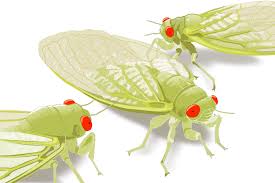
Cicadas and prime numbers! What is the connection?
In the US, people are flocking to Illinois, where two ‘broods’ of cicadas are about to emerge. Cicadas are quite amazing. They emerge from underground, when the temperature of the oil at a depth of six inches reaches 64 degrees F. They emerge almost all at once, climb into the trees, and the males ‘sing’, to attract females. After mating, the cicadas die and fall to the ground. The females first lay their eggs in cracks in the trees. Nymphs emerge (hatch), fall to the ground, burrow underground, and spend 17 years, or 13 years, munching on tree roots…only to emerge, together, and repeat the cycle.
Cicadas are harmless. They don’t bite. They just sing. And the chorus of cicadas all singing together can be deafening.
Cicada tourists are converging on Illinois, because two separate ‘broods’ of cicadas are about to emerge: the ’13-year’ brood and the ’17-year’ brood. Why are they emerging together? Herein lies the link with prime numbers.
The last time the two broods emerged together was in 1803. Thomas Jefferson was in the third year of his Presidency (1801-1809). That was 221 years ago.
So, the number 221 is formed by multiplying two prime numbers, 13 and 17. Since 1803, the ’13 year’ cicadas have emerged 17 times. Since 1803, the ’17 year’ cicadas have emerged 13 times. This IS THE FIRST TIME THEY ARE EMERGING TOGETHER SINCE 1803. 17×13=221.
And it won’t happen again until….2021 + 221 = the year 2242.
Now, you ask – how do they KNOW that 13 years, or 17 years, have passed? And why do they spend so long underground? And isn’t it sad that they live in darkness, underground, for so long, just to have a few short days or weeks above ground, to mate..and die?
We don’t know. Evolution, it seems, has taught them that if they emerge all together, trillions of them, the birds, racoons and other creatures will have a once-in-a-lifetime feast…but there are so many cicadas, most will live to mate and reproduce.
Where does the word cicada come from? It is Latin, meaning tree cricket.
In Jewish tradition, males become ‘bar mitzvah’ (those eligible for and worthy of fulfilling the Jewish precepts, or ‘mitzvahs’) at age 13. I like to think of the 13-year cicadas as celebrating their bar mitzvahs, and fulfilling the key Jewish commandment known in Hebrew as ‘pru u’rvu’ (be fruitful and multiply).
And the 17-year cicadas? Well, they’re almost old enough to vote. Maybe it’s best they don’t stick around, to see the elections in half the world this year, 2024 — we are going to have to hold our noses.
A Battle of Ideas Around the Family Dinner Table
By Shlomo Maital

Consider the sad case of Britain. In the 20th C., it had Conservative governments for 65 (non-consecutive) years, or two-thirds of the time – and Tories have ruled UK since 2010. They have slashed public spending, ruined the National Health Service, botched privatization – and are deeply unpopular at the moment, doomed to lose in the upcoming election. Schools in Britain have closed, because roofs have literally fallen in. Not to mention David Cameron’s disastrous referendum on leaving the EU. (After his enormous success, he’s back as Foreign Minister — call him Sir).
A voice of reason is being heard, at University College, London; Mariana Mazzucato, Italian born, US educated, and a UK economist for the last 20 years. Her book The Entrepreneurial State explains how historically, governments and government investment have spurred innovation, and how they still can and do. Public infrastructure investment pays itself back in four to five years, according to dozens of research studies. How many private investments can say that?
But my blog this time is not about this. It’s about Mazzucato’s family life. Our kids have long ago flown the coop. But from time to time, we still have fascinating discussions around the dinner table, mostly on Shabbat (Sabbath), with guests.
Here is what the Mazzucato’s do: (from a magazine piece):
“Even around the dinner table, economist Mariana Mazzucato deployed her extraordinary skills as a communicator to keep her family engaged during the pandemic lockdown in London. She and her husband, Italian filmmaker Carlo Cresto-Dina, insist on a sit-down family meal each evening in their London home, and everyone speaks a mix of Italian and English. They discuss school, work, movies, and economics.
“We talk about a theme, so every night is a massive debate between the teenagers and us,” Cresto-Dina says. The four kids are ages 20, 17, and 14 (twins). “During lockdown she also assigned the twins a research project on the digital divide.” There was, he says, “lots of yelling.”
. . . . . .
I love this idea. I think that families that argue are families with our-glue. Help your kids learn to become excited about ideas, to have their own, and to defend them and think about them critically, in the face of critique.
Jonathan Haight’s book The Coddling of the American Mind claims we are failing our kids, in not helping them learn to think critically. A nightly family dinner, where thinking (and not just French fries) are crisp, can help.
How Isaac Newton Changed the World
By Shlomo Maital

James Gleick’s 2007 biography of Isaac Newton is a masterpiece. Not only does Gleick document the life and innovations of Newton, he provides a clear explanation of the physics Newton pioneered, in understanding momentum, force, velocity, light, color, gravity, tides – and many other phenomenon – all, by a person born into poverty, orphaned by his father at an early age, rejected by his remarried mother, and who never married or even had a single girlfriend.
What was Newton’s secret? He saw things others did not, and constantly experimented, using crude devices that he improved – for example, a telescope based not on refracting lenses but on a highly polished mirror (precisely what is done today – a billion or trillion times more complex and costly).
Newton had a method that each of us can use in our daily life. I do, often.
Here is how it works. According to Newton’s own diary.
He ponders a problem that deeply interests him. He thinks about it sufficiently to let it sink deep into his brain – to signal his brain that he wants to crack it. Then he sets it aside, using the mantra used by Napa Valley vinier Robert Mondavi “we shall sell no wine before its time”… translated to, “we shall broach no solution (to the problem) before its time”.
Begin by, say, making a tentative decision. Think about it. Then, file it. Set it aside. Do not act on it at once. Let it age, like wine. Do not ‘sell it’ before its time. After a time, take it out of short term memory and bring it into focus. Ask yourself, your brain, how does this feel? Imagine you are implementing the decision. How does it feel? Does it feel right? Or, somehow – not quite right? Your brain will tell you. Note – this is not based on mathematics or statistics or risk evaluation. It is based on what your deep recesses of your brain are telling you – at an emotional level, at an intuiative level.
If after a time, the decision feels right, then, proceed. Implement it.
But if it does not feel right — set it aside, and either reject it, or file it for future examination, once again. Either reject outright, or offer a second chance.
If it fails twice, dump it. Your brain will eventually do better.
Newton did this with many of his scientific laws. With a keen eye, he read what other scientists claimed – mainly, Decartes in France and Robert Boyle in England – and then pondered whether what they claimed matched what he observed.
This led him to frame many of his famous laws, that clashed with the conventional wisdom of the time. He did not do this in haste, but deliberately, letting his ‘laws’ be born, and ferment or age in his brain, until he had a deep innate sense that they were true, correct, based on what he observed.
All this, by a person who probably (according to Gleick) never actually saw the sea, mostly lived in his room at the University of Cambridge, travelled very little, and had few friends.
So, what is the Newtonian method? Choose a meaningful problem or decision to be made. Think of a solution, or an action plan. Do not implement it or publicize it. File it away. Extract it after a time, after it has ‘aged’. Ponder on it. See how it feels, as you consider implementing it. Listen closely to your intuition, to the quiet, very quiet messages your brain sends you. Sometimes, they are barely audible.
This doesn’t have to take weeks or months. Maybe days, or even hours. But give your intuitive brain time to work on it, in ways that you are not fully conscious of.
Isaac Newton changed the world in this manner. We use his laws to this day. You need not change the world – but you can make choices that you feel good about, as time passes.
Daniel Kahneman wrote of his, in his book about slow and fast thinking. There is something in between. Fast thinking – that has a small time-delay. That time delay can be crucial.
Try it.
p.s. The story about how he discovered gravity when an apple fell on his head and bonked him? Not true. Not even close. He did contemplate falling bodies…..
AI Can Detect Heart Disease – From X-Rays
By Shlomo Maital

The latest segment of the Science Friday podcast, with Ira Flatow, featured Dr. Eric Topol, Scripps Research Translational Institute, professor of molecular medicine, based in La Jolla, California. [Translational research seeks to translate basic science discoveries more quickly and efficiently into practice].
He recounted how AI has used chest X-Rays for a surprising purpose for which they were not intended – to detect early signs of heart disease.
“The fact that there are over 70 million chest X-rays in the United States each year alone– it’s incredible,” Dr. Topol said. “So there’s all this free added information in those chest X-rays that could help us because most people don’t know their cardiovascular risk. And that’s important, especially for determining whether a person should take a statin, and whether it should be an intensive statin type of medication and dosage.”
Topol recounted: “…we can tell from other studies using the chest X-ray for this opportunistic detection that it can pick up the calcium score– what people can undergo a CT scan to see how much calcium they have in their coronary arteries. But that can also be derived from a chest X-ray, and that is an indicator of risk. Also, the chest X-ray can through AI determine the heart strength– the so-called ejection fraction. So it’s picking up a bunch of things, as seen in other studies, that are very predictive of a person’s risk. And it must be the composite of these things. But we really don’t know because, although the study really was extraordinary, it didn’t do enough as far as the explainability side of things.”
AI also proved able to diagnose diabetes from X-Rays. How? “It basically did this so-called occlusion, or masking, where it would look at the chest X-ray and block out various regions to find out what was the source of the information that we can’t see. And it turned out it picked up the fat pads in the chest that was providing this diabetes possible diagnosis.”
AI is exceptionally good at processing a huge mass of data, e.g. 70 million X-Rays, scanning every small detail in each, and then reaching conclusions that human eyes miss. Heart disease is the number one cause of death in the world. Perhaps some of those 70 million people X-rayed in the US will owe their lives and their health to Dr. AI.
How China Bought Tesla Lunch – Then Ate It
By Shlomo Maital

Consider Tesla, Elon Musk’s electric-car baby. In 2010 the market value of its shares was a paltry $2.52 billion. On November 6, 2021, in the midst of a pandemic, Tesla’s shares were worth a staggering $1.23 trillion, at their peak. Today? Tesla is worth less than half that: $554 b.
Before we discuss the key role China has played in Tesla’s growth, here are a few more numbers. Despite the sharp fall in value, Tesla is today worth more than the shares of Ford ($54 b.), GM ($51 b.), Toyota ($332 b.), and Build Your Dream ($81.6 b.). taken together.
In the New York Times “The Daily” podcast, Tesla’s romance with China is told in detail. Here is the story.
In 2017 Tesla was in trouble. Its factory in Fremont, CA., was struggling to produce cars. Musk mounted a massive lobbying campaign, that got a key piece of legislation through the California legislature, under then-Gov. Jerry Brown. Gas-guzzling car makers in California had to pay billions of dollars to Tesla’s “green” cars, based on environmental ‘credits’. Tesla got billions, at a time when Tesla was desperately starved for cash.
But that was just a Band Aid on a deep wound.
China to the rescue. Musk negotiated a deal with China, to build a huge car plant in Shanghai. (The then-mayor of Shanghai is now China’s #2, after Xi Jin Ping). That plant is a paragon of Chinese efficiency. Working 24/7, three shifts daily, it makes a million cars a year. But better than that – Musk persuaded the Chinese government to pay Tesla ‘credits’ from conventional Chinese car makers, just like in California! The State of California closed Tesla’s Fremont plant for two months during the pandemic. China? Tesla’s Shanghai plant closed for two weeks only, even when China locked down huge cities for long months.
China saved Tesla.
Why? Why would China rescue Tesla?
So, here are a few more numbers. Bear with me.
China produces yearly 6 million electric vehicles, soon to rise to 8.77 million. Its EV’s are not quite as sleek and sophisticated as Tesla’s, but they have longer battery range and are much cheaper. BYD has adopted a model pioneered by Henry Ford – vertical integration. BYD produces lithium from mines, electric batteries, basically everything their cars need. BYD swallows every renminbi of profit generated by EV’s and so, can charge much less.
Many of the workers and managers who cut their teeth on the Tesla Shanghai plant now work for Chinese EV makers. In short – China used Tesla to shortcut its EV industry development, leaping ahead while using the California credit system to incentivize its gasoline-car makers to make the shift to EV’s.
And Tesla? The mercuric Elon Musk dabbles in social media, space rockets, colonizing Mars — and supports free-market conservative politics, even though his business is alive because of Calfornia state govt. money. It appears that he has lost interest in Tesla.
In my country, Israel, Chinese EV’s have surged. Press reports note: “Chinese automakers, particularly BYD and Geely, have made remarkable strides in Israel’s automotive market. BYD’s surge from fourth place in 2022 to the top in 2023 indicates the growing acceptance of Chinese brands.”
Look for the same to happen elsewhere.

 TIMnovate