
You are currently browsing the category archive for the ‘Uncategorized’ category.
Why Study Philosophy
By Shlomo Maital

Aristotle
To: Prof. Agner Callard, U. of Chicago
Prof. Callard, thank you for your honest, tell-it-as-it-is Op-Ed in The New York Times, December 2, 2023, “I Teach the Humanities, and I Still Don’t Know What their Value Is”.
I was a freshman at Queen’s University, Kingston, Ontario, a long time ago, in 1959. All Arts & Science freshmen were required to take Philosophy 1 in their first year. The professor was a brilliant, demanding Scotsman named A.R.C. Duncan. The one-semester course had three parts: Logic, Ethics, Metaphysics. Logic: How to think and draw conclusions. Ethics; What is right, what is wrong – and how to know. Metaphysics: What does it mean “to exist’, what does it mean “to know”?
Since that first course, I took a great many courses, through an Economics Ph.D. at Princeton. All the other courses put together taught me far less than Philosophy 1 from A.R.C. Duncan. He taught me to think logically — using logic operators like and/or, not/both, either/or. He taught us how to deal with complex moral dilemmas involving right and wrong. We learned how the Greeks figured it out — valid to this day. (I learned about deontological intuitionism, meaning, I just know what is right, don’t ask me how!). I learned how to think critically – and the crucial importance of truth.
All that was 64 years ago. I remember that humanities course vividly and use it almost daily.
So, Prof. Callard — what is the value of humanities? Philosophy, art, literature, history, poetry? To me it is clear. The humanities help us be more human…. And to be better human beings. To think clearly, and based on that, to act in a manner that is right and honorable.
Humanities are being shut down right and left, all over the US, and in my country, Israel, too. As someone once said: If we only glorify quantum physics, and demean moral philosophy, we will have neither science nor values that hold water.
Why We Remember
By Shlomo Maital

For us seniors, few things are as troubling as memory loss. We know the statistics of dementia… and, for me personally, mental decline is far more worrisome than physical decline. I can deal with running slower, walking slower, and a variety of aches and pains. But an addled brain? Oh, boy.
That is why I and a large number of us seniors found the New York Times Op-Ed piece by Charan Ranganath, regarding the Republican special prosecutor’s gratuitous comment on Biden’s poor memory. Dr. Ranganath expanded on his insights in an insightful interview with Terry Gross, on the Fresh Air podcast.
Here are a few of his insights:
* The issue is not why we forget… but why we remember. We remember things that are significant to us. The part of our brain that focuses attention is the pre-frontal cortex. As we age, it works less well. (By the way – same problem with teenagers – their prefrontal cortex hasn’t yet fully developed, which is why they tend to do really dumb things…which their parents just don’t understand!).
When we are less mindful of events, we remember them less well. Conclusion? Mindfulness. If you really want to remember something, consciously focus on remembering it. Find a mnemonic trick (I remember Sandra Bullock’s name by linking it to an ox-cart (Bullock) ). In general, practicing mindfulness (paying close attention to what is going on at the present) is important for seniors, precisely because our brain is less mindful and more distracted. This is especially important when we drive our cars.
Ranganath makes a brilliant point. The question is not why we forget – but why we remember. We remember, because we regard the memory as very important, one that we will need to retrieve. And so many recent events (what I had for breakfast) are just not that important to us. And repetitive! So the brain just doesn’t bother with it!
Often, I want to remember a name (e.g. Sigourney Weaver, star of Alien) but for the moment, cannot retrieve it. This is a memory that is not lost – but simply harder to retrieve. If you worry about it, the worry itself will hamper your memory. So – file it. Tell your brain, I want you to dig this memory up…take your time, you can do it! And it can! It will pop into your head, later… moments or hours or even days. But it will come…as long as you do not let it worry you.
Evidence? Here is what the neurologist explains: “There is forgetting, and there is Forgetting. If you’re over the age of 40, you’ve most likely experienced the frustration of trying to grasp that slippery word on the tip of your tongue. Colloquially, this might be described as forgetting, but most memory scientists would call this retrieval failure, meaning that the memory is there but we just can’t pull it up when we need it.”
Having problems with dates? Remembering that an event took place is different from being able to put a date on when it happened, which is more challenging with increased age. Partly because those of us who are 80 and over have two times more dates to remember than spring chickens who are 40. Biden of course recalled the tragic death of his son Beau – but not the date. So what? The reporters who tormented him about this should…well, burn in Hell.
Think about it. In our digital age, everything is digitized and recorded. We simply do not NEED to remember. Silicon does it for us. Why waste valuable pre-frontoal cortex brainpower on remembering when everything is recorded for us and at our fingertips (or Google’s fingertips)?
At the same time — judgement. Would you prefer the judgment of an experienced, wise leader, who made vital decisions for many decades, over a Harvard-trained 40-year-old whiz kid who has no experience and probably, scores below sea level on EQ (emotional intelligence)? Or, a foul-mouthed lying 77-year-old insurrectionist whose business success has turned out to be utterly fraudulent, according to a Federal judge, and who mistakes Nikki Haley for Nancy Pelosi?
* Dr. Ranganath is a professor of psychology and neuroscience and the director of the Dynamic Memory Lab at the University of California, Davis,
Kharkiv & Hamas
By Shlomo Maital
Kharkiv is the second-largest city in Ukraine, next to Kyiv the capital. It is on the northeastern border with Russia. It had a population of 1,421,125 (2022 estimate) — it is thought that some 600,000 people have been evacuated, in the face of Russian missiles and artillery shells raining down on the civilian population, with many deaths.
Kharkiv has an underground Metro. It is being used now as a bomb shelter – and as schools. Some 9,000 children attend school there, according to the National Public Radio correspondent there, Joanna Kakissis — who, by the way, is exceptionally courageous, as she almost daily reports from the battleground.
Kharkiv’s underground schools have been so successful, that several more such schools are under consideration and planning, for Kharkiv’s 65,000 schoolchildren.
Contrast this with the Hamas tunnel system, now estimated at over 700 kms., in the Gaza strip which is only 40 kms. long (meaning tunnels crisscross the width and length of Gaza many times). Only Hamas terrorists shelter in the tunnels, including their peerless fearless leader Yahya Sinwar and his family. The people? Who cares.
The comparison between Ukrainian schoolchildren going to school underground, sheltered, protected, but still in fear, as the Russian war on Ukrainian civilians enters its second year, with Hamas’s hundreds of kilometers of tunnels, safe haven for its leaders and their bodyguards and families only…. It is obscene. And as corrupted as are the politicians who continue to block vital US aid to Israel and Ukraine.

Underground school in Kharkiv
Putin As Mass Murderer
By Shlomo Maital
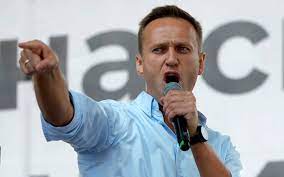
Alexander Navalny
Note: Facebook has threatened to close my account, if I post this blog….
To the MAGA Republicans who admire Putin: Here is the list of 10 opponents whose death he has ordered, according to Newsweek. Yes, Donald Trump. Putin is indeed a “killer”. Tucker Carlson, who interviewed Putin shortly before Navalny’s death, you have blood on your hands, too, as an indirect and unwitting (witless) accomplice. Republican House of Representatives Speaker: You are directly supporting this thug by adjourning the House for two weeks without approving the military aid for Ukraine. China and Iran: You are known by your friends.
Newsweek reports: “For over two decades, President Vladimir Putin has squeezed dissent in Russia. Critics, journalists, and defectors have faced dire consequences after opposing him. From poisonings to shootings, mysterious falls from windows, and even plane crashes, there is a long trail of silenced voices.”
- Alexei Navalny Age: 47. Date of Death: February 16, 2024. Cause of Death: Alexei Navalny died in prison. The Russian prison service reported that he felt unwell after a walk and lost consciousness. Alexei Navalny was a prominent critic of Vladimir Putin. He gained global attention in 2020 when he survived a poisoning with the nerve agent Novichok. Navalny willingly returned to Russia from Germany in 2021, where he had received treatment for the previous poisoning. Upon his return, he was promptly arrested. Navalny was known for exposing corruption, investigating Putin’s inner circle, and leading anti-Kremlin opposition movements. His death is likely to be seen by fellow opposition members as a political assassination attributable to Putin, but is as yet unexplained.
- Mikhail Lesin. Age: 57. Date of Death: November 5, 2015. Cause of Death: Mikhail Lesin was a former Russian press minister and media executive. He fell out of favor with Putin and faced scrutiny for his wealth. Lesin was found dead in a Washington, D.C. hotel room. The official cause of death was ruled as accidental blunt force injuries, but questions persist about the circumstances.
- Boris Nemtsov. Age: 55. Date of Death: February 27, 2015. Cause of Death: Boris Nemtsov was shot dead on a bridge near the Kremlin. His murder remains unsolved, but many believe it was politically motivated. Nemtsov was a vocal critic of Putin’s government, advocating for democracy, human rights, and transparency. He served as a deputy prime minister under President Boris Yeltsin and later became a prominent opposition figure.
- Boris Berezovsky. Age: 67. Date of Death: March 23, 2013. Cause of Death: Boris Berezovsky was a wealthy businessman, oligarch, and former ally of Putin. However, he became a vocal critic and fled to the U.K. Berezovsky was found dead in his home in Berkshire, England. The official cause of death was ruled as suicide, but suspicions remain due to his high-profile opposition activities.
- Sergei Magnitsky. Age: 37. Date of Death: November 16, 2009. Cause of Death: Sergei Magnitsky was a lawyer and auditor who exposed a massive tax fraud scheme involving Russian officials. He was arrested, imprisoned, and denied medical treatment. Magnitsky died in custody following severe beatings and medical neglect. His death led to the passing of the Magnitsky Act in the United States, which sanctions Russian officials involved in human rights abuses and corruption.
- Stanislav Markelov. Age: 34. Date of Death: January 19, 2009. Cause of Death: Stanislav Markelov was a human rights lawyer and journalist. He was assassinated in Moscow by a gunman who also killed journalist Anastasia Baburova. Markelov had represented victims of human rights abuses and criticized the Russian government’s actions in Chechnya. His death raised concerns about the safety of those opposing the regime.
- Anastasia Baburova. Age: 25. Date of Death: January 19, 2009. Cause of Death: Anastasia Baburova, a journalist and activist, was shot dead alongside human rights lawyer Stanislav Markelov in Moscow. She had reported on neo-Nazi groups and political violence. Her murder remains unsolved, but it is believed to be connected to her activism.
- Natalia Estemirova. Age: 50. Date of Death: July 15, 2009. Cause of Death: Natalia Estemirova, a human rights activist and journalist, was abducted in Grozny, Chechnya, and found dead later that day. She had documented human rights violations in Chechnya and criticized the government. Her murder remains unsolved, but it is widely believed to be connected to her activism and criticism of the Chechen authorities.
- Anna Politkovskaya. Age: 48. Date of Death: October 7, 2006. Cause of Death: Anna Politkovskaya, an investigative journalist, was shot dead in her apartment building in Moscow. She had reported extensively on human rights abuses, corruption, and the war in Chechnya. Her work was critical of Putin’s government, and her murder sparked international outrage. Despite investigations, the masterminds behind her killing have not been brought to justice.
- Yuri Shchekochikhin. Age: 53. Date of Death: July 3, 2003. Cause of Death: Yuri Shchekochikhin was a journalist, writer, and member of the Russian State Duma. He investigated corruption, organized crime, and human rights abuses. Shchekochikhin suddenly fell ill and died from an unknown cause. Some suspect poisoning, but the circumstances remain unclear.
Biden’s Memory? Or Biden’s Wisdom?
By Shlomo Maital
On November 1, 2017, Robert Hur was nominated by President Donald Trump to be the next United States Attorney for the District of Maryland. On January 12, 2023, Attorney General Merrick Garland appointed Hur to oversee the United States Department of Justice’s investigation into President Joe Biden’s alleged mishandling of classified documents during his time as vice president. His report referred to President Biden as a “well-meaning elderly man with a poor memory”.
Hur is now in private law practice in Washington. His report is a political hit job on the only issue Republicans have to attack Biden – because the economy is doing well, inflation is down, and the Republicans just shot down their own border security bill – while Trump just invited Putin to attack Europe if the cheapskate Europeans don’t pay up. Hur knows less than zero about memory or neurology.
Americans – you want TRUMP to lead you?
And re memory. I’m 81, Biden’s age. OK, I don’t always remember that Sigourney Weaver was the female lead in Alien. So? But I’ve learned a few things over the past 81 years. 6/10 on memory, and, this is not boastful, 9/10 on experience and life wisdom. With memory, you can look it up. With crucial decisions – you have to rely on wisdom. Answer this. Is Trump wise???? Is Biden wise?
Shame to let a political hack, Trump appointee, gratuitously stray from the job a Democratic Secretary of Justice assigned him, just to boost his law practice.
And re that disastrous Biden press conference? Thick-headed reporters twisted the knife and asked Biden about the Hur Report’s reference to the death of his son Beau – when it occurred. It upset and angered Biden. I know that when I’m angry and upset, I do not think very clearly. Neither did Biden.
Fire the damned reporter. And disbar Robert Hur.
* Shear, Michael D. (February 8, 2024). “Special Counsel’s Report Puts Biden’s Age and Memory in the Spotlight”. The New York Times.
Know Something Useful? Give It Away
By Shlomo Maital

In the United States, four million people are employed, in 6,000 post-secondary education institutions (colleges and universities). That makes Academe the fourth-largest industry, by employment — just after public schools (6.8 million employees), hospitals (5.8 million), and fast food outlets (4.3 million).
I spent my life in Academe. Still am. We professors generate a lot of ‘knowledge’. In the US, 700,000 academic research papers every year, just behind China (1 million).
Why ‘quotation marks’? Let me explain.
For over 50 years, I’ve asked myself, what do I know that my follow economists might find interesting, useful and innovative?
Very late in the game, I changed the question. What do I know, that ordinary people might find useful, interesting and UNDERSTANDABLE!!!! Because – economics, in trying to be ‘scientific’ like physics, embraced the language of mathematics – and became incomprehensible to ordinary people. Until recently, when behavioral economics has come to dominate. At last.
I strongly believe we academics have a responsibility to tell ordinary people what we are up to, what we have discovered, in ways they can understand and use. We are paid by their tax money (at least, for public universities, like mine, Technion), so in a real sense, we are employed by them. They deserve our attention.
Our guide could be a pathbreaking article by a psychologist, George A. Miller, 55 years ago.* The title is revealing: “Psychology as a means of promoting human welfare”. Here is the last line of his article: “I can imagine nothing we could do that would be more relevant to human welfare … than to discover how best to give psychology away.”
Give it away? He means: “…give people skills that will satisfy their urge to feel more effective.” Self-efficacy is “an individual’s belief in their capacity to act in the ways necessary to reach specific goals.” Happiness, fulfillment, meaningful life, etc.
‘Give it away’? This is the precise opposite of capitalism which says “Create value …and capture it as wealth.” Elon Musk is currently worth $200 b. His outrageous salary demands were recently challenged in court – and rejected. He did not become a multi-billionaire by giving stuff away. We teach startups, create value – and patent the hell out of it, to keep others from using it. Do you know how many energy-saving patents have been bought by Big Oil – and shelved, to keep oil demand high? Patents are as much to prevent ideas from being used, as to spread them.
Knowledge is, or should be, like love. The more you give, the more you get. Once this was what Academe stood for — in 335 BC by Aristotle in the Lyceum in Ancient Athens. But under capitalism, we have lost our way. That is in part why the cure for sickle cell anemia, a terrible illness, costs over $2 million – and remains inaccessible to over 100,000 African-Americans.
Physicists, chemists, psychologists, economists, physicians, mathematicians – What do you know that can benefit human welfare? Can you explain it in a way that people can understand? And are you willing to make the effort?
If I were a university president – I would make that the core question for tenure.
And for all those who are not professors. Know something useful? Share it with others. You will gain great satisfaction. And you will help a lot of others. Because knowledge and wisdom are like love.
* Miller, G. A. (1969). Psychology as a means of promoting human welfare. American psychologist, 24(12), 1063.
The Closing of the Social Media Mind
By Shlomo Maital
Even as regulators wrestle with how to counter the massive damage social media are causing to young minds in particular, social media are morphing and changing.
Here is how The Economist explains it, in its latest cover story:
“….new social media are no longer very social. Inspired by TikTok, apps like Facebook increasingly serve a diet of clips selected by artificial intelligence according to a user’s viewing behavior, not their social connections. Meanwhile, people are posting less. The share of Americans who say they enjoy documenting their life online has fallen from 40% to 28% since 2020.”
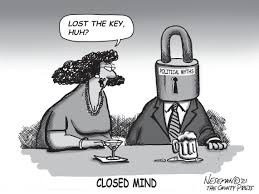
This was inevitable. As populism spreads like a virus, and politics are increasingly driven by narrow identity and tribalism, social media fall in line. They are providing viewers with what they want — content that fits with who they are, what they believe, what they support. It is the closing of the social media mind.
Well done, Zuckerberg. This is how you can make money. Meta made $16 b. in profits in fourth quarter 2023 alone, with a 41% profit margin! This, with a social media platform that many are abandoning.
Nearly 35 years ago, philosopher Allan Bloom published his book The Closing of the American Mind (Simon & Schuster, 392 pages). It was a surprise bestseller, selling half a million copies in hardback! Bloom’s key point: “openness leads to closed minds”.
What does that mean? If you believe that anything goes, any view, any opinion, any value, and that criticism of someone’s opinion is prejudice, unacceptable – you are not respecting diversity, you are destroying the search for truth. “Prejudices,” Bloom wrote, “strong prejudices, are visions about the way things are…error is indeed our enemy, but it alone points to the truth, and therefore deserves our respectful treatment. The mind that has no prejudices at the outset is empty.” If anything goes, then nothing is true, moral, right.
Let us be clear. This is not a praiseful essay for racism, anti-Semitism, Islamophobia! It is mainly a desperate plea to restore critical thinking. If every view or opinion is legitimate, then minds are closed. If everyone chooses to listen only to what they agree with, there is no dialog and no open critical search for truth. And that is where social media are rapidly descending – according to The Economist.
When social media become tribal totems, society and politics fragment. If Florida bans books in school libraries because they may clash with parents’ conservative views, they are closing kids’ minds rather than doing what they should be doing, opening them. When Trump pushes his own social media Truth (aka Lies), he is promoting the closing of minds, probably because his own mind has been closed from birth.
“Critical thinking is the analysis of available facts, evidence, observations, and arguments to form a judgment by the application of rational, skeptical, and unbiased analyses and evaluation. The application of critical thinking includes self-directed, self-disciplined, self-monitored, and self-corrective habits of the mind.” I can argue that all human progress has occurred because of individuals who are expert at critical thinking (XYZ is wrong, I seek the truth).
We are failing our kids, by facilitating the virus of political correctness, and by passively accepting the closed-mind nature of social media.
The damage will be hard to fix.
The Paradox of Individualism
By Shlomo Maital

Across the Western world, a core value has long been in consensus – freedom. Political freedom (democracy) and economic freedom (capitalism). At the core of this core value is the idea that individual freedom is a basic human right. Freedom to choose. Freedom to vote. Freedom to start a business and compete fairly.
I would never want to live in a country where freedom was abrogated or eliminated (Putin’s Russia). Those who do live in such countries risk their lives in the millions, to flee to countries of freedom. All too often, they encounter slammed doors and barbed wire.
But there is a paradox. What happens when personal freedom morphs into an “it’s all about me” society? What happens when we are called on to sacrifice for the good of our nation? And why is the sanctity of the individual — individual personality, physiology, and nature — not enshrined in healthcare?
A quarter of the countries in the world have populist leaders. America’s Trump leads the MAGA (Make America Great Again) movement that says, to hell with the rest of the world, only I count. (Ukraine is desperate and by some accounts, running out of ammunition because of self-centred MAGA-driven obstinence blocking US aid). My country Israel was driven off a cliff by a handful of Knesset members, in a coalition government, seeking personal it’s-all-about-me vengeance to curtail democracy – and tempting Hamas to attack.
There is a paradox here. Individualism ends in the realm of healthcare. Physical and mental health are key areas that are not at all “all about me”. Women and men have the same hypertension thresholds, even though women have far more pathology because of ‘borderline’ hypertension leading to cardiac problems. Personalized medicine has been a slogan for decades – but it is largely empty. Mental health rests on a thick book labelling mental illness, and practitioners slap a label on mental illness and treat it one-size-fits-all.
Under murderous attack, young Israelis have come forward, embracing “it’s all about my country and how I can defend it” – and forever refuting those who doubted the love of country of Gen X, Y and Z. It’s a terrible shame that it came to this. We have learned that to preserve the core value of personal freedom, sometimes we have to sacrifice for others – in some cases, the ultimate sacrifice. This is for us senior citizens an immensely painful experience.
Individualism in politics. In economics. In business. But not in the way we treat physical and mental health?
There are strong methods for personalizing mental health care. E.g., Steven Hayes’ ACT– approach, acceptance and commitment therapy * — helps each individual to look inward, become mindful and self-aware, accept things like grief and traumatic experiences, and rather than ‘get over it’ or ‘suck it up’ — make it a part of ourselves, our consciousness, in a manner that is constructive and in line with our values, in a manner suitable to who we are and what we seek in life.
What would be a strong simple formula for individualistic healthcare? Try this, from the late Gordon Paul, back in 1969: ”What treatment, by whom, is most effecitve for this individual, with that specific problem, under which set of circumstances, and how does it come about?”
There is a delicate and complex balance between sanctifying the individual and validating sacrifice for family, friends, and country. One of the most precious individual rights, is the freedom and obligation to do just that. Without such obligation, in the long run there is no freedom.
* “Evolving an idionomic approach to processes of change: Towards a unified personalized science of human improvement”. Steven C. Hayes, Joseph Ciarrochi, Stefan G. Hofmann, Fredrick Chin, Baljinder Sahdra. Behaviour Research and Therapy March 2022.
How to Heal
By Shlomo Maital

My recent Jerusalem Report column was titled “Nation in Trauma”.
On October 7, Israel suffered a traumatic disaster that smashed many of our most cherished beliefs – particularly, that the Israeli Army would protect us, and that never again would Jews be murdered, burned, and taken prisoner, starved, abused, and held in dark dungeons, as in World War II.
A massive effort is underway to prevent the trauma from becoming “post trauma”, or PTSD (Post Traumatic Stress Disorder), among some 330,000 reserve soldiers and among nine million Israelis. But there is an equally massive shortage of trained professionals able to help achieve this. Israel has one psychiatrist for each 11,000 citizens. And most are over age 55. There are only some 5,000 badly-underpaid psychologists in the public service.
In the end, it is going to be mainly up to us Israelis to help ourselves heal.
But how? What can we Israelis do on our own to avoid post-trauma? What can everyone experiencing trauma do to help themselves heal?
Dr. Mooli Lahad is one of Israel’s leading expert on coping and resilience. Here is his acronym, BasicPh, for his proven approach: Six ways to cope and bounce back.
The six are:
* B Belief: faith, inner core values.
* A Affect: By expressing emotions, we share fears, anger, sorrow, etc. Talking through anguish with friends and family helps.
* S Social: Seeking friendship helps us to stay grounded and decreases isolation.
* I Imagination: Children are especially good at coping, by expressing their thoughts and feelings in a creative manner – e.g. through art, drama, music. But so are adults. I have a close friend who does coping through poetry. One poem a week. And it brings solace to all who read it, not just himself.
* C Cognitive: Utilizing problem-solving, strategizing with others, can make us feel less alone, and more in control. This applies to helping others, not just ourselves.
* Ph Physical: Physical activity helps release feelings, in an indirect way. (I do a lot of walking and running).
Trauma is bi-directional. It can lead to traumatic growth — leveraging trauma to build back better – for ourselves, our families, communities, friends, country.
Or it can lead to post-traumatic stress – endless looped replays of horrific trauma that paralyze and drag us down.
We can help ourselves heal. And more important, we can help others.
How to Vote
By Shlomo Maital

Half the world will hold elections this year, 2024. And I want to suggest how you should vote.
No – not vote ‘right’, or vote ‘left’. But – vote love. Here is what I mean.
We in Israel are afflicted with a long-serving Prime Minister who, since our elections on Nov 4, 2022, has wilfully and maliciously divided our country, to remain in power.
He was first elected Prime Minister on June 16, 1996, heading Israel’s 27th government. Since then, he has served as Prime Minister for 6,122 days, or 16.78 years, up to January 1, 2024, heading Israel’s 27th, 32nd, 33rd, 34th, 35th and 37th governments. You don’t stay in power this long, without singlemindedly destroying any possible competent successor or without becoming corrupt (for which, he’s on trial at present).
After the government’s disastrous failure to keep us safe, Israelis want elections, to express their anger. But our Prime Minister doggedly delays this reckoning, glued to his chair. And here is a small but key example of his perfidious nature.
Israel’s top epidemiologist, Dr. Hagai Levine, the chairman of the medical team with the Hostages and Missing Families Forum, initiated a brilliant move, enlisting France and Qatar to broker a deal to get crucial medicine to the hostages. It was a thousand-to-one deal: a ton of medicine for Hamas in return for a kilo of medicine for the hostages. The medicine was delivered in a Qatari plane – but Israel still is not sure whether it reached the hostages.
Taking credit for the deal, Netanyahu boasted, “…at my orders”. As if he did the deal and gave the orders.
False. He had nothing to do with it. Bald lie. One of thousands.
I will not vote for him. Neither will most Israelis. But whom should we vote for? Whom should YOU vote for?
Vote for love. Vote for honesty. Vote for self-awareness. Vote for truth. Vote for humility.
Here is what I mean.
A family friend, Moshe Engelberg, is a top senior management consultant in California. He wrote a wonderful book, with the intriguing title The Amare Wave: Uplift Your Business by Putting Love to Work. (2020).
Love? In business? When CEO’s are taught to destroy the competition, kill the enemy? Put love to work? Really?
Here is Engelberg’s argument: “I coach high-performing executives Here are three things I hear the very best say that might shock you. 1. I don’t know if I can do it. What if I fail? 2. I feel like I’m never enough, no matter how much I accomplish. 3. If I make that decision, I’m afraid people won’t like me. …This is what self-aware love-powered leaders do. …it sets the tone for a culture rooted in honesty and safety that brings out the best in everyone.”
Does your candidate match Engelberg’s description? Sets the tone for a culture rooted in honesty?
Mine does.

 TIMnovate