
You are currently browsing the category archive for the ‘Uncategorized’ category.
Viral Smiles
By Shlomo Maital

Often, when walking our two dogs, I encounter strangers. Some are walking their own dogs. Some are just passersby. I find that when I smile at them, they nearly always (95%) smile back.
Why?
Turns out, our brains have ‘mirror neurons’ that respond to actions that we observe in others. Mirror neurons fire in the same way when we actually recreate that action ourselves. In other words — our brains respond to the smile of someone else in the same way they respond to our own smiles.
Smiles have a double whammy. They make us feel better. Literally — our brains themselves respond to a smile. Smiles tell our brains, hey, I guess I am happy, I am smiling. But they also generate similar responses from others.
Smiles are not the right response in every situation, by far. If you are in a heated argument, a smile can be interpreted as mockery or disdain – and ignite fury. But in ordinary encounters, smiles really do work.
A smile can be a random act of kindness. And it is proven to be viral. It is also a kind of brand. People known to be frequent smilers are often regarded as worth knowing and befriending. Grouches? A lot less so.
Try it. See if my 95% rule is exaggerated.
Is Nvidia a Bubble?
By Shlomo Maital
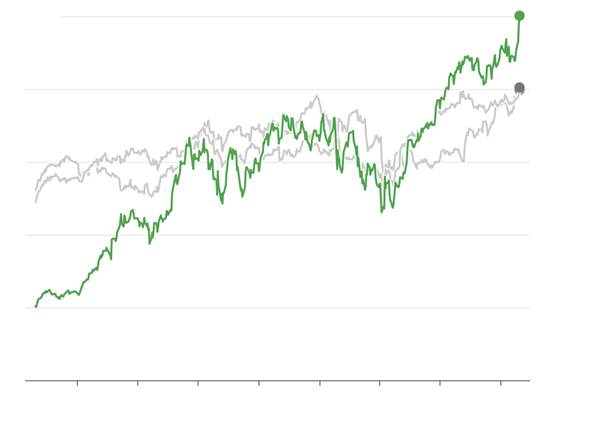
2024: $1 tr. Nvidia market cap. 2025 $5 tr.
Nvidia has become the first company whose market value of its shares reached $5 trillion. $5 trillion! That is larger than the national GDP’s of every country except the US, UK and Germany (close tie with Germany!).
Is this a bubble?
Nvidia’s shares have risen by five times, from $1 trillion just over a year ago. The reason is clear. Nvidia’s Jensen Huang made a huge bet on AI chips…and thanks to his acquisition of Israeli startup Mellanox, founded by Eyal Waldman, his bet paid off. Nvidia has the chips that AI desperately needs… right at the moment when they were most needed. Mellanox supplied software that speeds up calculations (originally, used to speed up uploads and downloads on the Internet), which Huang cleverly realized could speed up calculations on microprocessors.
So is it a bubble? Probably. Any share that rises by five times is a bubble. Can Nvidia sustain its growth? Especially when the US is trying to shut off the Chinese market for Nvidia, a market of the world’s second largest economy.
Every sharp rise in shares is driven by future expectations and dreams. Nvidia’s 2025 profits rose to about $80 b., from around $28 billion in 2024. That’s a big rise. But a stock valuation of some 60 times net income is very high. It is a PE price-earnings ratio of 60, astronomically high.
US stock markets are now at all time highs. It is not just Nvidia. It is time to think carefully if you are in the market. There are enormous storm clouds gathering.
Let’s MAP Our Lives
By Shlomo Maital
I have a modest suggestion. May not be everyone’s cup of tea.
Let’s MAP our lives. Here is what I mean.
M = mindful. Be mindful. Be present in the moment. Be mindful of how you feel, what you feel, where you are, what is happening…be in the moment. Important for some of us who tend to get distracted and lost in thought — especially when driving.
A = attentive. Be attentive. Be keenly aware of what others are doing, not just you, and anticipate – this is often called defensive driving. Is that wobbly driver in the fast lane about to cut in on me…while texting on his cell phone…
P = purpose. Be goal driven. When you set out to do something, small or large, be sure you define to yourself clearly what it is. E.g. I am the driver and I am going to get my passengers, loved ones, to our destination safely. Not trivial in Israel, where drivers are aggressive and at times unpredictable.
Mindful. Attentive. Purposeful. Works for me. It might for you…
Let’s MAP Our Lives
By Shlomo Maital
I have a modest suggestion. May not be everyone’s cup of tea.
Let’s MAP our lives. Here is what I mean.
M = mindful. Be mindful. Be present in the moment. Be mindful of how you feel, what you feel, where you are, what is happening…be in the moment. Important for some of us who tend to get distracted and lost in thought — especially when driving.
A = attentive. Be attentive. Be keenly aware of what others are doing, not just you, and anticipate – this is often called defensive driving. Is that wobbly driver in the fast lane about to cut in on me…while texting on his cell phone…
P = purpose. Be goal driven. When you set out to do something, small or large, be sure you define to yourself clearly what it is. E.g. I am the driver and I am going to get my passengers, loved ones, to our destination safely. Not trivial in Israel, where drivers are aggressive and at times unpredictable.
Mindful. Attentive. Purposeful. Works for me. It might for you…
The 7 Rules of Trust
By Shlomo Maital

I am a very frequent visitor to Wikipedia, founded by Jimmy Wales and a colleague in 2001 – a generation ago. It is a largely reliable and up-to-date source of key information, right at your fingertips. And lately, it is being attacked by right-wing fanatics, as being ‘biased’. Meaning – it fails to support far-right insanity.
Wikipedia is a phenomenon. Wales could have leveraged it to become a billionaire. Most people would have. Instead, he has steadfastly kept it as non-profit, ad-free, and hence objective. (Note, for instance, that Google and Apple have now prevented people from uploading videos of ICE police attacks on innocent victims – lest the 47th President retaliate.
Wales has now written a book, The 7 Rules of Trust, zeroing in on a key issue, perhaps THE key issue facing humanity today – lack of trust in political systems, democracy, and leadership. We have lost trust, because it is now possible to disseminate conspiracy theories, lies, calumny, attacks, and fables, and have people who subscribe to the respective media believe them implicitly – including some of the most outrageous stupid vicious lies. (Example: The Jewish religious rite of circumcision is a cause of autism! By none other than the US Secretary of Health, no less!).
Wales writes common sense. Use the working hypothesis of trusting others, so they will trust you. It is reciprocal. Use critical thinking on everything you are told by leaders — verify and trust. Wikipedia, he argues, is a metaphor or method for restoring trust.
A colleague and I once challenged ChatGPT to find an innovate method for establishing greater trust in society. Fakepedia, it said. Establish a website where fake news is debunked and its author(s) exposed.
Jimmy? Fakepedia? In a sense, Wikipedia IS a kind of fakepedia, because it offers truth while other websites offer lurid lies.
Replaceable You! Virtual You!
By Shlomo Maital
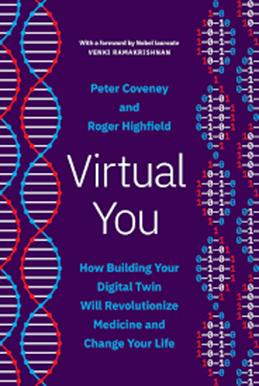
Virtual You: How Building Your Digital Twin Will Revolutionize Medicine and Change Your Life. Peter Coveney, Roger Highfield, Venki Ramakrishnan. 2023 Princeton University Press
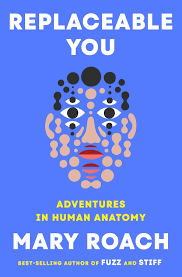
Replaceable You: Adventures in Human Anatomy. Mary Roach. Random House, 2025.
One of my never-miss podcasts is Ira Flatow’s Science Friday. This week two wonderful books were reviewed: Virtual You, and Replaceable You. Virtual You reviews how creating a digital copy of each person’s bodily mechanisms and organisms (each of us has a bodily organism unlike any other) can advance medicine by light years, at a time when identical drugs are prescribed for everyone, even though we are all different. This is particularly true of women, at a time when most clinical trials are done on white males. Personalized medicine has been long discussed; digital twin technology may make it feasible and cost-effective. “… your digital twin can help predict your risk of disease, participate in virtual drug trials, shed light on the diet and lifestyle changes that are best for you, and help identify therapies to enhance your well-being and extend your lifespan”, write the authors.
Replaceable You is about the spare parts business – how we are replacing hearts, lungs, livers, knees, hips, eye lenses, and hair follicles, among others, with ‘spare parts’. This too is revolutionizing medicine. It is also a source of heartache, literally – many people wait in long queues for, e.g., kidney transplants. One approach the author describes is the ‘body shop’ approach — hearts for transplant have to be used within four to six hours of removal from the dead donor, and many such hearts are not up to par and are not usable. Scientists look for ways to ‘repair’ defective hearts, and to prolong the time after which they become unusable, to expand the supply – currently, with huge excess demand and long queues.
Science Friday this week discusses how AI has shown promise in speeding development of new drugs – but so far has failed. The current model of drug development, involving mice (very poor representations of human anatomy) and then people (long, expensive, and often misleading) is costly and cumbersome. It was hoped that AI could analyze billions of molecules, to find the right one to block a ‘bad protein’ that causes illness. But so far – it has not happened.
One of the fascinating frontiers of research for ‘spare parts’ is 3D biological printing of organs – corpuscles, cells, etc. This is incredibly complex. But – one day, perhaps, a 3D printer will be able to print a heart – perhaps using key cells from one’s own body to forestall immune rejection.
Medicine Nobel 2025: Constraining Our Immune System
By Shlomo Maital

The 2025 Nobel Prize for Physiology and Medicine was awarded to Mary E. Brunkow, Institute for Systems Biology, Seattle WA, Fred Ramsdell, Sonoma Biotherapeutics, San Francisco, and Shimon Sakaguchi, Osaka U., Japan.
I have two close friends, each of whom is dealing with an immune system that has somehow gotten out of control. And a recently-departed cousin, who suffered for decades from an auto-immune disease.
Our immune systems are amazing. They can detect invaders, wipe them out with T-cells and antibodies, and remember the attack in case the invaders return. But sometimes, somehow, the immune system attacks our own bodies. The result is disastrous. Why does this happen.
These three researchers made groundbreaking discoveries regarding the peripheral immune tolerance – this is the mechanism that keeps the immune system from attacking the body itself. Sakaguchi in particular went against the stream (nearly all Nobelists do) and found a previously unknown class of immune cells, that protect the body from autoimmune disease. Their absence causes big trouble.
Wonderful to see a female scientist included in the three. Mary Brunkow, with Ramsdell, found why a particular strain of mouse was vulnerable to autoimmune diseases – a mutation in a gene, Foxp3.
Much of this pathbreaking research was done some 25 years ago and earlier.
Economics Nobel 2025: Culture
By Shlomo Maital
Each year at this time, I try to explain to readers why Nobel Prizes in science and economics were awarded, in plain language.
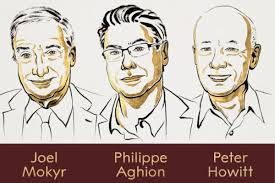
The Economics Prize went to Joel Mokyr, Philippe Aghion and Peter Howitt. For me this is very personal. Joel (Yoel) Mokyr was born in Leiden, Netherlands, in 1946, and is the son of Jewish Holocaust survivors. He immigrated to Israel as a while with his mother, got a B.A. degree from the Hebrew University, did his Ph.D. at Northwestern U. and remained there for his whole career.
In his wonderful 2016 book The Culture of Growth, Mokyr explained the crucial role of a society being ‘open to new ideas and allowing change’. Culture drives growth, in the end, not just science, technology, infrastructure, and R&D. Israel, Taiwan, Korea, Singapore, each in their own way have built a pro-growth entrepreneurial innovative culture.
Howitt and Aghion built a mathematical model of creative destruction in 1992, showing how when new and innovative products enter the market, older products lose out. This process is crucial. Societies and businesses need to dump old stuff in order to make room and conserve energy for new stuff. This is a lesson for all of us, not just businesses.
Yoel, well done. You join the 21% of Nobel recipients who are Jewish. We are proud of you.
Physics Nobel 2025: Quantum Tunneling
By Shlomo Maital

The Nobel Prize for Physics, 2025, was given to John Clarke (U. of California, Berkeley), Michel Devoret, Yale, and John Martinis, U. of California Santa Barbara.
Forty years ago (!!!), in 1984 and 1985, their experiments with an electronic circuit made of superconductors showed that quantum mechanical properties (something called quantum tunneling, which enables electrons to flow freely without resistance and hence controllable) can be created way above tiny atomic scale, in an apparatus large enough to be useful.
Fast forward: This is largely the basis of modern semiconductors, such as transistors.
The Nobel Committee has clearly done some homework and traced back to the early pioneering work that has been the basis of modern electronics and computing.
Note how early basic scientific research has generated massively powerful new technologies, in a manner that was surprising and rather unpredictable. When the prize winners did their research and published it, I doubt they could foresee the revolutionary new technologies that would result.
Basic research is vital. It struggles to get funding – but virtually all great new technologies derive from early scientific discoveries by bold researchers, who ask hard basic questions – and succeed in answering them.
Try Things!
By Shlomo Maital

Ever wonder why young people, especially very young people, are so competent at tech — operating computers, laptops, tablets, smartphones, etc.?
The famous ‘hole in the wall’ experiment in India offers a clue. A researcher put touch screens into a wall in a very poor slum neighborhood in India…and children showed up to mess with them. They knew no English…yet in short order had hacked the computers and done amazing things with them.
Why?
They were fearless, and just… tried things. Until something worked.
There is a lesson here. We older folks tend to do things the way we always have done… and with tech devices, get stuck — and in despair, give up. Especially when the devices are designed by 22 year old tech whizzes, for whom technical complexity is simplicity distilled!
I have found that watching my grandchildren and imitating them can be helpful. Stuck? Baffled? Try things! And not just with tech devices. Everything. Including family squabbles and dilemmas. Old stuff doesn’t work? Try something different.
This works with life in general. Try different kinds of music. Food. Books. TV programs. Variety is not only the spiece of life, it IS life!
Stuck? Try things. See if it works for you!

 TIMnovate