
You are currently browsing the category archive for the ‘Uncategorized’ category.
What Color is your Collar?
By Shlomo Maital

What color is your collar?
Blue? You do manual labor, construction, work on an assembly line, have a skilled trade. You are one of 60 million such workers in the US. Probably didn’t go to college.
White? You perform professional service, desk, managerial, or administrative work. You are one of 70 million such workers in the US. Probably went to college.
Neither white nor blue? Red? (government workers). Brown? Military. No collar? Artist etc. You are one of 37 million workers. Total: 167 people in the labor force.
Money? Believe it or not, white collar workers average about the same annual income as blue collar workers.
So, what do blue collar workers think? I’ve made a survey, and here is what I came up with, putting myself in their shoes:
“I show up. Day after day. Even for a job I hate. The bills are growing much faster than what I make. My wife has to work. It’s how we get (expensive) health insurance. Work is getting me down. Bosses are too young to shave and tell me what to do on the assembly line. I see where the company is being taken over. Companies buy the government with money, political donations. Government? It tries to buy the people. A lot of jobs have left. A lot of new immigrants are taking whatever jobs remain. And I pay taxes to pay for their lodging, health care, education. Our car is old and broke. Can’t remember when we went on vacation. OK, I didn’t go to college. So what? College kids are arrogant and stupid and worse, they don’t know it. Lawyers. They make the rules, send factories abroad, and pay themselves big bonuses. Washington? Cozy job for 465 lazy bums, and 100 lazier bums in the Senate – average age 94. They pretend to hear us, every 2 years, or every 6 years, but they don’t see us, we’re transparent. Why do we vote for a foul-mouthed billionaire? Because he says what we think, and because even though he went to college, he’s as dumb as us, and proud of it.”
….
p.s. Nicholas Kristof, New York Times:
“One gauge of how many Americans are struggling is that average weekly nonsupervisory wages, a metric for blue-collar earnings, were lower in the first half of 2023 than they had been (adjusted for inflation) in the first half of 1969. That’s not a misprint. Another: If the federal minimum wage of 1968 had kept pace with inflation and productivity, it would now be more than $25 an hour. Instead, it’s stuck at $7.25.”
“The Princeton economists Anne Case and Angus Deaton popularized the term “deaths of despair” for the tumbling life expectancy among working-class Americans since 2010, but the tragedy goes far beyond the staggering mortality. For each person who dies from drugs, alcohol and suicide, many others are mired in addiction and heap pain on their families. The challenges are particularly acute for Black and Native American men. Native American males have a life expectancy of only 61.5 years, shorter than men in India, Egypt and Venezuela. And the median wage of Black men in 2020 was only 55 percent of that of white men, a smaller share than it had been in the late 1960s.”
What Unites America? Sunday Night Football
By Shlomo Maital

Drew Esocoff
Americans are disunited – perhaps, more than ever, since the Civil War.
A 2017 poll found this: “Seven in 10 Americans say the nation’s political divisions are at least as big as during the Vietnam War, according to a new poll, which also finds nearly 6 in 10 saying Donald Trump’s presidency is making the U.S. political system more dysfunctional. The Washington Post-University of Maryland poll — conducted nine months into Trump’s tumultuous presidency — reveals a starkly pessimistic view of U.S. politics, widespread distrust of the nation’s political leaders and their ability to compromise, and an erosion of pride in the way democracy works in America.”
Since then, it’s gotten worse. E.g., Jan. 6. So, what does unite America?
Football! Specifically, Sunday Night Football on NBC TV.
Jody Rosen explains why on the podcast The Daily (NYT), reading his Sunday NYT essay “How an Ordinary Sunday Night Football Game Turns Into the Most Spectacular Thing on TV”.
Tune in to the game, to tune out the world, is the slogan.
NBC pays the NFL $3 billion for the rights. It loses money. Ad revenue doesn’t pay for the huge costs – even though a 30 second commercial costs over $800,000! But it’s worth it. TV viewing is plummeting, yet ratings for the Sunday night football game (SNF) on TV are soaring.
Who watches SNF? Well – pretty much everyone. Blacks, white Americans, women, Hispanics, young, middle-aged, old.
Why?
Rosen describes someone few have heard of – the legendary director Drew Esocoff. Each week, during the 18 week regular season, plus the playoffs, a convoy of a dozen or so huge trucks travels to the city that hosts the game – and goes to work. Esocoff choreographs 200 screens, cameras, sound men, play-by-play, commentators… all this, to tell a story, for a violent game that has players injured every game – sometimes seriously. (A Buffalo Bills player had his heart stopped, after a hard tackle, and was revived by speedy medical attention; he has resumed play since).
I am a regular viewer. As a part-time journalist and blogger, I am amazed at how Esocoff tells a gripping story each game – shots of jubilation, heartbreak, near misses, frustration, anger, mingling crowd views, players, referees. Some games are gripping to the end, but many are one-sided, challenging the commentators and producer to maintain the viewer interest.
SNF is the most-watched program on television, and has been every year, for years. SNF averaged 18.7 million TV viewers in 2022 ranking as primetime’s #1 TV show for an unprecedented 12th consecutive year. In Sept. 2023, Esocoff began his 18th season directing SNF.
If football unites Americans, perhaps politics can learn from football. Football has clear rules. Those rules are enforced with skill (video replays make certain of this). Bad behavior is penalized. Performance is well compensated. The system finds those with skill, no matter what their race, background or status. (Caveat: There is a paucity of Black coaches).
And Esocoff? We can learn from him too. DIE. Document. Inform. Entertain. He and play-by-play announcer Mike Tiriko follow this mantra brilliantly. Facts. Recount them. Never bore, but entertain. Find the human interest. Tell stories for 3 hours weekly.
Football unites America. Politics disunites America. Politicians — learn from football.
Breaching the Blood-Brain Barrier:
Hope for Treating Alzheimer’s
By Shlomo Maital
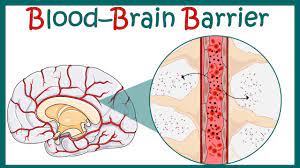
Alzheimer’s causes dementia through build-up of amyloid plaque in the brain. There are drugs that are effective in removing much of the plaque. Problem is, they are largely defeated by a remarkable defense mounted by the brain, to keep harmful things away from it, like toxins and germs, called the blood brain barrier.
Until brilliant researchers and an Israeli hi-tech company Insightec joined forces. Insightec headquarters are in a suburb of Haifa. It was founded by Kobi Vortman and Oded Tamir in 1999, 25 years ago.
Writing in The New York Times, Jan. 10, Gina Kolata explains that “the barrier is at the ends of several major blood vessels that supply the brain. As they enter the head, the vessels branch and divide until, at their tips, they form narrow capillaries with extremely tight walls. This barrier keeps large molecules out and allows small molecules like glucose and oxygen to get in.”
Anti-plaque drugs are swallowed or injected and enter the blood stream; the goal is for them to reach the brain. But they are intercepted by the blood brain barrier – so effective, that only 1% of the drug reaches its destination. This in part, Kolata explains, is why the new Alzheimer’s drug by Biogen, aducanumab (Aduhelm), is so costly — $28,000 a year. You need to administer 100 times more than eventually reaches the brain.
“The challenge was to pry those [capillary] walls open without ripping the capillaries apart.” Kolata explained. We need the blood brain barrier intact.”
How to have your cake (keep the barrier) and eat it too (open it to useful drugs)?
Here is the solution.
Kolata reports: “…Investigators at the Rockefeller Neuroscience Institute at West Virginia University reported their results last week in The New England Journal of Medicine. When the blood-brain barrier was opened, 32 percent more plaque was dissolved, said Dr. Ali Rezai, a neurosurgeon at the institute, who led the study.”
“First, patients are injected with tiny microbubbles of perfluorocarbon gas. The bubbles range in size from 1.1 to 3.3 microns (a micron is about 0.000039 inch.) Then, pulses of low frequency ultrasound are focused on the area of the brain to be treated. The ultrasound pulses set up waves in the fluid in blood vessels; the microbubbles rapidly expand and contract with the waves. This pries open the vessels without damaging them, providing entree into the brain.”
The ultrasound pulses must be aimed very precisely at just the right spot. The Israeli hi-tech company Insightec has technology that does delicate brain surgery with precisely-aimed beams of ultrasound, aimed with the aid of MRI’s. Its device provides the precision ultrasound beam that opens the blood brain barrier briefly without damaging it.
The technology is not only impactful for Alzheimer’s drugs. “One group, led by Dr. Nir Lipsman, a neurosurgeon at the Sunnybrook Research Institute of the University of Toronto and his colleagues, opened the barrier to deliver a chemotherapy drug to the brains of four breast cancer patients whose cancer had spread to the brain. The concentration of the drug, trastuzumab, increased fourfold, they reported.”
Words, Words, Words
By Shlomo Maital
On April 27, 2008, 5,735 days ago, I posted Blog #1 on WordPress. It was about a prisoner in Australia who maintained sanity in solitary confinement by inventing a game with a button. I then posted the link on Facebook – and continue to do so, almost daily.
Today, January 9, 2024, nearly 26 years later, I posted blog # 2053, about why our senior memories sometimes forget yesterday but recall yesteryear.
Words, words, words.
Some 2,053 blogs, averaging around 487 words, (but often, longer, too long), totaling a million words, roughly. That is more than 12 times the number of words in the Five Books of Moses. And nearly double the number of words in the English translation of War and Peace (587,287).
What is it that drives some people like me to spill so many words into the Internet?
I think I understand now why writers write.
We write to understand.
We write, so that we are compelled to state in words, with sharp clarity, what we think. Because until you shape vague thoughts into sentences and phrases, read them and revise them, you do not really know accurately what you think and believe.
So, why blog? The thinking is, maybe others will find interest, amusement and insight from those words. And hey — you may always decline to waste time reading them.
Words matter. Words can bring useful knowledge – or they can wound and destroy.
Are our children and grandchildren learning to express themselves and to write clearly? Once, they did. We have a hunch that in general, today, they are not.
Are words subject to the rules of truth? Often, today, they are not. Truth is in trouble.
Perhaps it is time to rethink how we use, abuse, and amuse, with words. And reject seditious, insurrectionist political leaders who abuse words and call their opponents vermin and ask them to “rot in hell”.
Why We Seniors Don’t Remember Things
By Shlomo Maital

Neuropsychology has shown that short-term memory lasts 15 to 30 seconds, after which it either has to be encoded as a long-term memory or it decays.
This is one of the 72 facts New York Times editor have inflicted on us, as part of their year-end roundup.
I find this one really helpful, in understanding why we seniors have trouble remembering things that happened very recently. A neurologist friend explained it to me as well.
A memory is not a memory until it is truly saved on our ‘hard disk’. Old memories are there for good – because we actually ‘reload’ them, reflect on them, and then, resave them. (By the way – we also change them somewhat.)
But new things — what we had for lunch yesterday – are not truly memories. We simply do not encode it as a long-term memory. It is not memorable, important or worth saving. I think our senior brains are simply economizing on disk space. Even a $3,000 Dell laptop has only one terabyte or so of storage on its hard disk. We have a lifetime of memories on our long-term memory ‘hard disk’. Isn’t it natural that our brains start to economize? With your laptop, you can always buy more hard-disk storage, or dump stuff on the cloud. But not so with our brains.
So, what do you do, as a senior, when you need to remember things that happened recently?
Here is my suggestion. It works pretty well.
If you forget a short-term memory — don’t panic. If you worry about it, it fogs the brain. Help your brain out. Frame a question. What was the name of the famous actor in the movie I saw last night, Meet Joe Black? (About the Angel of Death who visits Earth to learn why people fear death – meets a pretty girl — and chooses to stay on).
Ummm. So, tell your brain. Brain, hello! I want you to remember who starred in Meet Joe Black. You know it. I know you do. It’s in there. Somewhere. Take your time. No rush. When you’re ready, tell me. I really do want to recall it.
Later, I find, my brain will toss me the answer – but I have to really listen carefully. And the answer comes at surprising and unexpected times. My brain is digging around looking for ‘temp storage’, places where unimportant stuff is stored, not where long term memory is stored. But if you worry about it, if you let anxiety fog your mind – you’ll never remember.
The answer? It’s Brad Pitt. The young 1998 Brad Pitt. Fire the casting director. Would you believe the super-handsome young Brad Pitt is the Angel of Death?
Thanks brain! I knew you knew it.
Remember this. No, it is NOT dementia. It is just how things are in senior brains. Make a note, tell your brain you want to recall it – chances are, your brain will come through. Because your brain and mine are incredibly amazing gifts from God.
Nili Margalit
By Shlomo Maital

Nili Margalit
Nili Margalit, 41, is a nurse, and worked at the Soroka Hospital, Beersheba, for 12 years. She is a member of kibbutz Nir Oz, attacked by Hamas terrorists on Oct. 7 and was kidnapped, taken hostage to Gaza. Her captors were not Hamas terrorists but Gazan civilians, who poured in the hundreds or more across the fence into Israel, looted, murdered and took hostages, including Nili. In Gaza, she was ‘sold’ to Hamas by her captors, after a vigorous negotiation.
In the dark tunnels of Gaza, she was held together with a number of elderly Israelis, most of whom had medical conditions and needed medication and care. She speaks some Arabic and told her captors she was a nurse (“mumarida”) and took charge of listing the medications they needed. She listed them, and days before they ran out, argued with Hamas to refill them…not always with success. She demanded apparatus for measuring blood pressure and took each hostage’s blood pressure regularly. For some, it was ‘over the roof’, she said, 220/118. Understandable.
One of the elderly, Tami, had severe asthma. She needed an inhalator, which was not available. Nili improvised one – with a spoon, hot water, and a menthol liquid. It worked. Some of the elderly she was with have been released; some remain.
What enabled her to function? She called on her experience as a nurse in hospital. On Ilana Dayan’s “Uvda” TV series, excerpted on CNN, she explained that in the hospital, you see people who are severely ill. They arouse deep emotions. But, you set them aside, and just …act. You replace feelings with constructive action.
Just before her release, after 50 days in the dark, she was confronted with Yarden Bibas, a male hostage also from Kibbutz Nir Oz. Here is the account, from the Times of Israel:
“Nili Margalit, who spent nearly 50 days in Hamas captivity, revealed that she was with Yarden Bibas when Hamas terrorists told him his wife and two young children had been killed and ordered him to film a video in which he blamed Prime Minister Benjamin Netanyahu for refusing to return their bodies to Israel. Yarden Bibas, 34, his wife, Shiri, 32 and their two boys, Ariel, 4 and Kfir, then 9 months, were abducted from Kibbutz Nir Oz on October 7. Yarden was taken to Gaza separately from the rest of his family. [The two infants, Ariel and Kfir, have bright red hair and their photos were shown often on Israeli TV]. Margalit told Channel 12’s Uvda investigative program that Yarden Bibas was already in a poor psychological state due to worry over his family’s wellbeing and broke down upon being given the news by his captors. She said the Hamas captors had told her she would be released later that day, only to later tell her and fellow hostage Yoram Metzger that they would have to deliver the news about the Bibas family to Yarden. “I told Yoram, if they want to tell him such a terrible thing, let them tell him themselves. “Let him [Hamas terrorist] look him [Yarden] in the eyes and tell him himself. He knows Hebrew,” Margalit recalled, referring to the Hamas captor. The Hamas member proceeded to deliver the “news” to Yarden in Arabic as Metzger translated and another Hamas member filmed the reaction, telling the broken father what to say. A minute later, Margalit was swept away by her captors, and she was released later that evening.”
Nili’s home in Nir Oz was burned and destroyed. She now lives in a temporary apartment in a suburb of the southern city of Kiryat Gat, with her boxer, Nachi, who somehow survived the attack. She intends to return to work in Soroka Hospital, where many of the wounded were brought and cared for, after a period of recovery.
Some 136 hostages are still held by Hamas.
Think Ahead – By Looking Back
By Shlomo Maital

People, businesses, governments – all are in general notoriously myopic. We live for, plan for, think about tomorrow, not the next decade or century. We wrap our planet in a blanket of CO2 and tell our grandchildren to deal with it.
How can this fatal flaw be overcome? Bina Venkataraman is a Washington Post columnist, former Obama science advisor, and author of the book The Optimist’s Telescope: Thinking Ahead In A Reckless Age. Here is an excerpt from her recent TED talk:
“In 2011, a magnitude 9 earthquake hit Japan, causing massive tsunamis, one of which flooded the nuclear plant in Fukushima. Chemical explosions damaged surrounding towns. This disaster led to a meltdown of the nuclear reactors and displaced hundreds of thousands of people and killed many. There were still more than 100,000 people in 2017, six years later, displaced by that nuclear disaster. One of the things that was so interesting to think about and learn was how the company that ran the nuclear power plant, TEPCO – how they had thought about planning for the future at the time. TEPCO had done a risk analysis, but it hadn’t looked far enough into the past. And what was interesting to learn was the high contrast between what happened in Fukushima and what happened in Onagawa, Japan in 2011.
When I was there, I learned about the Onagawa nuclear power station, which was even closer to the epicenter of that earthquake than the infamous Fukushima Daiichi that we all know about.
In Onagawa, people in the city actually fled to the nuclear power plant as a place of refuge. It was that safe. It was spared by the tsunamis. It was the foresight of just one engineer, Yanosuke Hirai, that made that happen. In the 1960s, he fought to build that power plant farther back from the coast at higher elevation and with a higher seawall.
He knew the story of his hometown shrine, which had flooded in the year 869 after a tsunami. It was his knowledge of history that allowed him to imagine what others could not. Yes. A thousand years – more than a thousand years before, you have a tsunami that floods a shrine, and the story gets carried forward – the Jogan earthquake of 869. So there was a marker in his hometown shrine.
And there are actually markers in other areas of Japan that have survived from that particular earthquake. So there’s a place called Murohama where, on the top of a particular hill, in 869, people had fled to the top of that hill, thinking that was a safe place during an earthquake, given the risk of tsunami, to flee. And, in fact, it was one of the worst places you could go because two tsunamis, sort of two big waves crested over the hill and killed the people who had fled to the top of this hill.
And so the people who survived this disaster who weren’t on the top of the hill decided to mark that place and to have that marker stay intact and the story of it taught to local schoolchildren and sort of passed on through the generations.
So part of this future planning is taking the long view backwards and forwards.”
Take a long view BACKWARDS! Yanosuke Hirai was aware of a tsunami that occurred in 869, some 1,130 years earlier, and designed the future nuclear power plan to withstand another, similar one.
A Talmudic saying goes: Know where you came from, and where you are headed.
Knowing history can give us a longer perspective on the future. If you fail to study where you came from, how can you truly know where you are going? It is a great shame that studying history, like most of the liberal arts such as philosophy and literature, are being degraded or shut down, in our universities.
Jewish people gear up for the future by studying the timeless, vivid narratives in the Bible, ones that took place 2,500 years ago. When we ignore the lessons in them, we pay a price. The Biblical narratives, when we pay attention to them, give us a unique kind of telescope – one that not only can peer far into the future, but one that also peers way back in time, with great accuracy.
As Mark Twain said: “History does not repeat itself. But it does rhyme.” He meant that details change, circumstances change, settings change, names change, but similar events recycle.
Democrats vs. Republicans: It’s All About Messaging
By Shlomo Maital

Why is President Biden still at an abysmal 34% approval rating? Why are the Democrats polling so terribly vs. Republicans? Why, if the US economy had a stellar year in 2023, with inflation near its 2% Fed target, are the Dems not more popular?
Messaging. It’s about what you say and how you say it.
Republicans are clear. 70% of Republicans are Conservative. They favor 3 things: halting immigration, lowering taxes, and deregulating. Freedom, in a word. Don’t tell us what to do.
What are the Dems about? Ummm…. 25% of Dems are conservative. A small fraction are radical leftist progressives. What unites Democrats?
Uhhhh….
So, for what it’s worth, here’s my suggestion to Biden and his team.
Competence.
“Yes, we can!”. We can what? Run the country. Run the economy. US ranks third among wealthy countries in the 2023 Economist ranking of economies. Third! Yes, we care competent. Republicans? They can’t run their party, let alone the country. With a corrupt liar as its leader. The House hit a many-decades low for legislation, with the Freedom Caucus blocking anything and everything. Firing the Speaker.
Competence. Why vote for Trump, if his party is unable to agree on the time of day?
Yes, we can…run the country. And we are. Check the record. That should be the key message.
Anybody listening?
Asking Good Questions
By Shlomo Maital

The late Nobel Laureate in Physics, Isador Rabi, ascribed his success to his mother. Most moms ask you, what did you learn in school today? he recounted. Rabi’s mom asked him, Izzie, what good questions did you ask in school today?
A study by three Technion researchers led by Prof. Yoed Kenett formally explored the link between framing questions and creativity.[1] They note: “Question asking has been a critical tool for teaching and learning since the time of Socrates and is important in the creative problem-solving process. Yet, its role in creativity has insofar not been thoroughly explored. The current study assessed the role of question asking in the creative process.”
They find what startup entrepreneurs know well: Those who ask complex, unusual, complex questions tend to be more creative than others. Complex questions are a predictor of high creativity.
Rabi, who asked great questions, was part of a team at MIT that helped to develop a key component of radar, in WWII – a crucial breakthrough. His research on magnetic resonance (excitation of particles like atomic nuclei or electrons in a magnetic field) led to development of MRI, which uses a magnetic field and computer-generated radio waves that excite atoms in the body, to create detailed images of the organs and tissues of the body.
Note that complex does not necessarily mean complicated or long. A complex question can be one nobody else asks. Here is the question physicist Raymond Damadian asked, that ultimately led to the MRI: “Can the magnetic properties of the body’s atomic nuclei [pioneered by Rabi] be used to create a diagnostic tool for medical imaging?” Nobody else dreamed of linking magnetic resonance with medical imaging.
Later in his life, Rabi had cancer. In his last days, his doctors examined him using MRI, a technology arising from his ground-breaking research. The machine happened to have a reflective inner surface, and he remarked: “I saw myself in that machine… I never thought my work would come to this.”
[1] Tuval Raz, Roni Reiter-Palmon, Yoed N. Kenett, “The Role of Asking More Complex Questions in Creative Thinking.” Psychology of Aesthetics, Creativity and the Arts, 2021.
The Populism Pandemic
By Shlomo Maital

Source: USA – Takis S. Pappas
Populism is a virulent, dangerous ideology, a pandemic, on the rise worldwide, that threatens the fabric of democratic society. And there is no visible vaccine.
Scholars define it as “an ideology that considers society to be ultimately separated into two homogeneous and antagonistic groups, ‘the pure people’ versus ‘the corrupt elite’ “. The ‘corrupt elite’ are in general well-educated, supporters of democracy, and liberal, favoring government policies that benefit society. Populism is not programmatic; it is principally anti-elite, against rather than for.
Trump is a populist leader. Trump trumpets “them against us”. By nature populism is divisive, fractional, and virulent. It is often anti-democratic, as the January 6 2021 attack on the Capitol showed. Trump vows revenge on those who opposed him, and promises to be autocratic “on Day One only” (of his next presidency). Trump claims to represent the “forgotten men and women of our country”, with echoes of the populism of Andrew Jackson’s Presidency, 1829 – 1837 (one of America’s worst presidents). Trump says he is victimized, citing as his source….V. Putin.
I asked ChatGPT to characterize the demographics of Trump supporters. The result was closely similar to populist supporters. A significant portion of Trump supporters in 2022 were white, particularly in rural areas and small towns; blue-collar workers, especially in industries like manufacturing and construction; evangelical Christians comprised a notable segment of Trump’s base; older voters, particularly those over 50, were more likely to support Trump.
Populist supporters tend to be those who have not proportionately shared in the wealth created by the ‘elites’, who are urban, educated, and liberal. Ironically, they choose to be led by a billionaire, Trump, who apparently gained wealth more by fraud (inflated real estate values) than savvy.
My country, Israel, is led by a populist leader who chose to severely divide the country (‘them vs. us’), attack democracy – and tempt Israel’s enemies, sensing weakness, to attack. Israel has come together again, united – but at a terrible cost.
The world is currently in bad shape, with the despotic anti-American axis of Russia, China and Iran, wreaking havoc on the world order. When the world itself is ‘them vs. us’, it is tempting to believe that internal politics, too, are ‘them vs. us’. This is one reason populism is on the rise.
It is time for people of reason, wisdom, and good will to get off their hands and take action. The possibility of a second populist Trump Administration, vastly worse than the first, is too awful to contemplate.
 TIMnovate