
You are currently browsing the category archive for the ‘Uncategorized’ category.
Older People Are Happier People. Really!
By Shlomo Maital

So, go figure. I am 80 years old – and feel happier and more fulfilled than ever before. Not everything in my body works well, as it once did. I walk rather than jog. But all in all, life is really, really good. I do forget some names but my brain still works pretty well.
And I am not alone. It turns out, there is a paradox of aging — Older people are supposed to be sadder, depressed, and all are undergoing, well, a slow or fast road to becoming decrepit. But in fact we seniors are overwhelmingly happier than the young. This is the finding of Stanford psychologist Laura Carstensen, reported on the podcast Hidden Brain.
Carstensen says: “Aging was once considered to be a serious threat to virtually everyone’s mental health. There was a clinical psychology textbook that I had when I was in graduate school. So this was a textbook on psychopathology. They had a chapter on anxiety, a chapter on depression, a chapter on drug abuse, and then they ended with a chapter on old age. So old age itself was considered pathological. The whole range. And at the time, people also believed that Alzheimer’s disease was the inevitable consequence of aging, so that cognitive impairment would begin and would eventually progress to dementia. so that that was the fate of people who lived very long lives.”
Carstensen continues: “We studied a whole range of positive emotions and negative emotions. We wanted to understand what emotional experience in day-to-day life was like. We designed a study using what was then the gold standard, probably still is, of studying emotional experience in day-to-day life. And we gave people pagers, electronic pagers, and they carried them for a week. And at random times during each of seven days, we paged them and asked them to tell us the extent to which they were feeling each of 19 different emotions. Some were positive emotions like joy, happiness, calm. Some were negative emotions like anger, sadness, fear. And so we had this detailed record now for individuals about their emotional lives. So we knew from this large study of mental health problems that they had lower rates of that, but we didn’t know a lot about what day-to-day emotional life was like an old age.
“We found that increasingly older people had fewer negative emotions, less anger reported, less fear, less disgust, and just as much happiness, joy, calm.”
Naturally, the entire scientific community reacted in disbelief, rejecting her findings. How can old people be happy? But her studies have been replicated and validated. Yes, overall, we are happier. “With every study, it became clear that this was a highly reliable finding. Older people were happier in their day to day lives on balance than younger people were.”
Social networks play a key role in keeping us oldies happy. “Because social relationships are what bring us our greatest happiness, there was thinking that if networks and older people were smaller than they were in younger people, then older people must not be as happy. That was basically the thinking. Instead, it appears that what happens is that over time, social networks get smaller, but they’re very well honed. And so the people who are retained in the networks are those that are most important, the people who are most predictable, most valuable, in our lives. And those are the relationships that stay.”
For my wife and I, apart from our family our main social network is our synagogue community – which is tight-knit, loving, caring and a source of great happiness.
One more way old people are happier: We have good memories. Carstensen: “What we find is that younger people remember almost the same numbers of positive and negative images. By middle age, we see a preference and memory for the positive images, and in old age, that preference is whopping. That is, older people are remembering almost exclusively the positive images, and they’re not recalling the negative nor the neutral ones.”
I do know that there are a great many older people, suffering illness, isolation, and mostly, a feeling of a lack of meaning in their lives, after productive lives of service to the world. But they are the exception, not the rule. And I wish those of us not doomed to this state could organize to help those who are.
Blue Lies: Why Trump & Netanyahu Lie
By Shlomo Maital

Illustration from Psychology Today
Why do the ex-President of the US, Donald J. Trump, and the current Prime Minister of my country Israel, Benjamin Netanyahu, constantly lie? And why do their supporters applaud them, rather than castigate them for it? And why has telling the truth become an out-of-fashion value?
At last, a clear explanation, from Jeremy Adam Smith, writing on ‘blue lies’ in Scientific American, March 24, 2017, featured in a recent New York Times Op-Ed. It’s obvious, when you think about it. Kids do it all the time. He writes:
“Trump is telling “blue lies”—a psychologist’s term for falsehoods, told on behalf of a group, that can actually strengthen bonds among the members of that group. As University of Toronto psychologist Kang Lee explains, blue lies fall in between generous white lies (that harmlessly avoid offending or hurting others) and selfish “black” ones (that harm everyone).”
“You can tell a blue lie against another group,” he says, which makes it simultaneously selfless and self-serving. “For example, you can lie about your team’s cheating in a game, which is antisocial but helps your team….. People can be prosocial—compassionate, empathetic, generous, honest—in their group and aggressively antisocial toward out-groups. When we divide people into groups, we open the door to competition, dehumanization, violence—and socially sanctioned deceit.”
I watched CNN air audios of Trump looking at a top secret document written by the head of the Joint Chiefs of Staff, and talk about it to an aide. He mentions the document in detail. After CNN aired the audio, he denied he was looking at a top-secret document. Blue bald lie. His followers swallow it like cotton candy. CNN is them. Trump is us. So, we believe his lies. If we don’t, we help them. Liberals. Yuk. Tribal loyalty Trumps truth.
The world has split into tribes, fragments of nations. Social media helped. Loyalty to, and membership in, tribes has become super-crucial. Lies buttress tribal membership, as much about dis-ing other tribes as affirming our own. Trump perfected this and continues to practice blue lies. Netanyahu has followed his example.
This blue-lies plague is as much a pandemic as COVID. But there was a vaccine for the virus. How in the world are we to stop the pandemic of blue lies?
John Goodenough is In Your Home and Phone
By Shlomo Maital

Nobel Award: Senior King, Senior Engineer
John Goodenough, inventor of the lithium-ion battery, passed away yesterday. He was 100 years old. His genius is everywhere, in our homes and our phones.
In 2019, he was the oldest person, 97, ever to receive a Nobel Prize. (You have to be alive to win it – lots of great creators never made it). And we can learn a lot from his life, thanks to the wonderful obituary written by Robert McFadden in the New York Times.
Bottom line: One reason Goodenough’s genius is ever-present, is that he was a mentsch. (Yiddish for a person with strong moral values). He never patented his breakthroughs. He never accepted royalties, that could have made him many billions. This made his batteries widely and quickly available.
Overcoming great challenges: Goodenough was an unlikely person to change the world. In his memoir, he wrote that he was the unwanted child of an agnostic Yale professor of divinity and a mother with whom he never bonded. He grew up lonely and dyslectic, went to boarding school at age 12, and rarely heard from his parents. He figured out how to overcome his dyslexia, and got his Ph.D. from the U. of Chicago, then worked at MIT’s famous Lincoln Labs.
Inventing a great battery: A battery is a device with two terminals – cathode, positive, and anode, negative — and chemicals that generate ions. The ions flow from the anode to the cathode, generating an electric current. A British chemist, Dr. M. Stanley Whitttingham, who shared the Nobel with Goodenough, invented a patented lithium battery (patented by Exxon) that used titanium sulfide for its cathode. It was a huge breakthrough, producing high voltage at room temperature. But it overcharged, overheated and sometimes, caught fire and exploded. Ooops..
Goodenough found the solution, layering lithium with cobalt oxide, creating pockets for lithium ions. It took him four years. He was helped by postdoctoral students at Oxford. His device “had two to three times the energy of any other rechargeable room-temperature battery and could be made smaller and deliver the same performance”. A Japanese engineer, Yoshido (who also shared the Nobel), eliminated pure lithium from the battery and used only lithium ions, much safer. Sony used the technology to make the first safe rechargeable lithium ion battery for commercial sale.
OK. I know. Elon Musk, that great liberal humanitarian, has given away all of his Tesla patents, too. Oh, my. Put him up for sainthood? Saint Elon?
I don’t think so. He’s already leveraged those patents to become the world’s wealthiest person, owning nearly $200 b.
John Goodenough did this, gave it away, WITHOUT becoming a billionaire. He was a mentsch. And he helped Musk become a zillionaire. Goodenough’s lithium ion batteries are in every Tesla – and indeed, in my own hybrid Toyota Auris — over 25 kms. per liter of gasoline.
Thanks, Goodenough (pronounced good-enough). If only more of us would follow your path.
Baseball as Life: What We Learn from MLB Tampa Rays
By Shlomo Maital

Tampa Rays Designated Hitter
I believe that sport is a metaphor for life. It’s why I think kids should play sports. They teach you teamwork, persistence, effort, and resilience. I played hockey as a kid and was a fairly good goalie. But I was no athlete. So I ended up doing distance running, where endurance trumps speed. I learned a lot about life by running two marathons, New York and Boston. In New York, 1985, I undertrained, didn’t drink during the race, and ended up cramping at the 20th mile and limping across the finish line, still under four hours. But the persistence that taught me helped later during very very difficult battles for tenure.
So, here is a small story (based on Scott Miller’s lovely NYT piece) about how today’s hottest Major League Baseball team, Tampa Bay Rays, learned from adversity, and fixed the problem. Tampa has been winning nearly every game this season, based largely on a high number of home runs. And here is why, according to Scott Miller:
“Oddly enough, Tampa Bay’s 2023 power surge relates directly to Cleveland, and last October’s A.L. wild-card round between the teams. In losing both games of the best-of-three series to the Guardians, the Rays mustered only one run in 24 innings. Most excruciating was the second game, when Tampa Bay was eliminated with a 1-0, 15-inning defeat. The Rays went 6 for 49 in that game and struck out 20 times.”
Big problem. But how to fix it?
“We sat there for four hours and really didn’t have any competitive at-bats,” Chad Mottola, Tampa Bay’s hitting coach, said. “We weren’t even close. They got humbled. I got humbled.” He added: “We had the same group returning [this season], so it was just one of those things, like, we have to make an adjustment. We can’t just do the same thing.”
”Out of that wreckage came a unique drill this spring in which Mottola asked his hitters to run through several sessions each in the batting cage, without swinging, during which they faced a pitching machine hurling a variety of pitches. The idea was to simply focus on identifying pitches and locations. As each pitch was delivered, the stationary Tampa Bay batter called out pitch type and location. “Fastball, high.” “Curveball, outside.” “Slider, over the plate.” As each did, digital tracking devices relayed pitch information to the stadium scoreboard. This allowed the hitters to confirm whether they were correct or were wrong.” The Rays never talked about home runs. That wasn’t the point. “We just wanted the quality of the at-bat to be better,” Mottola said. “We didn’t anticipate the home runs going up. We just wanted to make better decisions on pitches, get deeper into the count if the guy is not giving you drivable pitches. And still, at this point, we are not talking about home runs at all.”
“The trickiest part, Mottola said, was when the hitters went back into the cages after the pitch-watching sessions. Batters found their timing was off and their swings had to be recalibrated, even if just by a little. Six or seven Rays batters have continued the program into the season. Luke Raley, Tampa Bay’s 28-year-old designated hitter, is one of them. (See photo above). Having entered 2023 with just three career homers in 144 plate appearances, Raley had 12 in 188 plate appearances through Wednesday, tied for third on the team with Yandy Díaz and Jose Siri. Isaac Paredes had 13. Randy Arozarena, who had a breakout postseason in 2020, led the team with 14.”
So, what do we learn from Tampa Rays and their hitting? Got a problem? Zoom in and really try to understand the root of it. Do NOT try to leap to a hasty solution. First, delve into the problem, deep dive. Next, zoom out. Find possible creative solutions. Make sure you can implement the one you choose. Finally zoom in, again. Apply the solution. Stick to it. Make it work.
Will Tampa Bay win the World Series and beat the Yankees in their own division?
Stay tuned.
Every Life Matters — Equally!
By Shlomo Maital

Migrant Vessel (The Guardian)
Five wealthy people, paying $250,000 each, die when a deep-dive submersible implodes at the site of the Titanic, off Newfoundland. For days, the world’s attention is gripped. Huge media coverage. Coast guard ships, French ships, Navy, aircraft…. Even when the terrible sounds of the implosion were noted by secret Navy equipment when it happened.
700 people (!) die in the Mediterranean when an overcrowded migrant vessel sinks. Greek rescue ships are accused of responding apathetically. And the world largely ignores it. 700 people, men women and children.
Before we criticize Greece, let each country search its soul and examine how badly it treats migrants – including my own country, Israel.
All lives matter. EVERY life matters. Every life matters equally. This is a basic human value. There is a reason people migrate. They flee violence, poverty, hunger, seeking a better life. There are wealthy countries that can a) afford to absorb them, and b) can benefit from the energy and drive of migrants. But choose not to.
There are somethings that cannot be forgiven. This is one.
Unfounded Pessimism: Avoid It!
By Shlomo Maital

The world is going to hell. Right? Climate crisis. Russian war. Disasters. Corrupt politicians. People cheat, swindle, steal, lie. And it’s getting worse.
According to Adam Mastroianni (Columbia U.) and Daniel Gilbert (Harvard), “Your brain has tricked you into thinking everything is worse”. (New York Times, June 20).
First, the bad news. They write:
“We first collected 235 surveys with over 574,000 responses total and found that, overwhelmingly, people believe that humans are less kind, honest, ethical and moral today than they were in the past. People have believed in this moral decline at least since pollsters started asking about it in 1949, they believe it in every single country that has ever been surveyed (59 and counting), they believe that it’s been happening their whole lives and they believe it’s still happening today. Respondents of all sorts — young and old, liberal and conservative, white and Black — consistently agreed: The golden age of human kindness is long gone.”
Next, the good news. The pessimism is not justified. It is not true. “We also found strong evidence that people are wrong about this decline. We assembled every survey that asked people about the current state of morality: “Were you treated with respect all day yesterday?” “Within the past 12 months, have you volunteered your time to a charitable cause?”,“How often do you encounter incivility at work?” Across 140 surveys and nearly 12 million responses, participants’ answers did not change meaningfully over time.
OK. So, if things are not so bad, and not getting worse – why do we think so? Why are we pessimistic? The authors published a study recently in NATURE to explain it. *
Two reasons. First, “human beings are especially likely to seek and attend to negative information about others.” That’s just the way we people are. Alas. Print, cable and social media amplify this; they are single-mindedly focused on terrible awful shocking ghastly news.
Second, “when people recall positive and negative events from the past, the negative events are more likely to be forgotten.” (p. 786). This biases our memories, to believe that things were much better in the past.
So, friends, no — things are not going to hell in a handcart. Things are not getting worse. People are not more corrupt, evil, selfish, egoistic, uncaring, cynical, awful. Maybe they are actually a bit better than people once were.
And even if they are not — if you believe they are, you will be happier and far less despondent. Because the narrative you choose will drive your frame of mind and your behaivor.
Why be a pessimist? It’s unjustified. And it’s harmful. Choose optimism.
* Mastroianni, Adam M., and Daniel T. Gilbert. “The illusion of moral decline.” Nature (2023): 1-8.
How Roger Payne Helped Save the Whales
By Shlomo Maital
Can one person change the world? Well, yes, sometimes. E.g. Greta Thunberg, who turned 20 in January, and whose one-person demonstration on Fridays, beginning in August 2018, outside the Swedish Parliament, led many young people to new protest and awareness regarding the climate crisis.
And long before – Roger Payne, who passed away on June 10, age 86, who saved the whales. Here is his story.
Payne recounts he was at Tufts University, near Boston, when he heard about a beached humpback whale at nearby Revere Beach, over 50 years ago. He hurried to the scene – and found people carving their names on the flesh of the dead whale, butting cigars on it, and cutting ‘souvenirs’ from its body. He was devastated.
In 1970, 33,000 whales were killed. Several species were on the brink of extinction. Payne decided on the spot to study these amazing creatures. He and a sound technician decided to listen to the sounds whales made. And to their huge surprise, in their earphones, they heard the songs of the humpback whales – plaintive cries, sad cries. They recorded them.
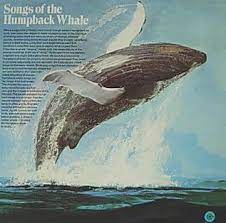
“Songs of the Humpback Whale is the 1970 album produced by Roger Payne. It publicly demonstrated for the first time the elaborate whale vocalizations of humpback whales. Selling over 100,000 copies, it became the bestselling environmental album in history, and its sales benefited the Wildlife Conservation Society’s Whale Fund, of which Payne was Scientific Director.” (Wikipedia).
Many people believe that this album of whale songs led to massive support for conservation efforts to save the whales. This was not Payne’s intention entirely. He simply wanted people to get to know this amazing animal. And there is an anthropomorphism here — the whales’ song is not plaintive, or pleading for help, but simply communicating socially. But it sounds like a call for help. And it turns out, whales are incredibly creative, composing new songs all the time, learning old ones from the elder whales, and showing high intelligence in doing so.
Another deep message here. In the end, people form their opinions based on emotions, not solely or even mainly on reason. The emotional appeal of the whale song touched our hearts.
So, yes, one person can change the world. If you find a way to pluck on people’s heartstrings – they will be moved to action. This is not cynical – I know on-line ‘motivators’ and opinion-shapers try to do this all the time. But one person, like Roger Payne, who does this in a good cause, can indeed change the world.
Roger Payne died peacefully, at home, in Vermont, surrounded by his family, without suffering. Thanks Roger. We owe you. Rest in peace.
How 4 Children Survived in the Jungle for 40 Days
By Shlomo Maital

Colombian special forces and the children
Here are the bare bones of this amazing story.
On May 1, a Cessna 206 aircraft carrying four children and their mother was flying from Araracuara, in Amazonas province, to San José del Guaviare, Colombia. The ages of the children: 13, nine, four and one, a baby. On the way the plane crashed in the jungle. The three adults on the plane, including the mother, were killed. Somehow all the children survived the crash. They wandered off to find help.
When the wreckage of the plane was found, there were no children there, nor were there the children’s bodies. A search began across many miles of thick jungle.
Incredibly, 40 days later, Colombia special forces military found the children alive, tracking footprints and food remnants, helped by a tracker dog. The dog, Wilson, has not yet been found. When found, the children were weak but OK.
The press of course covered the survival story. Of course, it is fascinating. But beneath it is a deeper tragedy.
Survival: According to the BBC, “The children’s grandmother, Fatima Valencia, said after their rescue: “I am very grateful, and to mother earth as well, that they were set free.” She said the eldest of the four siblings was used to looking after the other three when their mother was at work, and that this helped them survive in the jungle. “She gave them flour and cassava bread, any fruit in the bush, they know what they must consume,” Ms Valencia said.
Let us honor them by noting their names. Lesly Jacobombaire Mucutuy, aged 13, Soleiny Jacobombaire Mucutuy, 9, Tien Ranoque Mucutuy, 4, and infant Cristin Ranoque Mucutuy. Special kudos to 13 year old Lesly, who cared for her siblings. The children are all indigenous, members of the Huitoto or Witoto.
Tragedy: There is a back story, not covered at all, by any of the media, not a single word. This is from Wikipedia: “The Witoto people were once composed of 100 villages or 31 tribes, but disease and conflict have reduced their numbers. At the early 20th century, Witoto population was 50,000. The rubber boom in the mid-20th century brought diseases and displacement to the Witotos, causing their numbers to plummet to 7,000–10,000. …The Peruvian Amazonian Company extracted and sold Amazonian caucho rubber. The company relied on indigenous, including Witoto, labor, and kept workers in unending servitude through constant debt and physical torture. By the time the company’s work ended, indigenous populations in the area had declined by more than half of their original numbers. Since the 1990s, cattle ranchers have invaded Witoto lands, depleted the soil, and polluted the waterways. In response to the incursions, the Colombian government established several reservations for Witotos”.
Reservations! Sound familiar??
Once there were journalists who would have worked to cover the back story. It took me three minutes. This marvelous group of indigenous people has been nearly destroyed by greedy capitalists. As a result, we will lose all the wisdom, resilience and earthiness that these incredible children embody. We are defiling Mother Earth and her people.
Alas.
Dickens’ America, 1842 – Those Were the Days
By Shlomo Maital

In January 1842, noted author Charles Dickens set sail for Boston, from Liverpool, with his wife Catherine. He was given a hero’s welcome by Americans, who loved his books. During his stay in America, he spent time in Washington, and visited both the House of Representatives and the Senate. He wrote a book about his trip, American Notes, published in October 1842.
He had hard things to say about the US, mainly about slavery (he hated it) and violence. But listen to his assessment of the politicians: “There are…some men of high character and great abilities. …they are striking men to look at, hard to deceive, prompt to act, lions in energy, Crichtons in varied accomplishments, Americans in strong and generous impulse, and they as well represent the honour and wisdom of their country at home….”
“The Senate is a dignified and decorous body, and its proceedings are conducted with much gravity and order…..”
Fast forward. The Senate is an Old Folks’ Home, average age 65.[1]
The House? Marjorie Taylor Greene, far-right conspiracy theorist from Georgia. George Santos, Representative elected from New York, who lied about everything and is still embraced by his party (they need his vote to keep their slim margin). Steve King, US Representative from Iowa, 2003-2021 (yup — 18 years!) who the Washington Post said was “the Congressman most openly affiliated with white nationalism”. And believe me, the list is far longer.
Oh yes, and “Crichton”? What is that? “A scholarly person, student. a learned person (especially in the humanities); someone who by long study has gained mastery in one or more disciplines.”
Oh yes, lots of those today among US politicians. Not.
[1] These Republican Senators voted against the bill to raise the debt limit and send America crashing into default: Sen. John Barrasso (R-Wyo.) Sen. Marsha Blackburn (R-Tenn.) Sen. Mike Braun (R-Ind.) Sen. Katie Britt (R-Ala.) Sen. Ted Budd (R-N.C.) Sen. Bill Cassidy (R-La.) Sen. Tom Cotton (R-Ark.) Sen. Mike Crapo (R-Idaho) Sen. Ted Cruz (R-Texas) Sen. Steve Daines (R-Mont.) Sen. Deb Fischer (R-Neb.) Sen. Lindsey Graham (R-S.C.) Sen. Josh Hawley (R-Mo.) Sen. Cindy Hyde-Smith (R-Miss.) Sen. Ron Johnson (R-Wis.) Sen. John Kennedy (R-La.) Sen. James Lankford (R-Okla.) Sen. Mike Lee (R-Utah) Sen. Cynthia Lummis (R-Wyo.) Sen. Roger Marshall (R-Kan.) Sen. Rand Paul (R-Ky.) Sen. Pete Ricketts (R-Neb.) Sen. Jim Risch (R-Idaho) Sen. Marco Rubio (R-Fla.) Sen. Eric Schmitt (R-Mo.) Sen. Tim Scott Sen. Rick Scott (R-Fla.) Sen. Dan Sullivan (R-Ala.) Sen. Tommy Tuberville (R-Ala.) Sen. J.D. Vance (R-Ohio) Sen. Roger Wicker (R-Miss.) Five Democrat Senators voted ‘no’, as well.
Greedflation
By Shlomo Maital

Greedflation! Inflation caused by greed of profit-hungry CEO’s, who raise prices virtually together, against the anti-cartel laws, simply because…they can.
I retired from active teaching and research in Economics years ago and have been reluctant to weigh in against what I sensed was rear-view mirror Economics – interpreting today’s inflation woes using obsolete paradigms of the past. As a pensioner, sitting in the nose-bleed cheap seats, who am I to challenge those actively playing on the field? Inflation? Simple. Excess demand. Squeeze it with higher interest rates. Thus, say economists.
And at last! The Lone Ranger, or, actually, the host of NPR’s On Point podcast Meghna Chakrabarti, who did her homework diligently and brings us Prof. Isabella M. Weber and her brilliant paper with co-author Even Wasner, on Greedflation (actually, “Sellers inflation, profits and conflict: Why can large firms hike prices in an emergency? Review of Keynesian Economics, Summer 2023).
Weber says it clearly. “The US COVID-19 inflation is predominantly a sellers’ inflation that derives from microeconomic origins, namely the ability of firms with market power to hike prices.”
Normally, firms hesitate to hike prices because if competitors fail to do the same, they lose. But, Weber observes, “[hiking prices] requires an implicit agreement which can be coordinated by sector-wide cost shocks and supply bottlenecks.” In other words: Initial supply shocks lead to price hikes, and even when those shocks resolve, firms continue to raise prices together, because they can, buyers seem resigned to it.
“Such sellers’ inflation generates a general price rise which may be transitory, but can also lead to self-sustaining inflationary spirals under certain conditions.” And self-sustaining, it has indeed become.
“Until recently,” Weber notes, “it was considered heretical to point to a possible relationship between the first signs of a profit explosion and sharp price increases.”
Heretical!!!!??? If profits soar, prime facie, businesses are not recouping higher costs but are greedily snatching obscene profits, raising prices beyond what is fair or reasonable. Weber’s graph shows US corporate after-tax profits as a % of value added were steady at a reasonable 10%, from 2005 through 2020 – and are now ranging between 15% and 20%. In 2021, Weber observes, U.S. profit margins reached levels not seen since the aftermath of the Second World War!
Many people suffered from the impact of COVID. Businesses made it a whole lot worse. And post-COVID, the greedflation is continuing and perhaps even growing worse.
Why? The alibi. Cost inflation. The accomplices. We the people, emerging from lockdown and eager to spend. Buying the false claim of businesses, that they have to charge more, because it costs more to make stuff. Government — impotent at enforcing laws against anti-trust, monopolies, and cartels for decades. Economists – unable to see the handwriting on the wall, unable to blow the whistle. The Fed — way too late to see that inflation was becoming chronic, doggedly continuing to raise interest rates even when it is apparent that is not doing anything except risking a recession, all this to avoid admitting they were wrong and misguided even when it is obvious they were.
A few saw the slight. Albert Edwards, global strategist at the French bank Societe Generale, confessed: “How wrong I was to assume that margins would have declined by the end of last year. … supernormal profit margins are a big issue for policy makers that simply cannot be ignored any longer.”
And talk about banks? The Financial Times reported that “Profits in the US banking sector reached an all-time high of roughly $80 b. in the first quarter of 2023, up 33 per cent from a year ago, even as the industry contended with the aftermath of two bank failures and the most significant stress since the 2008 financial crisis.”
Thanks, Fed. Your interest-rate hikes have done nothing to half inflation, but instead have given windfall profits to banks and businesses, at the expense of the middle-class who struggle to pay their monthly mortgages, costlier every month.
This is not the first time mainstream Economics has led public policy astray. And it won’t be the last. The rearview mirror is a dangerous place to focus on, when your Mercedes is hurtling down the turnpike at 120 mph.
Look around you. See what is ahead. And respond in time. Because our wellbeing depends on it.
 TIMnovate