
You are currently browsing the category archive for the ‘Uncategorized’ category.
Inside Putin’s Mind
By Shlomo Maital

What is going on, inside Putin’s brain?
I’ve just done a quick survey of analyses on the impact of Putin’s War on the global economy. According to the IMF, the world economy was in trouble in January, slowing after picking up in late 2021. And now, the Putin War has dealt us a very heavy costly blow – even if it ended tomorrow, which it won’t.
So what is this evil man thinking? The best account I could find comes from Mikhail Zygar, a Russian journalist, author of “All the Kremlin’s Men: Inside the Court of Vladimir Putin.” He wrote an Op-Ed in the New York Times, published on March 10.*
Zygar writes: “I have been talking to high-level businessmen and Kremlin insiders for years. In 2016 I published a book, “All the Kremlin’s Men,” about Mr. Putin’s inner circle. Since then I’ve been gathering reporting for a potential sequel.
“While the goings on around the president are opaque — Mr. Putin, a former K.G.B. officer, has always been secretive and conspiratorial — my sources, who speak to me on condition of anonymity, have regularly been correct.
“What I have heard about the president’s behavior over the past two years is alarming. His seclusion and inaccessibility, his deep belief that Russian domination over Ukraine must be restored and his decision to surround himself with ideologues and sycophants have all helped to bring Europe to its most dangerous moment since World War II.
Putin has been isolated for two years. His deep feelings of anger towad the West, resentment at Russia’s humiliation, and the desire for revenge, have stewed in his head, reverberated there, and boiled over into war. Zygar explains:
“Mr. Putin spent the spring and summer of 2020 quarantining at his residence in Valdai, approximately halfway between Moscow and St. Petersburg. According to sources in the administration, he was accompanied there by Yuri Kovalchuk. Mr. Kovalchuk, who is the largest shareholder in Rossiya Bank and controls several state-approved media outlets, has been Mr. Putin’s close friend and trusted adviser since the 1990s. But by 2020, according to my sources, he had established himself as the de facto second man in Russia, the most influential among the president’s entourage.”
Who is this Kovalchuk, Putin’s most trusted – perhaps, only – confidant and advisor?
“Mr. Kovalchuk has a doctorate in physics and was once employed by an institute headed by the Nobel laureate Zhores Alferov. But he isn’t just a man of science. He is also an ideologue, subscribing to a worldview that combines Orthodox Christian mysticism, anti-American conspiracy theories and hedonism. This appears to be Mr. Putin’s worldview, too. Since the summer of 2020, Mr. Putin and Mr. Kovalchuk have been almost inseparable, and the two of them have been making plans together to restore Russia’s greatness.
“According to people with knowledge of Mr. Putin’s conversations with his aides over the past two years, the president has completely lost interest in the present: The economy, social issues, the coronavirus pandemic, these all annoy him. Instead, he and Mr. Kovalchuk obsess over the past. A French diplomat told me that President Emmanuel Macron of France was astonished when Mr. Putin gave him a lengthy history lecture during one of their talks last month. He shouldn’t have been surprised.”
Note those words. “Completely lost interest in the present”. Translate: “Detached from reality”. Diplomacy? With someone who is not interested in trivial matters, like the total isolation of the Russian people, for years or decades? The collapse of Russia’s economy? Death of its young men?
“In his mind, Mr. Putin finds himself in a unique historical situation in which he can finally recover for the previous years of humiliation. In the 1990s, when Mr. Putin and Mr. Kovalchuk first met, they were both struggling to find their footing after the fall of the Soviet Union, and so was the country. The West, they believe, took advantage of Russia’s weakness to push NATO as close as possible to the country’s borders. In Mr. Putin’s view, the situation today is the opposite: It is the West that’s weak. The only Western leader that Mr. Putin took seriously was Germany’s previous chancellor, Angela Merkel. Now she is gone and it’s time for Russia to avenge the humiliations of the 1990s.
“It seems that there is no one around to tell him otherwise. Mr. Putin no longer meets with his buddies for drinks and barbecues, according to people who know him. In recent years — and especially since the start of the pandemic — he has cut off most contacts with advisers and friends. While he used to look like an emperor who enjoyed playing on the controversies of his subjects, listening to them denounce one another and pitting them against one another, he is now isolated and distant, even from most of his old entourage.”
Zygar sees no likely figure who can oppose Putin. “He seems to believe that complete isolation will make a large part of the most unreliable elements leave Russia: During the past two weeks, the protesting intelligentsia — executives, actors, artists, journalists — have hurriedly fled the country; some abandoned their possessions just to get out. I fear that from the point of view of Mr. Putin and Mr. Kovalchuk, this will only make Russia stronger.”
* How Vladimir Putin Lost Interest in the Present. NYT, March 10, 2022
Zelensky: Life Imitates Art
By Shlomo Maital

Even if you tried, you could not make up a story as improbable. This is the story of Ukraine President Volodymyr Zelensky.
What is his background?
Zelensky is Jewish. He was born on Jan. 25 1978, and is 44 years old. His father is a Professor of Computer Science and his mother is an engineer. His grandfather Semyon attained the rank of Colonel in the Red Army infanatry and fought in WWII. Semyon’s father and three brothers were murdered by the Nazis in the Holocaust.
He grew up as a native Russian speaker in central Ukraine, and studied law, earning his degree from Kyiv National Economic University. But he did not practice, founded a TV production company Kvartal 95 and starred in the 2015-2019 hit sitcom Servant of the People, in which Zelensky played the role of the President of Ukraine. The program was aired in Russian and was highly popular in Russia.
Why was his TV sitcom Servant of the People so popular, especially in Russia?
Zelensky played the role of a high school history teacher in his 30s, who makes a viral video in which he rants against government corruption in Ukraine. He rides this popularity to the presidency. With oligarchs raking in wealth in Ukraine and especially in Russia, this touched a chord with middle-class Russians and Ukrainians.
How did he get elected as President of Ukraine?
In March 2018 members of Zelensky’s production company registered a political party named Servant of the People, the same name as the TV sitcom. I can only speculate it was primarily a marketing move. Zelensky says it was done to keep other politicians from appropriating the name. By October 2018 Zelensky already led the opinion polls. And finally, on December 31, 2018, he announced his candidacy for President – in the popular New Year’s Eve show on a leading TV channel. His announcement upstaged the speech, at the same time, of then-President Poroshenko.
Zelensky’s campaign was totally ‘virtual’. He had no policy platform. He avoided the press and campaigned solely through social media and YouTube. He even conducted standup comedy routines across Ukraine, running as anti-establishment, anti-corruption. The Ukrainian press heavily criticized Zelensky for avoiding them.
Zelensky was elected President of Ukraine on April 21 2019, in a super-landslide. He won 73% of the vote, to Poroshenko’s 25%.
One of Zelensky’s first acts was to shape a law creating a public registry of Ukraine’s oligarchs, banning them from participating in privatization of state-owned companies. (Note: This was how Putin’s oligarchs got wealthy, first under Yeltsin and then heavily under Putin – appropriating the shares of privatized State companies, in nickel, aluminum, steel, banking, and oil).
The bill became law in September 2021.
Why has he proved so effective as a wartime leader and communicator for his people?
Because he is playing a role he practiced for years. Because acting is communicating. Because as a wartime leader, the most crucial skill is communicating (e.g. Churchill, 1941). And because he understands the crucial role he is playing. And because he has guts.
Putin’s Paranoia
By Shlomo Maital
At the outbreak of Russia’s invasion of Ukraine, I consulted a senior, seasoned former diplomat, highly knowledgeable about Russia.
Is Putin crazy? I asked. The diplomat said, no. He is not crazy.
I accept that. He is not insane. But he is certainly paranoid. Here is why.
“Paranoia is an instinct or thought process that is believed to be heavily influenced by anxiety or fear, often to the point of delusion and irrationality. Paranoid thinking typically includes persecutory beliefs, or beliefs of conspiracy concerning a perceived threat towards oneself.”
Putin has frightened some of my family members, with his televised order to his nuclear forces to go on high alert. President Biden’s response has been measured and judicious, noting that “Putin perceives a threat that does not exist.” I am sure Biden’s intelligence people are supplying Biden with psychological profiles of the Moscow Maniac.
That defines paranoia. Putin perceives a threat to Russia, and to himself, that is not real. The West, he believes, is out to get him and Russia.
But there is a catch.
Putin acts on his paranoia and invades Ukraine. And his war does not go well. The West rallies, supporting Ukraine with sanctions, military aid, financial aid, and moral support. Russia is isolated. The ruble tanks. The Russian stock market closes. The Nordstream 2 pipeline tanks. Russia is banned from basketball and soccer competitions.
So – Putin’s paranoia becomes a self-fulfilling prophecy. You see? They ARE out to get me. And indeed, now, perhaps they are…. because this man is a danger to the world, not just to Ukraine.
Paranoia becomes reality.
And this is where things get really dangerous. Because this paranoid has a nuclear button. And Russia’s military doctrine calls for we-can-go-first use of tactical low-yield nuclear weapons, some of it fired as artillery shells from 205 mm. long-range artillery.
It is the beginning of the end for this 70-year-old Botox-disfigured lying despot. But before he goes down, he will take many innocent people with him.
As so often happens, Western democracies, smug, complacent, fat and contented, ignored clear and present dangers right on their horizons….until it is almost too late.
As Bob Dylan sang: When will they (we) ever learn?
History DOES Repeat Itself: Finland vs. Russia 1939-40
By Shlomo Maital
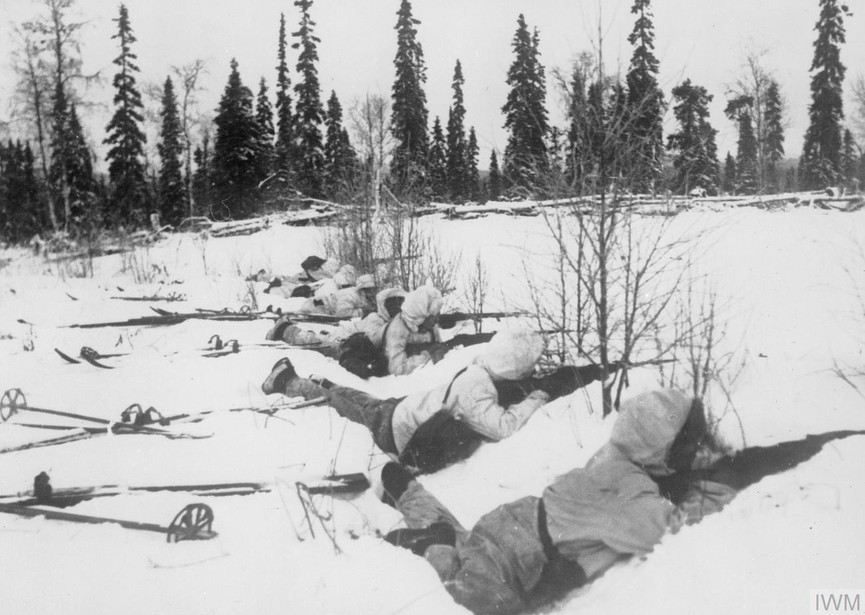
OK, I know. History does not repeat itself. But, as a wag once said, it rhymes.
“The ‘Winter War’ of 1939-1940, also known as the Russo-Finnish War, saw the tiny Finnish Army take on the might of the Soviet Union’s gigantic Red Army. There was mistrust between the two countries. Finland believed the Soviet Union wanted to expand into its territory and the Soviet Union feared Finland would allow itself to be used as a base from which enemies could attack.
“Finland declared itself neutral at the start of the Second World War, but the Soviet Union demanded concessions. Finland delayed, using the time to mobilise its army and seek help from Sweden and the Western Allies, including Britain and France, but with little success.
“A faked border incident gave the Soviet Union the excuse to invade on 30 November 1939. The Red Army was ill-equipped, poorly led, and unable to deal with the Finnish terrain and winter weather. Though small and under-resourced, the Finnish Army was resilient, well-led and was able to use knowledge of the terrain to good effect.
“Despite the overwhelming odds, Finland resisted for three months with little outside assistance. However, it was only a matter of time before the balance of power tipped in the Soviet Union’s favor.
“The Red Army came back strongly. Their command structure was reorganised, modern equipment was brought in and there was a badly needed change of tactics and personnel.
“The Finns held Soviet Foreign Minister Vyacheslav Molotov responsible for the outbreak of the Russo-Finnish War and named an improvised incendiary grenade after him. The ‘Molotov Cocktail’ proved to be a primitive but effective anti-tank weapon against Soviet forces.
“By early February 1940, the Finnish Army was exhausted and their defensive lines eventually overrun. Outside help never materialized. Finland was forced to sign the Treaty of Moscow on 12 March 1940, which ceded 11 per cent of its territory to the Soviet Union.”
The Finns suffered 70,000 total casualties. The Russians: 126,875–167,976 dead or missing. Nazi Germany saw how weak the Russian Army was, leading Hitler to decide he could invade Russia and defeat it. Finland never did get back the territory it lost.
= = = = = =
A lot of this script is repeating itself in Ukraine. Including the Molotov cocktails.
John Williams at 90!
By Shlomo Maital
Composer John Williams (score for Jaws!, Jurassic Park, etc. etc.) was 90 years old on Feb. 8. And he is finding new directions. Writing in the New York Times, Javier Hernandez (Feb. 12-13, 2022) recounts that Williams, who wrote the music for a huge number of movies, is now movie-less and working on composing a violin concerto.
Do you remember his score for Spielberg’s movie Jaws? Here is what Spielberg observes: “When everyone came out and said ‘Jaws’ scared them out of the water, it was Johnny who scared them out of the water. His music was scarier than seeing the shark!”
And indeed, it was.
Music is a crucial, and often not fully appreciated part, of movies and TV shows. Try this. At a dramatic or scary moment in the movie – press “mute’. How does this impact your emotions? Replay Jaws. At a scary moment, mute it. Makes a difference, right?
Here is a very small part of the list of movies John Williams has scored: Jaws, the Star Wars series, Superman, E.T. the Extra-Terrestrial, the Indiana Jones series, Jurassic Park, Schindler’s List, and the first three Harry Potter films. That triumphal scene where ET on the little boy’s bike handlebars takes flight? The music absolutely makes it!
Williams is super-creative. He does not repeat himself. For Schindler’s List, he made powerful use of Mahler. He is a hard worker, composing all morning at his Steinway, revising in the afternoon.
In his lovely piece, Hernandez quotes Williams as saying “Music has been my oxygen and has kept me alive and interested and occupied and gratified!”
And he ends with a Williams story.
Williams once made a pilgrimage to the St. Thomas Church in Leipzig, Germany, where Back once worked. He heard the church pastor explain how he worked hard to protect Bach’s remains during WWII. As Williams left the church, he paused. “An organist was filling the grand space with the hymn-like theme from “Jurassic Park”.
Williams, beaming, turned to the pastor. “Now,” he said, “I can die”.
Not yet, John Williams. We love your music and want more and more of it.
Putin Drinks His Own Kool-Aid
By Shlomo Maital

Kool-Aid is an American brand of flavored drink mix. It is mostly sugar. The powder form was created by Edwin Perkins in 1927 based upon a liquid concentrate called Fruit Smack. You mix it with water and get a sticky sweet drink. Kids used to love it – until we became more aware of the health impact of excessive sugar.
There is an expression: X drinks his/her own Kool-Aid. It means: A decision-maker listens to no views contrary to his or her own.
This fits Putin to a “T”. It explains his evil Ukraine folly.
During the pandemic, Putin sheltered in his bunker. Even lately, when he met French leader Macron, bizarrely he sat at one end of a 13 foot (4 meter) table while Macron sat at the other end. He sat alone, and paranoia blossomed. His grievances festered and spread in his brain, like bacteria. His views on Ukraine became twisted; in his Kool-Aid glass, there was no picture of a free democratic nation willing to fight and die on their own soul for their freedom from a hated despot. It would be a piece of cake. And there was no military leader or intelligence officer to say otherwise – even though they knew better.
This is what happens when you drink your own Kool-Aid. Putin is not the first. Nor the last. His Kool-Aid will for Russia turns to be far more like the glass of hemlock Socrates drank. But so many people are dying as a result.
It is heart breaking.
Regrets? How to Manage Them
By Shlomo Maital

In Frank Sinatra’s memorable 1969 song My Way, Sinatra sings, “regrets..I’ve had a few…but then again, too few to mention”.
Ol’ Blue Eyes, as he was known, was a great singer and actor, but he was not one to mope over regrets. In contrast, many of us are. I have quite a few, mostly related to becoming an economist, instead of a more meaningful profession.
This is why I listened avidly to the TED podcast interviewing Daniel Pink.
“Over the past two years, author Daniel H. Pink has collected a trove of more than 16,000 regrets from people in 105 countries in an effort to better understand this mysterious emotion.” *
Pink has some strong practical advice for how to manage regrets.
It all boils down to the same four core regrets, he says, categorizing the 16,000 regrets he collected from people all over the world.
Foundation regrets: I did not save enough. I did not plan retirement well enough. I did not take care of my health. I did not work out and stay fit. These are regrets related to how we acted in the present, to have a better future.
Moral regrets: I stole. I cheated on exams. I lied. I did things that were wrong, unethical. Pink recounts how some people told him they bitterly regrated stealing a candy bar from a corner store 60 years earlier. It gnaws at their consciences.
Boldness regrets: I should have gone for it. I should have taken the risk. I should have started a business, even if would have failed. People regret NOT taking chances, but rarely regret chances they DID take even when it did not work out.
Connection regrets: I should have asked her out but was afraid. I should have called my aunt. I should have called my colleague and apologized for hard words. Pink has strong advice in this realm. If you are debating, should I make contact or not? Should I connect or try to? You have already answered the question. You should. Very few people regret making a contact, saying I’m sorry, asking how are you? Many do regret not doing so. If you are debating – do it.
And Pink has a method that I use and embrace; in fact, I’ve used it long before hearing Pink. I call it, the ‘back from the future’ method.
When considering whether or not to do something – potentially creating a lifelong regret — imagine that you do it, and then, picture yourself in 10 years, looking back. Back from the future.
How will you feel about your decision? Will you have a painful regret? This is what Pink calls self-distancing. Get yourself up on the balcony, above yourself, your ego. Look at it from outside yourself, and from the vantage of years in the future.
Will you think about it and have regrets? I should have acted differently? If so, act differently. Act now, so that you do not have regrets in the future.
Believe me, regrets are painful. Look at all the regrets Pink collected, effortlessly. Very few of us are Sinatra. Best to forestall them rather than create them.
*https://www.ted.com/talks/daniel_h_pink_what_regret_can_teach_you_about_living_a_good_life
The Orchid That Fools Bees
By Shlomo Maital

My grandson Aharon Feinsilver is an amateur zoologist, with a particular fondness for wildflowers. In the garden of his parents’ home in Southern Israel, he has grown Ophrys apifera, known as the bee orchid.
“This is a self-pollinating orchid that has managed to devise a unique trick. It lures male bees through mimicry (its flower looks like a female bee) and scent (its scent resembles odors the female bee emits). [Male bees] have been observed attempting to copulate with the flowers, which emit allomones that mimic the scent of the female bee. …. In addition to chemosensory mimicry, the labellum of the flower acts as a visual decoy that the male bee confuses for a female. It is believed that male bees preferentially select orchids with the most bee-like labellum and attempt copulation, at which point the pollinia stick to the bee during the pseudocopulation. This achieves pollen transfer and, potentially, pollination.”
Evolution can generate some pretty amazing tricks. This one is especially amazing, because it is a double whammy – both scent and appearance, to lure unsuspecting male bees.
A tip of the hat to Ophris apifera! May the Force be with you. May you live long and prosper.
Cold War in Hot Technology
By Shlomo Maital
All eyes are now on Ukraine, and on Putin. Will he or won’t he invade? The consequences will be immense either way. The Cold War has returned, with a vengeance, and threatens a Hot War.
But as always, there are matters of enormous significance buried behind the daily reports from the Ukrainian border.
A new Cold War is developing in the world’s hot technologies. And I don’t think it will end well.
As often occurs the best source for this is The Economist weekly. Writing in the latest issue, Ludwig Siegele, European business editor and a veteran journalist, identifies a disturbing new Cold War between Russia, China and the United States, in new, powerful hot technologies.
“America’s package of potential sanctions aimed at deterring Russian aggression includes not just financial measures such as cutting off Russian banks from the Western financial system, but also denying it access to American technology,” notes The Economist. Cutting off US technology could be more painful than financial sanctions.
The Economist notes: “Since the invasion of Crimea in 2014 triggered an earlier round of Western sanctions, Russia has sought to construct a fortress economy. In the financial realm this has involved de-dollarization: shifting contracts, reserves and borrowing to other currencies. The share of cross-border invoices paid to Russia in dollars has dropped from 80% at the start of 2014 to 54%.”
“Less well explored is how Russia, with one eye on China, has sought to indigenize its tech industry. Moscow is implementing a systematic plan to build what scholars of geopolitics call a “stack”: a sovereign digital space made of layers stacked atop each other like a tiered cake. These layers include hardware, the cloud, apps, identity and payments. In some areas it has made leaps. Six of the ten biggest cloud firms in Russia are now Russian, for example. The Mir payments system has a market share of 25%. Russia is building a national version of the global domain-name system. From telecoms networks to apps, more of the industry is owned by Russian firms than was once the case.
“Whether the steps taken so far will insulate Russia from Western sanctions is doubtful. Last week my colleagues visited the boss of a big Russian tech firm in Moscow who said that the authorities “are trying to create an impression that [the industry] is self-reliant. This is not true.” His servers and systems still rely on Silicon Valley. Yet in the long run it seems likely that Russia will redouble efforts to reduce its dependence, by buying more components and software from China and by making more at home. That will lead to a less efficient but less vulnerable digital economy.”
“We calculate that US exports of IT services to Russia rose by 183% in the five years before the invasion of Crimea in 2014, and by 0.5% in the five years after it.”
And what about China?
“Huawei has been the subject of an exquisite torture in the form of American sanctions and controls, limiting its access to cutting-edge chips and other services such as phone software. The cost has been severe: Huawei’s sales in 2021 dropped by 29%. Both the Trump and Biden administrations have blacklisted ever-more Chinese tech firms. A desire to escape America’s grip has in turn accelerated China’s drive to indigenize its tech industry. SMIC, the home-grown semiconductor champion, reported sales growth of 61% year on year in the most recent quarter, and this year its capex will be more than double the level in 2019.”
And the US? Intel is building new chip plants in Arizona and New Mexico. It just acquired an Israeli chip maker, Tower. Taiwan, the world’s leading chip maker, is strategically aligned with the US, while facing Chinese threats.
We are moving inexorably from a world system built on the principle of comparative advantage – buy from those what they do best, sell to them what you do best – to autarchy and mercantilism — buy and build only within your borders.
This is very bad for the world. Here is why. Europe fought two bloody wars within 30 years. They made peace through trade. Let’s grow wealthy together, European countries said, and formed the European Union. Economic and business competition, to replace military conflict. It has worked well.
Closing nations off from commerce with rival nations is driven by fear and hostility. Nations that do not trade freely and openly, may one day fight bitterly and bloodily. By erecting high borders to technology, nations will limit communication and understanding.
China. Russia. United States. A new Cold War in hot technologies. The consequences may make an invasion of Ukraine pale in comparison.
Rupert Murdoch – Global Damage
By Shlomo Maital

You have to hand it to Rupert Murdoch, News Corp. tycoon, now turning 91, one of the world’s richest billionaires. I can’t think of another person who has unseated more worthy leaders and helped elect unworthy conservative ones, in more countries, over such a long time.
Here is what the New York Times summarizes about Murdoch: *
* “In Australia, where Murdoch’s power is most undiluted, his outlets led an effort to repeal the country’s carbon tax — a first for any nation — and pushed out a series of prime ministers whose agenda didn’t comport with his own.” Note: Murdoch’s media outlets dominate down under.
* “In Britain, his London-based tabloid, The Sun, led the historic Brexit crusade to drive the country out of the European Union — and, in the chaos that ensued, helped deliver Theresa May to 10 Downing Street.”
* “His 24-hour (US) news-and-opinion network, the Fox News Channel, fused with President Trump and his base of hard-core supporters, giving Murdoch an unparalleled degree of influence over the world’s most powerful democracy.” Murdoch has since expressed some distaste for Trump – but Fox continues to pander to ‘the big steal’ and to Trump supporters.
“Few private citizens have ever been more central to the state of world affairs”, conclude reporters Jonathan Mahler and Jim Ruttenberg, in their intensive long research piece on Murdoch.
Check out his New York Post for some really mind-bending fake news.
Murdoch is not alone in gobbling up newspapers and bending them to his views politically. Struggling local papers are being acquired, downsized radically, flipped, or closed outright. Here are data from the University of North Carolina School of Journalism:
* Since 2004, the United States has lost one-fourth – 2,100 – of its newspapers. This includes 70 dailies and more than 2,000 weeklies or non-dailies.
* At end of 2019, the United States had 6,700 newspapers, down from almost 9,000 in 2004.
* Today, more than 200 of the nation’s 3,143 counties and equivalents have no newspaper and no alternative source of credible and comprehensive information on critical issues. Half of the counties have only one newspaper, and two-thirds do not have a daily newspaper.
As local and regional newspapers disappear, local coverage of corruption, incompetent politicians, influence-peddling and general bad government also disappear. People increasingly get their news from biased, dubious sources. The result is threatening to democracy, which depends on voter access to accuracy and truth.
* “How Rupert Murdoch’s Media Empire Remade the World”, BY JONATHAN MAHLER AND JIM RUTENBERG New York Times, APRIL 3, 2019

 TIMnovate