
You are currently browsing the category archive for the ‘Uncategorized’ category.
Dr. Angelique Coetzee: Unsung Hero
By Shlomo Maital
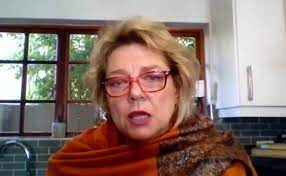
Dr. Angelique Coetzee, South Africa
A single alert, experienced family physician treating patients in South Africa may have (helped) save the world: According to Bloomberg –
“People infected by omicron in South Africa are showing very different symptoms to those suffering from the delta strain, said the doctor who alerted government scientists to the possibility of a new variant. Patients who contracted it complain of fatigue, head and body aches and occasional sore throats and coughs, said Angelique Coetzee, who is also chairwoman of the South African Medical Association. Delta infections, by comparison, caused elevated pulse rates, resulted in low oxygen levels and a loss of smell and taste, she said. After weeks of almost no Covid patients at her practice in Pretoria, the capital and epicenter of South Africa’s current surge, Coetzee said she suddenly started seeing patients complain of the symptoms on Nov. 18. She immediately informed the government’s Ministerial Advisory Council on Covid-19, and laboratories the next week identified a new variant, she said.
“I said these different symptoms can’t be delta, they are very similar to beta or it must be a new strain,” she said in an interview on Monday. “I don’t think it will blow over but I think it will be a mild disease hopefully. For now we are confident we can handle it.”
Let us note her conclusion: “I think it will be a mild disease hopefully”.
Let’s hope she is right. Meanwhile – kudos to Dr. Coetzee! Superior practice of medicine still involves alert experienced doctors who use their deep intuition and sharp eyes.
Words Can Change the World
By Shlomo Maital
For many years, I have studied startups and taught future and present entrepreneurs. My tools are…. words, words, words, in articles and books. Often, I doubt whether producing words, rather than world-changing innovations, is worthy and meaningful.
This is why I found reassurance and encouragement in a BBC story about a handful of words that did change the world, for the good — a short story by the 1913 Nobel Laureate for Literature from India, Rabindranath Tagore.
His story, “Kabuliwala” was written in 1892. It is about an Afghan, a Pathan, from Kabul, who visits Calcutta (today’s Kolkata), India, each year to sell dry fruits in the marketplace. While living in India, he develops a strong affection and friendship with a five-year-old girl, Mini, from a middle-class aristocratic family, who reminds him of his own beloved little daughter, at home in Afghanistan. The story is about love and about the universality of humanity. We are all parents, children, human beings, members of the human race.
How did this short story affect India? In general, Tagore had a powerful influence. He fought for India’s independence from Britain, achieved only in 1947. But his Kabuliwala story is taught in Indian schools and is thought to have made Indians more receptive to the plight of immigrants and more empathic toward them.
There are 21,000 Afghan immigrants in India today and they are demonstrating, demanding they be given basic rights. And alas, there appear to be very few Rabindranath Tagore’s around these days. Perhaps, like the Pfizer COVID-19 vaccine, words’ impact wears off – and requires a boost.
Pfizer has a booster – but, are there Tagore’s around these days to boost our humanity? I’m not sure. It seems the anti-vaxxers, anti-poor, anti-immigrants are gaining the upper hand. If large groups aren’t willing to wear a mask to protect others – how can we expect humane treatment for those Tagore wrote about 129 years ago?

What’s New? 22 Promising Technologies
By Shlomo Maital

Here is The Economist’s take on 22 promising new technologies, that will impact our lives — by the Science and technology correspondents of The Economist: (warning: 1,120 word blog!)
* Solar geoengineering: If the world is getting too hot, why not offer it some shade? Mount Pinatubo’s eruption in 1991 cooled the Earth by as much as 0.5°C for four years. Solar geoengineering, also known as solar radiation management, would do the same thing deliberately.
* Heat pumps” Keeping buildings warm in winter accounts for about a quarter of global energy consumption. Most heating relies on burning coal, gas or oil. If the world is to meet its climate-change targets, that will have to change. The most promising alternative is to use heat pumps—essentially, refrigerators that run in reverse.
* Hydrogen-powered planes: Might electricity from hydrogen fuel cells, which excrete only water, do the trick? Passenger planes due to be test-flown with hydrogen fuel cells in 2022 include a two-seater being built at Delft University of Technology in the Netherlands.
* Direct air capture: Carbon dioxide in the atmosphere causes global warming. So why not suck it out using machines? Several startups are pursuing direct air capture (dac), a technology that does just that. In 2022
* Vertical farming: A new type of agriculture is growing. Vertical farms grow plants on trays stacked in a closed, controlled environment. Efficient led lighting has made the process cheaper. Water use is minimized and bugs are kept out, so no pesticides are needed.
* Container ships with sails: Ships produce 3% of greenhouse-gas emissions. Burning maritime bunker fuel, a dirty diesel sludge, also contributes to acid rain. None of this was a problem in the age of sail—which is why sails are making a comeback, in high-tech form, to cut costs and emissions. In 2022 Michelin of France will equip a freighter with an inflatable sail that is expected to reduce fuel consumption by 20%.
* VR workouts: Most people do not do enough exercise. Many would like to, but lack motivation. Virtual reality (vr) headsets let people play games and burn calories in the process, as they punch or slice oncoming shapes, or squat and shimmy to dodge obstacles.
* Vaccines for HIV and malaria: The impressive success of coronavirus vaccines based on messenger rna (mrna) heralds a golden era of vaccine development. Moderna is developing an hiv vaccine based on the same mrna technology used in its highly effective coronavirus vaccine. BioNTech, joint-developer of the Pfizer-BioNTech coronavirus vaccine, is working on an mrna vaccine for malaria, with clinical trials expected to start in 2022.
* 3D-printed bone implants: For years, researchers have been developing techniques to create artificial organs using 3d printing of biological materials. The ultimate goal is to take a few cells from a patient and create fully functional organs for transplantation, thus doing away with long waiting-lists, testing for matches and the risk of rejection. That goal is still some way off for fleshy organs. But bones are less tricky. Two startups, Particle3d and adam, hope to have 3d-printed bones available for human implantation in 2022.
* Flying electric taxis: Long seen as something of a fantasy, flying taxis, or electric vertical take-off and landing (evtol) aircraft, as the fledgling industry calls them, are getting serious. Several firms around the world will step up test flights in 2022 with the aim of getting their aircraft certified for commercial use in the following year or two.
* Space tourism: After a stand-out year for space tourism in 2021, as a succession of billionaire-backed efforts shot civilians into the skies, hopes are high for 2022. Sir Richard Branson’s Virgin Galactic just beat Jeff Bezos’s Blue Origin to the edge of space in July, with both billionaires riding in their own spacecraft on suborbital trips. SpaceX has done a deal to send tourists to the International Space Station. Next up? The Moon.
* Delivery drones: New rules, which came into effect in 2021, will help drone deliveries gain altitude in 2022. Manna, an Irish startup which has been delivering books, meals and medicine in County Galway, plans to expand its service in Ireland and into Britain. The question is: will the pace of drone deliveries pick up—or drop off?
* Quieter supersonic aircraft: For half a century, scientists have wondered whether changes to the shape of a supersonic aircraft could reduce the intensity of its sonic boom. Only recently have computers become powerful enough to run the simulations needed to turn those noise-reduction theories into practice. In 2022 nasa’s x-59 Quesst (short for “Quiet Supersonic Technology”) will make its first test flight. Crucially, that test will take place over land—specifically, Edwards Air Force Base in California.
* 3D-printed houses: Architects often use 3d printing to create scale models of buildings. But the technology can be scaled up and used to build the real thing. Materials are squirted out of a nozzle as a foam that then hardens. Layer by layer, a house is printed—either on site, or as several pieces in a factory that are transported and assembled.
* Sleep tech: It’s become a craze in Silicon Valley. Not content with maximising their productivity and performance during their waking hours, geeks are now optimizing their sleep, too, using an array of technologies. These include rings and headbands that record and track sleep quality, soothing sound machines, devices to heat and cool mattresses, and smart alarm clocks to wake you at the perfect moment.
* Personalised nutrition: Diets don’t work. Evidence is growing that each person’s metabolism is unique, and food choices should be, too. Enter personalised nutrition: apps that tell you what to eat and when, using machine-learning algorithms, tests of your blood and gut microbiome, data on lifestyle factors such as exercise, and real-time tracking of blood-sugar levels using coin-sized devices attached to the skin.
* Wearable health trackers: Remote medical consultations have become commonplace. That could transform the prospects for wearable health trackers such as the Fitbit or Apple Watch.
* The metaverse: Coined in 1992 by Neal Stephenson in his novel “Snow Crash”, the word “metaverse” referred to a persistent virtual world, accessible via special goggles, where people could meet, flirt, play games, buy and sell things, and much more besides. In 2022 it refers to the fusion of video games, social networking and entertainment to create new, immersive experiences, like swimming inside your favourite song at an online concert. Games such as Minecraft, Roblox and Fortnite are all stepping-stones to an emerging new medium. Facebook has renamed itself Meta to capitalise on the opportunity—and distract from its other woes.
* Quantum computing: An idea that existed only on blackboards in the 1990s has grown into a multi-billion dollar contest between governments, tech giants and startups: harnessing the counter-intuitive properties of quantum physics to build a new kind of computer.
* Virtual influencers: Unlike a human influencer, a virtual influencer will never be late to a photoshoot, get drunk at a party or get old. That is because virtual influencers are computer-generated characters who plug products on Instagram, Facebook and TikTok.
* Brain interfaces: In April 2021 the irrepressible entrepreneur Elon Musk excitedly tweeted that a macaque monkey was “literally playing a video game telepathically using a brain chip”. His company, Neuralink, had implanted two tiny sets of electrodes into the monkey’s brain. Signals from these electrodes, transmitted wirelessly and then decoded by a nearby computer, enabled the monkey to move the on-screen paddle in a game of Pong using thought alone.
* Artificial meat and fish: Winston Churchill once mused about “the absurdity of growing a whole chicken to eat the breast or wing”. Nearly a century later, around 70 companies are “cultivating” meats in bioreactors.
How to Engage
By Shlomo Maital
Source of image: dreamstime.com
After many months of social isolation, perhaps there is a need to re-hone our social skills – specifically, how to engage with others.
My wife and I are blessed with a whole bunch of wonderful grandchildren (and one great grandchild), ages 1 through 27. We love being with them, and seek ways to engage them – not easy, when generations and decades separate us.
Here are a few ideas, for engaging (making strong contact) with friends and family and strangers.
1. Ask questions. What have you been up to lately? The goal is to find where two circles intersect – your own circle, and the person with whom you are engaging. To do this, you need to gather ‘intelligence’ (information). And the way to do that is to ask questions.
2. Be a good listener. It’s not enough to ask questions. You have to really listen closely to the answers….
3. Find the other person’s true passion. Some of our grandchildren are passionate about our country’s recent history. Some love chess. Others, sports, cycling, hi-tech… Make it your goal to find their passion. Then, in future, you have a head start. You know what really ignites the person with whom you are engaging and can engage them with conversation on it.
4. Suspend judgment. Sure, my generation (born 1942) disapproves of a whole lot of things the young generation does. At least temporarily, put those in the drawer. You can engage; or you can reprimand; but it’s hard to do both.
5. Try to remain relevant, daily. That means – be aware of what is going on in the world, and in the neighborhood, and in the lives of those you love. When you can, provide support – moral, or when possible financial. Be smart about it — sturdy independence should not be ruined by such help, but sometimes strategic financial help can change lives.
Learning from Ants
By Shlomo Maital

There is much for us humans to learn from Nature – and especially, from ants. Here is what the Bible says (Proverbs 6):
“Go to the ant, you sluggard; consider its ways and be wise! It has no commander, no overseer or ruler, yet it stores its provisions in summer and gathers its food at harvest. How long will you lie there, you sluggard? When will you get up from your sleep?”
There are 1,000,000,000,000,000 of these insects. One quadrillion! And they have been around for 150 million years — massively longer than us humans. There are 22,000 species! As the Bible observes, they have no ‘commander’ or Prime Minister, giving orders – just a Queen Ant who has thousands of babies – yet they collaborate perfectly to divide up tasks (gather food, fight enemies, feed the Queen and the larvae). They have adapted perfectly to their environment; for instance, leaf-cutter ants cut leaves, transport them, chew them up into paste, and store the food. They are ‘ranchers’ – they colonize and care for aphids, and harvest their liquid. They have tiny brains, with only 250,000 neurons (human brains have 86 billion), yet in relative terms, ant brains are huge, some 7% of their body weight, far more than humans. “Ant colonies are superorganisms because the ants appear to operate as a unified entity, collectively working together to support the colony.” Would that we humans did the same.
The top expert on ants is the late naturalist E.O. Wilson; I’ve read some of his fascinating books. Recently, a biography of Wilson was published: Richard Rhodes, Scientist: Doubleday (November 9, 2021).
Wilson had a troubled childhood; his parents divorced when he was 7, and he moved from place to place with his alcoholic father. Wilson found comfort in Nature, and especially in ants. Ants were his passion from an early age. “Animals and plants I could count on,” Wilson said… more so than humans. Wilson pioneered a new scientific discipline, sociobiology: the systematic study of the biological basis of social behavior. For instance: How evolution drives social behavior among ants.
Wilson had a nemesis: James Watson, co-discoverer (with Crick) of DNA. Watson insisted the key to behavior lay at the molecular (genetic) level. Wilson argued it lay in understanding how social processes are driven by biology, specifically evolution.
Of course, both are right. Ants surpass humans in so many ways. Here is just one: Asian weaver ants can lift up to one hundred times their own weight!
Schwarzenegger – eat your heart out.
I learned something else from Wilson and ants. Find your passion from an early age; help your kids and grandkids to do so. Having a lifelong passion will help you through hard times. And an early start will lead to great achievements. It almost doesn’t matter what that passion is – look what ants did for E.O. Wilson.
15-Minute City: Try It, You’ll Love It!
By Shlomo Maital
We live in Zichron Yaakov, an Israeli town of 27,000, between Haifa and Tel Aviv. My wife and I have lived here since 2016, after moving from Haifa, a city 10 times larger. And we have come to love Zichron deeply.
One reason? It’s a 5-minute town. We are literally 5 minutes from a supermarket, vet, doctor, HMO, barber, synagogue, pharmacy – everything! Even on foot, nothing is more than 15 minutes away. We spend zero time stuck in traffic, inhaling fumes.
In today’s cities (and 56% of the world’s population now lives in cities), vast physical and mental energy is expanded in simply getting from A to B, in cars. The devil himself has not invented a worse torture, than starting the day by spending an hour or two in a traffic snarl.
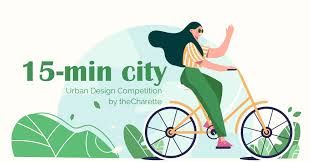
The concept of a 15-minute city is growing and spreading. What is it? Simply, designing large neighborhoods so that everything is easily accessible and close by. Paris Mayor Anne Hidalgo builds her re-election campaign on this idea.
Here in Israel, the new government budget boosts spending on transportation infrastructure by 20%. But it is doomed to failure. Why? There is a race between rising imports of cars…more and more vehicles hitting the roads – and new highways. Everywhere, including here, the cars win. It is a modern Field of Bad Dreams — build more highways, more lanes, and more cars will come to fill them and snarl them.
Today, we are seeing “The Great Resignation” – millions of people all over the world who, post-pandemic, refuse to return to their old jobs. They have seen the future, and it does not lie with commuting daily for hours. Work from home can be a part of the 15 minute city – one of six key localized functions, living, working, commerce, healthcare, education, entertainment.
Kudos to French-Colombian innovator Carlos Moreno, who proposed the 15-minute city in 2016; Nikos Salingaros, on whose work Moreno built; and Hidalgo, a far-sighted Paris mayor.
It is said that “all politics are local”. Perhaps all life should be local. Let us restore our neighborhoods. And if you are up to a move – find a great one to move to. We did. It changed our lives.
California School for the Deaf: Losers? Not Any More
By Shlomo Maital

Do you like underdog stories? I do.
Here’s a good one, by Thomas Fuller, in today’s New York Times – about a high school football team of deaf kids, mocked, 7 losing seasons, until this year – when they are scoring as many as 84 points – with second-stringers playing the second half of the game!
It is the California School for the Deaf, Riverside. Here is what Fuller has to say about them:
“RIVERSIDE, Calif — The athletic program at the California School for the Deaf, Riverside, has suffered its share of humiliations and harassment over the years. There was the time that a visiting team’s volleyball coach mocked the deaf players. And another time a hearing coach for the girls basketball team listened as opponents discussed how embarrassing it would be to lose to a deaf team. It did not help morale that the varsity football team, the Cubs, recently suffered seven straight losing seasons, leaving the school with the sinking feeling that opposing football teams came to the Riverside campus expecting an easy win. No one is disparaging the Cubs anymore. This season, they are undefeated — the highest ranked team in their Southern California division. Through 11 games, they have not so much beaten their opponents as flattened them. On Friday night, the second round of the playoffs, the Cubs trounced the Desert Christian Knights, 84-12, a score that would have been even more lopsided had the Cubs not shown mercy by putting their second-string players in for the entire second half.”
Two more wins – and they win their league championship!
And what is their secret? Communication! There are no huddles. All communication is done in sign language. Opponents, of course, don’t decode it. It is very rapid. And very thorough – not only does the quarterback call a play, but other players quickly communicate too, in a way that the opposing team cannot read or intercept. And of course, talent – many of the deaf players have played together for years; some suffered humiliation in trying to play with hearing players, at the hands of Neanderthal coaches – and now, united with non-hearing teammates, they thrive.
Trevin Adams, the Cubs’ quarterback with long brown hair, said playing with fellow deaf teammates is liberating and has fueled the team’s winning chemistry.
Fuller concludes: “We can express ourselves completely,” said Trevin, a junior who is Coach Adams’s son. “We can be leaders. We can be assertive.’ When he was younger, Trevin played in a league with hearing people. “That just felt like a team,” he said. “This feels more like a brotherhood.”
Glasgow COP-out: Ignoring Science for 165 Years
By Shlomo Maital


Cop-out has come to mean an evasion — an escape from facing up to something. It first appeared some 500 years ago in the Scots phrase “play cop out” where cop was equivalent to cup, meaning “playing empty the cup” or, frankly, boozing.
COP also stands for Conference of the Parties – the UN Climate Conference. The latest one, the 26th !!!, just ended in Glasgow, Scotland. Given the origin of ‘cop out’ that site is appropriate. The final declaration was an outright COPout. And one word was key. “Phase down” coal… instead of “phase out”.
How long have scientists know for sure that the carbon dioxide emissions caused by burning fossil fuels cause global warming and climate crisis?
The world has been aware for an exceptionally long time that carbon dioxide acts like a blanket, warming the world – in fact, since 1856, 164 years ago. In that year, a remarkable woman scientist named Eunice Foote published the results of a clever experiment. She filled glass jars with water vapor, carbon dioxide, and air, respectively, and compared how much they heated up in the sun. “The highest effect of the sun’s rays I have found to be in carbonic acid gas (CO2),” she reported, in The American Journal of Science (Foote, 1856).
In the 19th century, scientists realized that gases in the atmosphere cause a “greenhouse effect” which affects the planet’s temperature. These scientists were interested chiefly in the possibility that a lower level of carbon dioxide gas might explain the ice ages of the distant past. At the turn of the century, Svante Arrhenius calculated that emissions from human industry might someday bring a global warming.
The graph above shows two curves: mean global temperature change (left hand scale) and atmospheric carbon dioxide ppm (right hand scale). They coincide.
Humanity has ignored science for 165 years. The anti-vax insanity is only a tiny footnote in this saga of self-destruction. And it is not going to end well.
mRNA: Much More Than a Vaccine
By Shlomo Maital
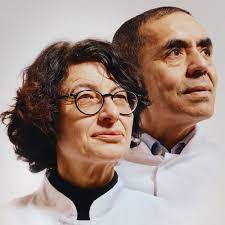
Özlem Türeci is a 54-year-old German physician, scientist and entrepreneur, born to Turkish parents who emigrated. She is married to Uğur Şahin, 57, a German oncologist and immunologist, who emigrated to Germany with his parents when he was four years old. He is the CEO of BioNTech, which helped develop one of the major vaccines against COVID-19 – the Pfizer-BioNTech vaccine. Türeci and Şahin founded BioNTech together.
Writing in The Economist (“The World Ahead”), the couple explain the enormous benefits mRNA technology will provide in coming years. Here are excerpts:
“The rapid development of multiple covid-19 vaccines is an unprecedented achievement in drug development that has offered a way out of the pandemic. But there is more good news to come. The role of vaccines based on messenger RNA (mRNA) technology in this success heralds a new era in the development of therapies for other diseases.
The mRNA breakthrough was made possible by scientific co-operation over three decades that helped transform a promising concept into a highly potent and versatile biopharmaceutical platform. We believe that in 15 years, one-third of all newly approved drugs will be based on mRNA.
Rather than relying on complex and time-consuming fermentation processes to produce drugs, mRNA therapies instead turn the recipient’s own cells into drug factories. Each mRNA molecule is a recipe that instructs the cells to manufacture a specific desired protein. Our covid-19 vaccine prompts cells to manufacture the “spike” protein found in the coronavirus’s outer coating, thus priming the immune system so that it can subsequently recognise and fend off the virus.
This technology is a turning-point in the pharmaceutical industry, comparable to the inauguration of recombinant dna technology (allowing the production of human-protein drugs such as insulin), or monoclonal antibodies in laboratory fermenters, more than 40 years ago. The roll-out of this concept into readily available drugs promises to disrupt and transform the industry—and global health.
We believe that in 15 years, one-third of all newly approved drugs will be based on mRNA
The development of covid-19 vaccines based on mRNA has proved the efficacy and safety of this approach in preventing infectious diseases. The fact that a safe and effective vaccine could be developed in less than 12 months, in the midst of a pandemic, and then manufactured at scale, suggests that mRNA vaccines will play an important role in future pandemic-preparedness programmes, which are high on governments’ agendas.
It also paves the way for mRNA vaccines to be deployed against other infectious diseases. Many existing vaccines for such diseases might be reformulated using mRNA, making them more efficient. We believe that the versatility of mRNA technology offers opportunities to go further, and to combat currently undefeated diseases.
At BioNTech, we are now going beyond covid-19 and investing in mRNA-vaccine programmes to deal with diseases such as malaria, tuberculosis and HIV, which are still responsible for many deaths in lower-income countries. The prospect of being able to bring mRNA technology to bear is creating a spirit of optimism in the fight against these human scourges.
The first mRNA-vaccine candidates for these diseases are expected to enter clinical trials in 2022 and 2023.”
2020: A Year of Resilience!
By Shlomo Maital

Each year, Gallup conducts a Global Emotions survey across well over 100 countries. The survey assesses, by country, negative and positive emotions. The results for 2020 are revealing.* (See Graph).
Negative emotions (did you experience yesterday pain, worry, sadness, stress, anger?) globally are up. But not solely due to COVID! In fact negative emotions have been on the rise since 2007. Why? According to Gallup: Corruption, hunger, income and wealth inequality, lack of freedom have driven negative emotions upward for 13 years. Gallup concludes: “While 2020 set a record for negative emotions, the trend actually started almost 10 years ago.” Build back better is not an empty slogan; while building back from the pandemic, there is a long list of bad flaws that have long needed fixing.
Positive emotions (were you respected, well-rested; did you smile, laugh, learned or did something interesting or enjoyable, yesterday?) have been stable for the past three years and are above 2007 levels, despite everything.
Here is what Gallup concludes: “2020 may eventually go down in history as one of the worst years ever, but the results on Gallup’s Positive Experience Index suggest many people remained resilient through the planet’s dark days…. Providing evidence of people’s resiliency, the results on most of these items changed very little from the previous year. People were just as likely to say that, during a lot of the preceding day, they experienced enjoyment, felt treated with respect and learned something interesting, with the percentage who said they felt well-rested even increasing one point.”
Of course, there are failed states whose results show annually desperation: Iraq, Lebanon, Iran, Tunisia.
But overall, we learn from Gallup how incredibly resilient human beings are. Nor would you know it, watching cable news and reading the newspaper or online news sources, which compete to report ever-more-shocking bad news.
Resilience is the psychological quality that allows some people to be knocked down by the adversities of life and come back at least as strong as before. Have we underestimated it, in human society?
There is even something called post-trauma growth (not to be confused with the ubiquitous PTSD, post-trauma stress disorder), in which people, after experiencing trauma, find deeper spiritual and intellectual meaning in their lives (witness the ‘great resignation’, people leaving dead-end jobs and rethinking their lives).
Never underestimate the power of the human spirit. Given a chance, it is boundless.

 TIMnovate