
You are currently browsing the category archive for the ‘Uncategorized’ category.
Moderna vs. Pfizer: The True Face of Capitalism
By Shlomo Maital

Want to understand the true face of capitalism? Let’s compare the latest quarterly financial reports of Pfizer and Moderna, the leading COVID-19 vaccine providers.
First Moderna. “Moderna Inc. on Thursday posted third-quarter revenue and earnings that soared above year-earlier levels thanks to the success of its Covid-19 vaccine, though both figures were below what analysts had expected. The Cambridge, Mass.-based pharmaceutical company logged earnings of $7.70 a share, a swing from a loss of 59 cents a share in last year’s third quarter. The company’s net income was $3.33 billion, compared with a loss of $233 million, it said. Revenue rose to $4.97 billion from $157 million a year earlier, the company said. The results missed analysts’ expectations. Analysts polled by FactSet had forecast sales of $6.2 billion and earnings of $9.22 a share.
Moderna said it sold 208 million doses of its Covid-19 vaccine in the quarter.
The company’s employee numbers have doubled as the success of the vaccine has boosted its growth. It now has a staff of 2,400, compared with 1,200 a year earlier, the company said.” The COVID-19 vaccine is Moderna’s only commercial product.
It’s a WOW, right? Nope. “The results missed analysts’ expectations”. Result? The stock fell sharply, by 20%, on Nov. 4. Moderna shares are now 40% below their August 9 peak.
Moderna saves the world with its mRNA vaccine – and achieves brilliant financials — and its stock falls! What is behind this? Moderna’s statement that it intended to focus on supplying vaccine to low-income countries – presumably at affordable prices. Wall Street says: You can do good, and we’ll punish you. You must do well, as well as we predict – or else. No more Mother Teresa!
Now Pfizer. “Third-Quarter 2021 Revenues of $24.1 Billion, Reflecting 130% Operational Growth; Revenues Grew 7% Operationally to $11.1 Billion. Third-Quarter 2021 Reported Diluted earnings per share of $1.42. Raises Full-Year 2021 for Revenues to a Range of $81.0 to $82.0 Billion and Adjusted Diluted EPS to a Range of $4.13 to $4.18, Reflecting 94% and 84% Year-Over-Year Growth at the Midpoints, Respectively. 60% of Revenues reportedly came from Pfizer’s COVID-19 vaccine.
Pfizer is not acting as Mother Teresa toward poor countries, in selling its vaccine. And its share price has risen by a third from $33.69 on March 1 to $44.89 on Nov. 3.
Let’s offer a vote of thanks to both Pfizer and Moderna, for saving lives. And let’s also offer thumbs down to Wall St. and the capital markets, who judge companies solely by whether they meet their profit expectations.
We need a vaccine, urgently, for shark capitalism.
And Moderna? Keep up the great work.
Why Are Our Kids Pessimistic About Their Futures?
By Shlomo Maital
A great deal has been lost in the COVID-19 pandemic — millions of lives, health, jobs, income, employment – and, let’s pay attention, our kids’ futures. At least, in their opinions.
September 2018, pre-pandemic: a global survey by the Gates Foundation finds – more than 9 in 10 teenagers in Kenya, Mexico, China, Nigeria and India reported feeling positive about their future. France and Sweden were the most pessimistic of countries surveyed (for young people).
Fast forward: the Guardian, a leading British newspaper, reports that “(British) young people have a gloomy and newly pessimistic outlook on the future. This is not consistent with pre-COVID-19 times, which usually finds young people optimistic about their own future”.
What happened? Agency! Young people widely believe in their own abilities to navigate whatever life throws at them; they even see uncertainty as opportunity. But COVID-19 dealt a sudden blow, says the report, to young people’s belief in their own agency. Stay-at-home tells youth: You are not in control.
And now — a Pew Research survey in the US shows 68% of US respondents say they think today’s children will be financially worse off as adults than their parents.! Two-thirds! The survey also covered 17 advanced economies. And Canada, Japan, France, Italy, Spain and Belgium were all equally or more pessimistic.
Build Back Better? Of course – bridges, jobs, the global supply chain, 5G networks. But I believe the first priority is to restore the faith, resilience, self-belief, self-worth, and self-efficacy of our children. We older people are partly to blame. Our own pessimism projects clearly to the kids, even if we do not clearly state it.
The pandemic and the climate crisis have combined lethally, like gasoline fumes and a spark. The world is in bad shape. But was it in great shape in 1930 when a decade-long depression began? Or in 1939, when a terrible World War broke out? In 2008, when the world financial system collapsed?
Part of our kids’ pessimism is related to dysfunctional politics. According to surveys, they do not believe they can change the system or influence it.
In Japan, where national elections are being held, a large majority of older people vote, while only a third of the young people do so. Rural areas in Japan, mostly elderly, have twice the electoral power than cities. And they vote for the same dinosaur party. The kids in cities have given up. Why bother voting?
Agency is defined as “action to achieve a particular result or effect”. If you believe you have agency, you can change things and make them better. If you believe you lack agency, then you are powerless – and hence pessimistic.
How can we restore our young people’s agency? Their resilience? Because if we cannot, we will suffer far more from it than from two degrees of global warming.
Inside Snarled Supply Chains: Why You Can’t Get Stuff
By Shlomo Maital
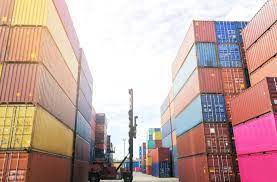
Chances are, you’ve experienced problems and delays in buying stuff. And you may have heard talk of “supply chain disruptions”. Clogged ports, shortages of truck drivers, lack of chips for car makers, ‘just in time’, and more.
What exactly is going on? Can I cut through the tangle? Here is my effort, based on Jordan Weissmann’s reporting on SLATE.[1] 986 words.
Can you save me time, and say in 61 words what the problem is?
Sure. We are buying enormous amounts of stuff online, instead of in stores. Every package has to be shipped. The remarkable global system of huge container ships was not built to handle this much stuff. Stores used to buy huge containers of stuff. Today, each shirt, smartphone, game console comes in its own box. It has to be delivered. Ergo: Snafu.
And underlying this: Countries and Central Banks shoveled money into the system, during the COVID recession. Unlike during other recessions, people had money – and spent it, much of it online, in ways that overloaded the global supply chain, and basically, like a 55-ton Abrams tank driving over a small wooden bridge, it broke.
From Weissmann: “We’ve spent decades optimizing supply chains to carry a very specific amount of cargo during very specific times of the year across very specific modes of transportation,” says Nathan Strang, an expert on ocean trade logistics at the supply chain tech and consulting firm Flexport. “As soon as we exceeded the design capacity of those systems, it broke.”
What specifically broke?
Everything. Panic hoarding caused shortages. China’s zero-tolerance policy toward COVID-19 closed huge ports for weeks. Huge Vietnamese plants were shut down due to COVID. Shipping prices have coard (have you noticed) – cost per container from China to N. Europe rose from $2,000 in August 2020 to about $14,000 in October 2021. Result: Shippers are shipping empty containers back to China, rapidly, (doesn’t pay for them to wait for cargo heading TO China)…. leaving US agricultural exportes in the lurch. Car makers used ‘just-in-time’ meaning, they did not stock parts beyond immediate needs. They ran out – and now halt or delay production, because lacking just one key part (e.g. chips) halts everything. Apple is expected to cut iPhone production by 10 million because it simply can’t get enough chips.
Will Biden’s plan to keep Port of Los Angeles running 24/7 help?
Maybe a bit. But it won’t help the shortage of truck drivers to transport the containers from the Port (Britain’s shortage of drivers, following Brexit and the Johnson policy of welcoming driver shortages to create jobs for Brits, has caused serious gasoline shortages).
Weissmann summarizes: “When you look closely at all of the small fractures that have contributed to the world’s supply chain crackup, it really can begin to look maddeningly complex. As the Atlantic’s Derek Thompson put it, global commerce is currently being choked by “a veritable hydra of bottlenecks.” (Hydra was the many-headed serpent in Greek mythology).
What’s with the choked Port of LA?
The docks in L.A. process 40 percent of the shipping containers that arrive in the United States. Now, huge numbers of container ships line up outside the Port (50 or more!) because the flow of goods has overwhelmed its unloading capacity.
What role has the pandemic played?
Simple. Under lockdown, people shifted to buying goods rather than services – services need a venue and socializing. The system couldn’t adjust fast enough to this massive shift.
Weissmann: “… the problems in the U.S. largely flow from one key factor: We are simply buying an enormous amount of things. When the pandemic began, and Americans found themselves unable to go out, households suddenly shifted their spending to goods from services. …By August, inflation-adjusted spending on goods was up 14.5 percent compared with pre-pandemic, while services were still down more than 2 percent.”
Why are we so worried now, about the global supply chain?
Christmas.
Weissmann: “ … global supply chains are only designed to operate at peak capacity for a few months of year, usually in the lead-up to the [Christmas] holidays. Ports and warehouses can then work through any backlogs during slower seasons. “The problem is you’ve essentially had peak season since the onset of the pandemic,” Phil Levy, Flexport’s chief economist, told me. As a result, there hasn’t been a chance to play catchup after things get clogged, and so delays have simply stacked up.”
Why is this a case of ‘embarrassment of riches’?
Jason Furman, former Obama advisor: “The only reason we’re having supply chain problems is because people can afford to buy things and are buying things, which is much better than the alternative…. It’s more severe in the United States, but it is happening to various degrees everywhere. This is the first recession where in the U.S. and most other advanced economies, people’s incomes were protected. So there’s actually booming spending on durables and retail in all of the OECD countries.”
Weissmann: “The irony of our supply chain woes is that shoppers can’t find what they want while they’re buying more stuff than ever. In that sense, we’re victims of our own success.”
Will the supply chain snafu be resolved soon?
No chance. Maybe if we had a “global supply chain czar” to manage the whole global system, there might be progress. But there are so many disruptions, in so many places, that when each country and each Port takes action to fix local problems, you simply pass the problem on to the next disruption. Port of LA may work 24/7 and unload those 50 ships – but where are the trucks to transport the containers?
[1] https://slate.com/business/2021/10/supply-chain-shortages-retail-united-states-explained.html
Why You Should Be Kind….To YourSELF!
By Shlomo Maital
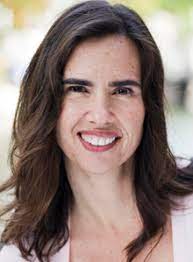
Prof. Kristin Neff
When you screw up – as I often do, as we all do, regularly – do you beat yourself up? Because if you do, U. of Texas psychologist Kristin Neff has some advice: Stop!
Most psychological theories assume that “individuals are primarily self-interested”, she notes, in a 2003 article.[1] A corollary of this: “people are often much harsher and unkind toward themselves than they ever would be to others they cared about, or even to strangers”.
Is that bad? Is it bad to set higher standards for our own self? It is. Be kinder to yourself. “…Having self-compassion entails forgiving one’s failings and foibles, respecting oneself as a fully human – and therefore limited and imperfect – being.“
Forgiving yourself diminishes egoism. Why? “When the self is harshly judged for its failings, in the belief self-flagellation will force change and improvement, the protective functions of the ego will often act to screen inadequacies from self-awareness. ….By giving compassion to oneself, one provides the emotional safety needed to see the self more clearly without fear of self-condemnation.” This enables us, Neff notes, to change how we think, feel and act more efficiently. If you beat yourself up badly for a screw-up, next time your clever brain may simply protect you from doing so, avoiding the distress.
In the excellent Hidden Brain podcast, produced by Harvard psychologist Shankar Vedantem,[2] Neff explains there are there components to self-compassion: self-kindness, avoiding harsh self-criticism; common humanity – perceiving one’s experiences as part of life’s great human canvas; and mindfulness – keeping painful thoughts and feelings in balanced awareness, rather than overstressing them.
Neff builds on and extends the work of psychotherapist Carl Rogers. Rogers wanted people to have “unconditional positive regard” toward themselves. Not unconditional positive judgments of oneself — but to be “more self-acceptant, more self-expressive, less defensive and more open – free to change and to grow and move in directions natural to the human organism.”
Imagine, if we all embraced Neff’s advice, and created what she calls “a kinder, less self-absorbed, less isolated and more emotionally functional populace”.
Imagine.
[1] Neff, K. (2003). Self-compassion: An alternative conceptualization of a healthy attitude toward oneself. Self and identity, 2(2), 85-101.
Economics Nobel: When Economists Encounter the Real World
By Shlomo Maital

David Card, Joshua Angrist and Guido Imbens
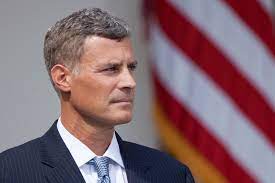
The late Alan Krueger
I LOVED! this year’s choices for the Economics Nobel. I learned years ago that powerful insights emerge, when we economists leave our offices and encounter the real world. And these three brilliant economists proved it. All have Harvard backgrounds.
1. David Card:
According to The Economist, “This year’s prizewinners [used] “natural experiments”, in which some quirk of history has an effect similar to an intentional [randomized] trial. In a landmark paper published in 1994, Mr Card and Alan Krueger studied the impact of a minimum-wage increase in New Jersey by comparing the change in employment there with that in neighbouring Pennsylvania, where the wage floor was unchanged. Although theory predicted that a minimum-wage rise would be followed by a sharp drop in employment, such an effect, strikingly, did not seem to hold in practice. The paper inspired further empirical work and injected new energy into thinking about labour markets. Krueger, who died in 2019, would probably have shared the prize had he lived.
2. Joshua Angrist:
The Economist: “Mr Angrist, together with Krueger, used a similar technique to examine the impact of education on labor-market outcomes. Because students of a more scholastic disposition are likely both to spend more time in school and to earn more in work, what looks like a return to education could in fact reflect natural aptitude. In order to determine causality, the researchers made use of odd characteristics of America’s educational system. Although laws typically allowed students to drop out of school when they turned 16, all students born in the same year began school on the same date, regardless of their birthday. Those born in January, therefore, received more schooling, on average, than those born in December—and, the researchers found, also tended to earn more. Since the month of a student’s birth may be assumed to be random, they concluded that the added education caused the higher earnings. The study of schooling found that an extra year of education raised subsequent earnings by 9%.”
3. Guido Imbens
The Economist: “Such a [large] effect seemed implausibly large to many economists. But that reflected a difference in definition, concluded Mr Angrist in work with Mr Imbens. … Together, the researchers developed statistical methods to make the conclusions from natural experiments more useful.”
At long last, Economics has discovered the real world. Behavioral economics is leading the way. And ‘natural experiments’ are joining. The result is a credibility revolution — economic research that is relevant and believable, anchored in reality.
The Economist: “The credibility revolution, like any big upheaval, has had its excesses. …Yet the innovations developed by this year’s prizewinners unquestionably changed the field for good, illuminating questions once shrouded in darkness and forcing economists to push theory in directions that better describe real-world experience—a cause, indeed, for celebration.”
Alas – I was born much too soon.
What Mr. Shark Can Learn from Mr. Congeniality
By Shlomo Maital

Freddie Freeman
What can Facebook head Mark Zuckerberg, Mr. Shark, learn from Atlanta Braves’ first baseman Freddie Freeman, Mr. Congeniality?
How to compete fiercely and be nice, at the same time. How to serve.
Zuckerberg, in his early days, started senior management meetings by pumping his fist and shouting, “company before country”. Facebook’s own data show how immense harm has been done to teenage girls, especially – by an algorithm built to foster our darker feelings (which makes Facebook ‘stickier’). Grow at all cost. Trample, and/or swallow, the competition. Facebook’s shares are now worth $930 billion – almost $1 trillion. Mr. Shark is happy.
Now, consider Freddie Freeman, 2020 Most Valuable Player in the National League. Six time over-300 hitter. Now helping Atlanta in its division series against Milwaukee, tied 1-1. In today’s New York Times, James Wagner recounts how Freeman plays ball. He competes – and collaborates. He gives tips to opposing teams’ hitters who reach first base. He compliments them on reaching base. He chats with them. He has fun. And – he competes. This season, he batted 0.360, [that means, he got a hit more than once out of every three at-bats!], hit 31 home runs, and batted in 83 runs.
He told Wagner, “It doesn’t matter if it’s the biggest game in the world. If you get a base hit and you come to first base, I’m going to tell you, ‘Nice job, nice hit’.”
I recall a study by political scientist Robert Axelrod. He used as his vehicle the fiercely competitive Prisoner’s Dilemma game, where two hard-nosed competitors can easily destroy each other. The best strategy, he found? Be nice. Be forgiving. Be clear.
Zuckerberg? Well, as Mr. Shark, he gets one out of three. He is clear. Facebook uber alles. Freeman: 3/3. He bats 1,000.
Over the decades, I have taught at many leading business schools. Mostly, they teach their students to be sharks – company before country. I had little luck bucking the trend. Zuckerberg never went to bizschool. But somehow he learned the shark stuff anyway.
Zuckerberg should have lunch with Freeman. And he should read about long-time Scott Paper CEO Thomas McCabe.
Whom do we serve? McCabe said. First, our customers, then our employees. Then our communities. Then, our countries. Last, our shareholders. Last???? In capitalism??
McCabe explained simply: If we serve the first four well, in the long term, we will also best serve our shareholders. And he was right. He built Scott Paper into a thriving profitable global company. McCabe served his country well. He fought as a soldier in World War I. And he served as Federal Reserve Chair, under President Truman.
But he is forgotten, as the sharks now seem to have captured global businesses. Very sad.
Nobel Prize Week: What We Learned
By Shlomo Maital
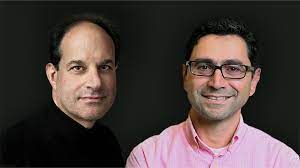
David Julius and Ardem Patapoutian: Nobel – Medicine

David List and David MacMillan: Nobel – Chemistry

Syukuro Manabe, Klaus Hasselmann and Giorgio Parisi: Nobel – Physics
The first week in October is Nobel week – when the prize is awarded, in physiology and medicine; chemistry; and physics. This year, the scientific breakthroughs that won the Prize are quite easy to explain, and are closely related to things we encounter every day. The Economist as always supplies crystal-clear write-ups.
David Julius and Ardem Patapoutian: Nobel – Medicine: These two won for discovering which proteins inside the body are responsible for responding to the heat and mechanical stimulation in a person’s environment. That is: How our sense of touch works. Touch and temperature are distributed around the body. Finding the key proteins took very long hard bench work, based on genetics and molecular biology. Its benefit to humanity? For one – helping relieve chronic pain, without addictive destructive drugs. Julius is from U. of California (San Francisco), Patapoutian is from Scripps, La Jolla.
David List and David MacMillan: Nobel – Chemistry: This prize focused on catalysts: materials that speed up chemical reactions and in our bodies known as enzymes. MacMillan of Princeton University and List from the Max Planck Institute for Coal Research in Germany (coal research??) independently found how to use organic molecules as catalysts. This is extremely helpful, for everything from making pharmaceutical drugs to solar panels.
Klaus Hasselmann, Syukuro Manabe, and Giorgio Parisi: Nobel – Physics: This year’s physics prize was the first for understanding the Earth’s climate. Syukuro Manabe of Princeton University (hey – second one this year for Princeton, my alma mater! and Klaus Hasselmann of the Max Planck Institute for Meteorology, in Hamburg, studied the way in which the Earth’s atmosphere behaves over time. Their simulation models led to breakthroughs in forecasting how global warming impacts the earth.
Giorgio Parisi, Sapienza University, in Rome, found the mathematical patterns in seemingly random systems. He studied “spin glass”, in which iron atoms are randomly distributed within a grid of copper atoms. Why anyone would care about such a weird material. Well – surprise! His ideas are useful in climate modelling and can also explain the patterns seen in the murmuration of thousands of starlings. Another incredible lesson in how seemingly esoteric science and research can yield powerful breakthroughs that benefit humanity.
My grumble – hey, no women this year. Just as with Watson and Crick: I bet there are women scientists back there in the guys’ labs, grinding out the work.
Tony Bennett & Lady Gaga: How Music Defeats Alzheimer’s
By Shlomo Maital

You need to be an old guy like me to know who Tony Bennett is. Anthony Dominick Benedetto, born August 3, 1926, known as Tony Bennett, is an American singer of traditional pop standards, big band, show tunes, and jazz. He fought as a US infantryman in Europe at the end of World War II, and had his first hit, “Because of You”, in 1951! Yes, he just turned 95. And alas, he has been diagnosed with Alzheimer’s (dementia) since 2015.
But he’s still crooning. And holds a Guinness record. Oldest singer to have a #1 album. With Lady Gaga’s help. Lady Gaga and Tony Bennett have recorded two stunning jazz albums: Cheek to Cheek (2014) and Love for Sale (2021).
On a National Public Radio program, Nate Chinen, WGBO, recounts how “Lady Gaga was seeking a certain validation as a singer — and having the Bennett benediction, so to speak, really put her in a different light. There’s nowhere to hide, musically, when you’re singing in this style. And as for Tony Bennett: he was 88 when Cheek to Cheek topped the charts in 2014, which made him the oldest artist ever to score a No. 1 album. According to Guinness, that’s a record he still holds.” There is a 60-year age difference between them.
Bennett and Lady Gaga gave a Bennett “farewell concert” at Radio City two months ago. Bennett’s wife and caregiver, Susan, recounts: “It was the last situation in which Tony could still be Tony and have a true understanding of who he is. And this is what I do, and this is what I’m supposed to be doing. And I can connect with my audience. And just in that moment, he understood exactly what was going on. Now, prior to singing, and then when he gets offstage, he would not necessarily know where he was or why he was there. And he couldn’t even tell you if he sang or not. But in that moment, you can just tell: all the mannerisms and the music, everything just comes right back. There’s something so wonderful and mysterious about that.”
It is well-known that those who suffer from Alzheimer’s, and dementia in general, often are greatly helped and comforted by music, especially music that is familiar. After singing classic songs for 70 years, since 1951, Bennett has very well-worn grooves in his brain for all those songs he recorded: 61 studio albums, 11 live albums, 33 compilation albums, three video albums, one extended play and 83 singles. And all that terrible Alzheimer’s plaque doesn’t stand a chance against those well-worn musical grooves.
Well done, Lady Gaga. She has the last word: “When I think about Tony and his last album, I have nothing but reverence, love and respect for him. I think I may always cry about this. I don’t think it will ever go away. And I don’t know that I want it to. I think that pain lives where pain belongs. And Tony has always inspired me to use it. So I’m going to keep using this magic in my life. And just share with you that even when hard things happen, you can witness a miracle. And watching Tony sing onstage was a real miracle for us all. When he was well, and when he had Alzheimer’s.”
Tabitha Brown: How Everyone is (Potentially) A Media Star
By Shlomo Maital

The immense harm done by Facebook, Twitter, Telegram, Instagram, Tik-Tok, and other social media is a proven fact.
A Sept. 14 story in Wall Street Journal by Georgia Wells, Jeff Horwitz and Deepa Seetharaman documents how Facebook’s Instagram knowingly was toxic for teenage girls – and Facebook persisted anyway. There is a shocking plan to create an Instagram aimed at younger children. Capitalism at its finest.
But nonetheless, in some cases social media provide both opportunities for those otherwise denied them, and offer valuable information that changes lives for the good. Take, for instance, Tabitha Brown. She told her story on National Public Radio’s 1A program, hosted by WAMU’s Jenn White.
Brown tried and failed for years to land a job as a TV actress, She spent five years working for Macy’s in Los Angeles. Brown began bouncing between North Carolina and Los Angeles to care for her mother, who had Amyotrophic lateral sclerosis (ALS), a rare debilitating neurological disease affects nerve cells controlling movement. She cared for her mother for three years.
Following her mother’s death in 2007, Brown landed small roles in several indie films. She developed chronic pain and fatigue, undiagnosed, and could not work for a year. After her daughter suggested it, Brown became vegan – and her symptoms disappeared.
Brown was running out of money. She became an Uber driver in October 2017. She did a video review in December 2017 of a Whole Foods Market vegan BLT bacon-lettuce-tomato sandwich. It went viral.
Whole Foods then hired her as a brand ambassador to travel the country.
In early March 2020, she created a TikTok account on which she began sharing vegan recipes, cooking tips, family moments, and encouraging advice, after her daughter suggested it. (At first, she was highly dubious about the idea).
She quickly gained 2 million followers in the space of five weeks. Brown’s content is upbeat, uplifting, loving, warm, human and empathic. She is a media star. She has won a coveted NAACP award, in 2021, as an outstanding media star, and has written and acted in numerous films.
Never before in history has it been possible for virtually any individual to create content and distribute it virally to millions, almost instantly. Yes, the same technology that brings comfort to millions can bring them viral virulent toxic lies and hate.
Perhaps that is the nature of technology. People are both very good and very evil. So is the technology they invent and employ.
Problems? Challenges? YOU Have the Answer – Lessons from Tennis Pros
By Shlomo Maital
Patrick Mouratoglou is perhaps the world’s best-known high-achieving tennis coach, for a wide range of professionals, men and women. He has a knack for identifying young talent and grooming them for greatness. He founded the Mouratoglou Tennis Academy in 1996 near Paris (now moved to the outskirts of Nice), and has coached many up-and-coming players, including Marcos Baghdatis, Julia Vakulenko, Anastasia Pavlyuchenkova, Aravane Rezaï, Irena Pavlovic, Jérémy Chardy, Laura Robson, Yanina Wickmayer and Grigor Dimitrov – and many others. And of course, Serena Williams…
What is his secret? Here is what Alexei Popyrin, Budding Australian tennis star, explained to Matthew Futterman, in today’s New York Times (Sept. 9):
“Mouratoglou usually functions like a tennis Buddha, a sounding board who listens more than he speaks. I vent to him. He lets you speak your mind and when you speak your mind to him, a lot of the time you get the answers yourself.”
Let’s take note of those last words. A lot of the time you get the answers yourself.
In teaching creativity to students – more accurately, in helping them re-discover their own nascent creativity — I stress two proven principles. First, assume from the outset, with 100% belief, that there IS a solution to the problem. Second, you yourself will find it, it is out there waiting to be found, persist and look in dark corners and it will pop out. But please, make sure you deeply thoroughly understand the problem BEFORE you try to solve it.
We often think by verbalizing our thoughts. Can you verbalize your problem or challenge? Say it, define it. Listen to it. It helps to talk about it to someone, who is a good listener. And as you listen to yourself defining the problem, solutions will emerge. Maybe not at once. But eventually. Why? Because one of the most powerful parts of our brains is our subconscious – the part of the brain that works, and works hard, even when we are not aware of it.
When you speak your mind, a lot of the time you get the answers yourself. A life lesson from tennis players.

 TIMnovate