
You are currently browsing the category archive for the ‘Uncategorized’ category.
Global Perceived Unfairness Will Change the World
By Shlomo Maital
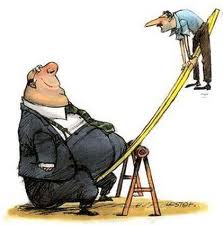 A BBC-sponsored poll by GlobeScan on ‘perceived economic unfairness’ has just been released. It covered all the major countries, and asked people whether the burden of adjustment to the global crisis has been unfairly placed on the poor. It also asked whether capitalism has ‘fatal flaws’. Here is a summary of the results.
* 61 % said the burden had been distributed ‘not at all fairly’ or ‘not very fairly’. Some 34% of Americans said the burden had been distributed ‘not at all fairly’, and a worrisome 66% of Spaniards. This bodes ill for Spain’s efforts to invoke austerity.
* 24% said capitalism has ‘fatal flaws’ – but only 17% in America, despite the fact that American capitalism was the origin of the global financial crisis.
* The U.S. has seen a sharp increase in the percentage saying “burdens have been shared unfairly”, from 2008 (52%) to 2012 (64%).
* Germany is the biggest fan in the world of capitalism – amazing. Some 74-75% of Germans say capitalism works well and efforts to regulate it will do damage – even though Germany itself has a government that is deeply involved in the economy, and is a key partner in, for example, social-contract wage negotiations nation-wide.
* France, in contrast, is one of the world’s biggest FOES of capitalism, with 41-43% saying capitalism has fatal flaws. What then is the chance France and Germany will continue to collaborate, within the EU, when their peoples hold such different views??!
Widespread global protests over social inequality will continue and will change the world. It may take time — but it will happen. The poll results show this is true. Perception is reality. Unfairness is widely perceived. It’s just a matter of time until this perception ‘bites’.
Creativity is a Choice, NOT a Gene:
Sternberg’s “Investment” Theory of Creativity
by Shlomo Maital
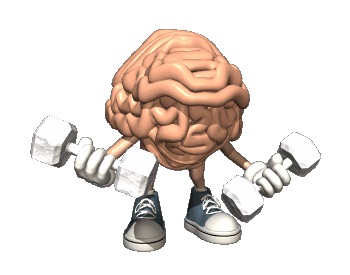
My next book will be about Building Your Creativity Muscles. The book came about as a result of my interactions with young people in many countries. Many of them were frustrated by boring jobs and by the total rejection their organizations provided, for any of their creative ideas. As a result, many had simply given up. Why bother? And they felt they had lost the creative spark forever.
So – my mission was to revive that spark, and to show them that creativity is a kind of muscle, that gets stronger, faster, and more flexible, as we use it. My book will contain stories of people who have changed the world with their creativity, along with exercises to emulate them. Creativity is YOUR choice, it is NOT some gene you inherited. But sometimes, you need to work out really hard, to get your creative brain in shape – much as you do when you train for a marathon, especially if you’re flabby and out of shape.
I found much support for this idea in the work of American psychologist Robert J. Sternberg, past president of the American Psychological Association, and someone who struggled in high school. His article “Creativity is a decision” (his Presidential address) appeared in the APA journal in Nov. 2003. In it, Sternberg says:
“….my colleague Todd Lubart and I proposed an investment theory of creativity, according to which creative people are like good investors: They buy low and sell high in the world of ideas. In other words, they propose ideas that others initially reject (buy low). Then they metaphorically raise the value of their investment. When they finally have convinced others of the value of their ideas, they move on to their next, usually unpopular idea (sell high). Creative people, then, are ones who are willing to defy the crowd. And indeed, in all domains of intellectual and other pursuits, creative people find that, rather than being rewarded for their creative ideas, they usually are punished.”
Perhaps this is the toughest creativity “workout” of all. Are you prepared to put forward ‘weird’ non-conforming break-the-rules ideas? Are you prepared to struggle to implement them, despite huge opposition? It will be like climbing a high mountain, with thin oxygen, your brain telling you to quit at every step, your muscles screaming they can’t go any farther… and still you go on. And reach the summit. A great many people who changed the world went through this ‘exercise’ – more than once. Sternberg himself is one. And he’s edited a book, Psychologists Defying the Crowd, about other psychologists who did the same.
Become who you are, Nietzsche wrote. Inside every one of us, is a creative world-changing person. Become that person. Practice becoming him or her. Above all, don’t ever stop with just the idea. That’s worthless. Follow through, at least some of the time. Having new ideas is easy and fun. So much so, many people just live off the sweet nectar of ideation. It’s a waste. If you have a good idea, if it’s born in your head, it deserves to grow up to become something many people use and love.
Work out your creativity muscles daily. You’ll be amazed how fit you become, in no time.
Three Cultures: Why Innovation Fails
By Shlomo Maital
“Why don’t organizational innovations occur, or if they do, fail to survive and proliferate”? This is the issue addressed by the great MIT scholar Edgar H. Schein, in a 1996 article, “Three Cultures of Management” (Sloan Management Review Fall 1996). He cites the standard answers, like ‘resistance to change’. But his explanation is far more persuasive and powerful.
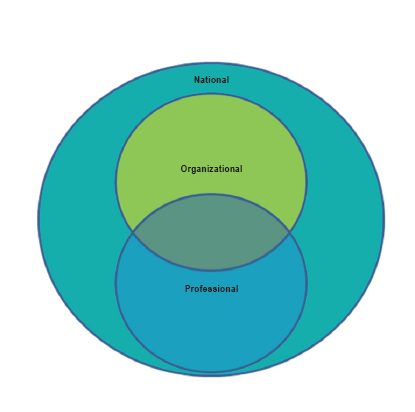
“In every organization, there are three particular cultures among its subcultures, two of which have their roots outside the organization and are therefore more fundamentally entrenched”, Schein writes. There is the internal culture of the organization. But, in technology-driven cultures, there is also the ‘engineering’ culture. And in addition, there is the ‘managerial’ culture. Very often, those cultures clash. Schein might have added that, in the age of globalization, there is also ‘national culture’. For instance, Israel has a sometime informal, get-it-done cut-the-corners culture that often clashes with organizations’ disciplined, orderly, by-the-book culture (such as Intel).
Culture, recall, is simply shared values. Engineers, for example, share the key value of quality and perfection. Make it work, make it right. This is in part why it is so hard to convey the concept of “minimum viable product” (part of ‘get to market fast’ strategies) that are part of many organization’s value of ‘speed’. The engineers in R&D simply will not part with the product, until by their culture it is perfected. That, often, is too late.
Recently, Goldman Sachs’ culture of profit maximization clashed with one of its senior managers’ values (create value for the customer, not for the bank). He quit, in a very public manner, blasting Goldman Sachs in a NYT Op-Ed.
And of course, underlying everything, there are sweeping changes in culture. Management culture is changing, as profit maximization becomes discredited. Organizational culture is changing, as more companies are forced to relate with greater respect to their customers.
Innovator: As an exercise, I recommend this: Draw three circles. One for organizational culture, one for management culture, one for engineering culture. List the core values you find in each (for your own specific context). Look very closely at the intersection of the three circles. Think about potential clashes. Will these clashes hamper the innovation you plan or are involved with? What can you do about it? It is very hard to change cultures. Sometimes it’s easier to change the project.
Ed Schein’s article is rather old, nearly 16 years old, but is still valid. Sometimes, the old truths are still the best ones.
Innovation/Global Risk
Whom Do We Serve? The Asymmetry That Is Screwing American Workers
By Shlomo Maital
Clyde Prestowitz
A recent column by NYT columnist Tom Friedman (Jan. 28), and a powerful blog by former Reagan trade negotiator Clyde Prestowitz (Foreign Affairs, Jan. 31), focus on a bitter asymmetry in global markets that is screwing American workers.
American companies, and European ones too, operate as if there were no geographic borders in the world, and deploy their businesses wherever it is profitable to do so. As Victor Fung, chair of Li & Fung, Hong Kong’s oldest textile makers, put it: “source everywhere, manufacture everywhere, sell everywhere”. As a result, Apple generates about 40,000 jobs in America, and directly and indirectly, 700,000 jobs outside it.
But what about Chinese companies? Do they, too, act as if they serve only their shareholders, and disregard the national interests of the Chinese people? Do Japanese firms? Russian firms? Prestowitz notes, “…China, Japan, Germany, Korea, Brazil, Taiwan and Russia all engage in a significant degree of protectionism, and are also the ones presently enjoying the most success”. Raw protection is the breakfast of champions, Prestowitz quotes an expert. Yet America continues to trumpet “free markets”, even though global markets are far from free. Globalization is not always win-win, Prestowitz notes, echoing a famous finding of MIT Economist the late Paul Samuelson. The assumptions underlying the “free trade is always win-win” theorem simply don’t hold, not a single one of them.
America is capitalist. Much of the rest of the world is mercantilist (seeking export surpluses through overt and covert policies that punish imports and subsidize exports). As a result, America’s workers and its middle class lose. America’s capitalist, who pocket the profits, gain.
Whom do we serve? America’s CEO’s answer: Money. Only when they begin to answer, “the people of America” will America’s job picture brighten.
Innovation/Global Risk
Managers: You Are Missing Opportunities Daily! Unfreeze!
By Shlomo Maital

A common reaction to crisis, among ordinary people, is simply to freeze. Facing danger, risk or threat, many of us simply become incapable of doing anything.
Apparently, this is equally true of highly-paid executives. A new study by the global consulting firm McKinsey, published in the September 2011 issue of McKinsey Quarterly, * reveals that “executives are foregoing opportunities that, despite today’s volatility and uncertainty, are probably worthwhile”.
According to McKinsey’s global survey of CEO’s, two-thirds of the respondents believe that their companies are underinvesting in product development. This, despite the well-known finding that recession and its aftermath are the times when competitive rankings within industries change the most, with the ‘bottom feeders’ tending to rise, and the ‘top teams’ tending to fall. The firms that improve their market share and competitive position are those that seize opportunities inherent in global crises.
Last year, together with my colleague D.V.R. Seshadri, I published the book Global Risk/Global Opportunity, showing how talented managers and entrepreneurs can transform global risk into massive opportunities. Apparently, according to McKinsey, nobody read the book or is even interested. Like us ordinary people, those who lead global businesses seem to be reacting to global crisis, volatility and uncertainty simply by ‘freezing’ – by avoiding any risky investments or product development programs. In general, facing danger, ‘freezing’ is the worst thing we can do. And it is also the worst thing our business leaders can do. Nonetheless, that’s what they are doing. And so, incidentally, are our political leaders, especially in Europe.
I wonder how this damaging paralysis can be cured.
- “A bias against investment”, Sept. 2011
Innovation/Global Risk
Fight Groupthink – Demand Space & Time – or Chats
By Shlomo Maital
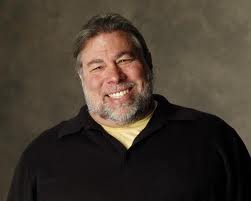
Steve Wozniak
Writing in the Global New York Times, Jan. 13, Susan Cain observes that “Research strongly suggests that people are more creative when they enjoy privacy and freedom from interruption.” Wow, amazing. But she does have a serious point:
“…the most spectacularly creative people in many fields are often introverted, according to studies by the psychologists Mihaly Csikszentmihalyi and Gregory Feist. They’re extroverted enough to exchange and advance ideas, but see themselves as independent and individualistic. They’re not joiners by nature.”
For innovators, this can be a huge problem, especially within large organizations. Much R&D is done in teams, with hierarchical organizations. Truly creative people, introverted ones, often don’t function well in such environments.
But as with all issues related to creativity, there are no hard and fast rules. Cain herself, in a recent book, gives Jobs partner Steve Wozniak some well-deserved credit:
“Before Mr. Wozniak started Apple, he designed calculators at Hewlett-Packard, a job he loved partly because HP made it easy to chat with his colleagues. Every day at 10 a.m. and 2 p.m., management wheeled in doughnuts and coffee, and people could socialize and swap ideas. What distinguished these interactions was how low-key they were. For Mr. Wozniak, collaboration meant the ability to share a doughnut and a brainwave with his laid-back, poorly dressed colleagues — who minded not a whit when he disappeared into his cubicle to get the real work done.”
Steve Jobs was a loner. Steve Wozniak was a collaborator and socializer. Both were exceedingly creative.
The message here is: Innovator, who are you really? Need solitude? Create it. Need socializing? Find it. Find your own unique creative style, and create your environment to optimize it.
Innovation/Global Risk
America’s Capitalism Lacks the Capitalists
By Shlomo Maital
Writing in today’s Global New York Times, Chrystia Freeland (one of my favorite columnists) makes a simple point. The destructive American brand of capitalism, that so many of us dislike, was never really capitalism. It lacks capitalists.
Why?
“The U.S.,” she argues, “created a system of capitalism without capitalists, of private sector companies whose owners have abdicated responsibility for the companies that belong to them.”
The evidence? First, exorbitant salaries CEO’s pay to themselves, including bonuses, especially bankers. Where are the shareholders? Why do they approve bonuses even in bad years? Why are US managerial salaries so blown out of proportion, compared to Europe and to Japan? Where are the shareholders, represented by Board of Director members?
Second, perspective. Why do CEO’s constantly get away with inflating share prices by narrow short-term policies, then grab their bonus and run (WBGWIC, we’ll be gone when it crashes). I worked this year with a company owned wholly by an Israeli kibbutz, a socialist collective community. I asked the CEO whether he has problems when the ‘board of directors’ is the whole kibbutz membership. Not at all, he affirmed. He is instructed to think long-term, to plan and invest long term. This is capitalism, run by socialism. America? Inflating the quarterly P&L is not capitalism at all, it surely is not what the shareholders want, when they seek to maximize shareholder value over time?
Freeland quotes an expert, who says, “thinking about where the company should be in 10 or 12 years, these are not the discussions held in many widely held companies”.
No, American capitalism isn’t really capitalism. The diffusion of ownership in publicly-listed joint stock companies has basically ceded control to senior management. They hold their jobs for 2-4 years, and have little interest in what happens beyond that. Shareholders who give up without a fight, who approve ballooning salaries, deserve what they get – myopic companies that destroy shareholder value rather than build it.
Freeland recommends that we look at Sweden. Once a socialist haven, Sweden reinvented itself, with dynamic free markets coupled with strong social equality driven by high taxation of the wealthy. Swedish companies are vigorously run by their shareholders. It’s time America learned from the rest of the world. America is indeed special – it is supremely great, best in class, in drinking its own Kool-Aid. American capitalism? Not even close.
Boards of Directors! Rise up! Do your job! Represent the shareholders who appointed you. Fight for their interests. Never ever approve exorbitant salaries for CEO’s who do not deserve them. Make them think long-term. Put their feet to the fire. Ask them what their 10-year vision is. Never let them slash R&D investment just to glorify the quarterly P&L. Be capitalists! There is no worse system than capitalism, when those who run it do not act like capitalists.
Global Crisis/Innovation Blog
Finding Golden Eggs Among Basic Science Geese
By Shlomo Maital
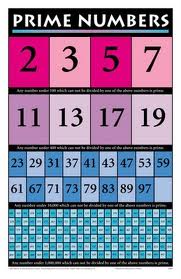
In a fascinating address given yesterday by Prof. Haim Harari, long-time (1988-2001) President of Israel’s Weizman Institute, the sometimes-weird link between great basic research and ‘golden eggs’ (commercial wealth, jobs, and income) was explained. Harari gave as an example RSA (the Rivest-Shamir-Adleman) algorithm, used widely for encryption, the foundation of security on the Internet. (Adi Shamir did the basic research while at MIT but then joined the Weizman Institute).
Here is how it works (from Wikipedia):
The algorithm involves multiplying two large prime numbers (a prime number is a number divisible only by that number and one) and through additional operations deriving a set of two numbers that constitutes the public key and another set that is the private key. Once the keys have been developed, the original prime numbers are no longer important and can be discarded. Both the public and the private keys are needed for encryption /decryption but only the owner of a private key ever needs to know it. Using the RSA system, the private key never needs to be sent across the Internet. The private key is used to decrypt text that has been encrypted with the public key. Thus, if I send you a message, I can find out your public key (but not your private key). It is an almost unbreakable encryption code.
The point Harari makes is that if you asked someone three decades ago, what is the most utterly useless, impractical field of basic research in the world, hands down ‘number theory’ would have won. Number theory is the study of numbers – integers and primarily, prime numbers. Who would have thought that number theory would become the foundation of Internet encryption and security, in term the foundation of the use of Internet for e-commerce and anything involving payment and sensitive information?
Harari’s message is clear. Allow curiosity to drive basic research. Strive for excellence. Do not try to calculate which basic research is potentially useful, and which part is not. You simply cannot predict. Who knew that the abstract research in physics on “microwave amplification by stimulated emission of radiation” (maser) and “light amplification by stimulated emission of radiation” would become the ubiquitous laser, the heart of the huge consumer electronics industry?
The “valley of death” (the huge gap between a basic science breakthrough and its successful commercialization) is very real. It needs to be overcome. But the point is, there is no valley at all to cross, if there is no strong basic research. Japan, for instance, discovered long ago that it cannot continue to borrow the basic research of other nations forever; every nation has to do its own.
Innovation/Global Crisis Blog
Gaddafi’s Real Crime Was Wasting Time
By Shlomo Maital
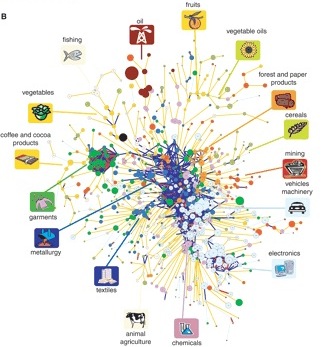
There is a link between the events we are watching on TV, as Libyan ‘rebels’ pursue Muammar Gaddafi, and a complex article published in the leading journal Science (C. A. Hidalgo, et al., The Product Space Conditions the Development of Nations. Science 317, 482 (2007).
Gaddafi was a brutal murderous dictator. He hung his foes in public squares and broadcast the event on live TV. He ruled for 42 years. He claimed to liberate Libya from the yoke of imperialism. What he really did was enslave Libya in a one-product oil economy that potentially could have fueled enormous rapid development and progress. Gaddafi wasted 42 years, or two generations. None of those years can be regained. Those two generations who lived under Gaddafi can rightly claim that his major crime was wasting their time.
Hidalgo et al.’s article produces a complex diagram that is actually beautifully simple.
Here is what this Figure means and what these scholars do to compute it. The graph portrays world trade. There are 775 circles, large and small, with one circle for each ‘industry’ in the SIC (Standard Industrial Classification). The circles’ size show the magnitude of trade, and the configuration of each circle (its position in x,y space) shows the extent to which the product is likely to be produced together with other related products. Circles close together are related; circles far apart are not. Circles on the periphery are more or less independent; circles in the core cluster are tightly interdependent.
What the figure shows is, of course, what we know already; countries that sell oil, and other raw materials, or specialize in raw-material-based products, only do that. Countries that produce sophisticated capital-intensive products (the inner dense core of circles) have complex ecosystems that combine a number of high-level industries, in complex trading networks with other nations.
Countries on the periphery of the global system are also on the periphery of the trade ecosystem. Their products are not interconnected with other products. Oil is a good example. Libya, before the revolt, produced 1.6 m. barrels of petroleum daily. That is 584 m. bbls. a year, worth about $58 b. (at $100/bbl.). Libyan oil is far lighter than Saudi oil, and hence was supplied to refineries in Europe best able to refine it. Since Libya has only 4 million people, if $58 b. were divided equally among all Libyans, they would each gain $15,000 a year. But of course it was sequestered by Gaddafi and his family and supporters.
As Hidalgo et al. note, “It is quite difficult for production to shift to products far away in the space, and therefore policies to promote large jumps are more challenging. Yet it is precisely these long jumps that generate subsequent structural transformation, convergence, and growth.”
Translation: It is hard for nations like Libya to practice “the adjacent possible” (see my earlier blog on this subject) and shift away from oil to higher value added products and services (petrochemicals, plastic, aluminum based on cheap energy, etc.). The oil wealth enables cruel dictators like Gaddafi and Iran’s Ahmedinajad and others to survive (without it, hungry people would have dumped them long ago), by giving the people just enough income to avoid deep penury. Iran cannot even refine its own gasoline, and has to import it. Yet this ‘adjacent possible’ (moving away from commodities to more and more sophisticated industries) is crucial. Qatar has made huge efforts to do this, and is worth benchmarking.
Gaddafi murdered, tortured and abused his people. He also wasted 42 years of their time. There is no international crime called “criminal incompetent waste of a country’s time”. There should be. It is not the colonial powers Libya should blame but the criminal incompetence of its long-time dictator.
Innovation/Global Crisis Blog
Innovator: Get Real, Go Virtual!
By Shlomo Maital
 James Cameron’s “Avatar”
Like educators everywhere, Israeli educators are grappling with a core paradox. Children, aged 6 through 18, live in two worlds. The morning world is real, based in school. The evening world is virtual, based in Facebook, Twitter and other social networks.
But for our kids, believe me, the virtual world is far more real than the real world. For them, the real world of brick-and-mortar schools is boring, unimaginative and for them increasingly irrelevant. And herein lies the problem. How can we make the real world more relevant, more meaningful, to them than their unreal (virtual) world? Simply, by embracing the latter and blending it with the former.
A new book by B. Joseph Pine II and Kim C. Korn, titled Infinite Possibility: Creating Customer Value on the Digital Frontier (BK Publishers: San Francisco, 2011), can help.
Pine takes a cue from Einstein, who redefined the relationship between time, space and matter. The real world, Pine observes, in his Figure 1.2 and Figure 1.3, has matter, has time and has space. The virtual world has none of those three. Yet increasingly, we are living in a digital virtual world. Digital technology makes possible vivid memorable experiences that the real world cannot truly rival. (Imagine sitting in a top tier seat, at Real Madrid’s Camp Neu stadium, and watching tiny figures miles away dance around the field, with binoculars; now add a hand-held HDTV and watch them up large, up-close, with only the ambience of crowd noise to distract you from the virtual soccer field). Pine leads us systematically through several permutations and combinations of space/non space, matter/non-matter, and time/non-time, to create vivid new offerings based on digital technology.
I have a strong example of an innovation that uses the virtual to make life much more real. Most videoconferencing technology requires extensive bandwidth, to stream live video. Some Boston entrepreneurs have created venuegen, software that replaces real video figures with avatars, based on photographs. (www.venuegen.com) . The avatar ‘learns’ to mimic the motions of the real figures participating in the videoconference. It gesticulates, moves, wriggles, and emphasizes. Avatars need a tiny fraction of the bandwidth that video streaming demands. The inventors got the idea from video games. An avatar can be more real, for participants, than a real fuzzy blurred and jerky video image.
Read “Infinite Possibility”, then re-invent your offerings to explore and exploit the amazing new world of the virtual. It’s time, innovator, to get real by getting far less real.

 TIMnovate