You are currently browsing the category archive for the ‘Uncategorized’ category.
The electronics product of the year is without doubt the FLIP Video camcorder, made by an unknown startup company called Pure Digital Technologies based in San Francisco. This innovation illustrates what Amnon Levav at SIT Systematic Inventive Thinking, in Tel Aviv, calls “subtraction” – innovating by removing features rather than adding them. It is a powerful way to systematically develop innovations, because most innovators are stuck in the rut of ‘addition’ – adding features, creating needless cost, complication and complexity.
Pure Digital began in 2001 as a maker of throwaway digital cameras. Buyers offered feedback, as they always do. Founder Jonathan Kaplan listened carefully. He produced, as the customers requested, a permanent shoot-and-share video camera that was fun, easy to use and above all, really cheap. It appeared just in time to tap into the craze for homegrown videos posted on blogs and YouTube, and when existing camcorder markers were busy adding unnecessary bells and whistles to their expensive products.
FLIP is the size of a bar of soap. It has no slot for memory cards. Instead it has a flip-out USB key (no cables!) [press a button and it pops out!] and internal storage of from 30 to 60 minutes.
Its built-in software loads instantly when you plug it in to your computer.
Price? $150 for the 30-minute version, $180 for the 60-minute one. Over a million have been sold this year, out of a total market of 6 million units.
Pure Digital has, in the words of the ‘blue oceans’ school, changed the rules of the camcorder game. It has proved that in winning innovations, often, less is more.
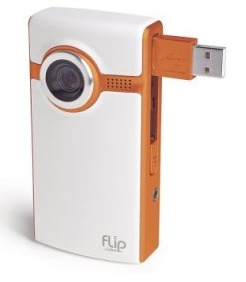
FLIP: Orange version, with pop-out USB
Steve Jobs offers contradictory advice.
“Do not listen to your customers,” he says. “They do not know what they want.”
Yet in the same interview, in Business Week, he says, “Always listen to your customers.”
Which view is right?
Both.
In the words of the Quaker prayer, modified for innovators:
• Give us the courage to not listen to our customers and provide them with innovations that fail market tests and that people say they do not want and do not need. E.g. the Walkman.
• Give us the serenity to to listen to our customers, when they tell us what they want and need and when we believe they are telling the truth. E.g., the FLIP camcorder (see next Blog).
• And – give us the wisdom to know the difference.
A BBC World Service documentary, The Convict Streak, about Australian convicts and their attempts at escape, includes a wonderful segment about Bernie Mathews, an intractable prisoner sentenced to solitary confinement for two years.
Mathews says his cell is pitch black, with no light at all. Once a day he was given a jug of water, a jug of milk and a loaf of bread. Once every four days he was allowed out to exercise for half an hour or an hour. He lived this way for two years.
How does one keep from going insane, in the total black darkness of a cell, with nothing at all to do?
Innovation.
“I found a plastic button in my cell,” Mathews relates. “I invented a game. I flicked the button, then crawled along the floor to find it. Then, after I found it, I flicked it again. I played this game for hours and hours and hours. That is how I survived solitary confinement.”
Management educators motivate companies to innovate, in order to survive. I wonder if they realize how, for some individuals, this is literally true.
I am an incurable and persistent listener to the BBC’s World Service on radio (AM, 1323), even though the BBC is consistently anti-Israel in its reporting – doubtless, because of its millions of listeners in the Arab world.
The programs I find most relevant and helpful in tracking global innovation are Global Business, with Peter Day, and Culture Shock. Day travels the world and interviews innovators (recently, for instance, he visited Philips’ R&D sites in Enthoven and elsewhere). But my favorite is Culture Shock. This program tracks trends in global culture.
For instance, a recent program segment titled “For Better or Worse” interviewed Prof. Clay Shirky from New York University, who related how mobile phones and the internet are fundamentally changing the way people organize themselves in single-interest groups – and why this might be bad. In the segment “Preserved in Rice”, Richard Kimber described a trend from Japan where new technology and traditional gift-giving culture have produced unique mementoes for parents and grandparents: customized bags of rice each of which is exactly the same weight as the new born was on his or her Day 1.
If you believe, as I do, that innovation is NOT about technology, but rather about lifestyle, in turn deeply embedded in culture – then listening to Culture Shock is a must. It opens a window on cultural trends that we might miss otherwise.
The table below shows Business Week’s latest top 50 corporate performers for 2007. The rankings are based on profitability, sales growth, and market value.
What we learn from it is this: Every one of the top 10 performers has found a way to innovate, especially in its business model and business design.
Here is what Business Week said about Coach, the #1, performer:
The handbag maker moved quickly when it understood that its aspirational customers might suddenly hesitate at spending $900 for one of its Legacy handbags. Coach quickly rolled out more affordable lines of bags for as little as $160.
And about #2, Gilead Sciences:
The Northern California biotech firm sensed an opportunity for any company that could develop drugs that were simpler and cheaper than standard HIV treatments, which required patients to take dozens of different pills throughout the day. Gilead’s researchers simplify those cumbersome treatments by combining myriad compounds into a single pill, Atripla, that costs just $1,300 a month and is taken at bedtime.
Going on down the list, we learn what strategy guru Gary Hamel has been saying for years: Truly powerful innovation changes the rules of the game in an industry, by redefining the way companies do business. When they succeed, profitability and sales growth soar.
|
|
|||||||||||||
|
1 |
2 |
A |
60.5 |
A |
24.1 |
A |
10.0 |
2.9 |
0.7 |
-41.8 |
-4.0 |
Consumer Discretionary |
|
|
2 |
3 |
A |
45.0 |
A |
47.5 |
A |
45.2 |
4.2 |
1.6 |
40.9 |
180.5 |
Health Care |
|
|
3 |
26 |
A |
43.2 |
A |
27.2 |
A |
7.5 |
5.5 |
0.7 |
-25.7 |
224.3 |
Materials |
|
|
4 |
7 |
A |
13.8 |
A |
11.1 |
A- |
99.7 |
93.5 |
5.5 |
-0.1 |
14.2 |
Telecommunication Services |
|
|
5 |
5 |
A |
24.3 |
A |
11.9 |
A- |
9.9 |
2.7 |
0.5 |
37.8 |
95.4 |
Utilities |
|
|
6 |
34 |
A |
31.6 |
A |
38.3 |
A |
112.4 |
26.5 |
4.1 |
44.7 |
217.7 |
Information Technology |
|
|
7 |
8 |
A |
58.0 |
A |
9.0 |
B- |
39.3 |
13.8 |
1.7 |
19.5 |
56.9 |
Consumer Staples |
|
|
8 |
– |
A |
37.3 |
A |
22.5 |
C |
7.4 |
4.9 |
0.7 |
-6.2 |
4.7 |
Energy |
|
|
9 |
– |
A |
56.4 |
A |
22.5 |
A |
6.5 |
3.7 |
0.5 |
2.5 |
34.5 |
Consumer Discretionary |
|
|
10 |
– |
A |
46.3 |
A |
24.7 |
B+ |
19.1 |
1.9 |
0.8 |
50.8 |
485.8 |
Information Technology |
|
|
|
||||||
|
10.0 |
2.9 |
0.7 |
-41.8 |
-4.0 |
Consumer Discretionary |
|
|
45.2 |
4.2 |
1.6 |
40.9 |
180.5 |
Health Care |
|
|
7.5 |
5.5 |
0.7 |
-25.7 |
224.3 |
Materials |
|
|
99.7 |
93.5 |
5.5 |
-0.1 |
14.2 |
Telecommunication Services |
|
|
9.9 |
2.7 |
0.5 |
37.8 |
95.4 |
Utilities |
|
|
112.4 |
26.5 |
4.1 |
44.7 |
217.7 |
Information Technology |
|
|
39.3 |
13.8 |
1.7 |
19.5 |
56.9 |
Consumer Staples |
|
|
7.4 |
4.9 |
0.7 |
-6.2 |
4.7 |
Energy |
|
|
6.5 |
3.7 |
0.5 |
2.5 |
34.5 |
Consumer Discretionary |
|
|
19.1 |
1.9 |
0.8 |
50.8 |
485.8 |
Information Technology |
|
Does life imitate art?
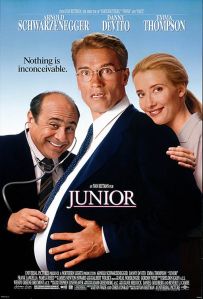
Remember the awful film starring Arnold Schwarzenegger, in which the muscular Arnold got pregnant and bore a child? (“Junior”, 1994).
Well, guess what. A former Hollywood beauty queen named Tracy underwent a sex-change operation, became a man, and then married Nancy, divorcee with two children from her previous marriage. The couple wanted to have a child of their own, but Nancy had problems getting pregnant.
Now, in the sex-change operation, “Tracy” had chosen to retaine his/her uterus and reproductive organs. So he became the one to bear their child. The birth will occur in a few months. His pregnancy has of course attracted world-wide attention, on BBC and with the couple appearing, inevitably, on the Oprah Winfrey Show.
“Tracy” says that child-bearing is not a male or female thing, but simply a human desire – to bring life into the world.
My question is: will baby Nova call Mom/Dad, Mom? or Dad? Will he or she call Mom, Mom? How about Mom one and Mom two? No, too long.
Innovation is not without its problems.
Some tools for innovation come with a very large price tag attached… a very very large price tag!
Consider LHC – large hadron collider. Hadrons are protons and neutrons, in the language of physicists. Collider – well, the device smashes them into one another at almost the speed of light. Beams of hadrons are sent in opposite directions around a circle, bent by huge supercooled magnets. At 99.9999991% of the speed of light, they collide and self-destruct. Large? How about a 17-mile-long circular tunnel? The LHC is now under construction beneath an area on the Swiss-French border. It should be called VELHC – very expensive LHC, because it will cost between $5 and $10 b. (nobody knows for sure yet).
It is part of CERN, the European Center for Nuclear Research, and when completed it will depose America from its top ranking in particle research, as the Fermilab accelerator near Chicago will no longer be world class.
You could do a whole lot of science with that $10 b. So what is the justification for LHC?
Basic science in physics has a way of producing inventions that make our lives better. Consider, for instance, the exotic “giant magnetoresistance” effect, discovered by Albert Fert and Peter Grunberg (for which they won the 2007 Nobel Prize for Physics).
Magnetoresistance is the property of a material that changes the value of its electrical resistance when an external magnetic field is applied to it. Applications of this phenomenon have led to techniques for retrieving data from hard disks – one of the very first commercial applications of nanotechnology, used in part to create better read-out heads for iPods and similar devices.
So – what will LHC contribute to humanity, when it is completed? No-one knows yet. I expect we will get both fruit and light. Light – in terms of understanding how the universe was created in the so-called Big Bang, which the LHC will partly simulate. Fruit – in terms of basic physics principles that brilliant entrepreneurs will turn into great devices like iPods.
And, incidentally, don’t eulogize “Old Europe” (in George Bush’s phrase) just yet. Europe is putting large resources into basic science. In time those resources will lead to powerful commercial innovations. Both America and Israel should take notice.
All eyes are focused on the global credit crunch and financial crisis, and the rapidly declining dollar. A Wall Street Journal editorial asks, The Buck Stops – Where?
Some commentators are optimistic, taking a long view and suggesting that America will bounce back from this short-term cyclical decline. America, they note, is the still world’s technology leaders. America will rebound.
But a study done by five Georgia Institute of Technology scholars, widely reported, and released in January, suggests otherwise.
They measure a variety of technology and competitiveness indicators for a cross-section of 33 countries, going back to 1993 and going up to 2007. For the “technological standing” indicator (which measures “a country’s recent overall success in export high technology products”), they present what they euphemistically call “quite interesting results”:
* The U.S. peaked at 95 in 1999, and is now down to 76.1; America is no longer first.
* China has increased from 22.5 in 1996 to 82.8 in 2007. It is now in first place.
* Japan peaked at 93.9 in 1996 and is now down to 66.0. (“Recall,” say the authors, “that the indicators are relative”).
The countries showing sizeable declines in 2007 include “the two traditional leaders, USA and Japan, note the scholars.”
And another worrisome postscript: Israel’s Technology Standing score is only 25, ranking Israel well behind, for instance, Malaysia and Mexico. Moreover, Israel’s competitiveness between 1993 and 2007 has declined, according to the researchers.
___________________________________________________________
A. Porter, N. Newman, X. Jin, D. Johnson, J.Roessner, “High Tech Indicators: Technology-Based Competitiveness of 33 Nations”, 2007 Report, Georgia Inst. Of Technology, Jan. 22/2008.
Toner is one of the world’s least green, environmentally friendly products. It is generally produced with toxic chemicals. But Xerox, whose Palo Alto Research Center (PARC) once led the world in innovation (the mouse, PC, early version of icon-based operation system, and many other ideas), is now, under its CTO Sophie Vanderbruck, getting a second wind. Rather than focus all its R&D efforts in one site, as it did in Palo Alto, Xerox is dispersing it, among several geographies, including Grenoble, France, and Canada, and is intensively partnering with universities around the world. Among its latest innovations: ‘green’ toner.
Xerox, world’s largest toner producer, has built a new $60 m. 100,000 sq. ft. plant near Rochester, NY to produce this product. The new product is backed by over 300 patents. According to Xerox:
In addition to producing better quality prints, EA Toner is significantly more environmentally friendly. Unlike traditional toner, which is created by physically grinding composite polymeric materials to micron-sized particles, EA toner is chemically grown enabling the size, shape and structure of the nano-particles to be precisely controlled. This Xerox-developed technology leads to improved print quality, less toner usage, less toner waste and less energy required for manufacturing and for printing.
It is significant Xerox built the plant in the U.S. and not in Asia, leveraging the steep fall in the dollar relative to other major currencies. Xerox holds a portfolio of over 8,000 patents.
Interviewed on BBC, Dr. Vandebroek spoke with vigor and energy about the renewed creativity at Xerox. She was appointed on Jan. 1, 2006, taking over from Dr. Herve Gallaire. Vandebroek, born in Leuven, Belgium, was previously Xerox’s chief engineer. She is 45 years old.
Science fiction writer Arthur C. Clarke died yesterday. He was 90 years old.
Readers will recall the movie: 2001: A Space Odyssey, which Clarke co-authored together with director Stanley Kubrick.
I often quote Clarke, including his statement: “Truly advanced technology is indistinguishable from magic.”
In 1945, in one of his books, Clarke proposed the concept of communications satellites – satellites that would be in ‘geosynchronous orbits,’ keeping them in a fixed position relative to the ground. The world’s first such satellite was launched 29 years later, on Dec. 17, 1974!
Some science fiction writers write pure fantasy. But some, like Clarke, are visionaries who see the future and describe it vividly. Such authors, I believe, are must reading for innovators, if only to peek into the workings of superbly imaginative and flexible minds like that of Clarke.
Clarke was co-commentator, along with Walter Cronkite, on the first Apollo space flight – a brilliant, and uncharacteristic, idea for the American TV network CBS.

 TIMnovate