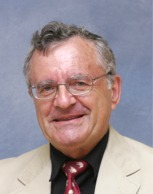
Larry Page: As Innovator Role Model

By Shlomo   Maital    

Larry Page

Fortune magazine has chosen Larry Page (Dec. 1 issue) as Business Person of the Year. The feature article begins with a revealing joke, told often around Google. At Google’s “moon shot” Google X center, where self-driven cars, high-altitude wind turbines, and stratospheric balloons for Internet access are developed, a ‘brainiac’ creates a time machine. As the scientist reaches for the power cord to start a demo for Larry Page, Page says: “Hey! Why do you need to plug it in!?”

   For a decade Page was one member of a triangle – Sergei Brin, Eric Schmidt, and Page – that led Google. In 2011 Page took over as CEO.   Turns out he is a good manager. In the past three years, Google has grown 20% annually, and has quarterly revenue of $16 b. It has $62 billion in cash. Page invests heavily both in Google’s core business (he says he argued with Steve Jobs, who said, ‘you guys are doing too much’) and in far-flung new projects.   According to Fortune, in the past year, Google has invested in artificial intelligence, robotics and delivery drones. It has expanded its venture unit, which invests in startups and is a kind of scouting team. It bought Nest, a smart-home startup. It invested in Calico, a biotech firm.  

   Originally Google set out to “organize the world’s information and make it universally useful and accessible”. Today that vision is too narrow. Page says he wants Google to change the world in ways most of us cannot imagine.

   Some say Google is too narrowly focused on advertising revenue. But YouTube now brings in $6 billion in annual revenues. Page continues to invest in bold ventures, to ensure the company’s future. He is making ‘credible bets’ on the home, the car, and wearable devices.

   Most amazingly, Google has a secret facility where a team of scientists are working on a project that will chemically ‘paint’ tiny nanoparticles, with a protein, so they bind to things like cancer cells.   And then concentrate them through magnetized wearable devices, so they can be ‘queried’. This would enable constant monitoring and detection of a whole host of devices.   Outside Google’s core competence?   Not at all.

   Page regards some of his bold bets as a portfolio bucket. Some will pay off. Many won’t. He doesn’t think the risk is high. By the time you want to put large sums of money into something, you pretty much know whether it will be profitable, he says. For him, not taking risks is the biggest risk of all.

IT Burnout: The Problem, The Solution

By Shlomo  Maital

  IT Burnout

    In New Zealand, my wife and I went into a knitting shop to buy wool, so that Sharona can knit a shawl.   The owner was a woman from San Francisco, an IT expert who studied at Stanford and held very good IT jobs.  But she chose to open a wool shop.  Why?

   She explained the reason.  IT experts fix problems with computers.  That means they are daily dealing with unhappy people, who are grumpy and bitter about a computer crash, and tend to ‘blame the victim’ – i.e. blame the IT person, who after all is responsible for anything that goes wrong with software and computers in the organization.  She simply got tired of dealing with complaining angry people.    Those who buy wool are far happier and more appreciative. 

  I’ve encountered this phenomenon of IT burnout all over the world.  And it is ironic.  Because IT experts are the one group within an organization who truly understand the entire organization and its ecosystem.  But rarely if ever is this knowledge fully utilized by senior management.  IT experts are simply regarded as technicians.   But they are not – they are systems experts who do understand how the organization works, how the flow of information works, and how people interact.  And of course, they are sitting on massive amounts of value intra-organizational data. 

   If you are in IT, and are experiencing some of the burnout phenomenon described above,  think about building some alternatives.   Either – seek positions within your organization outside the IT realm (you’ll need to do some homework before you do),  or,  find something about which you are passionate outside your organization, and it can be an “adjacent possibility”  (something close to IT),  or a distant endeavour about which you are truly passionate. 

  But – don’t continue to suffer.  Life is short.    

    Why Tea-Party Individualism Has a Basic Flaw

By Shlomo  Maital

 evolution

The extreme right-wing of the Republican Party, known as the Tea Party, demands maximum  individual libertarian freedoms, lower taxes, less government, less or no social welfare.   It is named after the Boston Tea Party, which initiated the American Revolution when Bostoners refused to pay taxes levied by the British on imported tea, and dumped tea overboard.  But Tea Party is no party.  It has disrupted American politics, divided the Republican Party and elected substantial numbers of House members and Senators.   

    The best refutation I’ve found of the Tea Party ideology comes not from an economist or political scientist, but from an anthropologist named John Terrell, the Regenstein Curator of Pacific Anthropology at the Field Museum of Natural History and professor of anthropology at the University of Illinois in Chicago.   His basic argument, presented in an Op-Ed in the New York Times: 

    “The basic unit of human social life is not and never has been the selfish and self-serving individual.    Philosophers from Aristotle to Hegel have emphasized that human beings are essentially social creatures, that the idea of an isolated individual is a misleading abstraction. So it is not just ironic but instructive that modern evolutionary research, anthropology, cognitive psychology and neuroscience have come down on the side of the philosophers who have argued that the basic unit of human social life is not and never has been the selfish, self-serving individual. Contrary to libertarian and Tea Party rhetoric, evolution has made us a powerfully social species, so much so that the essential precondition of human survival is and always has been the individual plus his or her relationships with others.”

Human beings have evolved for over 50,000 years.  We survive by joining with other people, to support them and receive their support. This happens within the key family unit,  within neighborhoods, cities, places of work, organizations, schools and  indeed   in  our social networks.   We thrive when we love others and receive their love.  We thrive when society works smoothly to provide mutual support, emotional physical and financial. 

     The Tea Party arose from the ashes of Ron Paul’s  failed Presidential Campaign in 2008, so it is only 6 years old.   It was strengthened by the disastrous financial collapse of 2008, which the Tea Party blamed on government rather than on greedy individualism rampant on Wall St.   There is a social evolution of ideas, not just people and societies. The failed, failing and refuted ideas of the Tea Party groups will be dumped on the trash heap, by the evolutionary process of ideas.     

Why Capitalism is (Not) Committing Suicide

By Shlomo  Maital

Brooks

    David Brooks has another superb column in the weekend new York Times.  Titled:  The Ambition Explosion, he quotes work by sociologist Daniel Bell, who wrote in 1976 that “capitalism undermines itself because it nurtures a population of ever more self-gratifying consumers. These people may start out as industrious, but they soon get addicted to affluence, spending, credit and pleasure and stop being the sort of hard workers capitalism requires.”

    Add to that capitalism’s tendency to concentrate wealth, corrupting democracy with it, and you have two huge reasons for its demise.  Right?

    Perhaps not.   My wife and I are returning home today from a long trip, which included mainland China.  There, I found highly ambitious young people, full of aspiration and amibition,  some working as waiters while studying, and one,  who started a vending machine business while working one of seven jobs and studying for his B.A.   “For instance” is not a proof, as the Yiddish saying goes, but it sure convinced us.

    Brooks cites what he thinks is the real Achilles Heel of capitalism – not the lack of ambition, or even wealth concentration, but the lack of real meaning!  

        “The real contradiction of capitalism is that it arouses enormous ambition, but it doesn’t help you define where you should focus it. It doesn’t define an end to which you should devote your life. It nurtures the illusion that career and economic success can lead to fulfillment, which is the central illusion of our time.”

      In the end, the ‘toys’ you buy with great wealth – like Lamborghini’s, we saw a dealership for them in Hong Kong and it was active and profitable —  do not in themselves provide meaning or satisfaction or fulfilment.  So what does?  Some try philanthropy.  Others, social entrepreneurship. 

      Make meaning, not money, counsels Guy Kawasaki, serial entrepreneur, venture capitalist and Macintosh guru.  For young people  —    at the start of your career, define your legacy and your life goals, goals that will at the latter end of your life give you satisfaction and make your life meaningful.  THAT will make your boundless talent and ambition focused and directed toward a worthy goal.   It will also keep capitalism from committing suicide through sheer boredom.   Listen to what Brooks counsels: “Capitalist ambition is an energizing gale force. If there’s not an equally fervent counterculture to direct it, the wind uproots the tender foliage that makes life sweet.“ 

Why Is Mercury, a Metal, Liquid at Room Temperature?

By Shlomo  Maital

Mercury Peter Schwerdtfeger

 Ever wonder why mercury, a metal, is liquid at room temperature – the only metal to be have so?   I’m sure most of us have seen mercury, have realized it is a metal, yet one man followed up to find the answer.  His name is Peter Schwerdtfeger, and he won the Rutherford Medal this year, New Zealand’s highest science prize. Schwerdtfeger is on the faculty of Auckland’s Massey University (where my wife spoke on Friday).

     According to Schwerdtfeger, the reason gold is golden in color and mercury is liquid has to do with quantum effects. 

    According to Schwerdtfeger:  “For a very long time people believed that relativistic effects are of no importance to chemical systems because from Einstein’s special relativity we know that if particles reach very high velocities close to the velocity of light, then special relativity becomes important. People thought that for electrons in the valence shell, which are important for doing all the chemistry but move rather slowly, that you wouldn’t expect that relativity effects would be important.”   But they are.  Hard for me to understand and explain in a short blog what those special relatively effects are – enough to understand that Schwerdtfeger took on the physics establishment and proved that relativity is important even for electrons travelling very slowly.

   “With increased computer power and a team of collaborators, including a bold doctoral student, he was able to show that without the effects of relativity, mercury would be solid at room temperature and melt at 82 degrees Celsius.”

         It took him years to get his breakthrough paper published.   When he submitted the first, the reviewer told him there had to be a mistake – because it violated what was known at the time.   Eventually it was published. 

      There are several lessons here. First, if you are a doctoral student, pick a really big touch hairy hard question to research.  I myself failed to do this and regret it ever since.

      Second,   Schwerdtfeger says:   ‘If you only invest in commercial science and completely neglect basic science you probably get neither of them.”   Under the current Conservative government of PM John Key,   government spending in New Zealand has been slashed to the bone, university lecturers have been fired, research grants cut back.  Key is vastly unpopular here, but democracy’s wheels grind slowly.   Until the wheel of democracy comes around, great damage will have been done to New Zealand’s universities.


Evolution at its Strangest: The Glow-worm Cave

By Shlomo  Maital

Waitomo glowworm cave

  Those strange luminous ‘fishing lines’ in the picture are actually —   strange luminous fishing lines.  They are created by glow-worms, weird creatures that live clinging to the roof of the Waitomo Cave,  here in New Zealand.   Evolution has taught these creatures to attract their food – bugs and mosquitos that breed in the river below, that runs through the cave —   by fluorescent luminosity.  When the lights are turned out in the cave, there is a spectacular sight – the entire ceiling glows, with a thousand points of light, just like the heavens on a clear starry night.  And the older the glow-worm, the more luminous it is.   The ‘butterfly’ form lives only a day or two, and has no mouth (because it has no need to feed, its only job is to mate, reproduce, and die), but the worms live quite long.  And it dangles those strange strings down, to trap its food.  

    Evolution has created creatures that are superbly adapted to every possible environment – deep under the sea, in steam vents, and here, in deep dark caves.  Give Nature enough time, and it will solve any problem.  

    I think we can learn from these tiny glow-worms.  They emerged because Nature tried experiments.   By accident, one weird glow-worm was luminescent.  His friends all laughed at him/her.  Hey, look at Wormie there, he glows.  Let’s sing him a song–  Glow little glow-worm, glimmer, glimmer….      But Wormie caught loads and loads of bugs,  enough to reproduce successfully.  And then Wormie’s kids, too, glowed…and down the generations. 

     This too is how humanity can crack its toughest problems.  Have enough creative people running around trying weird things,  trying to ‘glow’,   with bright ideas – and some of them may work.   Some of them may one day light up the world.


Creativity & Innovation in Remote New Zealand

By Shlomo  Maital

AKGrid

 My wife Sharona and I are in New Zealand, on the very last leg of a world tour that has taken us around the world, from Brazil, to Boston, France, Singapore, Vietnam, Guangzhou and Shantou China, Hong Kong and now Auckland.   It’s been a great adventure – we combined touring with lecturing, teaching, research and meeting the local Jewish communities on the Sabbath.

    Here, I visited GridAKL, a local incubator located near Auckland Harbor, in the Wynyard Quarter,  and designed to foster technological entrepreneurship.  I met with Eva Perrone, whose title is “activation manager” and she showed me the facility.  The first floor is an open ‘events’ area, where companies outside and inside the incubator can stage workshops, meetings, etc.   The second floor is the incubator, designed as open space, with quiet areas, kitchens, and lots and lots of light. 

    Some of the entrepreneurs in GridAKL are from Aukland University of Technology (AUT), a fine university with entrepreneurial spirit. 

     Despite New Zealand’s remoteness from the world, it is super-connected, with fast broadband.  Many of the startups in GridAKL are IT and software startups.  New Zealand itself makes a living from tourism and dairy and food exports, but is eager to expand its portfolio and build a startup culture. 

   In our travels, from Brazil to Vietnam, to China, Hong Kong, and now New Zealand, we have seen young people eager to start businesses and change the world.  This is an extremely positive trend.  It is also one that should accelerate the heartbeat of an entrepreneur and pump a few grams of adrenaline.   Today if you have a great idea, chances are so does someone else, who could be anywhere in the world, including places you might not think of.  

     Here in New Zealand, we saw an amazing site – the glow-worm cave (see my next blog),  where Nature and Darwinian evolution has created incredible worms that glow in the dark inside the cave ceiling,   and actually create tiny long ‘fishing lines’ that they use to catch their food (mosquitos and bugs).   The ‘glow’ attracts the bugs.    Evolution has produced amazing things, as species compete to survive.  Entrepreneurship can do the same.  The fierce competition  among ideas and resources can generate truly wonderful new creative things that create value for the world and literally, produce something from nothing.   And all it takes is a few young people (or young in spirit),  some open spaces, accessible food (this is the key to a great incubator, Eva Perrone assured me, and I told her about Google’s executive restaurants in their Mountainview, CA campus), strong networking and a great university.      

Marathon Man! 365 marathons, 365 days!

By Shlomo  Maital

Stefan Engel marathon man Stefan Engels: a marathon a day for a year

 The man in the picture is a Belgian runner named Stefan Engels, from Ghent. 

 He had a crazy idea – to get people interested in running, rather than “sitting in front of the TV with a bag of crisps (potato chips)”.   He would do it by a dramatic Guiness Book of Records feat – run one marathon a day, EVERY day, every single day, rain or shine, for a whole year, 365 days.  

  And despite injury, exhaustion, diarrhoea (in Mexico) and other problems, he succeeded. It was a tremendous triumph of will power.  Once, Stefan had to do the marathon with a hand-cycle, because his legs were injured.  But mostly, he ran, and once in a while, walked.

   Let’s do the numbers.  In all, over a year, he ran 9,563 miles or 15,330 kilometers.  His usual pace was four hours,  or 6.5 miles per hour  (10.5 kilometers per hour).

   Stefan is bandy-legged – his legs turn inward.  This should have led to serious injury, as the stress went up his legs into his back.  But in general it did not.  He runs very economically, with low leg lift, and very light footfall. 

    A documentary about him, Marathon Man, tells the story.

    For those of us who have done ONE or TWO marathons in their lifetime, running one a day for a year is mind-boggling.   Stefan – we salute you.   Anything is possible, indeed.

Jeanie Leung: Follow Your Passion!

By Shlomo  Maital

Jeanie Leung

My last blog was posted Nov. 5,  a very long (for me) 15-day silence, owing to travel, and difficulty in accessing Facebook and WordPress in Mainland China.   Today my wife and I are in Hong Kong, at Hong Kong University of Science and Technologies, a truly great research university where I will give five lectures.  HKUST is only 23 years old, founded in 1993,  yet it is now ranked among the world’s top engineering and science universities, owing to clever innovative leadership.  

    My friend Amylia took me on a tour of HKUST yesterday and by chance, in the library, we stumbled on an exhibition by an artist Jeanie Leung.  (See her website:  www.jeanieleung.com,  and ‘like’ her on Facebook,   Jeanie leung).    Jeanie is an HKUST graduate with a BBA (Bachelor’s in Business Admnistration).  She worked successfully in banking.   But her passion was art, even though she has never formally studied painting. 

    One day, she quit her job, left the secure paycheck – and sent out on an adventure.  She wrote a series of wonderful books,  child-like in quality but with powerful serious messages,  illustrated by her incredible acrylic-on-paper paintings.  The series of four books is called Colours of Stories.   Yesterday I met her in person at her exhibition and got her autograph. 

    Jeanie typifies two key principles. One is: Follow your passion!   She has, and has been eminently successful.  The second is:  Discovery and Delivery, you need both.  She had a brilliant concept for her books.  But she works exceptionally hard to implement them.  She finishes a painting in 2-3 days, and it takes over 40 of them to make a book.   From a video, it appears she works on the floor.      HKUST is helping her market her books and is giving her moral support – despite her abandoning the business world for the world of art and books. 

    Congratulations, Jeanie.   I hope others will follow your example.

IMF – Oops! We Got It Wrong!

By Shlomo Maital  

IMF


 The International Monetary Fund (IMF) was invented at Bretton Woods, NH, in July 1944.  It is headquartered in Washington, DC and its task is to bail out companies that get into financial trouble, overspending, overborrowing, etc.   And this happens often.

   The IMF is an exemplary organization. It has among the world’s best economists (its former deputy director was Stan Fisher, formerly head of Israel’s Central Bank, now Vice Chair of the U.S. Fed), and it even has an independent evaluation board that checks whether it has acted correctly.

   Now, this independent board has reported that..the IMF erred.  Ooops.

   Initially, when the global crisis broke out in 2007-8, the IMF recommended that governments support the economy, and indirectly its banks and financial institutions,  by using fiscal policy, i.e. deficit spending.  But then, the IMF switched direction, under pressure perhaps from capital markets, and said that governments should impose AUSTERITY,   cut spending, cut borrowing.

    Bad idea.  The independent IMF board said:  the IMF erred. It recommended austerity too early.  Perhaps, it should not have recommended austerity at all.

    It is sad when the world’s fireman, the world’s Mother Hen telling its chicks what the right thing to do is,  admits it blundered.  And sad when economics makes a mistake that is costly for hundreds of millions of people. 

It will be hard for even a serious body like the IMF to regain its credibility in future.

Blog entries written by Prof. Shlomo Maital

Shlomo Maital

Pages