Why Wasting Time Is Highly Productive

By Shlomo Maital

Wasting time 

   Recently, I found myself on a train from Haifa to Tel Aviv, a journey of almost one hour, without anything to do. No computer, newspaper, book, Kindle…nothing.  Empty wasted time. 

   I designed this empty wasted time on purpose.  The reason?  There is nothing more efficient than wasted time.  Here is why.

    Our busy modern lives are organized and a version of Parkinson’s Law says, things to do expand, expand, and expand, to fill every single waking moment.  I see people who, with empty time, stare blankly at their cell phones. 

     But when you have completely empty time, without anything to do, your mind relaxes. It wanders.  It soars outward, zooms out, to see those around you. (In buses, which I ride frequently, there are always four seats facing backward. Those seats are always empty, even when the bus is crowded; nobody wants to look at other people. I always take them and observe the bus riders, it is fascinating).  It dives inward, to explore your inner mind.  There are always things locked in our subconscious, screaming to be released, but we never listen to them, because, well, we’re too busy.   You’d be surprised what your subconscious mind will toss at you, if only you listen.

   On my ‘wasted time’ ride, my subconscious came up with a plot for a science fiction novel.  It wasn’t an idle thought, because it refused to go away, and it’s still there. One day I will write it. 

     Schedule yourself some wasted time. Let your mind wander.  Some of us like to jog for that reason; nobody can call you or bother you, and the physical activity relaxes the body and lets the mind float free for a half hour. 

     Practice the art of wasted time. Few things are more productive.

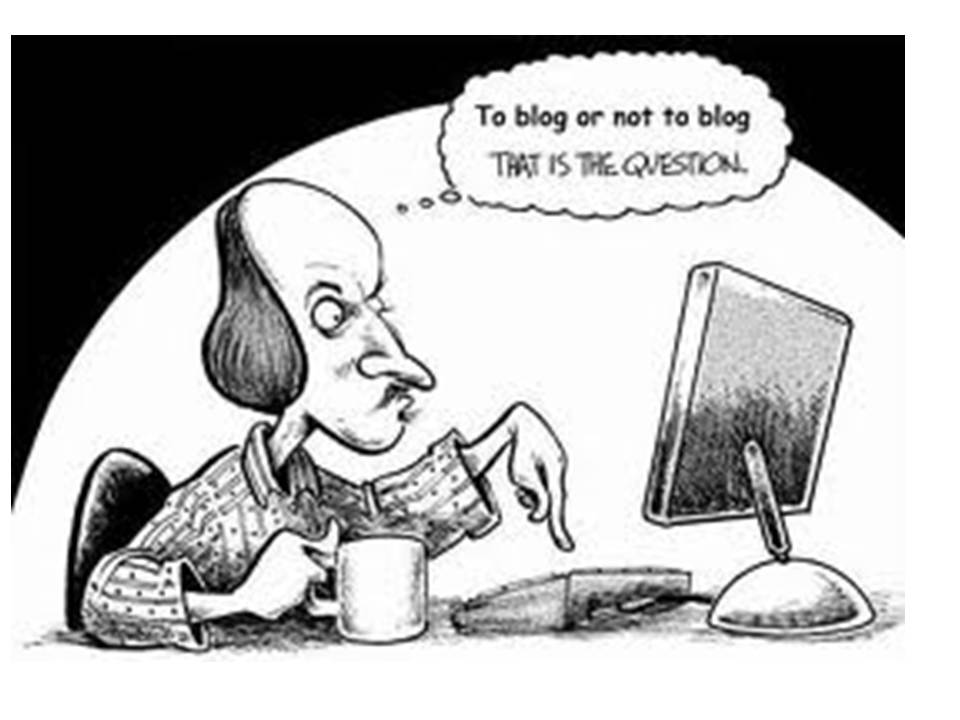
Exercise Your Brain, Write a Blog

By Shlomo Maital

blog   

  According to the host of my blog, wordpress.com, I have written over 900 blog entries.  I have several hundred faithful readers, get frequent comments, as well as massive spam attacks.

  I urge everyone to consider starting a blog.

  Why?

   The main reason for writing a blog is to give your brain a serious workout, daily, by challenging yourself to be perpetually curious about what is going on, what is new, what is interesting and unusual, in the world.  If you know you need to write a blog several times a week, your brain is trained automatically to search for ideas and topics.  Without that spur, I find my brain tends to go to sleep. It also helps those around me – my wife regularly passes on to me things she reads, that may be blog-suitable.

   What should you write about?

    Blogs are very personal. Write about a) what you are passionate about, what you really care about, and b) what you really know about, really understand.   Blogs need to be short, perhaps 200-300 words.  Amazing how much you can pack into a few words.  Write about everyday things.  People like to read about other people’s lives, their problems, conflicts, joys, triumphs, defeats.  You’d be amazed. 

     If you do want to maximize readership, take into account words that are used in web searches, e.g. on Google.  My most-read blogs involve things like Wal-Mart, and Lady Gaga, and terms like ‘workplace innovation’ (my all-time #1, for some reason).

   Use ‘first person’ (“I”). State your strong opinions.  People will react.

   Try to be positive.  I found myself writing doom-and-gloom blogs, driven by my profession (economics).  Look for things that inspire, rather than depress.  There are enough horrible/terrible/awful stories in the daily press already.   Your blog can reach out and touch other people in surprising ways. 

   Think about visuals – what picture or graph can you add, to make your point and catch attention? Remember, there are many many thousands of blogs out there already.  If you want others to read yours, try to catch attention with a great photograph or illustration. 

    And finally – the real goal of a blog.  A New York Times columnist (Arthur Krock, ‘dean of Washington journalists’) once said, during a newspaper strike: “How do I know what I am thinking if I cannot read what I write?”   As a thinking person, capture your thoughts, by writing them down.  You’ll see that once you start your blog, suddenly you will have a great many opinions, on everything.  Your significant others will find you a whole lot more interesting.

What Can Go Wrong?  A Whole Lot! No More Twinkies!

By Shlomo Maital  

 twinkies

  Remember the Kingston Trio’s song Merry Minuet (way back in the late ‘50s), written by Sheldon Harnick?

They’re rioting in Africa. They’re starving in Spain. There’s hurricanes in Florida and Texas needs rain.  The whole world is festering with unhappy souls. The French hate the Germans. The Germans hate the Poles. Italians hate Yugoslavs. South Africans hate the Dutch and I don’t like anybody very much!  They’re rioting in Africa. There’s strife in Iran. What nature doesn’t do to us will be done by our fellow man.   

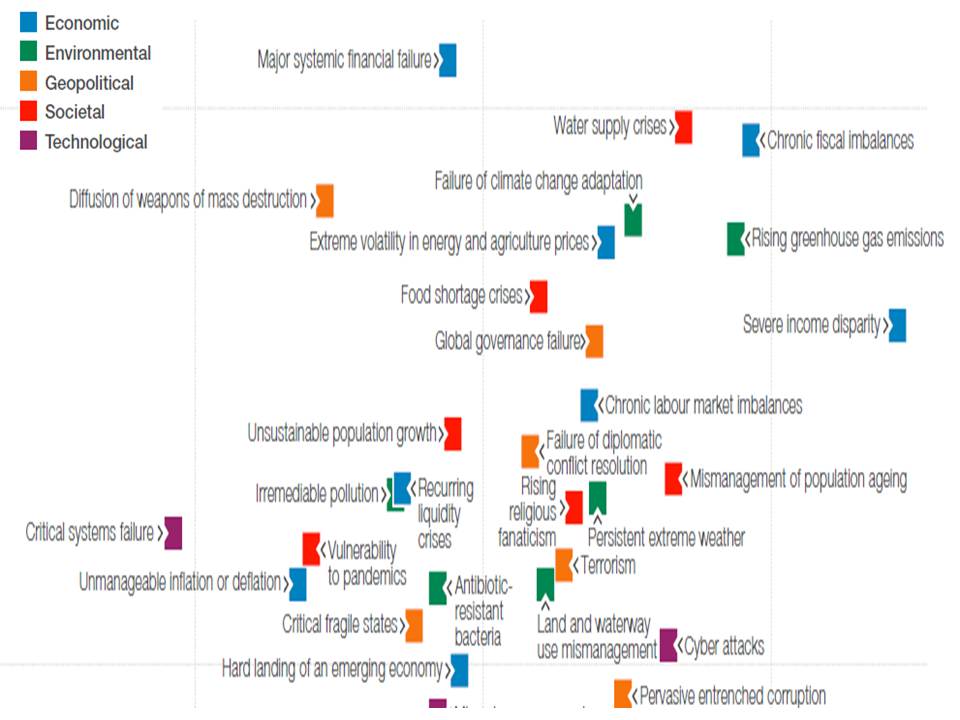
 Now comes a batch of 1,000 top experts, asked by Klaus Schwab’s World Economic Forum to predict the major risks facing the world in the coming year.  They graph the risks according to a) likelihood, and b) impact.   Here are all the things that can go wrong listed in order of importance:  chronic budget deficits, water crises, systemic financial failure, climate change, weapons of mass destruction, food shortage, rising greenhouse gases, global governance failure, food shortages, severe income disparity, chronic labor market imbalance, unsustainable population growth…  and I’ve barely got rolling.  Makes Merry Minuet sound downright jolly!

   But the experts have missed the real dinger.  The world may not have ended on Dec. 21.  But Twinkies did.  Did you know Twinkies is going out of production?  Bankrupt Hostess Brands is stopping production.  Twinkies have existed for 82 years!  Now,  people are stocking up.  Check out the price of a package of Twinkies on eBay. You won’t believe it.  There is massive demand.    Hopefully someone will come along and buy the brand.  What killed Twinkies? The shift to healthful food.

I still think anything that makes you happy (and Twinkies does) is healthy.  One more tip:  Don’t read the World Economic Forum end-of-the-world risk map.  Have a Twinkie instead. 

Risk Map 2013


Coursera: Web College Smash Hit

By Shlomo Maital   

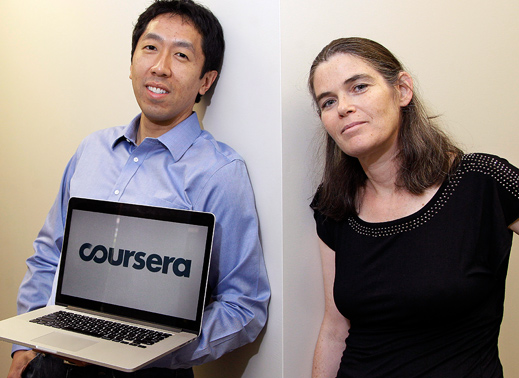
                    Coursera Daphne Koller & Andrew Ng

     Just one year ago, two Stanford University lecturers, Daphne Koller and Andrew Ng, took a leave of absence to launch a startup, Coursera, to supply on-line web-based college courses.  The website was officially launched in August.  Today, just one year from the inception of the idea and months from launch, it was two million faithful enrollees…a faster takeoff than either Facebook or Twitter! Some 70,000 students sign up each week (a number equal to three or four Stanford University’s!).  The company has posted more than 200 free classes taught by professors at 33 top universities, such as the University of Pennsylvania and Caltech.

    Education writer Tamar Lewin tells the story in the Jan. 6 edition of The New York Times.  [“Students Rush to Web Classes, but Profits May Be Much Later”.]

    Coursera’s secret of success?   First, the price. It’s free.  Nothing beats the word ‘free’.  Second, the courses.  They have such catchy titles as Human-Computer Interaction,  and Songwriting and Gamification. Highly relevant for young people seeking skills and knowledge.   Third, the teachers. Faculty come from top universities, like Stanford and Caltech.

    Lewin reports that college education is migrating to the Web with incredible speed:   

   “Universities nationwide are increasing their online offerings, hoping to attract students around the world. New ventures like Udemy help individual professors put their courses online. Harvard and the Massachusetts Institute of Technology have each provided $30 million to create edX. Another Stanford spinoff, Udacity, has attracted more than a million students to its menu of massive open online courses, or MOOCs, along with $15 million in financing. “

     What is Coursera’s business model?  Well…it doesn’t have one yet, following the Google principle (create value, THEN later think about monetizing it, after it is validated).  Notes Lewin:  “Ms. Koller has plenty of …. ideas, as well. She is planning to charge $20, or maybe $50, for certificates of completion. And her company, like Udacity, has begun to charge corporate employers, including Facebook and Twitter, for access to high-performing students, starting with those studying software engineering.”

    Soon, brick-and-mortar colleges will give credits for Coursera courses. In fact, they’ve already begun to. “This fall, Ms. Koller was excited about news she was about to announce: Antioch University’s Los Angeles campus had agreed to offer its students credit for successfully completing two Coursera courses, Modern and Contemporary American Poetry and Greek and Roman Mythology, both taught by professors from the University of Pennsylvania. Antioch would be the first college to pay a licensing fee — Ms. Koller would not say how much — to offer the courses to its students at a tuition lower than any four-year public campus in the state.”

    Everything related to the Web happens with blinding speed, faster than we would expect.  Conventional universities must wake up and quickly embrace this new technology; after all, schools that claim to innovate new knowledge should practice what they preach.   

Summing Up China in 1,300 Words: The View from Singapore

By Shlomo Maital   
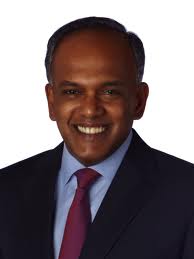
K SHANMUGAM 

   Singapore has outstanding ministers and civil servants.  Like Barcelona’s famed youth soccer academy, bright young people are spotted and cultivated very early in their careers. Elected and appointed officials are very well paid, forestalling corruption and generating motivation and prestigate.  This is why I listen very carefully, when my friend Bilahari Kausikan, First Permanent Secretary of Foreign Affairs, speaks, or writes, and when his minister Kasiviswanathan Shanmugam, Minister of Foreign Affairs, speaks.  Shanmugam recently spoke in Turkey during an official visit there. His ethnicity is Tamil Indian, and shows how Singapore is indeed a rainbow society (Malay, Chinese, Indian).  He provides us with a tour of the world. Here is a brief summary of his views on China.   

    By 2050, Asia could account for over 50 percent of global GDP.  China and India are also likely to be among the world’s three largest economies in a matter of decades.  

   According to British historian Niall Ferguson, there are six reasons why the West overtook the East and moved ahead in the last five hundred years: 1. Encouraging competition among political entities; 2. Science; 3.  Democracy; 4. Modern medicine; 5. Consumerism; and 6. the Protestant work ethic.   We can debate if these were the only factors in explaining the predominance of the West or make an argument for other factors, but it is clear that Asia is now catching up on many of the factors which made the West successful in the last five hundred years.

      China’s per capita GDP today is less than US$6,000.  At its current rate of growth, China’s GDP in purchasing power parity terms is expected to exceed the US’ in 2016.  Based on market exchange rates, China’s GDP could triple to US$17.7 trillion by 2030.  That is only 18 years away.  While straight line projections are not very reliable, the secular trend and conclusions are clear: China will succeed and become a superpower in every sense of the word.   The Chinese have in huge abundance the central, critical element for success: high quality human potential.  In 2012, China’s universities produced 6.8 million graduates.  An estimated 600,000 are engineers, of which 10,000 hold PhDs.  The Chinese are highly intelligent, creative, with a deep sense of national pride.  They want China to take its rightful place in the world.    In recent years, China has made remarkable technological leaps.  China today boasts 9,300km of high-speed rail.  Just last week, China launched the world’s longest bullet train service from Beijing to Guangzhou.  That is slightly longer than the distance from New York to Miami.  Less than ten years ago, China’s first high-speed trains were entirely supplied by German, French, Canadian or Japanese companies.  Today, China competes for high-speed rail projects around the world, including here in Turkey. China has also made significant progress in its space programme.  The first manned Chinese space mission, the Shenzhou-5, took place in 2003.  In 2015, China will launch the first module of its space station.  This is scheduled to be completed in 2020, just as the International Space Station is due to retire.  

I have only mentioned a few examples of China’s recent achievements.  One can give many other statistics to describe China’s successes, but the real questions are how fast China will continue to move and the implications for Asia.  To assess that, we need to in turn consider the key issues China has to deal with in the coming years.

     China faces three sets of “divide” challenges, namely the rural-urban divide, the coastal-inland divide, and the income divide within cities.  These “divides” will have profound implications for China’s political and social stability in the coming years.  China’s export-oriented economic model is also unsustainable in its current form, and needs to be re-structured to focus on internal consumption as well.  At the same time, China needs to re-balance the share of its economy between the state-owned enterprises and the private sector.   China will have to address these economic challenges against the backdrop of increasing urbanisation.  China crossed a milestone in 2011 when, for the first time, there were more Chinese living in urban areas than in rural areas.  This trend will continue.  China needs to create two to three hundred million jobs over the next twenty to twenty-five years for growing numbers of people moving to the urban centres.   These are massive challenges on a scale and level of complexity that no other country, except India, faces.  

     China’s population is aging rapidly.  According to some estimates, China had 185 million people over the age of 60 in 2011.  The ratio of working-age to retired people may go from 8:1 to 2:1 by 2040.  In a few years’ time, labour market growth may decrease.  Significant resources will be needed to look after the elderly.  The need for social welfare is increasing, in key areas such as housing; healthcare; basic medical coverage; pension coverage and education. Education, for example, is estimated to cost around 2.2. trillion yuan.   China’s leadership knows that China has to make itself internally strong.   And for that, it has to deal with all of these challenges successfully.  If you look at China’s track record over the last 30 years, China will find a solution to these challenges.   China’s leaders have shown what their priorities are.  At the 18th Party Congress, President Hu Jintao called for GDP per capita to be doubled by 2020. He acknowledged the need for more equitable development, and described the need to strengthen social management to improve the delivery of basic public services.  President Hu’s administration has laid out the following as key components of his policy framework:    Social management has now been identified as a key issue.  China’s leadership has looked at various countries, including Singapore, to see what they can learn in areas such as anti-corruption, city planning, environmental management, and maintaining social order and political stability.  The Chinese leadership has also made significant achievements in improving the people’s welfare.  However, in the years ahead, China’s new leadership will have to structure a new social compact with its population.        There has been a lot of breathless coverage in the media about whether there will be political change (usually labeled as “reform”).  This is wide off the mark.  China’s leadership will not rush into change.  Instead, it will try to manage change.  President Hu’s remarks that China would “never copy a Western political system” and should not revert to the “old path that is closed and rigid” or take the “evil road of changing flags and banners” are indicative.  China’s leadership is more concerned with good governance, progress and stability.  They know most of the suggestions for political change may weaken China and impact its growth.  They look at what happened when the Soviet Union pursued glasnost before perestroika and do not want to repeat that same experience.  The Chinese look at Western prescriptions for China with much suspicion.  They see a wish on the part of some in the West for China to be weak, ineffective.  The Western media, too, often paints a distorted and superficial picture.

   China’s leadership is pragmatic and aims to choose the best people for the job.  Of course, the system is not perfect.  There will be internal politics.  But on the whole, it is a rigorous system where only tested people, many of whom have had to run provinces bigger than many European countries, can rise to the top.  I am not an apologist for China, but one must look at the facts.  In 30 years, China has achieved what no other country has achieved.  500 million people have been lifted out of poverty.  The lives of 1.3 billion people have been completely transformed.  It is safe to conclude that China’s main focus in the near future will be internal, and that its leadership will pursue a steady course in tackling the key issues.

      China alone has nearly 600 million vocal netizens.  Neither the Chinese Communist party nor leaders in the other claimant states can be seen as “soft” on sovereignty issues.  The new Japanese government, for example, has a more nationalistic approach and has made statements about beefing up its military in response.  But the Japanese government is likely to take a prudent course.  These conditions make for a potent mix.  A small act perceived as antagonistic could lead to hasty responses.  This could result in an escalating cycle of chain reactions.  The risk of miscalculation is exacerbated in countries without a strong structure for inter-agency coordination.  Such a scenario cannot be ruled out, and has in fact happened over territorial disputes in recent years. 

Meet Robo Sally: Only Your Brain Moves this Artificial Limb

By Shlomo Maital  

 Robo Sally

   A great many people, especially soldiers injured in war, need prosthetic arms.  The ultimate goal has been to create a robotic arm that replicates the human arm, controlled only by brain waves sent through nerves, just the way real limbs work.

    Now:  thanks to CBS News’ 60 Minutes:   Meet “Robo Sally.”  “She is the most sophisticated robotic hand and arm ever engineered.     Complicated physical tasks are no problem for Sally. Her arms are the same size and weight of a man’s arms — and every bit as strong. She can curl up to 50 pounds, and her agile fingers, each containing a high-efficiency mini-motor, can squeeze 20 pounds of pinch force. “  The device was funded by the U.S. Defense Department and much of the work was done at John Hopkins’ Applied Physics lab. 

    It is sad, but inevitable perhaps, that the Defense Department had to motivate the research by saying it is developing a remote device for disarming explosive devices without endangering soldiers’ hands.  Apparently, thousands of wartime amputees are not reason enough for Congress.

  In a pioneering operation, a University of Pittsburgh brain surgeon placed two tiny sensors in the area of a woman’s brain that controls arm movements.  Those sensors were then connected to the prosthetic robotic arm, through two small terminals on the top of her head.   The woman, Jan Schuermann, who has no arms, is now able (after practice) to do incredible things with her prosthetic arm,  using only her thoughts.  She is even able to ‘feel’ textures, and discriminate between, say, a balloon and a hard baseball. 

   To see more, go to http://www.cbsnews.com/8301-504803_162-57560535-10391709/scott-pelley-meet-robo-sally/


“The Truman Show” for Dementia Sufferers

By Shlomo Maital

Hogeway

      In the 1998 move “The Truman Show” starring Jim Carrey,  an insurance salesman discovers his entire life is actually a TV show.  Innovative Dutch have now used the idea to help care for those suffering from dementia, in a village near Amsterdam, called Hogeway.    A dementia care home there is experimenting with a new way of treating patients by offering them an “alternative reality”.

   Dementia is a huge worldwide problem.   The world is aging; by 2050 nearly one person in every four will be over 65.   There are an estimated 35.6 million people with dementia worldwide, a number that will nearly double every 20 years, to an estimated 65.7 million in 2030, and 115.4 million in 2050.   

According to the BBC,  Director of Innovation and co-founder Yvonne van Amerongen has created in Hogeway apartments for those with severe dementia, built around a square.  There are 152 residents. Each flat has  6-7 people  …urban life is patterned on old Amsterdam, recreating an environment people were used to before they got dementia.   “If you’re in a hospital  surrounding, those with dementia think every day, I want to look for my home, I don’t need to be in a hospital. Here at Hogeway people are at home.   There is a  village grocery store –  an ordinary store, where the residents come to shop, it is a bit different, because if residents pick up a bottle of wine and leave without paying for it,  the caregivers simply charge the residents’ account.  There are many social activities and above all,  a sense of normal life, with all-important social interaction.  Today for example there is a flower fair.”

What is the evidence this environment is better?  “Part of what happens here has been researched. Exercise is very good for people with dementia. We provide a lot of exercise, because people walk around all day and they get fresh air in the courtyard.  It is a controlled environment, but a familiar one.”  Is there an ethical dilemma, deceiving people?  “We’re not deceiving people, we’re helping them understand where they are.  Real life outside Hogeway is disturbing, they don’t understand it.  People with dementia have trouble coping with the truth.  They cannot understand it.  Here they can.”  

   The Cost?  It is the same as for an ordinary nursing home. 

   Perhaps this model will spread elsewhere?

Does Austerity Work? The Case of Latvia

By Shlomo Maital

Latvia

  Europe’s austerity program (spending cuts to reduce public debt) has been a disaster.  In this blog, I protested that you cannot grow an economy by shrinking it, and austerity shrinks demand and raises unemployment, leading to the need for more austerity, causing more suffering..and so on.   James Estrin, writing in LENS (photography website), documents the suffering austerity is causing in Europe:

    After three years of grinding austerity, the Greek gross domestic product has shrunk by 25 percent. The unemployment rate among young people is now at 50 percent, and over all about one fourth of Greeks are out of work. Ireland has a debt burden of 117 percent of its annual G.D.P. Spain’s unemployment rate is more than 25 percent, and the Portuguese government is predicting a third consecutive year of recession in 2013, with unemployment reaching nearly 16 percent….

   ..and so on. Estrin says the numbers don’t begin to convey the suffering, and the photographs in the LENS website show why.    See:       

    http://lens.blogs.nytimes.com/2012/12/31/the-human-toll-of-europes-economic-statistics/

    Yet – along comes Latvia, to prove that austerity DOES work.  In today’s Global New York Times, Andrew Higgins reports the following:  “Latvia, feted by fans of austerity as the country-that-can and an example for countries like Greece that can’t, has provided a rare boost to champions of the proposition that pain pays.     Hardship has long been common here — and still is. But in just four years, the country has gone from the European Union’s worst economic disaster zone to a model of what the International Monetary Fund hails as the healing properties of deep budget cuts. Latvia’s economy, after shriveling by more than 20 percent from its peak, grew by about 5 percent last year, making it the best performer in the 27-nation European Union. Its budget deficit is down sharply and exports are soaring.

    Why has austerity worked in Latvia, yet failed in nearly every other European country?  The people of Latvia are simply used to severe hardship. They’ve been through austerity before. They know there is light at the tunnel’s end.  Higgins notes: “Latvia has [endured] Soviet, Nazi and then renewed Soviet rule…After Moscow relinquished control in 1991, decrepit Soviet-era plants shut down, gutting the industrial base. The economy contracted by nearly 50 percent. The collapse of Latvia’s largest bank in 1995 wiped out many people’s savings. Latvia then was hit by debris from Russia’s financial blowout in 1998. Then came a dizzying boom, fueled by a lending splurge by foreign, particularly Swedish, banks, followed by a catastrophic slump as credit froze when the global financial crisis swept into Europe in 2008.”

    Latvia’s currency, the lat, is now pegged to the euro, and Latvia desperately wants to join the euro in 2014. Why? Because having a relatively strong currency is a condition for attracting foreign money, and as weak as it is, the euro is far more reliable than the lat.  Latvia resisted the easy solution (devaluing the lat to spur exports and demand) and accepted short term pain for long term gain.  I wish them great success.

    Latvia is perhaps  the exception that proves the rule (austerity fails).  Morten Hansen, head of the economics department at the Stockholm School of Economics in Riga, says, “You can only do this [austerity] in a country that is willing to take serious pain for some time and has a dramatic flexibility in the labor market,” he said. “The lesson of what Latvia has done is that there is no lesson.”  

    There IS  a lesson, Prof. Hansen.  A condition for austerity should be the willingness of the people to endure severe pain. America lacks it. Greece lacks it.  Most of Europe lacks it.  If you lack this political resilience, better not to start down the austerity road in the first place. 

Has India Lost Its Way?

By Shlomo   Maital   

Indian dancer 

   I am very fond of India. I’ve visited it several times, have a dear friend there, and chose to publish my recent textbooks there.  This is why I am saddened and perplexed by what is happening to India. I fear India has lost its way.

  During 2003-8, India’s economy boomed, because private capital spending rose from 10% of GDP to 17% ! (source: The Economist, Dec. 1).  New factories and infrastructure dotted the land.  Then, after the global crisis began, capital spending slumped to only 10-12% of GDP.    India has two deep-seated problems: debt and graft.  As one senior Indian boss told The Economist, “most business houses have whole departments dedicated to getting things done no matter what the cost (in bribes)”.    Investment projects are backlogged, but any attempt to fast-track them leads to cries of corruption. 

    India’s capital-intensive firms are highly leveraged.  Between 2007 and 2012, net debt among India’s biggest firms doubled as a per cent of operating profits.  There are zombie firms, alive legally but dead in practice owing to heavy debt.

   India’s image abroad has suffered greatly, with the horrifying rape and murder of the young 23-year-old medical student.  A nation’s image does impact its ability to attract foreign businesses and foreign investment. 

    Doing business in India is very difficult. I know this first-hand from those who have tried.   According to the World Bank, India ranks 132nd in overall ‘ease of doing business’ (2012).  Everything related to doing business there is tough.  Registering property, trading across borders (rank 109), getting a construction permit (181st!), enforcing a contract (182nd!), paying taxes (147th), even getting electricity (rank 98th).   There is no reason for this.  The young women who was raped and beaten was sent to Singapore for medical care.  Let India benchmark Singapore, one of the easiest places in the world to do business. 

    India’s Prime Minister Manmohan Singh is a brilliant economist, whose reforms in the early 1990’s provided the foundation for India’s economic boom. Today, he seems tired and dispirited, defeated by a moribund political system.  The possibility that a Gandhi scion will take over, simply because his name is Gandhi, is simply unbelievable. 

     I grieve for India, which gained independence around the same time as my country Israel.  I love India’s resilient people, and their spirituality.  I wish a leader would arise who could cut through the Gordian knot of India’s deep-seated problems and start afresh.   

Stories That Heal: On Narrative Therapy

By Shlomo   Maital  

Rita Charon 

   Stories, we know, inform, entertain and convey the lessons of an entire culture from one generation to another.  Stories have evolved from stories told around a campfire, or a village square, by a journeyman storyteller, to printed books and magazines and now, more commonly, to film and video.

   But stories can not only entertain, they can heal.  The brilliant British neurologist Oliver Sacks has been writing fascinating books about single illnesses (starting with Migraine, in 1970), books that tell stories about illness and overcoming it.  Sacks’ latest book is called Hallucinations.   Sacks, according to Siri Hustvedt (writing in today’s International Herald Tribune), is “part of a long tradition of descriptive, narrative, case-oriented medical writing Sacks calls ‘romantic’ “.

    But it is also leading to a new approach to healing, known as narrative medicine. Take for instance the narrative medicine department at Columbia University, headed by Rita Charon.  In this approach, “doctors draw insights from and explore forms of literature, for their work with patients.”   Charon is very unusual.  In addition to her MD degree,  she also has a Ph.D. in English literature. 

    Here is how one reviewer summarizes her 2006 book *:

  Charon defines narrative medicine as “medicine practiced with these skills of recognizing, absorbing, interpreting, and being moved by the stories of illness”   She calls this a “new frame” for medicine, believing that it can improve many of the defects of our current means of providing (or not) medical care. Caregivers who possess “narrative competence” are able to bridge the “divides” of their relation to mortality, the contexts of illness, beliefs about disease causality, and emotions of shame, blame, and fear.   Charon finds that medical care and literature share five narrative features; she argues that careful reading of narratives builds skills that improve medical care, including intersubjectivity between caregiver and patient, and ethicality. Beyond the theory, there are powerful and persuasive examples of interactions between caregiver and patient, many from Charon’s own practice. A mother of a sick daughter experiences stress that makes her ill; when she sees a narrative connection, she begins to heal.

 As I see it, we understand our ill health by telling a story that explains and interprets it, to ourselves.  Doctors like Charon (who are rare) can help.  Then, we heal ourselves, by telling ourselves another story, in which our ill health diminishes or disappears.  This healing story is powerful, because we know there is a strong physiological connection between the brain, neural pathways and the body’s functioning organs.  Narrative therapy counteracts the growing, and distressing, trend toward mechanical medicine, which analyzes illness solely through tests, data, symptoms and research.   Illness is about people.  Narratives and stories return the individual person to the scene.  By honoring their stories, we can heal the sick.    

* Rita Charon. Narrative Medicine: Honoring the Stories of Illness  Oxford Univ. Press, New York:  2006

Blog entries written by Prof. Shlomo Maital

Shlomo Maital

Pages