Let the Cat Guard the Cream – And You Get LIBOR Fraud, or

Don’t Blame Barclay’s, Blame Ourselves!

By Shlomo  Maital   


The Cat Guards the Cream..Great Idea!


What in the world is LIBOR? 

 It is an acronym that stands for “London Interbank Offered Rate”.  It is the average of the perceived rate of interest banks pay when they borrow from each other.  It is calculated by officials of the top London banks with “cash” responsibilities, just before 11 a.m. daily. 

Why is it so important?

Because, LIBOR is used as the basis for calculating the rate of interest on a very wide and large range of assets, including  forward rate agreements, short-term-interest-rate futures contracts,  interest rate swaps, inflation swaps, floating rate notes, syndicated loans, variable rate mortgages, and currencies. You do not have to know what all those are; enough to know, as the BBC says, that LIBOR impacts $550 trillion (!) worth of assets (about 10 times the annual world GDP). 

Why is it in the news?

 On May 29 2008, The Wall Street Journal reported that banks were systematically understating the LIBOR rates,  in order to pretend they could borrow much more cheaply than they really could.  They did this,  because in the face of huge losses on subprime mortgages and credit default swaps, they had to pretend their balance sheets were better than they really were.   According to WSJ, “) “Citigroup said it could borrow dollars for three months at about 0.87 percentage point lower than the rate calculated using default-insurance data.”   Is that a lot?  You bet!  0.87 per cent on, say $550 trillion, is $4.35 trillion (twice the GDP of Italy!). 

On 27 June 2012, Barclays Bank was fined $200m by the U.S. Commodity Futures Trading Commission, $150m by the United States Department of Justice and £59.5m by the British FSA manipulation of the LIBOR and EURIBOR rates. 

Why Barclay’s?

Because the CEO of Barclay’s Bob Diamond was the first to admit wrongdoing.  (You can bet he is kicking himself, because his reward for being the only one to tell the truth is to be humiliated, busted, fired and discarded).  But many other banks did the same thing.  And it was obvious they were doing it.   How come we let the bank cats guard the cream? If they have every incentive to mis-state the true LIBOR rate, if millions of dollars and pounds in bonuses are at stake, why would they not do it?  Especially when, as author Michael Lewis recounts, the bank culture is not that of kittycats but ferocious tigers:

   “An investment banker is a breed apart, a member of a master race of dealmakers. He possessed vast, almost unimaginable talent and ambition. If he had a dog it snarled. He had two little red sports cars yet wanted four. To get them, he was, for a man in a suit, surprisingly willing to cause trouble.”

   Bob Diamond is an investment banker. So are most of the other Masters of the Universe (cf. Jamie Dimon, JP Morgan, etc.).  Maybe he did not know his workers were falsifying LIBOR.  But given the culture he represented, why would they NOT?

 What is the solution?

 Here is a serious suggestion I heard on the BBC.  Treat every bank product or service as a pharmaceutical drug.  Act like the FDA – insist that banks prove that every new proposed product or service creates real value for human society, like medicine.  And make them do ‘clinical trials’ to provide evidence.  Because otherwise, we will continue to get poisonous products like manipulated LIBOR.

   But at the very least, let’s stop being so stupid.  Calculate LIBOR with a team of Bank of England experts who use objective data from real borrowing deals, not ‘perceived’ estimates from bank kittycats who have a vested interest in lying.  If we let them do this, we deserve what we get.    
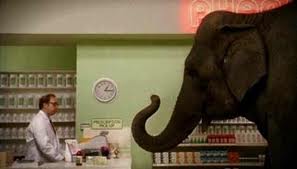
 What Money Can’t Buy: End the Tyranny of Markets Now!

By Shlomo  Maital  


 The Mastercard elephant:  Priceless???

In a Mastercard commercial, an elephant keeper in a zoo catches cold and goes home. His elephant picks up his Mastercard credit card, and with it buys tissues ($4), cold medicine ($11), soup ($4) and a warm blanket ($24),  and brings it to his keeper’s home. 

    After quoting all those prices, the narrator says,   “Making it all better….priceless”. 

    The problem is, with the overwhelming dominance of capitalism and free markets, thanks to us economists, everything today has a price, including things that should not.  Even ‘making it all better’.

     Princeton Univ. Professor  William Baumol, who taught me microeconomics nearly 50 years ago, once observed that “a price is a relationship between people, expressed as a relationship between things [money and goods].”  Harvard University Professor Michael Sandel believes that at least some relationships between people should NOT have a market price, precisely because they are priceless.  “Markets crowd out morals,” he writes, in his new book What Money Can’t Buy: The Moral Limits of Markets. 

   He is absolutely right.  In another of their destructive ideas, economists teach that when you create a market for something, you make it efficient.  Here is a wide variety of things that now have prices: 

    * Kids in schools are paid for grades or achievement.

    * Criminals in prisons buy luxury cells ($82 a night).

    * Sheriffs are paid by the number of prisoners they incarcerate (Lousiana).

  * Lobbyists pay people to stand in line for them, to get seats in Congressional hearings. (They charge $36-$60/hr., often reaching $1,000 a seat, and pay $$10-$20/hr. to those standing in the queue).  

   * Doctors offer ‘concierge service, for up to $25,000 a year, giving people priority in service, and no waiting. 

    * Airlines offer no-queue service, even in security lines.

   * In theme parks, a premium ticket lets you jump long queues.

  What’s wrong with all this?  Simple.  Today, in capitalist America, you can buy anything and everything. Despite Mastercard, nothing is priceless.  Once queues were the great equalizer…rich and poor waited for Grateful Dead tickets. No longer. If you have money, you jump almost every queue.   Today, whether you are at Universal Studios theme park or waiting for a rock concert ticket on-line, if you have money, you get what you want, if you don’t, you probably don’t. Because those who pay to jump queues push those who don’t far back to the end of the line.

     It’s just another case of rampant raging capitalism, out of control, guided by economists who have put their ethical judgment into the drawer…permanently. 

     If you think it’s just and sensible to have lobbyists’ deep pockets capture all the seats in a Congressional hearing, if you think Congress should allow this obscene practice, well, ignore this blog.  [A Democrat Congresswoman tried to ban it – the Republicans foiled her attempt.]   If you think there things that, like Mastercard says, should forever remain priceless,  let me know.   If you think that not every relationship between people should be capable of expression in terms of things, let me know.

    As Sandel says, “we live at a time when almost anything can be bought and sold.  The logic of buying and selling governs the whole of life.  It is time to ask whether we want to live this way.”  

    I don’t.  Do you?

The Snuggle for Survival: Darwin is Not What You Thought

By Shlomo  Maital  


 Evolution: It’s NOT always like this….

  The July cover story in Scientific American is by Harvard scholar Martin Nowak.  It is titled “Why we help”.  The theme?  If Darwin is right, if both humans and animal and plant species struggle for survival,  and if indeed it is “survival of the fittest”,  if big fish eat little ones, why then do we help one another?  Is there some evolutionary advantage to cooperation?  Why don’t we just ‘eat’ one another?  Nowak coins a lovely phrase: “the snuggle for survival”, rather than “the struggle for survival”.

   The answer, of course, is that mutual assistance and love helps those who offer it to survive and thrive.  Societies, tribes, cultures that are cohesive and that help and support one another are more likely to survive than those that do the opposite.  Take ant colonies, for instance.  Ants (which, incidentally, are all female – the few males fertilize the queen and then die) act for the good of the colony.  This social behavior, which is true of termites as well, has evolved through evolution.  Ant colonies have been selected for this pro-social skill. 

   Nowak, in his article, lists five reasons people help one another. First, direct reciprocity, or ‘tit for tat’.  You help me, I help you.  Even animals evince this type of behavior.  Second, neighborly effects.  Neighbors help one another, and a culture of sharing spreads.  I grew up in a small rural town in Saskatchewan; with fiercely cold winters this type of mutual help is vital for survival.  Even yeast does this; ‘cooperative’ yeast cells make enzymes that digest sugar, at a cost to themselves but creating value for the whole colony.  Third, kin selection. Because our kin share our genes (first cousins have 12.5 % of our genes), by helping our kin, we preserve our own genes.  Fourth,  “indirect reciprocity”. This one exists even in monkeys.

  “Those who have a reputation for assisting others who fall on hard times might even find themselves on the receiving end of goodwill from strangers when their own luck takes a turn for the worse. Thus, instead of the “I’ll scratch your back if you scratch my mine” mentality, the cooperator in this situation might be thinking, “I’ll scratch your back, and someone will scratch mine.” Among Japanese macaques, for example, low-ranking monkeys that groom high-ranking ones (which have good reputations) may better their own reputations—and hence receive more grooming—simply by being seen with the top brass.”

Finally, the fifth reason is one Darwin himself understood, group selection. 

    “Darwin himself, who observed in his 1871 book The Descent of Man that “a tribe including many members who … were always ready to aid one another, and to sacrifice themselves for the common good, would be victorious over most other tribes; and this would be natural selection.” 

  The 2007-2012 global financial and economic crisis was driven by two forces: selfish self-seeking destructive behavior that took on excessive risk, and a system that permitted this behavior.   Are we now seeking a ‘natural selection’ process, in which societies that pursue such selfish behavior (America, parts of Europe, particularly Germany) are sinking, while other societies (Scandinavia, Asia) are rising? 

John’s Phone: Innovation by Subtraction

By Shlomo  Maital

 John’s Phone

    A friend and reader, Howard, drew my attention to this cellphone innovation.  It is called “John’s Phone”.  It isn’t cheap; it costs $100,  and $150 for the premium (gold) version.  It’s the world’s most basic cell phone. All you can do with it is make calls and receive them.  Nothing else.  Basic basic.  It was designed by the Dutch firm John Doe Amsterdam, and is especially good for kids, or elderly  people, or those who HATE technology.  It made  the top 12 of the Year’s Best Ideas in Interface Designs.   

   John’s Phone has a sense of humor.  John’s Phone features a 32-page paper address book kept on the back of the handset.   It includes an ink pen that resembles a stylus, a notepad, and a tongue-in-cheek “Games” section (for tic-tac-toe). The designers say that these features allow the phone to be used even when it is turned off.  Also included is “text messaging” which is done in the paper booklet.  The device is not locked, making it compatible with any SIM using the GSM system.   The keypad consists of only the numbers 0 to 9, an asterisk, a hash, and the call and end buttons.


    What does John’s Phone prove?   There is a constant inherent stubborn bias in innovation toward added complexity and additional features.  The result is often needlessly complex, unfriendly products and services.   The solution?  Take a familiar product or service.  Strip it down to the most basic elements.  What is the core function of the product, the thing most people use it for?  Eliminate everything else.  Subtraction, not addition, is the most powerful arithmetical operator for innovation.  Subtraction will give you user friendly, simple, cost-effective innovations. 

   Action learning exercise: Take another product that you like.  What is its #1 main use?  Eliminate everything else.  What do you get?  How could you market it?  How much could you charge?    

Screensart: An Intimate Glimpse into the Creative Mind

By Shlomo  Maital


 Dana Ruttenberg


Despite many volumes and articles on the creative process – how people come up with wonderful ideas – it remains largely a mystery.   That is why it is so keenly interesting when an articulate innovator describes the precise way a great idea was born and implemented.

    Dana Ruttenberg is an Israeli dancer and choreographer.  She and Oren Shkedy have created “Screensart – The art arena for digital screens: photography, paintings, videodance and videoart for your public digital screen.”    See www.screensart.com

   Here is Dana’s idea and in her own words, how she came up with it and made it happen.

  1.  The “Trigger”:     “… the initial idea was actually my father’s (Arie Ruttenberg, founder of Kesher-Barel, a leading ad agency acquired by McCann Erickson, and Club 50).  . He was concerned with the  dissonance between how long and how much effort goes into creating a dance piece, and the resulting exposure available to it in terms of it existing only in the present, not available for proper duplication (a video recording of a dance performance never ever does justice to the live experience of it), it needing a stage, lighting, the presence of the cast and crew etc. etc….

 2.  The “Resource Base”:  Parallel to that he noticed the abundance of screens everywhere that had nothing interesting to fill them up. Banks and post offices were just then putting up screens to promote their business, and were limited to the soundless showcase of images, so that meant either subtitled news/ads, aquarium shots or ski shots.

 3. The Background:  My  earlier [dance] piece, NABA,  showcased silent [dance], with [each member of] the audience actually choosing the soundtrack on earphones connected to audio guides.   My father thus knew that dance does not require sound.  That was the first spark.

4. The opposition:  It  came from the idea, placing dance on screens,  being something that has never been done before. Although the idea of artwork being created for, and presented in public spaces, is as old as time, re-opening minds to this idea onceagain, and deeming it worthy for investment, was something businesses  were not yet ready for.  There is a misconception in Israel, which now is being contested by the “people”, that the “people” are, for a lack of a better word, dumb, not curious, and uninterested.  Recent social protests  have proved just the opposite.

   Man is as evolved as the challenges that come his way. When those challenges were hunting an animal down and cooking it for dinner – we learned how to do that and mastered it.  When we needed to calculate the square root of a number – we mastered that too, but forgot how to hunt when that wasn’t needed anymore. People might have forgotten how to FACE art, because they haven’t been faced with it. Put it in their path, and they WILL know what to do with it.  Some resistence is natural — the same resistence I might experience upon opening an algebra book now. But that doesn’t mean anything about my future capabilities of appreciating (even if not being able to “solve” or “create”) the beauty of math. Art, and especially dance, is not meant for the elite. If anything, it does not require words, vocabulary…it goes straight to the gut. I truly believe in that.

 5. Persistence:  When I think of persisting [with our idea] for two years, I think of 365 days x 2 x 24 hours of pushing, maintaining, considering, remembering….but, that is NOT the case.  It is important not to disappoint either oneself or the other (partner).  Persisting means having more burners besides the front or even back ones,  on which you can slow-cook. You forget about it, come back to it, try something else, want to throw it away, fall back in love with it and “save” it. Keeping it at arm’s length is what makes it alive.   And having your collaborator to talk to about it, really helps.

6.  Self-awareness:  The thing I lack most of all is patience. But I know see the power of it.  I intend to work on it, I am not yet very successful, because of my childish nature (which is wired to the artistic-creative side), but in my mind (that of the more mature, grownup self), I know that time makes things happen. Keep your ideas in the drawer.  Take them out from time to time. Put them back. Take them out again. …. 

  Thanks Dana!  I invite readers to visit Screensart and experience your dance videos for themselves.   Thanks for sharing your personal creative process. 

Why You Must Never Trust Economists – Including Me!

By Shlomo  Maital

   Have you ever noticed that the word ‘economics’ contains two shorter words?  First, the word ‘con’,  to swindle or cheat; and second, the word ‘comic’, which means, laughable, humorous, funny. 

   Two respected economists, Joshua Angrist and Jorn-Steffen Pischke, recently published a lead article in a respected journal, noting how nobody believes empirical results derived using ‘econometrics’ (the application of statistics and mathematics to data analysis).  *   They point out that things are slowly changing.  Economists are increasingly doing real experiments, or quasi-experiments (data analysis that simulates a true experiment, including a control group), and that this is increasingly becoming a requirement for research to be published or to be believed.  This ‘revolution’ is mainly happening, they note, in labor economics, public finance and development economics.  It is NOT happening, they note, in macroeconomics or in industrial organization – the two fields where new research and thinking is urgently needed, in view of the global macro crisis and the need to rethink regulation of markets.  Imagine what could be learned, they note, if we only did credible research in the latter two fields.    In macro – want to prove the key is money?  Easy. Want to prove the opposite?  Equally easy.  And both approaches have won Nobel Prizes.

    I’m afraid the ‘con’ and ‘comic’ will not leave economics, until we economists get out of our offices, dig our noses out of data tables, and get out into the field and talk to real people and real businesses.   I have a confession to make.  I once co-authored a paper in a leading journal, Econometrica.  It was an analysis of inflation expectations, based on a dataset supplied by a friend, Joe Livingston, of the Philadelphia Inquirer, who ran regular surveys about inflation and kindly provided me with the data.  It took seven full years for the paper to be accepted, running the gauntlet of referees’ criticisms.  What we did to massage those poor data was inhuman.  By the time our manipulations were done, well, nothing was left of the simple underlying data (“do you think prices will rise or fall?”).  None of this was crooked or dishonest.  It simply mangled the data using generalized least squares, Heckman corrections, heteroskedasticity, time-invariant blah blah, ….. beyond recognition. 

     Kudos to Angrist and Pischke for revealing the ‘con’ in economics.  The latest fad in economics is to pursue Dan Ariely-like experiments to understand behavior.  This is good.  There is very little ‘con’ in behavioral economics, when you study real live people first-hand. 

*  Joshua D. Angrist, Jorn-Steffen Pischke, “The credibility revolution in empirical economics:  How better research design istaking the ‘con’ out of econometrics’,  Journal of Economic Perspectives, Spring 2010, pp. 3-30.   

Wheels for Wheelchair People: The Stacy Zoern Story

By Shlomo  Maital     


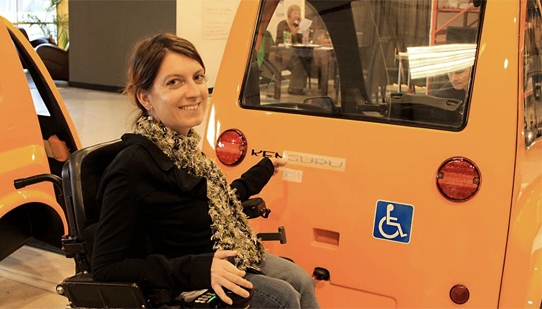
 Stacy Zoern and “Kengaru”

This story was drawn to my attention by a former student, Maurice.

    Stacy Zoern is an Austin, TX attorney. She has been confined to a wheelchair almost from birth, being unable to walk.   As a teenager, she drove a costly $80,000 van modified for paraplegics.  But she “totaled it”…and hasn’t been able to drive since.

     One day she came across a little car company, based in Hungary, called Kengaru.  It made a clever small electric vehicle fully adapted for paraplegics – easy to get into, out of, etc.  But like many clever small ventures, Kengaru was going out of business. The bank had called its loan and it had run out of money. Bankruptcy loomed.

    How much money do you need?  Stacy asked.  The sum was large.  Rather than complain, gripe, or bitch about how unfair the world is, Stacy chose to act. (My student Maurice says:  Entrepreneurs need to act fast, that way “your fears cannot catch up with you!”.  Right on, Maurice!).  She raised the money.

   Today, in just two years, Kengaru is a thriving company making small electric cars perfectly suited for paraplegics, and enabling them to drive.  Her company has 10 employees.  Kengaru can drive 60 miles on one charge, and has two   two-kw. motors and rear wheel drive.  It has gotten fantastic reception from paraplegics.   The cost is  $25k.  But, that is reduced to $20k. or even to zero, in two ways. First as an electric vehicle it is eligible for many incentive programs run by American states.  Second, it can be part of a vocational rehabilitation program for paraplegics, hence eligible for state aid. 

   Way to go, Stacy!  Find a need (often, something you yourself need and want) and act to meet it.  In a previous blog I showed how Dr. Amit Goffer’s REWALK exoskeleton enabled paraplegics to walk.  Now Stacy Zoern enables them to drive.  This is truly capitalism as it should be. 

A New Golden Rule: “What’s In It For Me?”

By Shlomo  Maital      

 It would be nice if each of the world’s 7 billion people followed the Golden Rule (do unto others..) and acted selflessly like Mother Teresa.  But in reality most of us do what benefits us, our wallets, and our egos.  That’s life.

   Why then do so many policymakers screw up, by ignoring this simple fact of life?  Why do we fail to create incentives for people to do the right thing, instead of trying to create laws and regulations that try to force them to do so – laws that never work? 

  Here are some how-not-to examples of policies that do huge damage, by screwing up the incentive systems, in absurd stupid ways.

* By 2021 U.S. health spending will be 20 per cent of GDP!  At the same the standard of care will decline, because most of that increase will be health-cost inflation.  Why? In the present system, doctors and hospitals are reimbursed in large measure according to the procedures they carry out (tests, MRI’s, etc.).  Result: Numerous expensive tests and procedures, many of which are superfluous.  Some specialties like pediatrics are poorly paid, because procedures done on kids are cheaper than those for adults. (I heard this from a medical student, about to choose his specialty). 

   * The State of Lousiana pays local sheriffs per head, for each prisoner they incarcerate!  Guess which U.S. state has 26 per cent more prisoners than the next highest state (Mississippi)? 

   * The new Prime Minister of Thailand, Yingluck Shinawatra dramatically raised the salaries of teachers, after a campaign promise, and began giving students tablets. Yet the performance of Thai kids on international standard tests has fallen.  Why?  The added pay for teachers came with no type of performance or success measure.  They get the extra money, all of them, whether they’re good or bad.  Nice work, PM! 

   Teachers, doctors, police —  there are numerous examples.  Let’s rethink policy. Let’s ask two simple questions.  What do we want people to do?  What will get them to do it?  It’s that simple!

Natural Gas, Geopolitics and World Peace:

Toward a Better Future

By Shlomo  Maital


  Within a very short period of time, the geopolitical map of the world has been radically altered.  Most people haven’t really noticed.

   Here is why.   It’s called “fracking”.

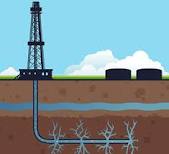
   Suddenly, by inducing tiny fractures in natural gas deposits trapped in rock (through explosions and injection of huge amounts of water), engineers can now unlock massive deposits of natural gas underground.  There are massive environmental issues involved – fracking can pollute groundwater, and even cause small earthquakes.  Hopefully these problems can be overcome.

   But the key point is this:  The world consumes about 2.4 trillion cubic meters of natural gas yearly.  The estimated supply of natural gas, through fracking, is (by country):  U.S. 24.4 (trillion cu. meters), Argentina, 21.9; Europe, 18.1; Australia, 11.2; and China, 36.1.  Total:  111.7 trillion cubic meters. In other words:  50 YEARS  OF SUPPLY, AT CURRENT CONSUMPTION RATES.   If you assume that some of the natural gas will be converted to fuel to run cars and trucks, there is still at least 25 years worth of annual consumption. 

   What this means is the world can liberate itself from the tyranny of Mideast oil.  (And, by the way, help the environment; natural gas burns far more cleanly than petroleum).   America has already seen the light.  America’s Joint Chiefs of Staff head Raymond Odiorno has published a thoughtful essay in Foreign Affairs, in which he documents America’s new geopolitical strategy – shift its military power away from the Mideast (especially carrier task forces) and toward Asia. 

   The reason the decline of Mideast oil is good, is simple.  Vicious tyrannical governments in Saudi Arabia, Iran and elsewhere are kept afloat solely by petrodollars.  Leaders of oil-rich Mideast countries, and those in North Africa too, like Libya, utterly failed to build any semblance of a modern economy, because they did not have to – oil money lubricated their pockets and kept them in power.  Now there will be no choice.  Modernize or be swept away by hungry masses.  This is positive. When Iran joins the 21st C., and builds a real economy (today, Iran cannot even refine its own crude oil, and has to import gasoline), the ayatollahs’ reign will end. 

     My friend, the late economist Julian Simon, loved to point out that the world has never run out of a key natural resource. Long before this happens, something occurs to find a replacement or a new source.  This is true of hydrocarbons as well.  I believe the new sources of natural gas are a positive force for world peace and even for the environment, on balance (even though France and Bulgaria have banned fracking).  And for my own country, Israel, which discovered huge deposits of natural gas offshore, and with even larger deposits awaiting fracking beneath the Negev, a historical wrong has finally been corrected after 2,000 years… Moses’ wrong turn into Canaan, instead of Saudi Arabia, toward oranges, rather than toward oil, finally transforms into a plentiful source of energy.  As the saying goes, the wheels of G-d grind slowly but exceedingly fine…

Analysis of America’s Problem & Solution For Grade Four

By Shlomo  Maital   


 Will Smith’s 10-year-old son jaden

My fellow economists specialize in complicating what is essentially very simple. 

   Can we simplify America’s current slumping economy, and explain a solution, at a level that a 10-year-old (Grade Four student) can understand?

   Let’s try.   If you know a 10-year-old, try this on them.

   “So, some pretty smart people say they did a study and they found that ordinary American families have gotten a lot more poor between 2007 and 2010. (2007 was when you were five years old).  *  Why?  Well, about seven American families in every 10 own their own home.  Mostly their wealth is in their homes.  And lately, since you were 5, the price of those homes has gone down a whole lot.  So, if, say, your family had a $500,000 home in 2007, then just three years later, it would be worth about $300,000.   That’s a lot of money to lose. It’s like several years of your dad’s or mom’s salary.  So people feel poor, because of that, and they don’t spend and buy things and take trips and go shopping.  So, when they don’t spend, people can’t find jobs to make the things people would buy if they did spend.  That makes people even poorer…and we are on, say, a roller coaster, going down, and it never seems to go up.  So, how do you get the roller coaster to go up again?  Change direction. If people aren’t spending because they feel they are poor, make them feel rich again. How?  Make their houses worth more?  How?  Get banks to stop selling houses that they grab because the people living in the houses can’t pay the bank what they owe it.  How?  Well, make the banks sell the mortgages to the people who run the city.  And then, stop kicking people out of their homes and stop selling those homes, so the price of homes can go up again and everyone can feel richer.  It’s pretty simple, right?   So, if it’s so simple, why don’t all those smart people do something about it?  Well, Picasso (a great painter) once said it took him his whole life to learn to paint like a child.   It’s taking all those smart guys and gals a whole life, just to learn to think like a child…and they still haven’t figured it out yet.  Hope they figure it out soon!”

  •  The Federal Reserve released a study showing that the median net worth of AMERICAN FAMILIES fell by 39% between 2007 and 2010, to $77,000, a level last seen in 1992. This was except for the top 10% of earners, whose wealth rose slightly. Most of the decline was a result of the collapse in the  housing market.

Blog entries written by Prof. Shlomo Maital

Shlomo Maital

Pages