The German Side of the Story

By Shlomo  Maital  


As a part-time journalist, blogger and columnist,  I try hard to present strong views, but at the same time offer fair and balanced analysis.  When it comes to Germany’s role in resolving the euro crisis, I fall far short of this goal. 

  Hans-Werner Sinn, president of the Ifo Institute and a Univ. of Munich economist, presents a powerful argument for more sympathy for Germany and Merkel, in an Op-Ed commentary in the Global New York Times today (Thursday June 14).  Taking a long historical perspective, he notes that when American Treasury Secretary Alexander Hamilton had the federal govt. take over the debt of the states, after the Revolutionary War,  “socializing the debt”, this caused the states to over-borrow, leading to bankruptcy of eight states and territories in the 1830s and 1840s and seriously threatening the very existence of the federal United States of America (they weren’t very united).  No-one will bail out California, notes Hans-Werner, today, even though it is nearly bankrupt; it has to find its own solutions. 

   We are in the fifth year of generous liquidity to help Europe’s deadbeats, he notes (he doesn’t call them deadbeats, only ‘uncompetitive members’).  Since 2007, the European Central Bank has given target credit, and Germany chipped in $874 b. worth.  Since May 2010 the ECB gouth over $250 b. in govt. bonds, with another $500 b. coming from emergency programs an the IMF.  Add to that two European rescue funds, “and you have a total of $2.63 trillion!”.  Should Ireland, Greece, Italy Portugal and Spain go bankrupt, he notes, Germany will lose over $1.35 trillion, more than 40 per cent of its GDP!  “Has the U.S. ever incurred a similar risk for helping other countries?” he asks.

   Germany got 0.5 % of its GDP, for four years, or 2% of one year’s GDP, from the American Marshall Plan, in 1947-8.  Greece has received $575 b. in assistance efforts, which amount to a staggering 115 Marshall plans, relative to Greece’s GDP.  And the situation still gets worse. 

    Why, Mr. Obama, asks Hans-Werner, is that not enough?   

Finally! Financial Innovation to Resolve Underwater Mortgages

By Shlomo  Maital

 underwater mortgage  

  What is the biggest problem facing America’s economy today? Well, of course, the economy’s utter inability to create meaningful jobs.  But underlying that problem is the ‘underwater mortgage’ problem.  Millions of American home-owners owe money borrowed to buy their homes, and their homes are worth less, often far less, than what they owe.  In principle, if you pay off your mortgage, you are paying much more than the asset you own.  If you fail to pay your mortgage, well, you’re a deadbeat and lose your home.  It is a bitter dilemma facing millions of Americans. 

      How widespread and severe is this problem?

   “CoreLogic recently estimated that about 22 percent of all of the homeowners in the US now owe more on their homes than what they are worth. In San Bernardino County alone, officials say that there are about 100,000 homeowners with underwater mortgages.”   

  One homeowner in every five (in fact, nearly one in four) owes more than their homes are worth. And there is little sign property values will rise soon.  In fact, as long as banks are seizing property and foreclosing after non-payment of mortgages, then selling properties, the supply pressure will keep property prices from rising.

   Where is the financial innovation that can cut through the problem and resolve it, so that homeowners can continue to live in their homes, and perhaps, feel secure enough to resume spending? 

  Here is a solution invented by  Mortgage Resolution Partners.  1. Local governments use funds raised on capital markets, and the law of ‘eminent domain’ (which permits them to buy assets they need to, for instance, build a road, at fair market prices), to buy mortgages now held by banks and other financial institutions.  2. The mortgages will then be restructured, to halve the monthly payment and allow homeowners to continue to pay the monthly payment, while living in their homes.  3. The newly restructured mortgages would then be sold to investors, hedge funds and pension funds, in order to pay back the money used to buy those mortgages. 

  Sounds complicated? It is, a bit.  And some are cynical about Mortgage Resolution Partners, a private investment firm that stands to make a tidy profit if the scheme goes through.  But so what?  If their innovation works, the benefit to America will be huge, far exceeding whatever profits MRP makes. Can local governments legally seize mortgages (force banks, etc., to accept fifty cents on the dollar for them)?  They can indeed.  The law of ‘eminent domain’ allows this.  It may be in the banks’ interest anyway. Right now they carry huge unrecognized losses on their books.  Why not recognize the losses, clean up the mess – and move on. 

    There has been a veritable desert of non-innovation in financial services, related to cleaning up the subprime mortgage mess. Finally some ideas are starting to emerge.  They deserve a try.  Any idea is better than no idea.  If they don’t work, try something else. But for heaven’s sake – try SOMETHING!

Can You Feel My Pain?  Germany: “No!”

 Shlomo  Maital  


One of the tools I teach aspiring entrepreneurs is that of empathy – becoming the person whose needs you seek to meet, feeling their pain, their discomfort, their needs.  Only through empathy can we design truly unique, world-changing goods and services that meet unmet needs, which people often are not able to articulate. We need to become like them, to serve them well.

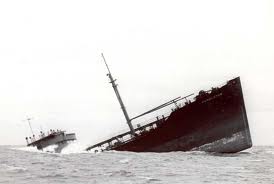
  According to the latest issue of the Economist, Germany is sinking the world’s boats. The cover design, showing the “ship of the world” sinking, captures it well. 

   Why is Germany unable to take decisive action, to resolve the EU (and world) crisis?

   Because Germany is like the rich kid, who cannot fathom what it’s like to be poor.

   Here are the numbers.  Germany has a current account surplus (gap between money flowing in and money flowing out) of $202 b. (!), for the 12 months ending in March.  This is the largest in the world, bigger than even China ($197 b.) or Saudi Arabia ($174 b.).

   Why? Because Germany is benefiting from the falling euro, which makes German exports (to China, among others) very cheap.  German is profiting from the pain of Greece, Spain, and Italy, whose troubles (generating 25% unemployment in Greece and in Spain) are driving the euro down, making Germany rich. 

    The rate of unemployment in Germany?  6.7 per cent, in May.  No, friends, young Germans are not leaving Germany, bailing out to find jobs abroad.  But young Greeks and young Spaniards are. 

    So why is Germany unwilling to help nations in trouble?  Why is Angela Merkel talking about a two-tier Europe (have’s and have-not’s)?  Perhaps because, if I’m all right, and you’re not, it’s your fault and your problem.  Just because you’re having a crisis, Germany is saying to Greece and Spain, does not mean I have a problem.

    The point is, Germany DOES have a problem.  If the EU and euro group collapse, Germany will pay a huge price.   It will realize it too late.

 Germany Fails to Learn the Lessons of 1931

By Shlomo Maital


The leaders of Europe all hold shares in Eli Lilly, the drug company that makes and sells Prozac, an anti-depressant. That is the only way I can explain why they are causing a global Depression, and widespread despair among individuals.   The chief culprit is the leader of Germany, the brilliant (no sarcasm intended) Angela Merkel.

     This is not just my opinion. It is the opinion of Niall Ferguson, a  Harvard economist, and Nouriel Roubini, Columbia Univ. professor who foresaw the global crash of 2008-11.  They are writing in the Financial Times, June 9-10, p. 9.  What they say is deeply disturbing.

      The rise to power of a murderous German dictator in 1933 was preceded by massive German bank failures in 1931.  Today Spanish banks are failing, as are banks in Greece, and perhaps in Italy.  Only Germany can initiate a plan to bail them out.  Instead, Angela Merkel foresees a two-tier Europe.  Translation: the strong responsible countries in the North stay, the weak irresponsible spenders in the south, the lazy bums who don’t work or pay taxes, will leave.  The two-tier Europe is her solution. 

   It is pure folly.  Widespread bank failures in Spain will be the beginning of the end for the euro.  You either save the euro, or you abandon it. And according to Ferguson and Roubini, if the euro sinks, Germany will pay a devastating price.  So while Germany now battles the memory of the hyperinflation of the 1920’s,  what it really should fear is the deflation of the 1930’s.  There is no two-tier Europe. Only one tier, or no tier.

   The EU single market had a political vision – to have Germany and France trade and grow wealthy together, so that they would never again fight.  Economic wealth creates political unity.  Now, Germany has forgotten that vision, created by France’s Jean Monnet, and France is too weak to revive it.  Collapse of the economic union will bring political conflict back to Europe. Perhaps not war – but hostility, and the price will be very high, for Europe and for the world.  Blame Germany. 

    The closing paragraph of the article is chilling. “The EU was created to avoid repeating the disasters of the 1930s.  It is time Europe’s leaders –and especially Germany’s – understand how perilously close they are to doing just that.”

 Is the UK Committing Suicide By Hiking College Fees?

By Shlomo Maital

   Together with my colleague Amnon Frenkel, I recently wrote a report on the rate of return to investment in educating a Technion science and engineering graduate.  The report was based on a Web survey of some 4,450 Technion graduates. The results were striking.  The return (risk free) is on the order of 76 per cent to 192 per cent.   Despite this, during the 2001-2009 decade, university budgets in Israel, including Technion, were mercilessly slashed by governments who believed fiscal austerity was more important than investing in the nation’s future.  All of Europe is now afflicted by this wrongheaded misguided fumble. 

   Now comes a British study, reported by the BBC, which states:

UK graduates contribute to the economy almost 10 times what it costs the state to educate them to degree level, research suggests.   An IPPR think tank and UCU academics union report suggests graduates bring in £180,000 more than those with A-levels over their working life.  An average degree costs the state just under £18,800 per student.

Do the math.  This is a 1,000 % rate of return.  And the British government is scrapping it. 

  The consequence? 

….. in 2000 the UK had the third highest number of graduates among advanced industrialised nations.By 2008 it had fallen to fifteenth because competitor nations had been investing at a faster rate, the report says.   China quadrupled its number of graduates between 1999 and 2005 and is expected to become the world’s largest producer of PhD scientists and engineers.  Recent research has suggested that the number of students graduating in the UK is likely to fall further following tighter restrictions on student numbers, with 15,000 fewer higher education places in September 2012 compared with the previous year and around 25,000 fewer places in English universities.   Recent UK reforms to the higher education system have led to reductions in courses available in key areas such as science, technology, engineering and mathematics (STEM) skills.

      What possible future can Britain have, other than that created by its scientists and engineers?   And what utter folly can lead a government to destroy that future, while competitors in Asia singlemindedly build and enhance theirs?  And why are governments all through Europe committing the same madness?  And since when does scrapping a 1,000% return on investment make sound economic sense?  And why are there economists, some with Ph.D.’s, who approve of this folly and support it? 

 Do Attention Deficit Disorder and Asperger’s Foster Creativity?

Are We Erring in Treating ADD So Massively?

By Shlomo Maital     


David Neeleman, Jet Blue founder (with ADD)

    In The Economist’s (June 2) Schumpeter column, “In praise of misfits”, the columnist cites some remarkable research by Julie Login of Cass Business School.

   She surveyed a group of entrepreneurs and found that “35% of them said that they suffered from dyslexia [10% in the population, 1% of professional managers]. Prominent dyslexics include the founders of Ford, GE, IBM and Ikea, not to mention Charles Schwab, Richard Branson, John Chambers and Steve Jobs.  …ADD Attention Deficit Disorder is another entrepreneur-friendly addiction. People who cannot focus on one thing for a long time can be disastrous employees but founts of new ideas.  …Studies suggest people with ADD are six times more likely to found their own business. David Neeleman (founder of JetBlue) says: “My ADD brain naturally searches for better ways of doing things. With the disorganization, procrastination, inability to focus and all the other bad things that come with ADD, there also come creativity and the ability to take risks”. 

    The columnist “Schumpeter” concludes:

    The replacement of organization man with disorganization man is changing the balance of power.  Those square pegs may not have an easy time in school.  They may be mocked by jocks and ignored at parties. But these days no serous organization can prosper without them.   

 Four years ago, I wrote a blog about Bram  Cohen, who has Asperger’s Disease.     Asperger’s is  a condition that keeps him rooted in the world of objects and patterns, puzzles and computers, but leaves him floating, disoriented, in the everyday swirl of human interactions.   After miserable experiences working with startup companies, Bram headed for Silicon Valley.   There he started BitTorrent.    BitTorrent has run into difficulties.  Bram is no longer CEO.  But the mere fact it exists and survives, and the fact a person with Asperger’s launched it successfully,  are inspirational.   

    I wonder whether parents and psychologists, by having their children’s ADD treated (among other things, with Ritalin), are in fact impairing their creativity – and their lives. Probably not – but it’s worth reflecting on.          

                                   Can You Survive the “Hole” (Solitary)?  On Human Resilience

By Shlomo Maital    


 Solitary — “The Hole”

America has become a massive prison.  One person in every 33 is under “correctional supervision”. According to Wikipedia: 

“According to the U.S. Bureau of Justice Statistics (BJS) 2,266,800 adults were incarcerated in U.S. federal and state prisons, and county jails at year-end 2010 — about 0.7% of adults in the U.S. resident population.   Additionally, 4,933,667 adults at year-end 2009 were on probation or on parole.  In total, 7,225,800 adults were under correctional supervision (probation, parole, jail, or prison) in 2009 — about 3.1% of adults in the U.S. resident population.”

    Over the past 20 years, “supermax” prisons have become popular.  There, tens of thousands of inmates spend years in ‘solitary’ or ‘the hole’ (small cells), for 23 to 24 hours a day, for years and years.   Psychologists are concerned that long periods in solitary, in ‘the hole’, does massive damage.

   The May 2012 issue of APA Monitor has an article by Kirsten Weir, describing a  long-term study by Maureen O’Keefe and Kelli Klebe.  They studied 65 male inmates and 24 controls.   The hypothesis, of course, was that the inmates in solitary would show “worsening psychological health measures over time” and that this damage would be more pronounced among inmates who were previously mentally ill.

   Makes sense.  But neither hypothesis was supported by the data. 

   Conclusion?  Human beings are resilient.  Lock them away by themselves, away from social contact, and they will find ways to amuse, entertain and divert themselves. 

   Please don’t misunderstand.  This blog is NOT about praising solitary confinement.  Any society that puts one person in 33 in “correctional supervision” is a disastrous utter failure.  My point is, human beings are incredibly resourceful and resilient.  One of my earliest blogs was about an Australian prisoner, put in a ‘hole’ in utter darkness, for many months, who kept himself sane by inventing a game with a button he tore off his shirt.  He would toss the button, in the dark, then see how long it would take for him to find it. 

     Never underestimate your own resilience, and that of others, to bounce back from insurmountable odds and impossible difficulties.   By the way, the psychological establishment has fiercely attacked the study by O’Keefe and Kliebe.  Psychologists prefer to favor findings that prove how necessary their services are, rather than findings that show how resilient people can remain sane and mentally healthy despite impossible conditions. 

   The photograph shows the cell of a prisoner held in solitary for 29 years in Angola.

Psychologists Can Foretell the Future, But…Their Lightning Never Strikes Twice

By Shlomo Maital  


   As I look back on my academic career, among my many regrets are the 80 scholarly papers I published.  I find no evidence that even a single one did any good at all in the world.

   Now come two articles that expose some of the flaws in ‘scientific research’. 

   An article in Nature magazine [http://www.nature.com/news/replication-studies-bad-copy-1.10634]  reports on an experiment by an eminent psychologist, Darryl Bem:

Daryl Bem, a social psychologist at Cornell University in Ithaca, New York, showed student volunteers 48 words and then abruptly asked them to write down as many as they could remember. Next came a practice session: students were given a random subset of the test words and were asked to type them out. Bem found that some students were more likely to remember words in the test if they had later practised them. Effect preceded cause.   Bem published his findings in the Journal of Personality and Social Psychology (JPSP) along with eight other experiments  providing evidence for what he refers to as “psi”, or psychic effects.


The problem with this research, the article notes, is this:  Three research teams independently tried to replicate the effect Bem had reported and, when they could not, they faced serious obstacles to publishing their results.   


    Journals compete with one another to publish exotic results.  All too often, those experimental results just don’t replicate. But that’s not interesting, so why publish it? Result: False results live forever.   In psychology, lightning never strikes twice. One amazing experiment – never to be duplicated.   Try 1,000 times to get a desired result, and like in Las Vegas, get it randomly that one time…publish it…and bask in glory. 


  But it gets worse.  According to:  Bones, A.K. (2012) We knew the future all along: Scientific hypothesizing is much more accurate than other forms of precognition- A satire in one part. Perspectives on Psychological Science, 7, 3, 307-309:

   “…roughly 97% of psychologists’ a priori hypotheses are supported. Says the pseudonymous author:   “With a near 100% accuracy rate, psychological scientists have clearly demonstrated that psychological scientists already know what is going to occur. This makes the subsequent empirical confirmation superfluous. Once predicted, there is no logical justification for expending the resources to actually conduct the data collection and analysis.  ”


    Yup.  97% of null hypotheses are true.  I wonder about the other three per cent. 


  To be fair, the same story prevails in my discipline, economics, and in many others. 

   The so-called scientific method is in fact highly unscientific.   As we academics throw mud at Wall St., for its lack of integrity, we are rolling in it ourselves.  

Paul Krugman:  End This Depression NOW!

By Shlomo Maital



Paul Krugman

Nobel Laureate Paul Krugman, a NYTimes columnist, was recently interviewed on the  BBC program Hard Talk, on May 31/2012.  The occasion was publication of his new book.  I bring you, concerned readers, his own words.   In brief:  The austerity imposed by European and American leaders is wrong, misguided and is prolonging the current Depression, causing immense human suffering.  It must be ended.  Only public pressure can do this. 

   “We are in a depression.  There is worse to come. None of it needs to be happening.  America and Europe should be richer than they were 5 years ago. And it won’t take much to solve the problem. They should borrow more to spend their way out of trouble. 

   “The thing to understand is that the problem is not the overall level of debt, as the fact that right now everyone is trying to pay off their debt at the same time.  My spending is your income. Your spending is my income. If we both say we need to slash spending at the same time, then we have a Depression.   We’re in a counterintuitive world.  But Keynes understood this in the 1930’s.  His recipe for recovery is still relevant.  My book End The Depression Now says, it need not be painful.  Keynes used a wonderful phrase in 1930.  “We have magneto trouble”, he said.  We have a ‘dead battery’.  We have an expensive car. It won’t run.  We may think, scrap the car.  No!  It’s just a dead battery.  A spark!  It’s easy to solve. But, if your husband thinks your car is broken, you have a problem – not with the car, but with your husband, with what he thinks!   Fix the magneto. 

   “British austerity so far has been not that much more than America’s austerity.  But what’s special about Britain (all countries are mucking up, making a hash of it),  Europeans have a common currency that doesn’t work, American has one political party that is stark raving mad…but Britain’s error is unforced. It doesn’t have to be doing austerity. It is doing so out of a fundamental misunderstanding of the situation, choosing a destructive economic policy.   Britain never showed any sign of crisis in its ability to borrow!  No advanced country with its own currency has had any difficulty borrowing.  U.S., Germany (its currency is the euro), Japan…none of these countries face immediate borrowing concerns.   If you read the IMF statement carefully, point by point, it says the Cameron Govt. policies were a terrible mistake.  They say, “if it’s not working by November, cut taxes and boost spending by 30 b.”  Why wait until November?  It’s hard for Christine Lagarde to say, we (IMF) screwed up. The IMF staff believes austerity was a terrible error.  

     “When Keynes wrote about stimulus and deficit spending, UK debt to GDP ratios were higher than they were now.  Britain has had no immediate need to slash its deficit.  We all have much to worry about in the long run. BUT NOT IN THE MIDDLE OF A DEPRESSION.       

     “Greece has a problem of not having its own currency.  Greece was seriously irresponsible during the good years.  Greece cannot print euros. That creates vulnerability. All the severe crisis countries are not fiscal crisis countries but euro crisis countries, they are suffering from being stuck with over-valued exchange rates.   What should  they do?  If you’re the Prime Minister, you have very few options, only two. One, go along with whatever the Germans are demanding. Two, leave the euro.  This is a nuclear option. This is not different from that of a governor of a US state. Gov. of Illinois has little freedom of action, too.  Europe as a whole has an option of lending more freely from the ECB, being more expansionary, adopting a higher inflation target.  If I were advising the Greek govt. now,   I would be despair. I believe Greece MUST and WILL leave the euro. There is no alternative. Whoever MAKES that decision will end his political career.  IT has to happen, but with no one person’s fingerprints on it. When? It could happen in two weeks, after the next election.  If not, it happens when the European Central Bank says we will not continue lending euros to let Greek banks fund their ongoing bankruptcy.   It is desirable for the Greeks to leave the euro.   

      “There will be interesting negotiations.  Argentina is our role model. Not entirely positive. But Argentina had a commitment, “irreversible”, (like the euro), to one peso per dollar. It left that irreversible commitment in 2001.  And its dollar debts, in pesos, ballooned.  It ended up paying those debts, 30 cents on the dollar.  It defaulted on 70 per cent.  Argentina had one terrible year, then it had a strong economic recovery. The same may occur to Greece.   No one can be certain. But their current path offers no hope for recovery,  FOREVER!  

    “Why is the 1923 hyperinflation in Germany seared into their memory,  but the 1930-32 deflation by Chancellor Bruning has not seared into their memory?  And we all know what the terrible deflation caused (rise of Hitler).  Anyone who brings Weimar Germany or Zimbabwe into the discussion should be expelled. We are talking about 3-4 per cent inflation. NOT hyperinflation.  Inflatoin at the level it was in Ronald Reagan’s second term. 

    “You cannot collectively spend less than you earn.  Everyone is trying to earn a financial surplus, while trying to earn as much as before.  It is IMPOSSIBLE.   In my book, I bring evidence – people who look at the situation my way, anti-austerity, have been more right in their forecasts, the effects of austerity, than those who favor austerity.  The prediction: Slash spending, create confidence and there will be a boom,  this has not panned out.  The Keynesian prediction – austerity brings decline – has come true.  How did we end the Great Depression? We spent our way out of it. 

    “I am proposing a stimulus for the U.S. of  $300 b. a year, and a new inflation target of 4%, not 2%.  A very modest solution.    Household balance sheets are indeed better. Recovery is not as difficult as it was.  There is growth.  America and Canada are doing better than other G8 nations. But the depression has lasted too long.  Unemployment falls because people are leaving the labor force. Do we want to have a lost decade, continuing this way?  And suffer the cumulative damage done to people?  Wait for slow slow recovery?  Why not do a forceful program to hasten the recovery? 

     “We should be angry!  The amount of human damage being done by this Depression is enormous.  We have 4 million people out of work for a year. This hasn’t happened since the 1930’s. It is destroying people’s lives. We have college graduates in a job market that has no use for them, and they have huge debts.  This is incredibly cruel, to allow this to persist.  Bernanke says it makes no sense to pursue higher inflation, just to cut unemployment, this is reckless.  To take action to bring down this high unemployment, this is reckless?  It is reckless NOT to!  Is it responsible to continue as we are, instead of trying something different?  We should have Rooseveltian resolve, do whatever it takes.  Try things. Don’t let things slide. Do you know who said these words? Ben Bernanke, writing about Japan’s policy in 2001.   Bernanke faces political constraints. I can understand he can’t be as aggressive as I would wish. I’m doing him a favor. He’s attacked from the right. I say, he should be doing more. His own writings say this.  An informed public can bring pressure. Get angry!  Even, take to the street.  The Occupy movement in the U.S. changed the conversation in a positive direction.  The inequality issue re-appeared.  The political establishment took notice.  The tone of the Obama Administration has changed, their rhetoric is more activist, though not their deeds.  

   “ It is important NOT to accept that depression is the new normal.  In the long run we are all dead.  Let’s stop this problem NOW!    

  BRIC Economies Drop Like Bric(k)s

By Shlomo Maital

  While the world’s attention focuses almost exclusively on the death throes of the euro,  a more serious problem is emerging, in emerging markets.  The emerging-market BRIC countries (Brazil, Russia, India and China), whose growth in the past decade has been phenomenal, despite the global recession, are all slowing down.  This is very bad news indeed for the global economy.  We tend to forget that China is a huge importer, from other Asian nations. If China slows, so will the rest of Asia.

   Here is the evidence:

 *  Brazil’s economy grew only by 2.7 % in 2011, and in March, the economic activity index dropped for the third straight month. President Rousseff is considering a stimulus package, as Brazil threatens to dip into recession.

* Russia’s economy has recovered more slowly from the global recession than other emerging markets, the World Bank says.  It has an aging population, unproductive workers, corrupt opaque investment climate, and political unrest.  All this was papered over by high oil prices, but now oil prices have come down and fracking has brought new gas supplies online in Europe.  Russia’s growth will be an anemic 3.5% this year.

* India is in economic slowdown, perhaps even crisis.  Foreign investment is now half of what it was the previous year. The Finance Ministry has imposed a slew of new taxes to stem a growing budget deficit, deterring foreign companies.  Indian bureaucracy and corruption are rife.  Moreover, India has been loathe, for some reason, to trade with its neighbors (Bangla Desh, Sri Lanka), unlike China, which made itself into a part of a whole ecosystem of cross-border trade. 

* And worse of all, China. Growth in all of East Asia/Pacific is slowing from 10% in 2010 to 7.6% this year.  China’s growth may slow to 6 % or 7%.  China has a ‘wait for the second shoe to drop’ problem.  At government insistence, banks made huge loans to property investors. The property bubble hasn’t burst, but property prices have fallen. Many owners of property have lost heavily. Some can’t pay back their loans. Banks are slow to foreclose and sell the properties, as they do in America, because to do so would recognize the losses on their P&L’s.  But sooner or later, those losses will indeed be realized.  China’s government has very few good options to stimulate the economy, because banks have already overlent. 

    The last thing the world needs is an Asian crisis, to match the European crisis.  It seems that is what we have.

    Asian and European leaders need to sit down together and work out a joint stimulus plan.  But if the Europeans themselves can’t get along, what are the chances Europe can work harmoniously with Asians?   Zero. 

Blog entries written by Prof. Shlomo Maital

Shlomo Maital

Pages